


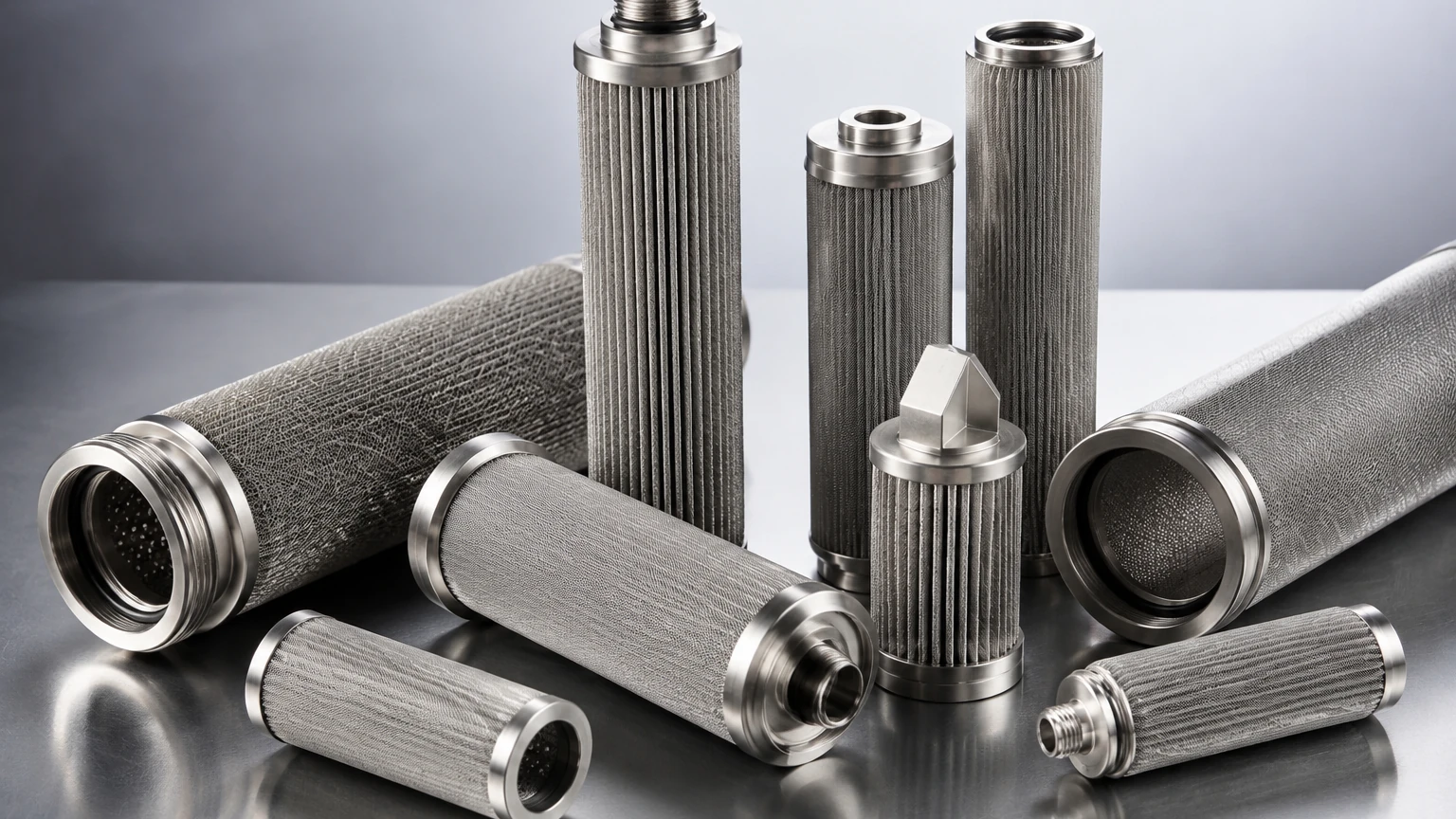
Stainless Steel Filter Cartridges
In industrial processing, the efficiency of a filtration system is often the determining factor in product quality, equipment longevity, and operational safety. Stainless steel filter cartridges represent a critical component in these systems, offering a level of durability and precision that polymer-based or disposable filters cannot match. As industrial environments become increasingly demanding—characterized by high temperatures, corrosive chemicals, and high-pressure differentials—the selection of the correct metallic filtration media becomes a fundamental engineering decision.
For engineers and procurement professionals, understanding the technical nuances of stainless steel filter cartridges is essential for optimizing process performance. These components are not merely consumables; they are engineered tools designed to provide reliable particle retention while maintaining structural integrity under stress. This guide examines the technical specifications, material considerations, and application-specific factors that define high-performance metal filtration.
Fundamentals of Industrial Metal Filtration
Stainless steel filter cartridges are primarily constructed using three types of media: woven wire mesh, sintered metal fiber felt, and sintered metal powder. Each medium offers distinct advantages depending on the required filtration accuracy and the nature of the fluid being processed.
1. Woven Wire Mesh: This is the most common medium for stainless steel cartridges. It consists of stainless steel wires woven into specific patterns (such as plain, twill, or dutch weave). It provides precise pore sizes and is excellent for surface filtration, where particles are trapped on the surface of the mesh, making it easy to clean via backwashing.
2. Sintered Metal Fiber Felt: Created by sintering non-woven stainless steel fibers, this medium provides a high-porosity depth filtration structure. It offers a higher dirt-holding capacity and lower initial pressure drop compared to wire mesh, making it ideal for high-viscosity fluids or applications with high contaminant loads.
3. Sintered Metal Powder: This involves the compression and sintering of metal spheres or irregular particles to create a rigid, porous structure. It is typically used for very fine filtration and applications requiring extreme mechanical strength and resistance to high-pressure pulses.
At Kaifil, the focus remains on leveraging these materials to create customized solutions that meet the specific micron ratings and flow requirements of global industrial partners. For more information on our manufacturing capabilities, you can visit our Main Page.
Material Grades and Environmental Compatibility
The choice of alloy is the first line of defense against premature filter failure. While various metals can be used, the industry standard focuses on two primary grades of stainless steel: 304 and 316L.
* Stainless Steel 304: Suitable for general industrial applications, 304 provides good corrosion resistance and is cost-effective for water treatment, food and beverage processing, and hydraulic oil filtration where extreme chemical exposure is not a factor.
* Stainless Steel 316L: The "L" stands for low carbon, which improves weldability and resistance to intergranular corrosion. 316L contains molybdenum, significantly enhancing its resistance to chlorides and acids. This makes it the preferred choice for pharmaceutical manufacturing, chemical processing, and marine environments.
Beyond these, specialized alloys like Hastelloy or Monel may be utilized for extreme environments involving high-concentration acids or ultra-high temperatures. Engineers must confirm the chemical compatibility of the fluid, including pH levels and the presence of oxidizing agents, before finalizing the material specification.
Structural Designs: Pleated vs. Cylindrical Cartridges
The geometry of a stainless steel filter cartridge directly impacts its service life and flow characteristics. Most industrial applications utilize either a standard cylindrical design or a pleated design.
Cylindrical Filter Cartridges
Cylindrical cartridges consist of a simple, smooth-walled filter medium supported by an inner core. These are robust and easy to clean but offer limited surface area. They are best suited for applications with low contaminant concentrations or where space constraints are not an issue.
Pleated Filter Cartridges
Pleating the filter medium significantly increases the effective filtration area—often by a factor of two to four times compared to a cylindrical design of the same dimensions. This increased surface area results in:
* Lower Flux Rates: The fluid passes through the media at a lower velocity, improving filtration efficiency.
* Reduced Pressure Drop: Lower resistance to flow extends the time between cleaning cycles.
* Higher Dirt-Holding Capacity: More surface area allows the cartridge to capture more contaminants before reaching the terminal pressure drop.
For high-flow systems, pleated stainless steel filter cartridges are generally the more efficient choice, despite a higher initial manufacturing complexity.
Performance Metrics: Micron Ratings and Pressure Drop
When evaluating filter cartridges, engineers must balance filtration efficiency with system throughput. Two key metrics define this balance: the micron rating and the differential pressure (Delta P).
Absolute vs. Nominal Micron Ratings
In the context of stainless steel filtration, it is vital to distinguish between nominal and absolute ratings. A nominal rating indicates the filter can trap a large percentage of particles of a certain size (e.g., 90% of 10-micron particles). An absolute rating, common in metal mesh filters, implies that 99.9% or more of particles at that size are retained. For critical processes in the pharmaceutical or semiconductor industries, absolute ratings are mandatory to ensure consistent product purity.
Managing Differential Pressure
Every filter introduces a pressure drop into the system. As the filter captures contaminants, the differential pressure increases. Engineers must design systems with a clear understanding of the "clean" pressure drop and the "terminal" pressure drop (the point at which the filter must be cleaned or replaced). Stainless steel cartridges are valued because they can withstand significantly higher differential pressures than polymer filters without collapsing or experiencing "media migration," where the filter material itself sheds particles into the downstream flow.
Maintenance, Cleaning, and Service Life Optimization
One of the primary economic advantages of stainless steel filter cartridges is their cleanability. Unlike disposable depth filters made of polypropylene or glass fiber, metal cartridges can be restored to near-original performance through various cleaning protocols.
1. Backwashing/Backpulsing: This involves reversing the flow of the fluid to dislodge particles from the surface of the mesh. It is highly effective for surface-filtration media like woven wire mesh.
2. Ultrasonic Cleaning: Using high-frequency sound waves in a cleaning solvent, this method can remove fine particles trapped deep within the pores of sintered fiber or powder media.
3. Chemical Cleaning: Soaking the cartridges in specific acids, alkalis, or surfactants can dissolve organic or inorganic scaling that mechanical cleaning cannot reach.
4. Burn-off/Pyrolysis: For cartridges used in polymer or resin filtration, high-temperature ovens can be used to burn off organic contaminants, leaving the stainless steel structure intact.
Proper maintenance extends the service life of the cartridge to several years, drastically reducing the total cost of ownership and minimizing the environmental impact associated with disposable filter waste.
Customization and OEM Solutions for Specialized Systems
Industrial filtration is rarely a one-size-fits-all discipline. Many systems require custom-engineered cartridges to fit existing housings or to meet unique process parameters. Customization options typically include:
* End-Cap Configurations: Cartridges can be manufactured with various end-cap styles, such as Double Open End (DOE), Code 7 (226 O-ring with bayonet), or Code 3 (222 O-ring). Proper sealing is critical to prevent bypass, where unfiltered fluid escapes around the edges of the cartridge.
* Reinforcement: For high-pressure applications, cartridges can be designed with heavy-duty inner cores or outer shrouds to prevent mechanical deformation.
* Dimensions: Custom lengths and diameters can be fabricated to maximize the filtration area within a specific vessel footprint.
Kaifil specializes in providing these OEM and customized filtration components, ensuring that every cartridge is tailored to the specific mechanical and chemical requirements of the application. Engineers looking for specific design support can review our options on our Main Page.
Evaluating Total Cost of Ownership in Filtration Systems
While the initial purchase price of a stainless steel filter cartridge is higher than that of a disposable alternative, the Total Cost of Ownership (TCO) is often significantly lower. When calculating TCO, procurement teams should consider the following factors:
* Replacement Frequency: Disposable filters may require replacement weekly or even daily in high-load applications, whereas stainless steel filters can last for years with proper cleaning.
* Labor and Downtime: Frequent filter changes require system shutdowns and manual labor. Reducing the frequency of these events increases overall equipment effectiveness (OEE).
* Disposal Costs: In many regions, the disposal of contaminated filter media is regulated and expensive. Reusable metal filters eliminate this waste stream.
* Process Stability: Stainless steel provides a rigid pore structure that does not deform under pressure, ensuring consistent filtration quality throughout the entire process cycle.
Conclusion: Selecting the Right Filtration Partner
Choosing the right stainless steel filter cartridge requires a deep understanding of the interaction between the filter media and the process fluid. By focusing on material integrity, structural design, and cleanability, engineers can implement filtration solutions that enhance product quality and reduce operational overhead.
Whether you are managing a chemical refinery, a food processing plant, or a hydraulic system, the reliability of your filtration components is paramount. To explore our full range of custom stainless steel filtration solutions and technical specifications, please visit our Main Page.
