


Rvs Filterhuis
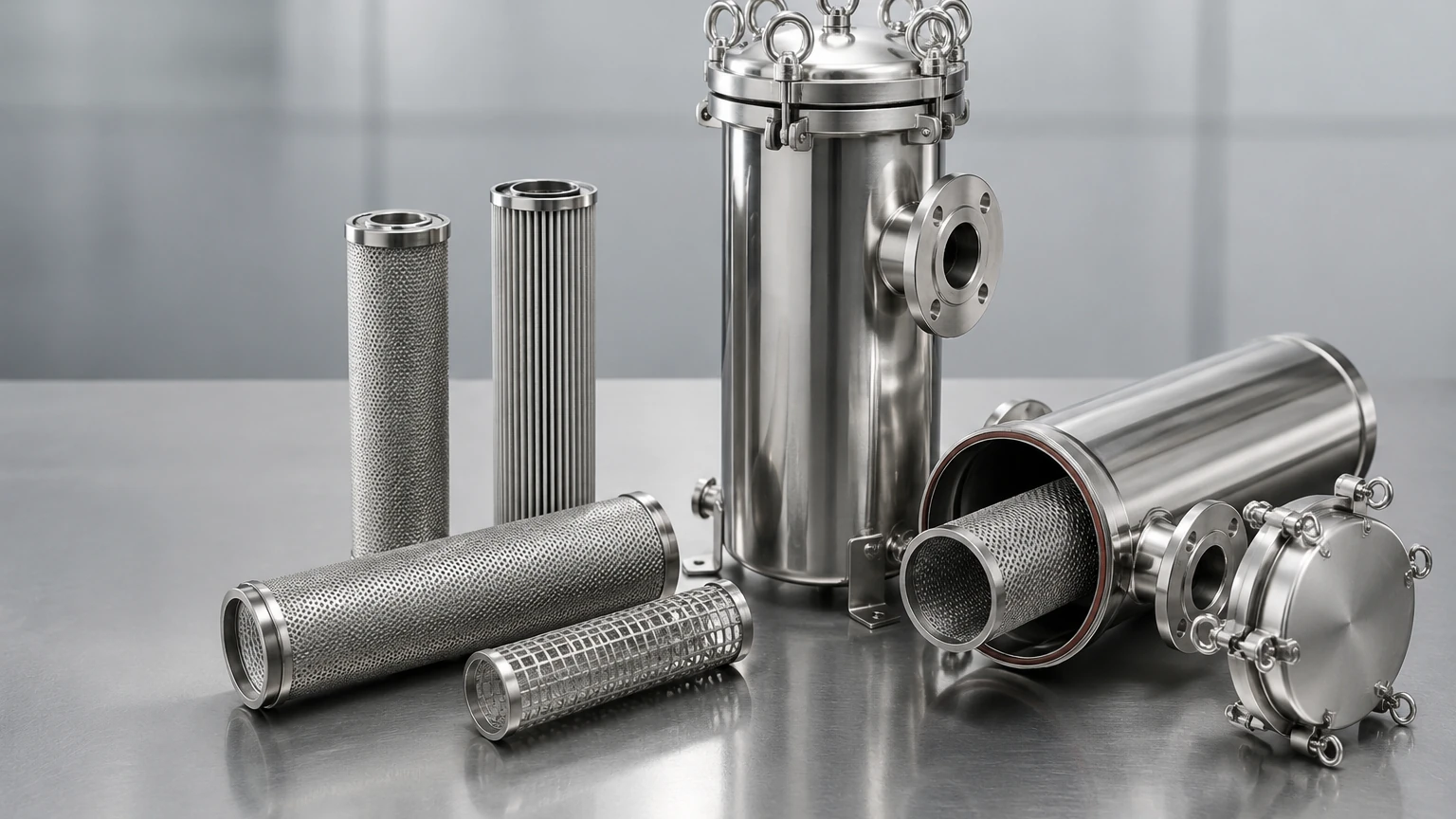
In industrial filtration, the housing is as critical as the filter media it contains. An rvs filterhuis (stainless steel filter housing) serves as the primary pressure vessel that directs fluid through the filtration medium while maintaining system integrity under varying pressures and temperatures. For engineers and procurement specialists, selecting the correct housing involves more than matching pipe sizes; it requires a deep understanding of material science, fluid dynamics, and mechanical engineering standards to ensure long-term operational efficiency and safety.
Stainless steel is the preferred material for industrial filter housings due to its inherent corrosion resistance, mechanical strength, and ability to withstand rigorous cleaning protocols. Whether used in chemical processing, water treatment, or the pharmaceutical industry, the rvs filterhuis must be engineered to prevent bypass, minimize pressure drop, and facilitate easy maintenance.
Material Selection: Grade 304 vs. 316L
The performance of an rvs filterhuis begins with the grade of stainless steel utilized in its construction. While several alloys exist, the industrial standard typically focuses on AISI 304 and AISI 316L.
Grade 304 Stainless Steel
Grade 304 is a versatile, general-purpose stainless steel containing chromium and nickel. It offers excellent corrosion resistance in most atmospheric conditions and is widely used in applications where the fluid is non-corrosive, such as standard water filtration or hydraulic oil systems. However, it is susceptible to pitting and crevice corrosion in high-chloride environments.
Grade 316L Stainless Steel
Grade 316L contains an addition of molybdenum, which significantly enhances its resistance to chlorides and acidic solutions. The "L" stands for low carbon, which improves weldability and reduces the risk of sensitization—a process where chromium carbides precipitate at the grain boundaries during welding, leading to intergranular corrosion. For chemical processing, marine applications, and high-purity pharmaceutical water systems, 316L is the mandatory choice for an rvs filterhuis.
Engineering Standards and Pressure Ratings
An rvs filterhuis is a pressure vessel, and its design must adhere to international engineering standards to ensure safety. Depending on the region and application, these may include the ASME Boiler and Pressure Vessel Code (Section VIII) or the European Pressure Equipment Directive (PED 2014/68/EU).
Key engineering considerations include:
* Design Pressure: The maximum pressure the housing can safely withstand. This must account for system surges and water hammer effects.
* Design Temperature: Stainless steel’s mechanical properties change at elevated temperatures. The housing must be rated for the maximum operating temperature of the process fluid.
* Corrosion Allowance: In some heavy industrial applications, engineers may specify a wall thickness that exceeds the minimum requirement to account for potential metal loss over decades of service.
* Hydrostatic Testing: Every rvs filterhuis should undergo hydrostatic testing at 1.3 to 1.5 times its design pressure to verify structural integrity and weld quality before deployment.
Types of Rvs Filterhuizen
The architecture of the housing is determined by the filtration task, the required flow rate, and the type of filter element used.
Cartridge Filter Housings
These are designed to hold one or more filter cartridges. They are ideal for high-precision filtration where fine particle removal is required.
* Single-Round Housings: Used for lower flow rates or point-of-use filtration.
* Multi-Round Housings: Capable of holding dozens of cartridges, these are used for large-scale industrial processes. The internal design must ensure even flow distribution across all cartridges to prevent premature clogging of the elements closest to the inlet.
Bag Filter Housings
Bag housings are typically used for high-solids loading or pre-filtration stages. They utilize a replaceable filter bag supported by an internal perforated basket. The rvs filterhuis for bags often features a "top-entry" or "side-entry" design. Top-entry designs are generally preferred as they provide a 360-degree seal, reducing the risk of bypass.
Sanitary Filter Housings
In the food, beverage, and pharmaceutical sectors, the rvs filterhuis must meet sanitary standards (such as 3-A or EHEDG). These housings feature high-grade surface finishes—often electropolished to a Ra < 0.4 µm—to eliminate microscopic crevices where bacteria can grow. They also utilize tri-clamp connections and are designed for Clean-in-Place (CIP) and Steam-in-Place (SIP) sterilization.
Sizing and Fluid Dynamics
Correctly sizing an rvs filterhuis is a balance between initial capital expenditure and long-term operational costs. A housing that is too small will result in high fluid velocity, leading to an excessive initial pressure drop (Delta P) and reduced filter element life.
Pressure Drop Considerations
The total pressure drop in a system is the sum of the pressure drop across the housing and the pressure drop across the clean filter element. As a rule of engineering, the clean pressure drop across the housing should not exceed 0.1 to 0.2 bar. High velocities within the housing can also lead to erosion of the internal surfaces and turbulence that may interfere with the filtration efficiency of the media.
Connection Types
The choice of inlet and outlet connections affects both installation and maintenance. Common options include:
* NPT/BSPT Threaded: Common for smaller, low-pressure housings.
* Flanged (ANSI/DIN): The standard for industrial-scale piping systems, providing a robust and leak-proof seal.
* Tri-Clamp: Essential for sanitary applications where frequent disassembly for cleaning is required.
Sealing Materials and Compatibility
The rvs filterhuis relies on O-rings or gaskets to ensure a leak-proof seal between the head and the bowl, and between the filter element and the housing. The choice of elastomer must be compatible with the process fluid and temperature.
* EPDM: Excellent for water and steam but poor for oils.
* Viton (FKM): High temperature and chemical resistance, suitable for oils and fuels.
* Nitrile (Buna-N): A cost-effective choice for water and oils at moderate temperatures.
* PTFE/Teflon: Offers the highest chemical resistance but lacks the elasticity of elastomers, often requiring specialized housing designs.
Maintenance and Total Cost of Ownership
While the initial cost of an rvs filterhuis is a significant factor, the total cost of ownership (TCO) is influenced by maintenance requirements and operational downtime. Features that simplify maintenance can lead to substantial savings over the life of the equipment.
1. Swing Bolt Closures: For housings that require frequent element changes, swing bolt closures allow for tool-free access, significantly reducing downtime compared to standard bolted flanges.
2. Vents and Drains: Every rvs filterhuis should be equipped with a high-point vent to release trapped air and a low-point drain to allow for complete evacuation of the fluid before opening the vessel. This is critical for operator safety, especially when handling hazardous chemicals.
3. Differential Pressure Gauges: Installing gauges at the inlet and outlet allows operators to monitor the "dirty" pressure drop, ensuring that filter elements are replaced only when necessary, thereby optimizing consumable costs.
Customization and OEM Solutions
Many industrial applications require bespoke solutions that standard off-the-shelf housings cannot provide. This may involve custom dimensions to fit into restricted spaces, specialized internal coatings, or the integration of heating jackets for high-viscosity fluids. For technical teams seeking specialized configurations, visiting the Main Page of a professional manufacturer provides insights into the breadth of customization available, from material selection to precision machining of internal components.
Customization also extends to the internal support structures. For instance, in high-pressure hydraulic systems, the rvs filterhuis may require reinforced internal cores or specialized bypass valves to protect the system in the event of a total filter blockage.
Application-Specific Engineering
Chemical Processing
In the chemical industry, the rvs filterhuis must withstand aggressive solvents and reagents. Engineers often specify 316L stainless steel and may require full material traceability (MTRs) to ensure compliance with safety protocols. The housing design must also account for the potential for static discharge when handling flammable liquids.
Water Treatment
For industrial water treatment, including reverse osmosis (RO) pre-filtration, housings are often subjected to continuous high-flow conditions. Durability and resistance to atmospheric corrosion are paramount, especially in desalination plants where salt spray is prevalent.
Food and Beverage
In this sector, the rvs filterhuis must be designed with "dead-leg" free zones to prevent product stagnation. The surface finish must be smooth enough to prevent protein binding and bacterial colonization. Compatibility with caustic cleaning agents used during CIP cycles is also a critical requirement for the stainless steel grade and seal materials.
Conclusion
The selection of an rvs filterhuis is a technical decision that impacts the reliability, safety, and efficiency of an entire industrial process. By focusing on material integrity, adherence to pressure vessel standards, and application-specific design features, engineers can ensure that their filtration system performs optimally throughout its service life. Whether for a standard water application or a complex pharmaceutical process, the stainless steel housing remains the foundation of effective industrial filtration. For those looking to explore high-performance filtration components and custom engineering support, the Main Page offers a comprehensive overview of the technical capabilities required to meet demanding industrial standards.
