


Water Filter Mesh
In industrial water treatment and process engineering, the selection of an appropriate filtration medium is critical to maintaining system efficiency, protecting downstream equipment, and ensuring product quality. Among the various media available, water filter mesh—specifically when constructed from high-grade stainless steel—stands out for its durability, precision, and ability to withstand harsh operating conditions. This article examines the technical specifications, engineering considerations, and selection criteria for industrial-grade water filter mesh, providing a resource for engineers and procurement professionals tasked with optimizing filtration performance.
Understanding the Fundamentals of Industrial Water Filter Mesh
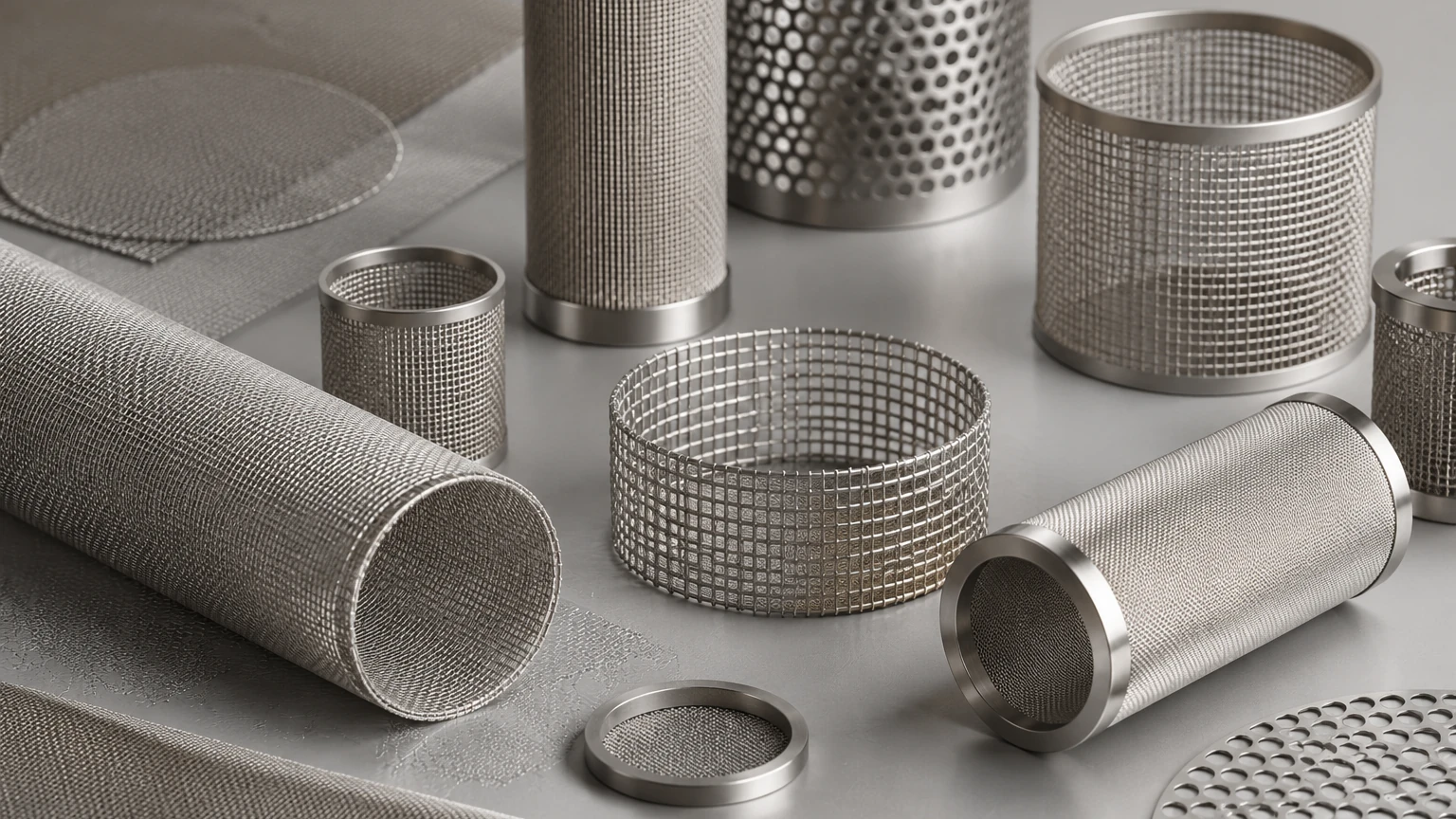
Industrial water filter mesh is a porous material composed of interlaced or bonded metallic wires, designed to remove suspended solids from liquid streams. Unlike disposable fabric or paper filters, stainless steel mesh offers a rigid structure that maintains its pore geometry even under significant pressure. This structural integrity is essential in applications ranging from cooling water intake to high-precision pharmaceutical processing.
The primary function of the mesh is to act as a physical barrier. Particles larger than the mesh openings are retained on the surface, while the fluid passes through. Because it is a surface filtration medium, water filter mesh is particularly effective for applications requiring high flow rates and low pressure drops. Furthermore, the metallic nature of the mesh allows for repeated cleaning and reuse, which significantly reduces the total cost of ownership compared to single-use alternatives.
When evaluating mesh for industrial use, engineers must consider the interplay between filtration accuracy (micron rating), mechanical strength, and chemical compatibility. Each of these factors is influenced by the material grade and the specific weave pattern employed during manufacturing.
Material Selection: Stainless Steel Grades and Corrosion Resistance
The performance and longevity of water filter mesh are heavily dependent on the alloy used. In industrial water applications, stainless steel is the standard due to its inherent resistance to oxidation and corrosion. The two most common grades are SS304 and SS316L.
SS304 Stainless Steel
SS304 is the most widely used grade for general industrial water filtration. It provides excellent resistance to atmospheric corrosion and is suitable for most freshwater applications, including municipal water treatment and pre-filtration for industrial cooling systems. However, it may be susceptible to pitting in high-chloride environments.
SS316L Stainless Steel
For more demanding environments, such as seawater filtration, chemical processing, or applications involving high-salinity process water, SS316L is the preferred choice. The addition of molybdenum enhances its resistance to chloride-induced pitting and crevice corrosion. The "L" designation stands for low carbon, which improves weldability and reduces the risk of intergranular corrosion in the heat-affected zones of welded filter components.
In specialized cases, other alloys like Monel or Hastelloy may be used for extreme chemical resistance, but for the vast majority of industrial water applications, the 300-series stainless steels provide the optimal balance of performance and cost-effectiveness. For technical specifications on material availability, engineers can refer to the Main Page for detailed product data.
Engineering the Weave: Plain, Twill, and Dutch Weave Structures
The method by which the wires are woven determines the mesh's filtration characteristics, including its pore size, flow capacity, and mechanical stability. There are three primary weave types used in the production of water filter mesh:
Plain Weave
In a plain weave, each warp wire (running lengthwise) passes alternately over and under each weft wire (running crosswise). This results in square or rectangular openings. Plain weave mesh is characterized by its high open area and low pressure drop, making it ideal for coarse filtration and high-flow applications. However, it is generally limited to filtration ratings above 50 microns, as the wire diameters required for finer filtration lack the necessary stability in a plain weave pattern.
Twill Weave
Twill weave involves each warp wire passing over and under two weft wires. This allows for the use of heavier wires in a given mesh count, resulting in a stronger and more durable mesh. Twill weaves are often used when a combination of fine filtration and high mechanical strength is required.
Dutch Weave (Plain and Twilled)
Dutch weaves utilize different diameters for the warp and weft wires. Typically, a smaller number of heavy warp wires are combined with a larger number of fine weft wires. This creates a dense, multi-layered structure with wedge-shaped openings.
* Plain Dutch Weave (PDW): Offers a high degree of mechanical strength and is excellent for high-pressure applications.
* Twilled Dutch Weave (TDW): Allows for the finest filtration ratings, often down to 1-5 microns, by overlapping the weft wires to create a complex path for the fluid.
Dutch weaves are the standard for precision industrial water filter mesh because they provide superior particle retention while remaining easy to clean through backwashing.
Filtration Performance: Micron Ratings and Mesh Counts
Selecting the correct water filter mesh requires a clear understanding of the relationship between mesh count and micron rating. These two terms are often used interchangeably but represent different physical properties.
* Mesh Count: This refers to the number of wires per linear inch. A higher mesh count generally indicates a finer mesh. For example, a 100-mesh screen has 100 wires per inch in both directions.
* Micron Rating: This indicates the size of the particles the mesh is intended to capture. One micron (μm) is one-millionth of a meter.
In industrial filtration, it is important to distinguish between "nominal" and "absolute" micron ratings. A nominal rating indicates the mesh will trap a certain percentage of particles of a given size, while an absolute rating (common in Dutch weaves) indicates the largest spherical particle that can pass through the mesh under laboratory conditions.
For water filter mesh applications, the target micron rating is determined by the sensitivity of downstream components. For instance, a spray nozzle might require 100-micron protection, while a Reverse Osmosis (RO) membrane might require pre-filtration down to 5 or 10 microns to prevent premature fouling.
Operational Considerations: Pressure Drop and Flow Dynamics
One of the most critical engineering considerations in filter design is the pressure drop, or Delta P (ΔP). This is the difference in pressure between the inlet and outlet of the filter. As water filter mesh captures particles, the effective open area decreases, leading to an increase in ΔP.
Factors Influencing Pressure Drop
1. Open Area Percentage: A mesh with a higher percentage of open area will initially have a lower pressure drop. Plain weaves typically offer the highest open area.
2. Fluid Velocity: Higher flow rates through the same surface area increase the pressure drop exponentially.
3. Contaminant Loading: The nature and concentration of the solids in the water will dictate how quickly the mesh becomes blinded.
To manage pressure drop, engineers often use pleated mesh designs. By pleating the water filter mesh, the total surface area within the same housing footprint can be increased by 3 to 5 times. This reduces the flux (flow per unit area), which lowers the initial pressure drop and significantly extends the service life between cleaning cycles.
Maintenance and Cleaning Protocols for Extended Service Life
Unlike disposable cartridges, stainless steel water filter mesh is designed for long-term service. However, maintaining peak performance requires effective cleaning protocols. The ability to clean the mesh depends largely on the weave type and the nature of the contaminants.
Backwashing
Backwashing involves reversing the flow of water through the mesh to dislodge accumulated particles. This is the most common method for automated industrial filters. Dutch weave meshes are particularly well-suited for backwashing because their wedge-shaped pores prevent particles from becoming permanently wedged in the structure.
Ultrasonic Cleaning
For mesh that has become heavily fouled with fine or sticky particles, ultrasonic cleaning is highly effective. The mesh is submerged in a cleaning solution, and high-frequency sound waves create cavitation bubbles that implode on the surface of the wires, stripping away contaminants without damaging the mesh structure.
Chemical Cleaning
In applications where mineral scale or organic biofilms have formed on the mesh, chemical soaking may be required. Because stainless steel is resistant to many acids and bases, the mesh can be cleaned with specialized agents to restore its original flow characteristics.
Regular maintenance not only ensures consistent filtration quality but also prevents mechanical failure. If a mesh becomes completely blinded, the resulting pressure differential can exceed the mesh's structural limits, leading to deformation or bursting.
Customization and OEM Solutions for Specialized Applications
Industrial filtration requirements are rarely one-size-fits-all. Factors such as housing dimensions, flow rates, and specific particle distributions often necessitate customized water filter mesh solutions. Customization can involve the selection of specific wire diameters, unique weave patterns, or the integration of the mesh into specialized filter cartridges or strainers.
OEM (Original Equipment Manufacturer) capabilities are vital for companies developing proprietary filtration systems. A manufacturer with deep expertise in wire mesh can provide engineering support to optimize the mesh selection for a specific piece of equipment, ensuring that the filter component meets the exact performance specifications required by the end-user.
Customized solutions also extend to the structural support of the mesh. For high-pressure applications, fine filtration mesh is often sintered to a coarser support mesh or a perforated metal core. This process, known as sintering, bonds the layers together at the molecular level, creating a composite material that combines the fine filtration of the mesh with the structural rigidity of the support layer.
Conclusion: Selecting the Right Filtration Partner
Choosing the correct water filter mesh is a technical process that requires a balance of metallurgical knowledge, fluid dynamics, and mechanical engineering. By understanding the properties of different stainless steel grades, the advantages of various weave patterns, and the operational impact of pressure drop, engineers can design filtration systems that are both efficient and durable.
Stainless steel mesh remains the gold standard for industrial water filtration due to its reusability and precision. Whether the application involves protecting sensitive process equipment or ensuring the purity of a final product, the right mesh configuration is essential for operational success. For those in the process of specifying or purchasing filtration components, exploring the options available on the Main Page can provide the necessary technical foundation to make an informed decision. Working with an experienced manufacturer like Kaifil ensures that the filtration solution is tailored to the specific demands of the industrial environment, providing reliable performance and long-term value.
