


Coalescer Filter Media
In industrial fluid processing, the separation of immiscible liquids or the removal of entrained liquid droplets from gas streams is a critical requirement for protecting downstream equipment and ensuring product purity. Coalescer filter media serves as the functional core of this separation process. Unlike standard particulate filters that simply block solids, coalescer media is engineered to facilitate the merging of small droplets into larger ones, which can then be separated by gravity or other mechanical means. For engineers and procurement teams, selecting the appropriate media involves a deep understanding of fluid dynamics, material science, and the specific chemical environment of the application.
Understanding the Role of Coalescer Filter Media in Industrial Separation
Coalescer filter media is primarily utilized in two scenarios: liquid-liquid separation (such as removing water from aviation fuel or oil from condensate) and gas-liquid separation (such as removing oil mist from compressed air). The effectiveness of the separation depends heavily on the physical properties of the media and its interaction with the fluids involved.
In a typical industrial system, the "dispersed phase" consists of microscopic droplets suspended within a "continuous phase." Because these droplets are often too small to settle out naturally within a reasonable timeframe, the coalescer filter media provides a high-surface-area environment where these droplets can collide and combine. As the droplets grow in size, their buoyancy or weight increases relative to the continuous phase, allowing them to drop out of the stream or rise to the top for collection.
For those seeking a broader understanding of how these components integrate into larger filtration systems, visiting the Main Page of a specialized manufacturer provides insight into the various configurations available for industrial use.
The Mechanics of Coalescence: How Media Facilitates Phase Separation
The performance of coalescer filter media is governed by three primary mechanisms: interception, impingement, and adsorption. As the fluid passes through the tortuous path of the media, the following stages occur:
1. Capture: The dispersed droplets come into contact with the fibers or mesh of the media. This is achieved through Brownian motion for extremely small particles, or through direct interception and inertial impaction for larger droplets.
2. Wetting and Attachment: Once a droplet contacts the media, it must adhere to the surface. The surface energy of the media—whether it is hydrophilic (water-attracting) or hydrophobic (water-repelling)—determines how the droplet spreads across the fibers.
3. Coalescence: As more droplets are captured, they move along the fibers and collide with one another. These collisions result in the merging of small droplets into larger globules.
4. Release: Once the globules reach a critical mass where the drag force of the flowing fluid or the force of gravity exceeds the adhesive force holding them to the media, they are released. These larger droplets then settle into a sump or rise to a collection area, depending on the density difference between the two phases.
Material Selection for High-Performance Coalescer Media
Selecting the right material for coalescer filter media is a balance between chemical compatibility, thermal stability, and surface tension requirements. In demanding industrial environments, stainless steel is often the preferred choice due to its durability and resistance to corrosion.
Stainless Steel Wire Mesh and Sintered Structures
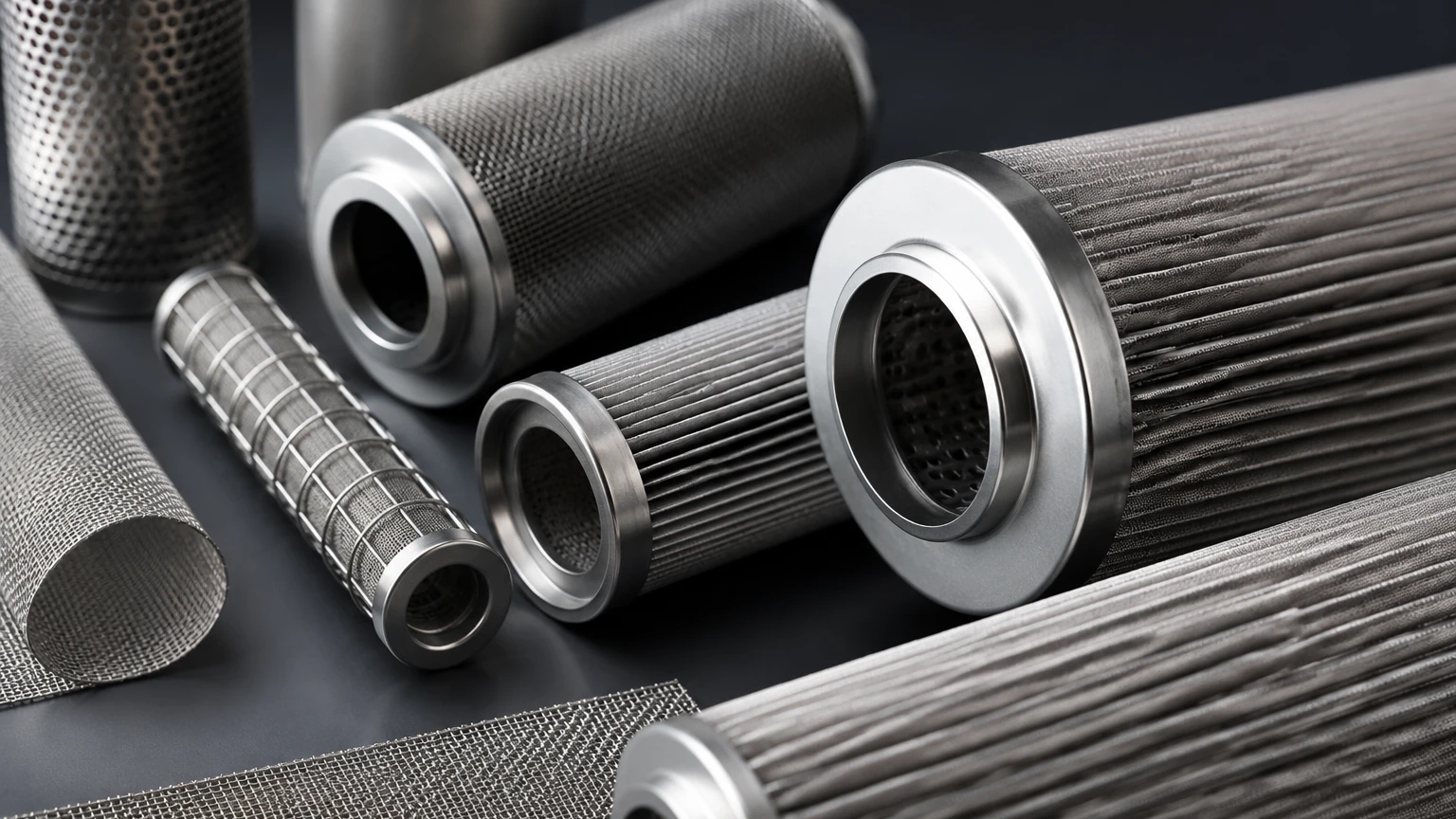
Kaifil specializes in utilizing stainless steel wire mesh and sintered metal components for filtration. In coalescence, multi-layered stainless steel mesh provides a controlled environment with high mechanical strength. Sintered structures offer a fixed pore geometry that prevents media migration—a common failure point in fiber-based filters where individual fibers may break off and contaminate the downstream fluid.
Chemical and Thermal Resistance
In chemical processing and pharmaceutical applications, the media must withstand aggressive solvents and high temperatures. Stainless steel 316L is frequently specified for its superior resistance to pitting and crevice corrosion. For high-temperature steam or hot gas applications, metal-based coalescer filter media maintains its structural integrity far better than synthetic polymers or glass fibers.
Surface Treatments
To optimize the separation of specific fluids, the media surface can be treated to alter its wetting characteristics. For example, in oil-water separation, a media may be treated to be highly oleophilic (oil-attracting) to ensure that oil droplets adhere and coalesce efficiently while allowing water to pass through with minimal resistance.
Key Performance Indicators for Evaluating Coalescer Media Efficiency
When evaluating coalescer filter media for a specific project, engineers must look beyond simple micron ratings. The following factors are critical for performance evaluation:
* Separation Efficiency: Often expressed as the concentration of the dispersed phase in the effluent (e.g., reducing water content from 1,000 ppm to less than 10 ppm). This is the most direct measure of the media's effectiveness.
* Differential Pressure (Delta P): As the media captures droplets and potentially solids, the resistance to flow increases. A high-quality coalescer should maintain a low initial pressure drop to minimize energy consumption and extend the service life of the element.
* Saturation Level: Coalescer media operates in a partially saturated state. The equilibrium saturation—the point where the rate of droplet capture equals the rate of release—must be reached for the filter to function consistently. Media that saturates too quickly or unevenly can lead to "slugging," where large bursts of the dispersed phase are pushed through the filter.
* Interfacial Tension (IFT): The ability of the media to coalesce droplets is significantly affected by the IFT between the two liquids. Low IFT (often caused by the presence of surfactants) makes coalescence much more difficult, requiring specialized media designs with finer fibers and higher surface areas.
Engineering Considerations for System Integration and Customization
Industrial filtration is rarely a one-size-fits-all solution. Customization is often necessary to account for flow rate fluctuations, varying viscosity, and the presence of solid contaminants.
Handling Solids Loading
Coalescer filter media is designed to separate liquids, not solids. If the process fluid contains high levels of particulate matter, the coalescer will quickly plug, leading to premature failure. In such cases, a pre-filtration stage using stainless steel filter cartridges is recommended to remove solids before they reach the coalescing stage. This protects the delicate structure of the coalescer media and ensures long-term separation efficiency.
Flow Velocity and Residence Time
There is a critical velocity for every coalescer design. If the fluid moves too fast, the shear forces will break apart the coalescing droplets before they can grow large enough to settle. Conversely, if the velocity is too low, the droplets may not collide frequently enough. Engineering the media thickness and density allows for the optimization of residence time within the filter element.
OEM and Custom Configurations
Manufacturers like Kaifil work closely with OEM partners to develop custom filtration components. This includes designing specific end-cap configurations, varying the layers of mesh to achieve precise filtration accuracy, and ensuring the housing compatibility for specialized hydraulic or chemical systems.
Maintenance and Longevity of Industrial Coalescer Elements
The total cost of ownership for a filtration system is heavily influenced by the replacement cycle of the filter elements. While stainless steel coalescer filter media is more expensive upfront than disposable glass fiber elements, its longevity and cleanability often provide a better return on investment.
Monitoring Pressure Drop
Continuous monitoring of the differential pressure is the most reliable way to determine when a coalescer element needs attention. A sudden rise in pressure usually indicates solid particulate fouling, while a gradual rise is expected as the media reaches its operational saturation point.
Cleaning and Regeneration
One of the primary advantages of stainless steel media is the ability to clean and reuse the elements. Depending on the nature of the contaminants, methods such as ultrasonic cleaning, backflushing, or chemical cleaning can restore the media to near-original performance levels. This is particularly valuable in industries where waste reduction and sustainability are priorities.
Conclusion: Selecting the Right Solution for Demanding Environments
Coalescer filter media is an essential component for maintaining the integrity of industrial processes, from protecting gas turbines from liquid ingestion to ensuring the purity of pharmaceutical ingredients. By focusing on material durability, precise engineering of pore structures, and a clear understanding of fluid interactions, engineers can select filtration solutions that offer both high performance and cost-effectiveness.
For organizations looking to optimize their filtration processes, partnering with a manufacturer that understands the nuances of custom stainless steel solutions is vital. For more information on technical specifications and application support, please refer to the Main Page to explore the full range of industrial filtration capabilities.
