


Basket Strainer for Pipeline
In industrial fluid handling systems, the protection of sensitive downstream equipment is a primary engineering concern. A basket strainer for pipeline applications serves as a critical mechanical component designed to remove unwanted solids from liquid, gas, or steam lines by means of a perforated or wire mesh straining element. Unlike Y-strainers, which are often used for smaller lines or where frequent cleaning is not required, basket strainers are typically utilized in larger pipelines and applications where high flow rates and significant debris loading are expected.
As a professional manufacturer specializing in custom stainless steel filtration solutions, Kaifil provides the technical expertise required to integrate these components into demanding industrial environments. Understanding the engineering principles, material selection criteria, and maintenance requirements of a basket strainer for pipeline systems is essential for ensuring process continuity and equipment longevity.
Understanding the Role of Basket Strainers in Industrial Pipelines
The fundamental purpose of a basket strainer for pipeline installation is to safeguard expensive components such as pumps, valves, flow meters, and heat exchangers from damage caused by scale, rust, weld beads, or other foreign contaminants. Because the straining element is shaped like a basket, it offers a larger surface area for debris collection compared to other strainer types. This design allows for a greater holding capacity and a longer interval between cleaning cycles.
In many industrial processes, the cost of downtime far exceeds the cost of the filtration equipment itself. Therefore, selecting a robust basket strainer is an investment in system reliability. These strainers are commonly found in chemical processing, water treatment, oil and gas, and food and beverage production, where maintaining fluid purity is non-negotiable.
Engineering Considerations: Design and Flow Dynamics
When specifying a basket strainer for pipeline use, engineers must evaluate the internal geometry and flow dynamics of the unit. The efficiency of a strainer is not merely determined by its ability to catch particles, but by its ability to do so without creating excessive resistance to flow.
Simplex vs. Duplex Configurations
* Simplex Strainers: These are used in systems where the flow can be shut down periodically to clean or replace the basket. They are ideal for batch processes or applications where the fluid flow is not continuous.
* Duplex Strainers: For critical systems that cannot be shut down, duplex strainers feature two separate basket chambers connected by a diverting valve. This allows the operator to switch flow to a clean basket while the other is serviced, ensuring uninterrupted pipeline operation.
The Open Area Ratio (OAR)
A key technical metric in strainer design is the Open Area Ratio. This is the ratio between the total open area of the strainer basket and the cross-sectional area of the inlet pipe. A high OAR (typically 6:1 or higher) ensures that even as the basket begins to fill with debris, the pressure drop across the unit remains within acceptable limits. A low OAR leads to rapid pressure increases, which can cause cavitation in pumps or mechanical failure of the strainer element itself.
Material Selection and Chemical Compatibility
Material integrity is paramount when dealing with corrosive fluids or high-temperature environments. Kaifil specializes in stainless steel filtration, offering grades that provide superior resistance to chemical attack and physical wear.
1. 304 Stainless Steel: This is the standard choice for general industrial applications. It offers excellent corrosion resistance and durability for water, oil, and mild chemical services.
2. 316L Stainless Steel: For more aggressive environments, such as pharmaceutical processing or marine applications, 316L includes molybdenum, which enhances resistance to pitting and chloride-induced corrosion.
3. Specialty Alloys: In extreme cases involving highly acidic or alkaline fluids, specialized alloys may be required to prevent premature failure of the housing or the mesh element.
Choosing the correct material involves analyzing the fluid's pH, temperature, and the presence of abrasive particles. Using an incompatible material can lead to leaching, contamination of the process fluid, or catastrophic structural failure of the pipeline component.
Critical Performance Metrics: Pressure Drop and Filtration Accuracy
The performance of a basket strainer for pipeline systems is measured by two primary factors: how well it filters (accuracy) and how much it restricts flow (pressure drop).
Filtration Accuracy (Mesh and Micron Rating)
The straining element can be constructed from perforated plate, woven wire mesh, or a combination of both. The "mesh size" refers to the number of openings per linear inch, while the "micron rating" defines the smallest particle size the strainer can reliably capture. For coarse filtration, a perforated basket may suffice. For finer requirements, a stainless steel wire mesh liner is added inside the perforated basket to provide structural support while achieving high precision.
Managing Differential Pressure
As debris accumulates, the differential pressure (the difference between the inlet and outlet pressure) increases. Engineers must determine the "clean pressure drop" during the design phase and set a "terminal pressure drop" at which the basket must be cleaned. Exceeding the terminal pressure drop can result in the collapse of the basket or the forcing of contaminants through the mesh, a phenomenon known as "bypass."
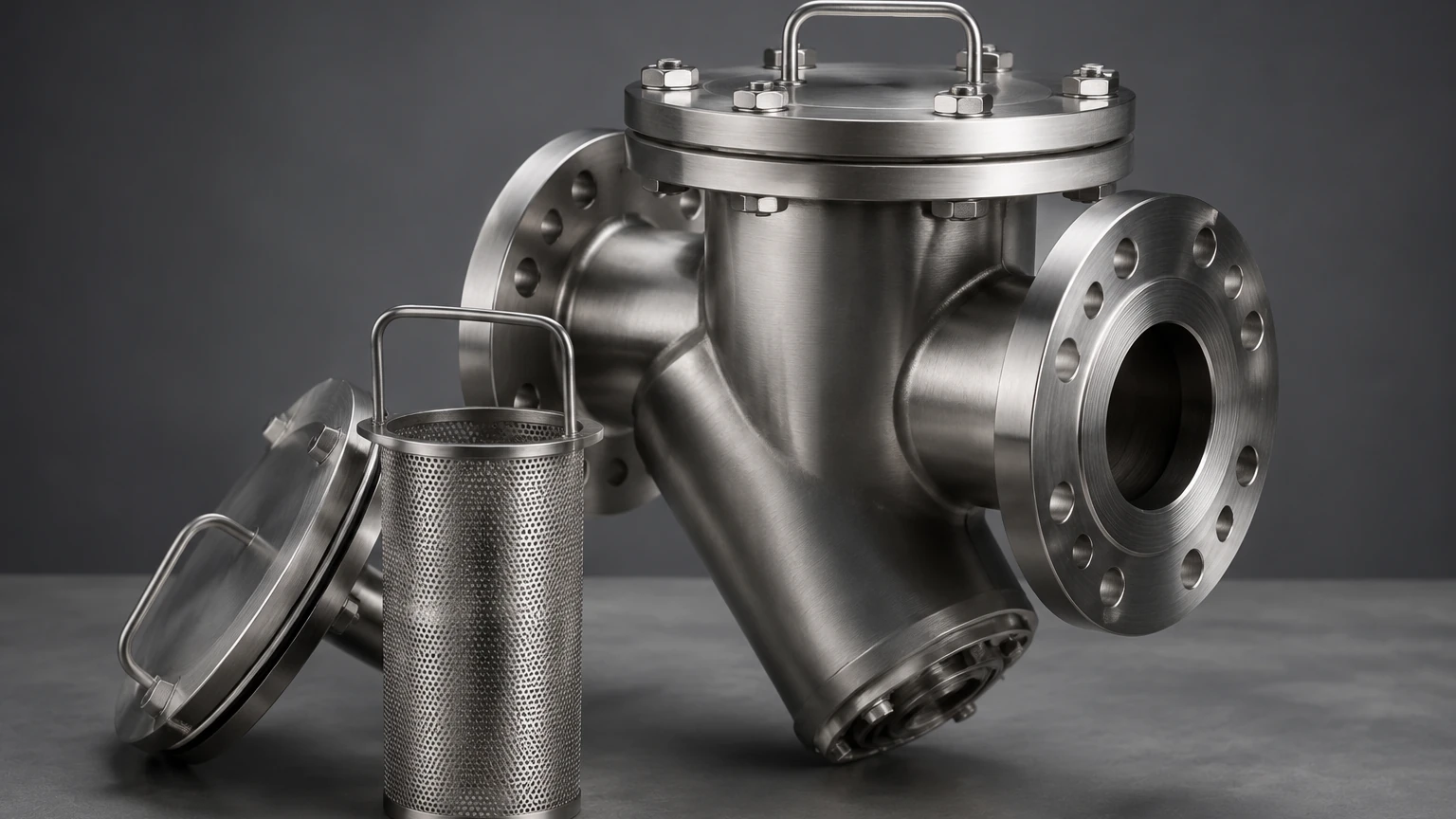
Customization and OEM Capabilities for Specialized Applications
Standard off-the-shelf strainers often fail to meet the specific needs of complex industrial systems. This is where customized engineering becomes vital. Kaifil works closely with global customers to develop tailored filtration components that fit unique spatial constraints or specific filtration profiles.
Customization options include:
* Custom Flange Connections: Matching existing pipeline standards (ANSI, DIN, JIS).
* Specialized Basket Liners: Utilizing multi-layer sintered mesh for high-pressure applications where standard mesh might deform.
* Magnetic Inserts: Adding magnetic rods to the basket to capture fine iron and steel particles that might otherwise pass through the mesh.
* Heating Jackets: For high-viscosity fluids like resins or chocolate, heating jackets prevent the fluid from solidifying inside the strainer.
By leveraging advanced manufacturing capabilities, Kaifil ensures that every Main Page component meets the rigorous demands of the intended application, providing reliable OEM solutions for diverse industries.
Installation, Maintenance, and Operational Longevity
Proper installation and a proactive maintenance schedule are essential for the effective operation of a basket strainer for pipeline systems. Incorrect installation can lead to leaks or inefficient filtration, while neglected maintenance can cause system-wide failures.
Installation Best Practices
* Orientation: Basket strainers must be installed in the correct orientation, typically with the basket chamber hanging downward to allow gravity to assist in debris collection.
* Support: Large strainers can be heavy, especially when full of fluid and debris. Ensure the pipeline is properly supported to prevent stress on the strainer housing and flanges.
* Accessibility: Ensure there is sufficient clearance above the strainer to remove the cover and lift out the basket for cleaning.
Maintenance Protocols
Regular inspection of the basket is mandatory. Operators should monitor differential pressure gauges daily. When cleaning the basket, it is important to inspect the gaskets and seals for wear. Replacing a worn gasket is a low-cost preventive measure that prevents hazardous leaks. Furthermore, the basket should be cleaned using methods that do not damage the mesh, such as ultrasonic cleaning or high-pressure air/water, depending on the nature of the contaminants.
Evaluating Total Cost of Ownership
When purchasing a basket strainer for pipeline use, the initial purchase price is only one component of the total cost of ownership (TCO). Procurement teams should also consider:
* Maintenance Costs: How easy is it to access the basket? Does it require specialized tools?
* Replacement Part Availability: Are replacement baskets and gaskets readily available from the manufacturer?
* Energy Consumption: A poorly designed strainer with a high pressure drop forces pumps to work harder, increasing energy costs over the life of the system.
* Durability: A high-quality stainless steel strainer from a reputable manufacturer like Kaifil may have a higher upfront cost but will last significantly longer than cheaper, cast-iron alternatives in corrosive environments.
By focusing on quality and precise filtration performance, industrial operators can reduce the frequency of equipment repairs and optimize their overall process efficiency.
Conclusion
The basket strainer for pipeline systems is an indispensable tool for maintaining the health of industrial fluid networks. From protecting high-speed pumps to ensuring the purity of chemical batches, these components perform a vital, if often overlooked, function. By selecting the right materials, understanding flow dynamics, and partnering with an experienced manufacturer like Kaifil, engineers can ensure their systems operate at peak performance with minimal downtime.
For technical professionals and purchasing teams, the focus should always remain on the technical specifications that align with the specific needs of the application. Whether it is a standard simplex unit or a highly customized stainless steel filtration solution, the goal is the same: reliable, durable, and effective contaminant removal. For more information on customized filtration components and engineering support, visit the Main Page to review product options and application support.
