


Key Filters for Wind Turbine Applications
Wind energy systems operate in some of the most demanding environments on the planet. From the corrosive salt spray of offshore installations to the extreme temperature fluctuations of high-altitude plains, wind turbines must maintain high operational uptime to remain economically viable. At the heart of these massive machines are complex mechanical and hydraulic systems that rely on precision lubrication and fluid power. Contamination in these systems is the primary cause of component wear and premature failure. Consequently, identifying and implementing the key filters for wind turbine applications is a critical task for engineers and maintenance professionals seeking to optimize turbine longevity and reduce levelized cost of energy (LCOE).
Industrial filtration in wind turbines is not a singular process but a multi-layered defense strategy. It involves protecting the gearbox, the hydraulic pitch and brake systems, the cooling circuits, and even the air quality within the nacelle. Each of these systems requires specific filtration media, housing designs, and performance ratings to handle the unique stresses of power generation.
Understanding the Filtration Requirements of Wind Energy Systems
The primary objective of filtration in a wind turbine is to maintain fluid cleanliness levels according to ISO 4406 standards. In a gearbox, for example, the presence of hard particles—such as silica from the environment or metallic wear debris from gears—can lead to surface fatigue, pitting, and eventual catastrophic failure. Because wind turbines are often located in remote areas, the cost of a gearbox replacement can exceed hundreds of thousands of dollars when including crane rentals and lost production time.
Filtration systems must be designed to handle high-viscosity oils, especially during cold starts. As the temperature drops, oil viscosity increases, which can lead to high differential pressure across the filter element. If a filter is not engineered to handle these surges, or if the bypass valve settings are incorrect, unfiltered oil may circulate through the system, or the filter element itself may collapse. Engineers must balance the need for high-efficiency (absolute-rated) filtration with the physical realities of fluid dynamics in variable climates.
Primary Types of Key Filters for Wind Turbine Applications
To ensure the reliability of the nacelle components, several distinct filtration stages must be integrated into the turbine design. Each serves a specific function in protecting the mechanical integrity of the unit.
Gearbox Lubrication Filters
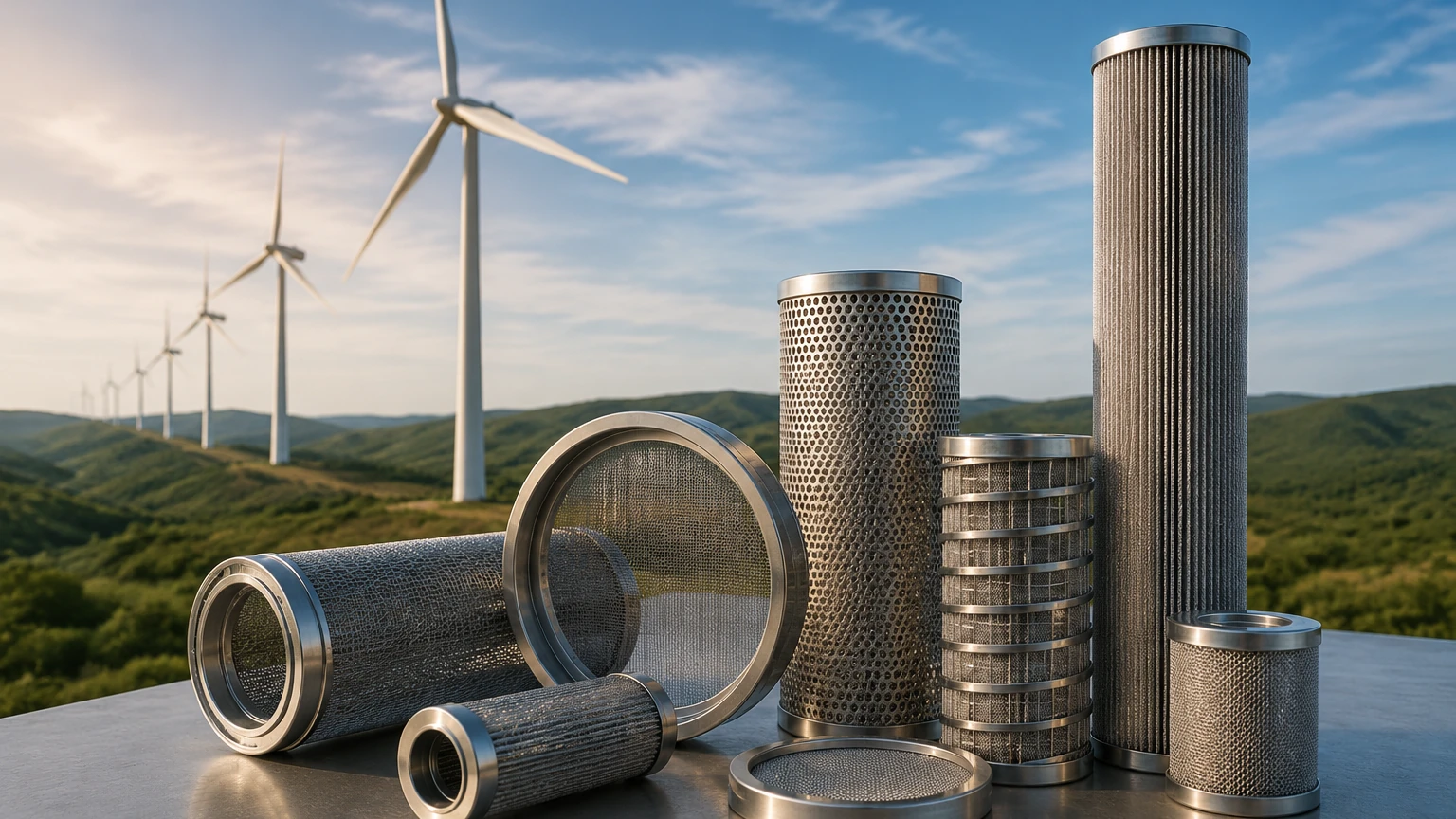
The gearbox is arguably the most critical component requiring high-performance filtration. Most modern wind turbines utilize a dual-stage filtration approach. This typically includes a primary high-efficiency filter (often 5 to 10 microns) and a secondary bypass or offline filter. The offline filtration system operates continuously, even when the turbine is not spinning, to polish the oil and remove ultra-fine particles and moisture. Stainless steel wire mesh filters are frequently used as protective strainers or in high-pressure bypass lines due to their structural integrity and resistance to pressure spikes.
Hydraulic Pitch and Brake Filters
Wind turbines use hydraulic systems to control the pitch of the blades and to operate the mechanical braking system. These systems require high-pressure filters that can withstand frequent cycling. Contamination in hydraulic fluid can cause valves to stick or actuators to leak, leading to a loss of control over the turbine's speed and orientation. Precision metal filter components are often preferred here because they maintain their pore structure under high pressure, ensuring consistent filtration performance during critical braking maneuvers.
Cooling System Filters
As power ratings for turbines increase, thermal management becomes more complex. Cooling systems for the generator and the power electronics often use water-glycol mixtures or oil. Filters in these circuits prevent the buildup of scale and debris that could clog heat exchangers. Effective cooling is essential to prevent derating the turbine during high-wind, high-temperature periods.
Desiccant Breathers and Air Filtration
As the oil level in the gearbox or hydraulic reservoir fluctuates, air is drawn in from the nacelle. If this air is humid or dusty, it introduces contaminants directly into the fluid. Desiccant breathers remove moisture and particulate matter from the incoming air. Additionally, nacelle ventilation filters protect the internal electronics and generator from dust and salt ingress, which is particularly vital for offshore assets.
Engineering Criteria for Selecting High-Performance Metal Filters
When selecting filters for wind energy, engineers must look beyond simple micron ratings. The material science and structural engineering of the filter element determine its performance over a multi-year service life. For those seeking specialized components, it is helpful to Review product options and application support to understand how different metal alloys and mesh weaves impact fluid flow.
Material Selection and Corrosion Resistance
In offshore environments, corrosion is a constant threat. Standard carbon steel filter housings and low-grade mesh can degrade rapidly. Stainless steel (specifically 304 or 316L) is the industry standard for high-durability filtration components. Stainless steel wire mesh filters offer excellent chemical compatibility and can withstand the acidic byproducts that sometimes form as lubricating oils age and oxidize.
Filtration Efficiency and Beta Ratio
The Beta ratio (β) is the standard measure of a filter's efficiency. For wind turbine gearboxes, an absolute rating (typically βx ≥ 1000) is required for the primary filter. This means that for every 1000 particles of a certain size entering the filter, only one passes through. However, high efficiency must be balanced against dirt-holding capacity. A filter that reaches its maximum differential pressure too quickly will require frequent technician climbs, increasing maintenance costs.
Structural Integrity and Pleat Design
Metal filter cartridges often utilize pleated designs to maximize the surface area within a compact footprint. The engineering of these pleats is vital; they must be supported to prevent "pleat bunching" under high flow rates. In wind applications, where vibrations are constant, the mechanical bond between the filter media and the end caps (often achieved through specialized welding or potting) must be robust enough to prevent bypass leakage.
Addressing Environmental Challenges: Offshore and Remote Site Considerations
The location of a wind farm significantly dictates the filtration strategy. For offshore turbines, the primary concern is salt-induced corrosion and high humidity. Moisture in the lubrication oil can lead to the formation of sludge and the acceleration of bearing fatigue (hydrogen embrittlement). In these cases, filtration systems are often paired with water-removal technologies, such as coalescers or vacuum dehydrators.
In cold climates, the focus shifts to cold-start performance. Filtration systems may incorporate integrated heaters or sophisticated bypass valves that allow the system to warm up without damaging the filter elements. For remote onshore sites in arid regions, the high concentration of airborne silica requires heavy-duty air filtration and high-capacity fluid filters to handle the increased particulate loading.
Maintenance Cycles and Predictive Monitoring Strategies
The traditional approach to filter maintenance was schedule-based (e.g., every 6 or 12 months). However, the industry is moving toward condition-based maintenance. By using differential pressure sensors and online oil condition monitoring, operators can replace key filters for wind turbine applications only when necessary, or just before a failure occurs.
Differential Pressure Monitoring
As a filter captures contaminants, the pressure drop across the element increases. Modern turbine control systems monitor this "Delta P." If the pressure exceeds a certain threshold, the system may trigger a warning or even shut down the turbine to protect the gearbox. Engineers must specify filters with a high "terminal pressure drop" to provide a sufficient safety margin between the warning signal and the actual bypass event.
Oil Analysis and Particle Counting
Regular oil analysis provides a window into the health of both the filter and the machinery. An increase in metallic particles despite a functioning filter might indicate a bearing is beginning to fail. Conversely, a sudden drop in particle count might suggest that the filter has bypassed or the media has ruptured. Using high-quality stainless steel cartridges ensures that the filter itself does not contribute to the contamination through media migration.
Total Cost Considerations and Custom OEM Solutions
When evaluating filtration options, the purchase price of the filter element is often the least significant factor. The total cost of ownership (TCO) includes the cost of the oil, the labor for replacement, the cost of waste disposal, and the potential cost of component failure.
Reusable vs. Disposable Elements
While many wind turbines use disposable fiberglass elements for fine filtration, stainless steel wire mesh filters offer the advantage of being cleanable and reusable in certain applications. In high-load or high-temperature scenarios where synthetic media might degrade, metal filters provide a permanent solution that reduces the long-term waste stream of the wind farm.
Customization for OEM Integration
Every turbine model has a different nacelle layout and hydraulic requirement. OEM manufacturers often require customized filter shapes, sizes, and connection types to fit within tight spatial constraints. Custom stainless steel filtration solutions allow for the integration of unique features, such as internal bypass valves or specialized mounting brackets, ensuring that the filtration system is an optimized part of the turbine's original engineering.
Conclusion: Verifying Filtration Specifications
For engineers and purchasing teams, the process of selecting filtration components should begin with a clear understanding of the operational environment and the specific cleanliness targets of the turbine manufacturer. Before finalizing a procurement decision, technical professionals should confirm the following:
1. Fluid Compatibility: Ensure the filter media and seals are compatible with the specific synthetic or mineral oils used in the gearbox and hydraulics.
2. Pressure Ratings: Verify that the collapse pressure of the filter element exceeds the maximum system pressure, including cold-start surges.
3. Certification: Check for compliance with international standards such as ISO 16889 (multi-pass testing) and ISO 2941 (collapse/burst resistance).
4. Supply Chain Reliability: For large-scale wind farms, the ability to source consistent, high-quality replacement elements is essential for maintaining fleet-wide uptime.
By focusing on high-quality materials and precision engineering, operators can ensure that their filtration systems provide the necessary protection for the life of the turbine. As the wind industry continues to evolve toward larger turbines and harsher environments, the role of robust, reliable metal filtration will only become more central to the success of renewable energy infrastructure.
