


Industrial Woven Wire Mesh Solutions for Calgary Applications
In the industrial landscape of Western Canada, particularly within the energy, chemical processing, and agricultural sectors, the demand for precise and durable filtration components is constant. For engineering and procurement teams sourcing woven wire mesh calgary-based projects, understanding the technical nuances of mesh construction is critical to ensuring system reliability and process efficiency. Woven wire mesh serves as a fundamental component in solid-liquid separation, gas filtration, and protective screening, where material integrity and dimensional accuracy are non-negotiable.
As a specialized manufacturer, Kaifil provides high-performance stainless steel filtration solutions designed to meet the rigorous standards of industrial environments. This guide explores the engineering considerations, material selections, and application-specific requirements for integrating woven wire mesh into modern industrial systems.
Understanding Woven Wire Mesh Specifications
Woven Wire Mesh is produced by weaving individual metal wires on industrial looms, creating a structured grid with precise openings. The performance of the mesh is determined by three primary factors: the weave pattern, the wire diameter, and the mesh count (or micron rating).
Weave Patterns and Their Functional Roles
Selecting the correct weave pattern is the first step in optimizing filtration performance. Each pattern offers distinct advantages regarding flow rate, mechanical strength, and particle retention.
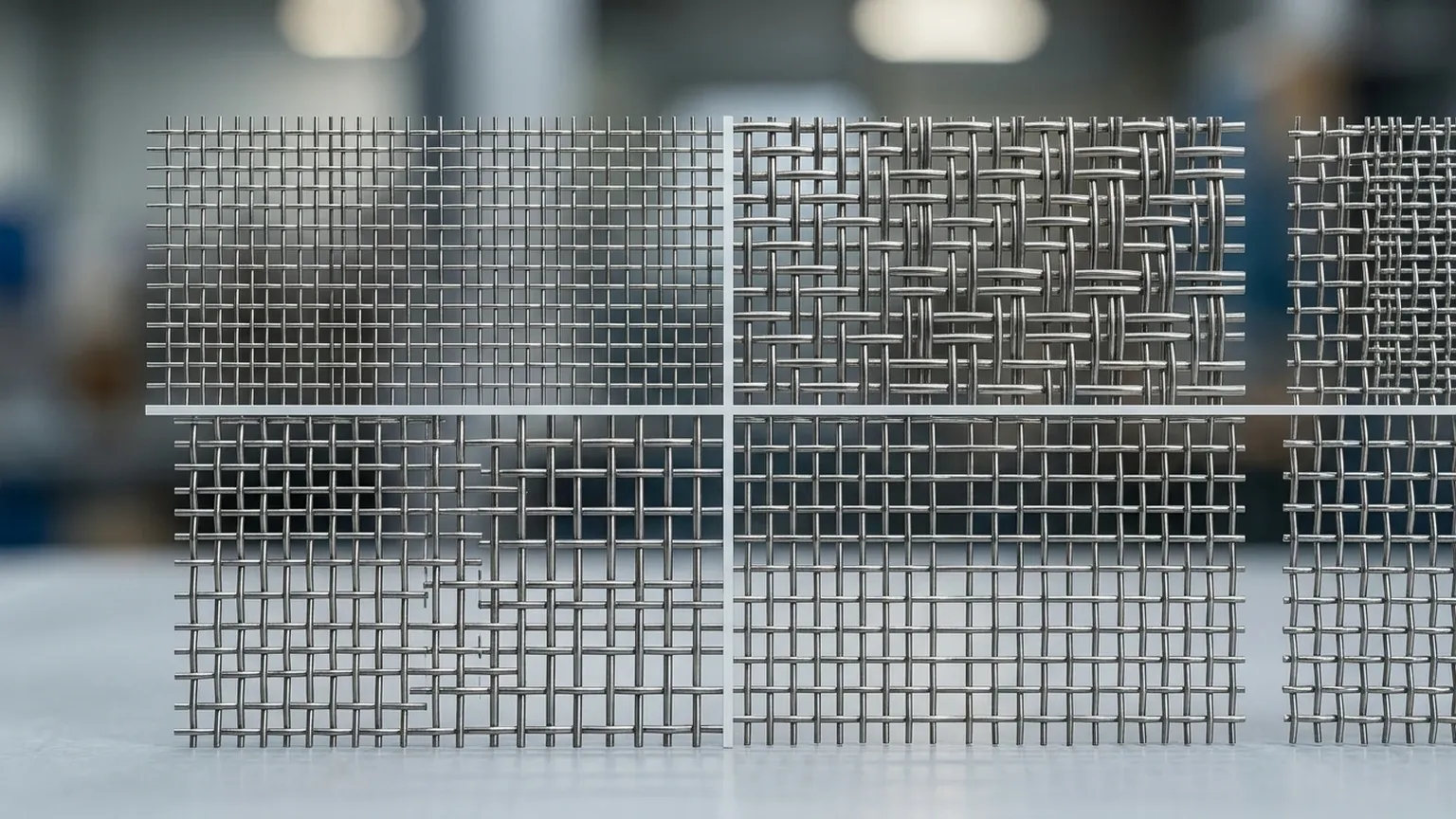
* Plain Weave: The most common configuration where each warp wire crosses alternately over and under each weft wire. This provides a high open-area percentage, making it ideal for high-flow applications and general screening.
* Twill Weave: In this pattern, each weft wire passes over and under two warp wires. This allows for the use of heavier wire diameters in a given mesh count, increasing the mechanical strength and durability of the mesh without significantly sacrificing filtration accuracy.
* Dutch Weave (Plain and Twill): Dutch weaves utilize different wire diameters for the warp and weft. This results in a dense, robust mesh with smaller triangular openings. It is the preferred choice for high-pressure filtration and applications requiring fine micron ratings (down to 5-10 microns).
Material Selection: SS304 vs. SS316L
For industrial projects in Calgary, material selection often focuses on corrosion resistance and thermal stability. While various alloys are available, stainless steel remains the industry standard.
* Stainless Steel 304: Offers excellent mechanical properties and basic corrosion resistance. It is suitable for most food and beverage applications and general industrial screening where exposure to aggressive chlorides is minimal.
* Stainless Steel 316L: Contains molybdenum, which significantly enhances resistance to pitting and crevice corrosion in chloride-rich environments. This is often the required specification for oil and gas processing, chemical plants, and wastewater treatment facilities.
Key Industrial Applications for Woven Wire Mesh in Calgary
The industrial sectors surrounding Calgary require filtration components that can withstand harsh operating conditions, including extreme temperature fluctuations and high-pressure differentials.
Oil and Gas Processing
In the upstream and midstream sectors, woven wire mesh is utilized in sand control screens, produced water filtration, and catalyst recovery. The high mechanical strength of stainless steel mesh ensures that filter elements do not deform under the high flow velocities common in hydrocarbon processing. Precision-engineered Dutch weaves are frequently employed here to capture fine particulates while maintaining a manageable pressure drop.
Agricultural and Food Processing
Calgary’s proximity to large-scale agricultural operations drives the need for high-quality screening and sifting media. From grain processing to dairy filtration, the mesh must be compliant with food safety standards. Stainless steel 304 and 316L are favored for their ease of cleaning and resistance to the caustic chemicals used in Clean-in-Place (CIP) cycles.
Hydraulic and Lubrication Systems
Precision machinery requires clean hydraulic fluids to prevent premature wear. Woven wire mesh serves as the primary filtration media in hydraulic suction and return line filters. The ability to customize the mesh count allows engineers to target specific ISO cleanliness codes, ensuring that sensitive valves and pumps are protected from metallic debris.
Engineering Considerations for Filter Selection
When specifying woven wire mesh calgary for a new project or replacement cycle, engineers must look beyond simple dimensions. A comprehensive evaluation of the following parameters is necessary to ensure long-term performance.
Micron Rating vs. Mesh Count
While "mesh count" (the number of openings per linear inch) is a common industry term, "micron rating" (the size of the smallest particle the mesh will retain) is often more relevant for filtration efficiency. It is important to distinguish between *nominal* and *absolute* micron ratings. An absolute rating indicates that 99.9% of particles of a specific size will be captured, which is critical for high-purity applications.
Pressure Drop and Flow Rate
The "open area" of a mesh—expressed as a percentage—directly impacts the pressure drop across the filter. A higher open area reduces resistance to flow but may decrease the structural integrity of the mesh. Engineers must balance the required filtration fineness with the system's pump capacity to avoid excessive energy consumption or cavitation.
Mechanical Integrity and Support
In many high-pressure applications, a single layer of fine woven wire mesh may lack the strength to resist bursting. In these cases, the mesh is often pleated to increase surface area or sintered with multiple layers of coarser mesh to provide structural support. This multi-layer approach ensures that the fine filtration layer remains intact even under significant differential pressure.
Customization and OEM Capabilities for Local Projects
Every industrial process has unique requirements that standard off-the-shelf mesh rolls cannot always satisfy. Kaifil specializes in providing customized filtration components that integrate seamlessly into existing equipment or new designs.
Cut-to-Size and Framed Panels
For many Calgary-based manufacturers, receiving mesh in ready-to-install formats is essential for maintaining production schedules. Kaifil offers precision cutting services, including laser and ultrasonic cutting, to prevent fraying at the edges. Additionally, mesh can be supplied as framed panels or reinforced discs, providing a complete solution for vibrating screens and centrifugal separators.
Custom Filter Cartridges
Beyond flat mesh, many applications require cylindrical or pleated filter cartridges. By leveraging advanced welding and pleating technologies, Kaifil can manufacture custom stainless steel filter elements that match specific housing dimensions and performance targets. This OEM capability allows engineering teams to optimize their filtration systems without being restricted by standard catalog sizes.
Plain, twill and dutch woven wire mesh in SS304/316L — rolls, cut mesh and framed panels. Send mesh count or micron target for a technical quote. Review product options and application support.
Evaluating Total Cost of Ownership and Durability
While the initial purchase price of woven wire mesh is a factor, the total cost of ownership (TCO) is a more accurate metric for industrial procurement. High-quality stainless steel mesh offers several advantages that contribute to lower long-term costs:
1. Longevity: Stainless steel is inherently resistant to oxidation and many chemical solvents, extending the interval between replacements.
2. Cleanability: Unlike disposable polymer filters, stainless steel woven wire mesh can be cleaned via backwashing, ultrasonic cleaning, or chemical soaking. This reduces waste and lowers the cost per gallon of filtered fluid.
3. Recyclability: At the end of its service life, stainless steel mesh is 100% recyclable, aligning with corporate sustainability goals.
In the context of woven wire mesh calgary applications, choosing a mesh with a slightly higher upfront cost—such as SS316L over SS304—can often lead to significant savings by preventing premature failure in corrosive environments.
Sourcing Considerations for Calgary-Based Engineering Teams
Sourcing industrial components requires a partner that understands both the technical requirements and the logistical challenges of the North American market. When evaluating a supplier for woven wire mesh, technical professionals should confirm the following:
* Material Certification: Ensure the supplier provides mill test reports (MTRs) to verify the chemical composition of the stainless steel.
* Dimensional Accuracy: Verify that the mesh count and wire diameter adhere to international standards (such as ASTM E2016).
* Technical Support: A reliable manufacturer should be able to assist in calculating pressure drops, selecting weave types, and advising on chemical compatibility.
Kaifil’s commitment to quality and technical expertise makes it a dependable partner for engineers and purchasing teams across various industries. By focusing on precision manufacturing and customized designs, Kaifil helps ensure that Calgary’s industrial projects achieve efficient, durable, and cost-effective filtration performance.
Conclusion
Woven wire mesh is a versatile and essential component in modern industrial processes. Whether it is used for fine chemical filtration, oil-water separation, or agricultural screening, the success of the application depends on selecting the right combination of weave, material, and structural design. For those managing woven wire mesh calgary projects, partnering with a manufacturer that offers both high-quality materials and deep engineering insight is the most effective way to optimize system performance and ensure long-term reliability.
By understanding the technical boundaries of mesh performance—from micron ratings to mechanical strength—engineers can make informed decisions that protect their equipment and enhance their process outcomes. For detailed specifications or to discuss a custom filtration requirement, engaging with a professional manufacturer like Kaifil provides the necessary technical foundation for project success.
