


In industrial procurement and engineering, the selection of high-performance materials often requires a balance between technical specifications and budgetary constraints. When evaluating materials for industrial partitions, security enclosures, or specialized filtration systems, the woven wire fence cost per foot is a frequent point of inquiry. However, for professionals sourcing from manufacturers like Kaifil, it is essential to distinguish between standard commercial fencing and high-precision Woven Wire Mesh designed for demanding industrial environments.
While agricultural or residential fencing may prioritize basic containment, industrial-grade stainless steel mesh is engineered for corrosion resistance, precise aperture control, and structural integrity under high pressure or chemical exposure. This article examines the variables that determine the cost of woven wire mesh in industrial applications, the technical differences between material grades, and how engineers can optimize their selection for both performance and cost-efficiency.
Factors Influencing Woven Wire Mesh Pricing
The cost of woven wire mesh is not a fixed figure but a calculation based on several physical and chemical properties. For B2B buyers, understanding these variables is the first step in accurately estimating the woven wire fence cost per foot for a specific project.
Material Grade and Alloy Composition
The most significant driver of cost is the raw material. In the realm of stainless steel filtration and industrial partitions, two grades dominate the market:
1. Stainless Steel 304: This is the standard industrial grade, offering excellent durability and reasonable corrosion resistance. It is the most cost-effective option for indoor applications or environments with minimal chemical exposure.
2. Stainless Steel 316L: Containing molybdenum, 316L provides superior resistance to chlorides and pitting. It is the preferred choice for marine environments, chemical processing plants, and pharmaceutical applications. The increased nickel and molybdenum content makes 316L more expensive than 304, often increasing the cost per foot by 20% to 40% depending on market fluctuations.
Wire Diameter and Mesh Count
The relationship between wire diameter and mesh count (the number of openings per linear inch) dictates the amount of raw material used per square foot. A "heavy-duty" mesh with a large wire diameter will naturally cost more than a fine mesh with thin wires, even if the mesh count is lower. Conversely, extremely fine mesh requires more precision during the weaving process, which adds to the labor and machine time cost.
Analyzing Woven Wire Fence Cost Per Foot in Industrial Contexts
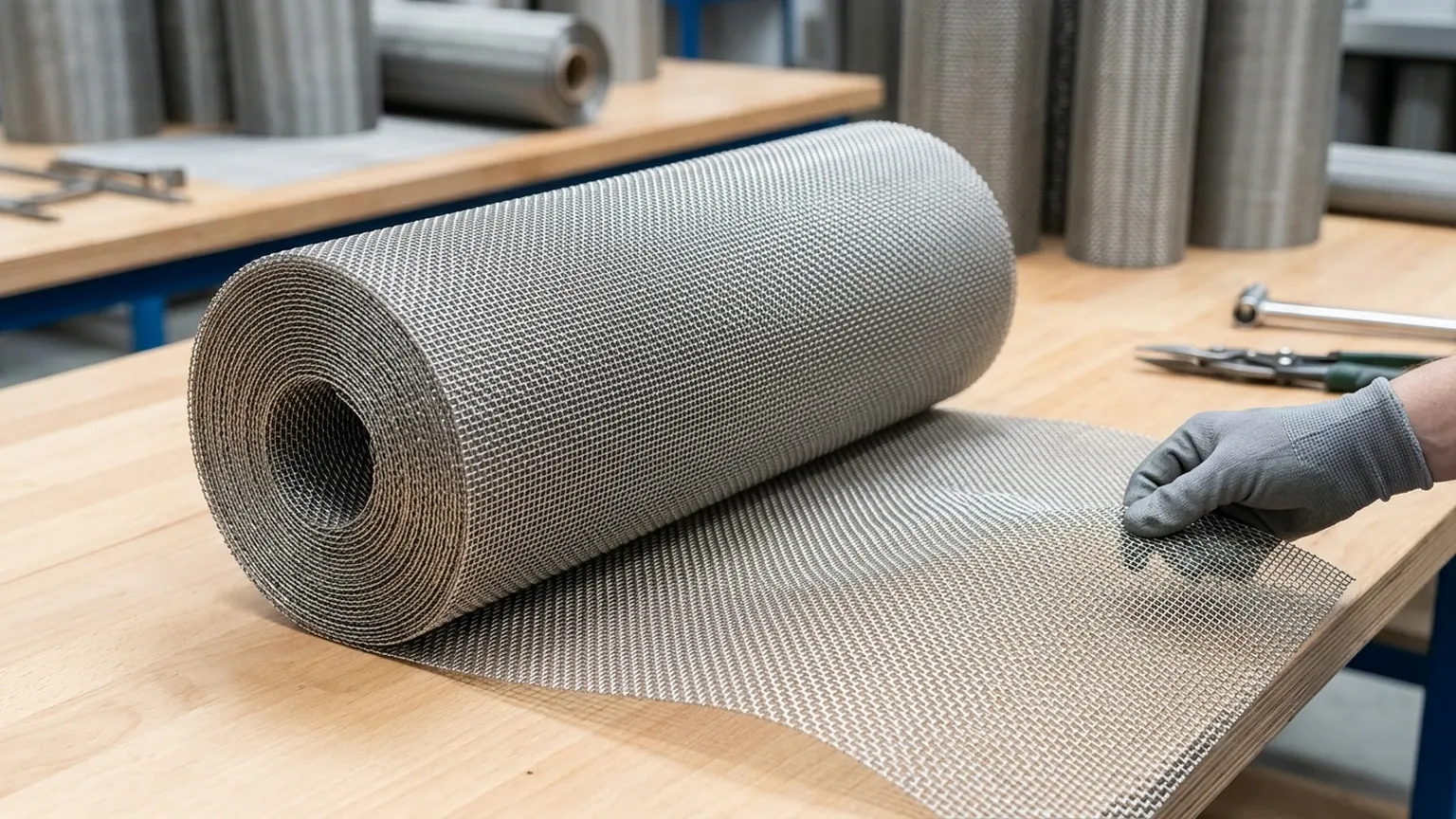
When engineers calculate the woven wire fence cost per foot, they must consider the format in which the material is delivered. Industrial mesh is typically produced in rolls of standard widths—most commonly 36, 48, or 60 inches.
Linear Foot vs. Square Foot Pricing
In the fencing industry, pricing is often quoted per linear foot for a specific height. In industrial procurement, however, pricing is frequently calculated by the square foot or square meter. To convert this to a "cost per foot" for a project like an industrial safety partition or a large-scale filtration intake, one must multiply the square foot price by the height of the roll.
For example, if a high-grade Plain, twill and dutch woven wire mesh in SS304/316L — rolls, cut mesh and framed panels. Send mesh count or micron target for a technical quote. is priced at $5.00 per square foot and the project requires a 4-foot high barrier, the cost per linear foot would be $20.00. This unit of measure is critical for budgeting large-scale industrial installations where hundreds or thousands of feet may be required.
Manufacturing Complexity
The weave type also plays a pivotal role in the final price. While a standard "Plain Weave" is the most economical, more complex patterns like "Twill Weave" or "Dutch Weave" require specialized machinery and slower production speeds. These weaves are often necessary for high-pressure filtration or specific architectural aesthetics, but they will result in a higher woven wire fence cost per foot compared to basic patterns.
Weave Types and Their Impact on Performance and Cost
Choosing the right weave is not just a matter of price; it is a matter of engineering suitability. Each weave pattern offers different levels of strength, flow rate, and filtration accuracy.
Plain Weave
The most common and cost-effective weave. Each shute wire passes over and under one warp wire. It provides a stable structure and is ideal for most general-purpose industrial screens and partitions. Because it is the simplest to manufacture, it typically represents the baseline for woven wire mesh pricing.
Twill Weave
In a twill weave, each shute wire passes over and under two warp wires. This allows for a heavier wire diameter to be used for a given mesh count, resulting in a stronger and more durable mesh. It is often used when the mesh must withstand significant mechanical stress. The added complexity of the weaving process increases the production cost.
Dutch Weave (Plain and Twill)
Dutch weaves utilize different diameters for the warp and shute wires. This creates a dense, robust mesh with very fine filtration capabilities. These are specialized products used almost exclusively in high-end industrial filtration (e.g., oil and gas, polymer filtration). Due to the high density of the wire and the precision required, Dutch weave mesh occupies the highest price bracket in the industry.
Technical Specifications for High-Performance Applications
For B2B purchasers in sectors like chemical processing or food and beverage, the woven wire fence cost per foot is secondary to the technical performance of the material. A failure in a filtration system or a breach in a high-security industrial enclosure can lead to costs far exceeding the initial material investment.
Aperture Precision and Micron Ratings
In filtration, the "aperture" or the size of the opening is critical. Industrial manufacturers like Kaifil provide mesh with precise micron ratings. Ensuring that the mesh consistently filters out particles of a specific size requires rigorous quality control. Buyers should confirm that the manufacturer adheres to international standards such as ISO 9044, which governs the industrial requirements and testing for woven wire cloth.
Structural Integrity and Tensile Strength
When used as a protective barrier or "fence" in an industrial setting, the tensile strength of the wire is paramount. Stainless steel mesh offers significantly higher impact resistance than galvanized or plastic alternatives. This durability ensures that the installation remains effective for decades, even in high-traffic or high-impact zones, effectively lowering the long-term cost of ownership.
Total Cost of Ownership (TCO) in Industrial Filtration
When evaluating the woven wire fence cost per foot, engineers must look beyond the initial purchase price. The Total Cost of Ownership (TCO) includes installation, maintenance, cleaning, and eventual replacement.
Durability and Corrosion Resistance
A lower-cost material that requires replacement every two years is significantly more expensive than a high-quality stainless steel mesh that lasts for twenty years. In corrosive environments, such as wastewater treatment plants or chemical labs, the use of SS316L is an investment in longevity. The resistance to oxidation and chemical degradation means fewer shutdowns for maintenance and replacement.
Cleanability and Reusability
Unlike disposable fabric or paper filters, stainless steel Woven Wire Mesh can be cleaned and reused multiple times. Techniques such as backwashing, ultrasonic cleaning, or chemical baths can restore the mesh to its original performance levels. This reusability is a key factor in reducing the operational budget of industrial filtration systems over time.
Procurement and Customization for B2B Buyers
To get an accurate quote and ensure the material meets project requirements, B2B buyers should be prepared to provide specific technical data to the manufacturer. Standard "off-the-shelf" fencing solutions rarely meet the needs of specialized industrial projects.
Custom Fabrication and Framing
Many industrial applications require the mesh to be cut to specific dimensions or integrated into frames. Kaifil provides custom fabrication services, including framed panels and cylindrical filter cartridges. While customization adds to the initial woven wire fence cost per foot, it significantly reduces on-site labor costs and ensures a precision fit, which is vital for maintaining the integrity of a filtration or security system.
Information to Confirm Before Ordering
Before proceeding with a purchase, engineers and purchasing teams should confirm the following with their supplier:
* Material Certification: Request mill test reports (MTRs) to verify the chemical composition of the stainless steel.
* Mesh Tolerances: Ensure the aperture size and wire diameter fall within the required tolerances for the specific application.
* Edge Treatment: Specify whether the mesh should have raw edges, folded edges, or be welded into a frame.
* Shipping and Handling: For large rolls or framed panels, logistics can impact the final landed cost per foot.
Conclusion
While the woven wire fence cost per foot is a useful metric for initial budgeting, industrial professionals must prioritize the technical specifications of the Woven Wire Mesh to ensure long-term success. By selecting the appropriate material grade, weave type, and customization options, engineers can achieve a filtration or enclosure solution that offers the best balance of performance and value. For those requiring high-precision stainless steel solutions, partnering with an experienced manufacturer like Kaifil ensures that every foot of mesh meets the rigorous demands of the industrial sector.
