


Filter Sock for Swimming Pool
In the field of aquatic maintenance and industrial water treatment, the efficiency of a filtration system is often determined by its primary defense layer. A filter sock for swimming pool applications serves as a critical pre-filtration component, designed to capture macroscopic debris before it enters the secondary filtration media or the mechanical pump assembly. For facility managers, engineers, and OEM designers, understanding the technical specifications and material science behind these components is essential for optimizing system longevity and reducing operational overhead.
Industrial-grade filtration requires a balance between flow rate, particle retention, and structural integrity. While residential applications may focus on simple debris removal, commercial and industrial water loops necessitate a more rigorous approach to filtration engineering. This guide examines the technical parameters of pool filter socks, the materials used in their construction, and the engineering considerations for large-scale aquatic systems.
The Engineering Role of Pre-Filtration in Aquatic Systems
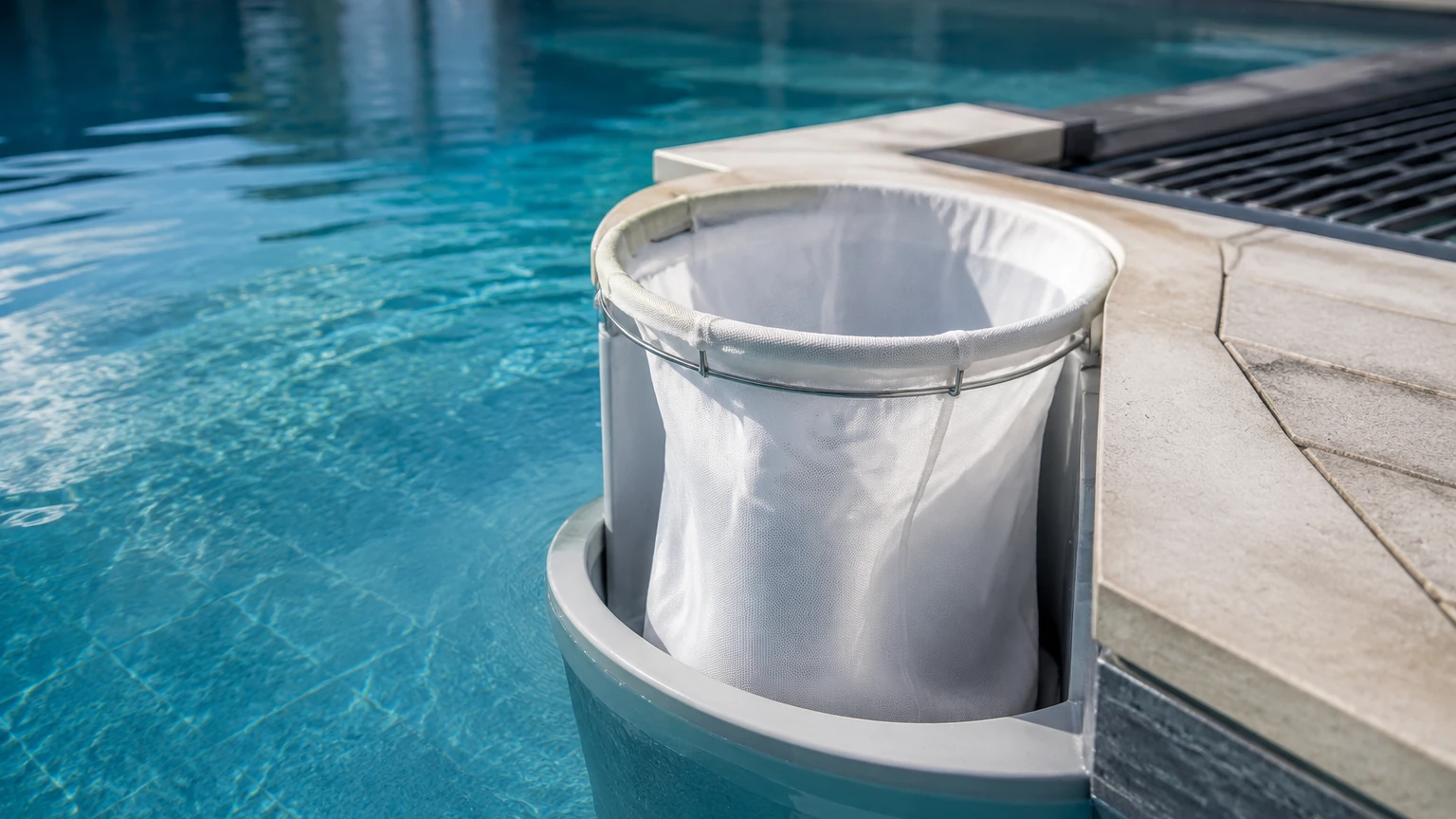
The primary function of a filter sock for swimming pool use is to act as a sacrificial barrier. By intercepting contaminants such as hair, lint, organic matter, and fine particulate at the skimmer or pump basket, the sock prevents these materials from clogging the more expensive and difficult-to-clean primary filter—whether that be a sand, diatomaceous earth (DE), or cartridge system.
From a fluid dynamics perspective, the introduction of a filter sock adds a layer of resistance to the system. Engineers must calculate the "clean pressure drop" (the initial reduction in pressure when the sock is first installed) and the "terminal pressure drop" (the point at which the sock is sufficiently loaded with debris that it significantly impedes flow). Maintaining a low pressure differential is vital for pump health, as excessive resistance can lead to cavitation and premature motor failure.
Material Selection and Durability
When selecting a filter sock for swimming pool environments, material compatibility is the foremost concern. These components are subjected to constant hydraulic pressure and chemical exposure, specifically chlorine, bromine, and various pH adjusters.
Synthetic Polymers
Most standard filter socks are manufactured from nylon or polyester mesh. These materials are chosen for their elasticity and resistance to chemical degradation.
- Nylon: Offers excellent abrasion resistance and is highly effective at capturing fine particles. However, it can be sensitive to prolonged exposure to high-acid environments.
- Polyester: Provides superior dimensional stability and resistance to UV degradation, making it suitable for outdoor commercial facilities.
Industrial Metal Mesh Alternatives
In high-demand industrial or commercial aquatic centers, synthetic socks may lack the structural rigidity required for high-flow pumps. In these scenarios, engineers often look toward stainless steel filtration components. While a traditional filter sock for swimming pool use is often disposable or semi-disposable, stainless steel mesh liners—such as those produced by specialized manufacturers—offer a permanent, high-strength alternative. These metal components provide precise micron ratings and can withstand significantly higher pressure differentials without tearing or bypassing. For more information on high-performance metal filtration solutions, professionals can visit the Main Page of industrial filtration experts.
Micron Ratings and Filtration Efficiency
Filtration efficiency is measured by the micron rating, which indicates the size of the particles the mesh can successfully intercept. For a filter sock for swimming pool skimmers, the micron rating typically ranges from 50 to 200 microns.
1. Coarse Filtration (150–200 Microns): Effective for capturing leaves, insects, and large organic debris. These socks have a lower pressure drop and require less frequent cleaning.
2. Fine Filtration (50–100 Microns): Capable of capturing pollen, fine sand, and even some oils. While these improve water clarity significantly, they increase the frequency of maintenance cycles due to faster loading rates.
In a B2B context, specifying the correct micron rating is a trade-off between water quality and labor costs. A finer mesh improves the aesthetic and sanitary quality of the water but increases the man-hours required for cleaning and replacement.
Hydraulic Impact and Pump Performance
Every component added to a water circulation loop contributes to the Total Dynamic Head (TDH). A filter sock for swimming pool use, particularly when it begins to accumulate debris, increases the TDH. For engineers designing commercial pump rooms, it is essential to account for this variable.
If a filter sock is too restrictive, the pump may struggle to move the required volume of water to meet turnover rate regulations (often 4 to 6 hours for commercial pools). This can lead to "dead zones" in the pool where chemical distribution is poor, increasing the risk of bacterial growth. Therefore, the surface area of the sock must be maximized to allow for high flow rates even as the mesh becomes partially blinded by contaminants.
Maintenance Cycles and Total Cost of Ownership (TCO)
For facility managers, the decision to implement a filter sock for swimming pool maintenance is often driven by a desire to reduce the Total Cost of Ownership. By protecting the main filter, the sock extends the time between backwashing (for sand filters) or chemical cleaning (for cartridge filters).
- Backwash Reduction: Every backwash cycle for a large commercial sand filter can waste thousands of gallons of heated, chemically treated water. By using a pre-filter sock, the frequency of these cycles can be reduced by up to 50%.
- Labor Efficiency: Cleaning a skimmer sock takes minutes, whereas deep-cleaning a primary filtration tank can take hours and may require system downtime.
However, the labor cost of checking and rinsing socks must be weighed against the savings in water and chemicals. In high-load environments, such as public water parks, automated pre-filtration systems or heavy-duty stainless steel baskets may be more cost-effective than manual synthetic socks.
Customization and OEM Considerations
Equipment manufacturers (OEMs) in the aquatic and water treatment sectors often require customized filtration components that fit specific housing geometries. A standard off-the-shelf filter sock for swimming pool skimmers may not suffice for specialized industrial equipment or high-velocity intake systems.
Customization options typically include:
- Variable Micron Gradation: Multi-layered socks that capture larger debris on the outer layer and finer particles on the inner layer.
- Reinforced Stitching: Utilizing ultrasonic welding or high-strength chemical-resistant threads to prevent seam failure under hydraulic surges.
- Integrated Gaskets: Ensuring a bypass-free seal between the sock and the housing to maintain filtration integrity.
For engineering teams developing new filtration hardware, partnering with a manufacturer that understands the nuances of stainless steel and synthetic mesh integration is vital. This ensures that the filtration component is not an afterthought but a precisely engineered part of the fluid management system.
Common Risks and Mitigation Strategies
While the benefits of using a filter sock for swimming pool applications are clear, there are technical risks that must be managed:
1. Flow Restriction: If a sock is left unattended, it can completely block the intake. In commercial systems, this can trigger low-flow alarms or cause pump overheating. Mitigation involves installing pressure sensors that alert staff when the differential pressure exceeds a set threshold.
2. Bypass: If the sock does not fit the basket perfectly, water will take the path of least resistance, bypassing the mesh entirely. Precision-fit OEM components are necessary to prevent this.
3. Chemical Degradation: In systems with high-dose chemical injection points located near the skimmer, synthetic socks can degrade rapidly. In these instances, upgrading to a 316L stainless steel mesh component is the recommended engineering solution.
Conclusion: Selecting the Right Solution
The implementation of a filter sock for swimming pool filtration is a strategic decision that affects the efficiency, cost, and longevity of the entire aquatic system. For residential use, simple nylon socks provide an easy fix for debris management. However, in B2B and industrial contexts, the focus shifts to material durability, hydraulic impact, and the integration of high-performance filtration media.
Engineers and purchasing teams should evaluate their specific turnover requirements and chemical environments before selecting a filtration partner. By focusing on high-quality materials and precise engineering, facilities can ensure optimal water clarity while protecting their most expensive mechanical assets. For those seeking robust, industrial-grade filtration components that go beyond standard consumer options, exploring professional manufacturing resources on the Main Page is the next logical step in system optimization.
