


Hydraulic Filter Element By Size
In industrial hydraulic systems, the selection of a replacement filter is a critical maintenance task that directly impacts the longevity of pumps, valves, and actuators. While performance specifications like micron ratings and beta ratios are essential, the physical dimensions of the component often serve as the primary starting point for procurement. Searching for a hydraulic filter element by size is a common practice for maintenance engineers and purchasing teams, particularly when dealing with legacy equipment, discontinued OEM parts, or custom-designed hydraulic power units (HPUs).
Correct sizing ensures not only a proper mechanical fit within the filter housing but also that the system maintains optimal flow characteristics and pressure differentials. As a professional manufacturer specializing in custom stainless steel filtration solutions, Kaifil provides high-performance components designed to meet the rigorous demands of industrial hydraulic applications. Understanding the nuances of filter dimensions, material properties, and engineering constraints is vital for selecting the right solution from the Main Page of a reputable supplier.
The Technical Importance of Filter Dimensions
When identifying a hydraulic filter element by size, three primary dimensions define the geometry of the component: the Outside Diameter (OD), the Inside Diameter (ID), and the Overall Length. Each of these measurements plays a specific role in the mechanical and functional integration of the filter into the hydraulic circuit.
Outside Diameter (OD)
The OD is perhaps the most restrictive dimension. If the OD is too large, the element will not fit into the filter bowl or housing. Conversely, if the OD is significantly smaller than the housing’s internal clearance, it may lead to unstable fluid flow or vibration within the housing, potentially causing mechanical wear or bypassing of the filter media. In pleated stainless steel elements, the OD also dictates the maximum surface area available for filtration; a larger OD allows for more pleats, which reduces the face velocity of the fluid and extends the service life of the element.
Inside Diameter (ID) and Connection Type
The ID is critical for ensuring a leak-proof seal with the housing’s center tube or mounting post. Hydraulic filters typically utilize one of several connection styles, such as a threaded base, a slip-on fit with O-ring seals, or a bayonet-style locking mechanism. Precision in ID measurement is paramount; even a millimeter of deviation can prevent the O-ring from seating correctly, leading to unfiltered fluid bypassing the media and entering the downstream system.
Overall Length
The length of the filter element determines the total volume of media and the total dirt-holding capacity. In systems where space is at a premium, engineers must balance the need for a compact footprint with the requirement for a low pressure drop. A longer filter element provides more surface area, which is particularly beneficial in high-viscosity applications or systems with high flow rates.
Engineering Considerations Beyond Physical Fit
While finding a hydraulic filter element by size ensures the part fits the housing, it does not guarantee performance. Engineers must consider how the physical size interacts with the hydraulic fluid's properties and the system's operational parameters.
Surface Area and Flow Velocity
The relationship between the size of the filter and the flow velocity is governed by the effective filtration area. In a stainless steel wire mesh filter, the open area of the mesh determines how much resistance the fluid encounters. If a filter is undersized for a specific flow rate, the fluid velocity through the media increases. This high velocity can cause "migration" of trapped contaminants through the mesh or lead to premature clogging. By selecting an element with an optimized size-to-flow ratio, users can ensure a lower initial clean pressure drop ($ΔP$), which improves energy efficiency and reduces the frequency of bypass valve activation.
Dirt-Holding Capacity and Service Life
A larger hydraulic filter element by size naturally offers more space to trap particles. For industrial applications in sectors like chemical processing or water treatment, where fluid contamination levels may be high, maximizing the size of the filter element within the available housing space is a cost-effective strategy. It reduces downtime associated with filter changes and lowers the total cost of ownership over the life of the machine.
The Role of Stainless Steel in Hydraulic Sizing
Kaifil specializes in stainless steel filtration solutions, which offer distinct advantages over traditional cellulose or glass fiber media when sizing hydraulic filters. Stainless steel wire mesh and sintered metal fibers provide structural rigidity that allows for more precise manufacturing tolerances.
Strength and Collapse Pressure
In high-pressure hydraulic systems, filter elements are subjected to significant structural stress. Traditional media often require heavy internal support cores to prevent collapse. Because stainless steel is inherently strong, Kaifil can design elements that maximize the internal flow path while maintaining high collapse pressure ratings. This is especially important when an engineer is searching for a hydraulic filter element by size for a high-pressure return line or a suction line where vacuum forces are present.
Reusability and Customization
Unlike disposable synthetic filters, stainless steel elements are often cleanable and reusable. When a specific size is no longer available from the original equipment manufacturer, custom-manufactured stainless steel filters provide a long-term solution. Kaifil’s ability to manufacture custom sizes allows engineers to retrofit older systems with modern, high-durability filtration components without needing to replace the entire housing assembly.
How to Accurately Measure a Hydraulic Filter Element
To ensure you receive the correct hydraulic filter element by size, precise measurement techniques must be employed. When measuring a used or sample element, follow these steps:
1. Measure the OD at Multiple Points: Use a digital caliper to measure the outside diameter at the top, middle, and bottom of the element. If the element is pleated, ensure you are measuring the outer edges of the pleats or the end caps.
2. Determine the ID of the Seals: Do not just measure the hole in the end cap; measure the internal diameter of the O-ring or gasket seating area. This is the dimension that determines the seal integrity.
3. Calculate the Overall Length: Measure from the furthest point of one end cap to the furthest point of the other. If the filter has a handle or a specialized fitting, include those in your technical drawing or description.
4. Identify the End Cap Style: Note whether the end caps are open on both ends (DOE) or open on one end with a bolt hole or handle on the other (SOE). Common configurations include Code 7 (226 O-rings/Fin), Code 3 (222 O-rings/Flat), and various NPT or BSP threaded connections.
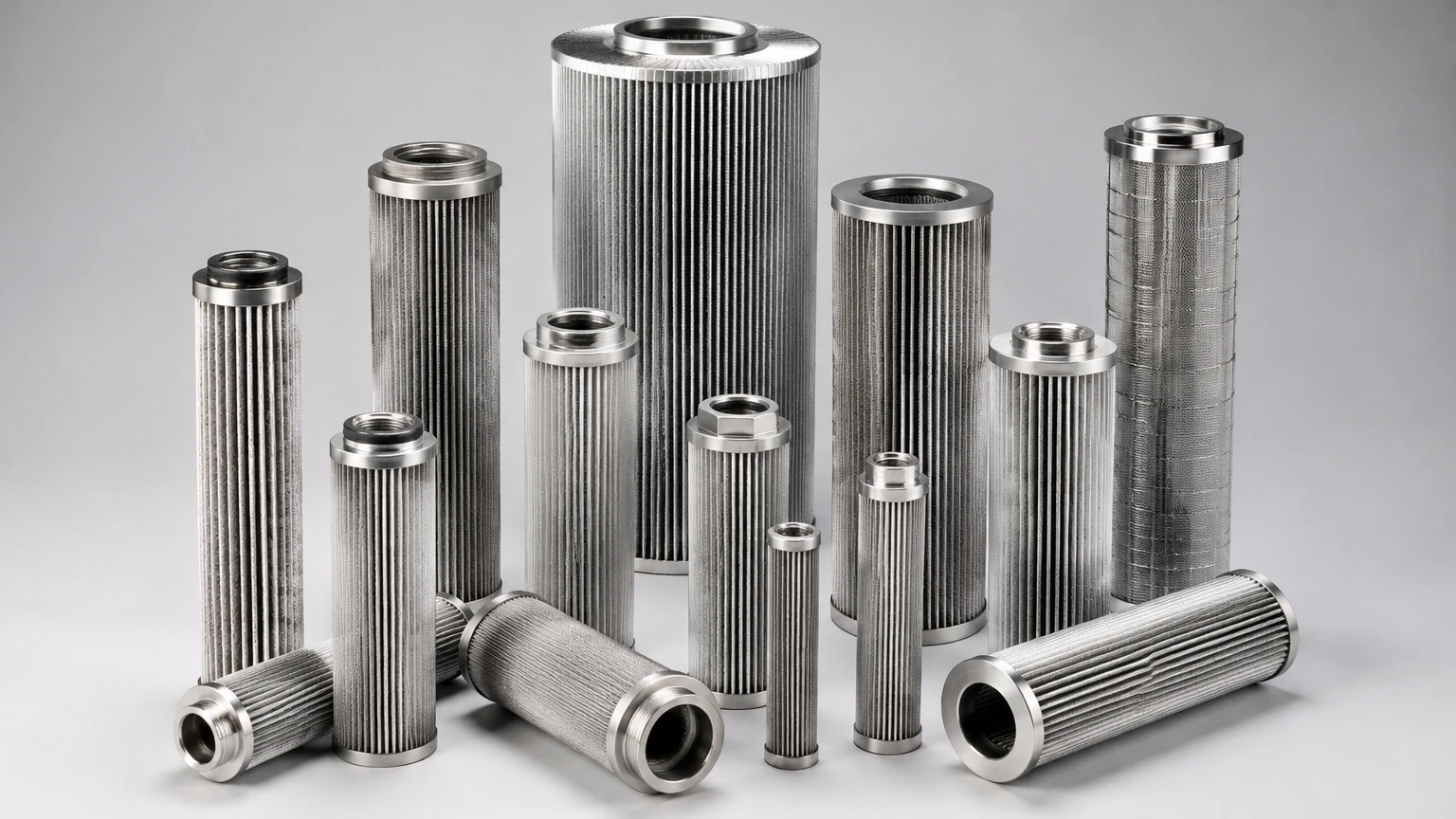
Custom Filtration Solutions for Demanding Applications
In many industrial environments, a standard off-the-shelf hydraulic filter element by size simply will not suffice. Factors such as extreme temperatures, chemically aggressive fluids, or specialized flow requirements necessitate a customized approach.
Material Compatibility
For hydraulic systems operating in the pharmaceutical or food and beverage industries, material compatibility is non-negotiable. Kaifil produces filters using 304 or 316L stainless steel, ensuring that the filter media does not react with the process fluid or shed fibers into the system. When sizing these filters, engineers must also consider the thermal expansion of the metal if the system operates at high temperatures, as this can affect the fit within the housing.
Precision Micron Ratings
Sizing is also related to the filtration accuracy required. A hydraulic filter element by size must also be specified by its micron rating. Whether the application requires coarse straining (100+ microns) or fine precision filtration (down to 1 micron), the choice of weave—such as plain weave, twilled weave, or Dutch weave—will impact the thickness of the media and, consequently, the internal dimensions of the pleat pack.
Common Risks of Incorrect Sizing
Selecting a hydraulic filter element by size without verifying secondary specifications can lead to several system failures:
* Bypass Leakage: If the ID or O-ring size is slightly off, contaminated fluid will take the path of least resistance, bypassing the filter entirely and damaging sensitive downstream components like servo valves.
* Excessive Pressure Drop: An element that is physically smaller than the original may have significantly less surface area, leading to a high $ΔP$. This can trigger false alarms in monitoring systems or cause the pump to cavitate.
* Mechanical Fatigue: If the filter does not fit snugly within the housing, the constant pulsation of hydraulic fluid can cause the element to vibrate, leading to fatigue cracks in the end caps or the media itself.
Why Choose Kaifil for Your Filtration Needs?
As a dedicated manufacturer, Kaifil understands that industrial filtration is not a one-size-fits-all commodity. Our expertise in stainless steel wire mesh and precision metal components allows us to support customers who need reliable replacements or innovative designs for new machinery. By focusing on quality and durability, we ensure that every hydraulic filter element by size we produce meets or exceeds the performance of the original component.
Our manufacturing process includes rigorous quality control to ensure that dimensions are held to tight tolerances. This precision is what allows our filters to perform reliably in demanding sectors such as hydraulic power generation, oil and gas, and heavy industrial manufacturing. For technical teams looking to optimize their filtration systems, reviewing product options and application support on our Main Page is the first step toward achieving superior fluid cleanliness.
Conclusion
Selecting a hydraulic filter element by size is a foundational step in maintaining the health of a hydraulic system. However, a successful procurement process requires a holistic view that combines physical dimensions with material science and fluid dynamics. By understanding the critical roles of OD, ID, and length, and by opting for high-quality stainless steel constructions, engineers can ensure their systems remain efficient and protected. Whether you are replacing a standard element or requiring a custom-engineered solution for a complex industrial application, Kaifil provides the technical expertise and manufacturing capability to deliver precision filtration components that fit perfectly and perform reliably under pressure.
