


Woven Wire Mesh for Cabinet Doors: A Technical Guide for Industrial Applications
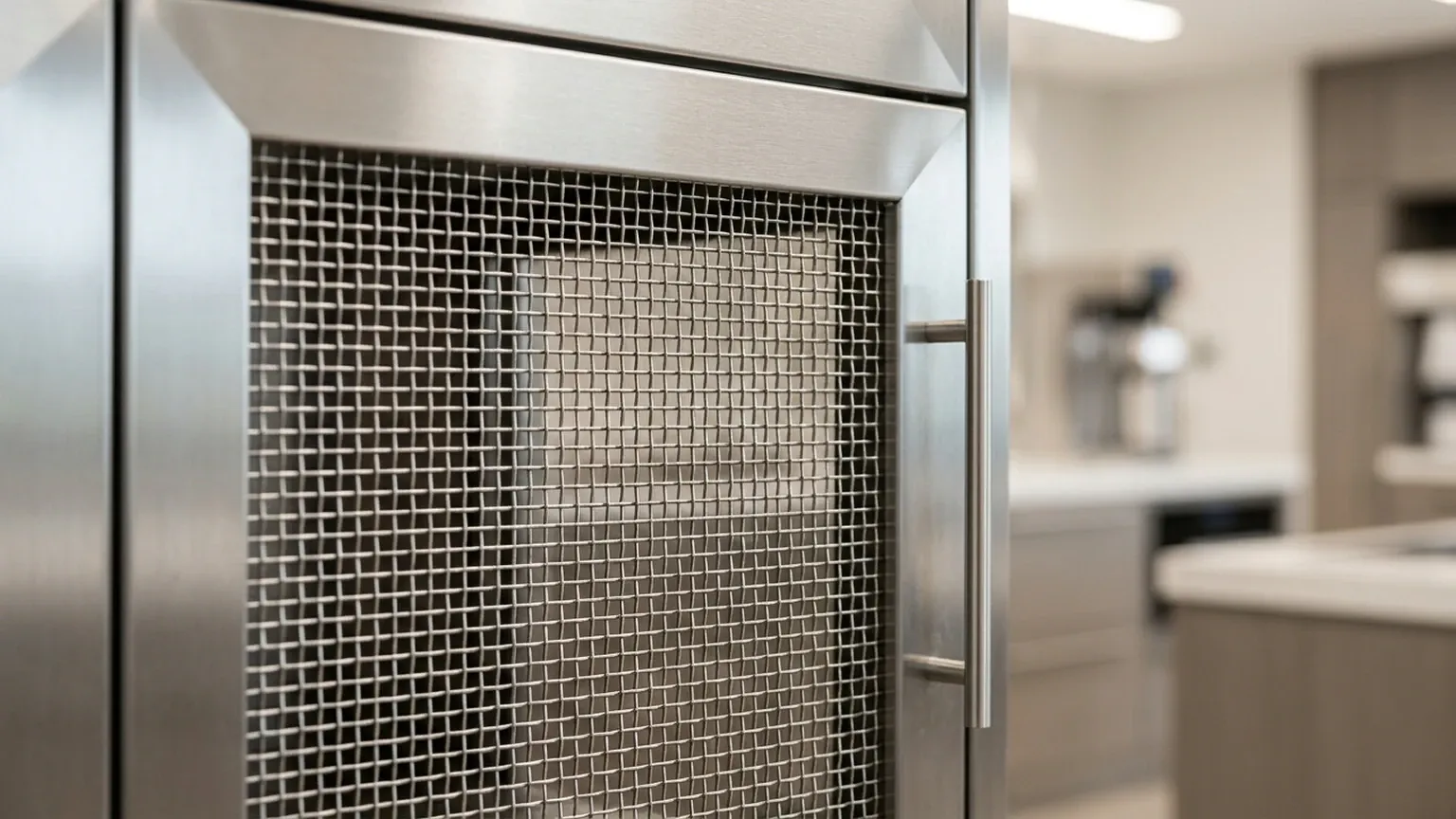
In industrial and commercial environments, the selection of materials for equipment enclosures and storage units is driven by a balance of structural integrity, environmental resistance, and functional performance. While often associated with architectural aesthetics, woven wire mesh for cabinet doors serves critical engineering roles in sectors ranging from chemical processing and pharmaceuticals to food production and electronics housing.
Unlike solid panels, woven wire mesh provides a semi-permeable barrier that facilitates airflow, visibility, and safety without compromising the security of the contents. For engineers and procurement professionals, understanding the technical specifications of Woven Wire Mesh—including material grades, weave patterns, and open area calculations—is essential for optimizing the performance and longevity of industrial cabinetry.
The Role of Woven Wire Mesh in Industrial Cabinetry
Industrial cabinet doors are rarely just about containment. In many applications, they must perform specific mechanical or thermal functions. Woven wire mesh is frequently specified for these components due to its unique combination of strength and permeability.
Ventilation and Thermal Management
In electrical enclosures or server cabinets, heat dissipation is a primary concern. Solid doors can trap heat, leading to equipment failure. By utilizing a specific mesh count and wire diameter, engineers can calculate the exact open area required to maintain passive or active airflow while preventing unauthorized access or the ingress of large debris.
Visibility and Inspection
In laboratory and pharmaceutical settings, it is often necessary to verify the presence or status of contents without opening the cabinet. Woven wire mesh allows for visual inspection while maintaining a physical barrier, which is particularly useful in safety-critical environments where frequent door opening could disrupt temperature controls or increase the risk of contamination.
Durability in Harsh Environments
Standard decorative meshes often lack the structural rigidity required for industrial use. Industrial-grade woven wire mesh, particularly when manufactured from stainless steel, offers high impact resistance and can withstand the rigors of heavy-duty use in factories, offshore platforms, and chemical plants.
Material Selection: SS304 vs. SS316
The performance of woven wire mesh for cabinet doors is largely dictated by the alloy used in its construction. As a specialist in stainless steel filtration and mesh solutions, Kaifil emphasizes the importance of matching the material grade to the operating environment.
Stainless Steel 304 (SS304)
SS304 is the most common grade used for industrial mesh. It offers excellent corrosion resistance in most atmospheric conditions and is highly weldable, making it ideal for mesh panels that must be integrated into larger frame structures. It is a cost-effective solution for general industrial storage, tool cabinets, and non-corrosive manufacturing environments.
Stainless Steel 316 (SS316/316L)
For applications involving exposure to chlorides, marine environments, or aggressive cleaning chemicals (common in the food and beverage and pharmaceutical industries), SS316 is the preferred choice. The addition of molybdenum enhances its resistance to pitting and crevice corrosion. When specifying mesh for cabinets in wash-down areas or chemical storage rooms, the long-term durability of SS316 often justifies the higher initial investment by reducing replacement frequency.
Engineering Specifications: Weave Types and Mesh Count
When selecting Plain, twill and dutch woven wire mesh in SS304/316L — rolls, cut mesh and framed panels. Send mesh count or micron target for a technical quote., the weave type significantly impacts both the mechanical strength and the visual transparency of the cabinet door.
Plain Weave
This is the most straightforward and common weave, where each warp wire crosses alternately over and under each shute wire. It provides a consistent opening size and is highly stable. For cabinet doors, plain weave is often selected for its clean, industrial look and predictable airflow characteristics.
Twill Weave
In a twill weave, each warp and shute wire passes over two and under two successive wires. This allows for the use of heavier wire diameters for a given mesh count, resulting in a stronger and more rigid panel. Twill weave is often specified for larger cabinet doors where extra structural support is needed to prevent sagging or deformation over time.
Mesh Count and Wire Diameter
The "mesh count" refers to the number of openings per linear inch. A higher mesh count results in smaller openings and finer filtration/visibility. However, the wire diameter must also be considered. A thick wire with a low mesh count creates a very robust, "heavy-duty" appearance and feel, whereas a fine wire with a high mesh count provides a more translucent, screen-like effect. Engineers must balance the need for security (thicker wire) with the need for airflow (higher open area).
Calculating Open Area for Functional Performance
For B2B applications, the "Open Area" percentage is a critical metric. This value determines how much air can pass through the cabinet door and is calculated using the following formula:
Open Area % = (Space / (Space + Wire Diameter))² x 100
* Space: The distance between adjacent wires.
* Wire Diameter: The thickness of the individual wire.
If a cabinet houses heat-generating components, such as power supplies or motors, the mesh must provide a minimum open area (often 40% to 60%) to ensure sufficient cooling. Conversely, if the cabinet is intended to protect sensitive equipment from larger particles while still allowing air to circulate, a tighter mesh with a lower open area may be appropriate.
Customization and OEM Integration
Industrial projects often require bespoke solutions that go beyond off-the-shelf mesh rolls. Customization is a core capability of manufacturers like Kaifil, providing several advantages for cabinet door production:
1. Precision Cutting: Mesh can be cut to exact dimensions using laser or waterjet technology to ensure a perfect fit within the door frame, reducing waste and assembly time.
2. Framing and Edging: To ensure safety and structural integrity, woven wire mesh for cabinet doors is often supplied with U-edging or integrated into custom metal frames. This prevents the sharp edges of the mesh from being exposed and provides secure mounting points for hinges and latches.
3. Surface Finishes: While stainless steel is naturally resistant to corrosion, additional finishes such as electropolishing can be applied. Electropolishing removes surface impurities and creates a high-luster finish that is even easier to clean, which is a requirement in sterile environments like hospitals or cleanrooms.
4. Pre-Forming: For specialized equipment housings, mesh can be formed or bent into specific shapes before delivery, allowing for seamless integration into complex cabinet designs.
Maintenance and Lifecycle Considerations
One of the primary reasons B2B buyers select stainless steel woven wire mesh for cabinet doors is the low total cost of ownership (TCO). Unlike plastic inserts or painted carbon steel, stainless steel mesh does not chip, crack, or require frequent repainting.
Cleaning Protocols
In food processing or pharmaceutical applications, hygiene is paramount. Stainless steel mesh can withstand high-pressure wash-downs, steam cleaning, and harsh sanitizing agents without degrading. Its non-porous surface prevents the growth of bacteria and mold, making it a superior choice for sanitary cabinetry.
Durability and Replacement
Under normal operating conditions, a high-quality stainless steel mesh panel can last the entire lifespan of the cabinet. However, in high-traffic industrial environments, physical damage can occur. Because woven mesh is modular, individual panels can often be replaced within their frames without needing to replace the entire door assembly, providing a sustainable and cost-effective maintenance path.
Key Questions for Procurement and Engineering
Before finalizing a specification for woven wire mesh for cabinet doors, technical teams should confirm the following details with their supplier:
* What is the primary function? (e.g., airflow, security, visibility, or debris protection)
* What is the environmental exposure? (e.g., indoor, outdoor, chemical exposure, or high humidity)
* What are the structural requirements? (Does the mesh need to be rigid enough to support its own weight, or will it be fully supported by a frame?)
* What is the required open area? (Calculated based on thermal or ventilation needs)
* Are there specific regulatory standards? (e.g., FDA compliance for food contact or specific ISO standards for cleanroom equipment)
Conclusion
Woven wire mesh is a versatile and high-performance material that offers significant advantages for industrial cabinet doors. By selecting the appropriate material grade, weave type, and technical specifications, engineers can ensure that their cabinetry meets the demanding requirements of modern industrial environments. Whether the goal is to improve thermal management in an electronics rack or to ensure hygienic storage in a food processing plant, Woven Wire Mesh provides a durable, functional, and professional solution.
As a professional manufacturer, Kaifil supports global customers with precision-engineered filtration and mesh components, ensuring that every specification—from mesh count to custom framing—is met with technical accuracy and quality assurance.
