


Gas Condenser
In the landscape of industrial thermal management, the gas condenser serves as a critical component for phase-change heat transfer. Its primary function—converting a substance from its gaseous state to a liquid state through the removal of latent heat—is fundamental to power generation, chemical processing, refrigeration, and HVAC systems. For engineers and procurement specialists, understanding the technical nuances of gas condenser design, material selection, and the integration of high-performance filtration is essential for ensuring system longevity and operational efficiency.
As industrial processes become more demanding, the reliance on robust components, such as those provided on the Kaifil Main Page, becomes paramount. Protecting the internal surfaces of a gas condenser from fouling and corrosion is not merely a maintenance preference but a technical necessity for maintaining optimal heat transfer coefficients.
Fundamentals of Gas Condenser Operation
A gas condenser operates on the principle of heat exchange between a hot vapor and a cooling medium (typically water or air). As the gas loses energy to the cooling medium, it reaches its saturation temperature and undergoes a phase change. This process involves several distinct stages of heat transfer:
1. Desuperheating: The sensible heat is removed from the gas until it reaches its dew point.
2. Condensation: The latent heat of vaporization is removed at a constant temperature (for pure substances), resulting in the formation of liquid droplets on the heat exchange surfaces.
3. Subcooling: The resulting liquid is further cooled below its saturation temperature to prevent re-evaporation or cavitation in downstream pumps.
The efficiency of this process is governed by the overall heat transfer coefficient (U-value), which is influenced by the thermal conductivity of the materials, the flow velocities of both fluids, and the presence of any insulating layers, such as scale or particulate buildup.
The Critical Role of Filtration in Gas Condensation Systems
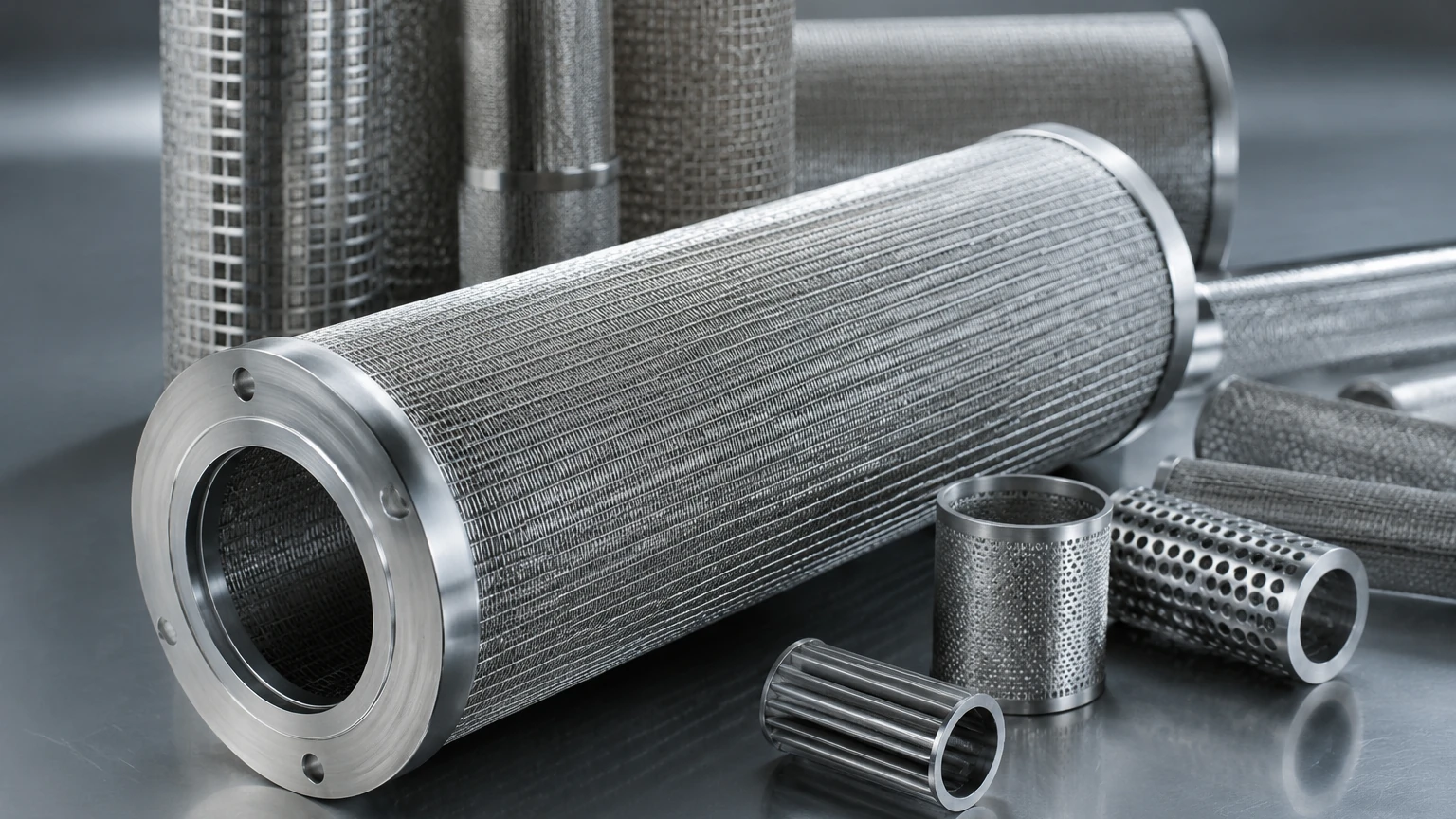
One of the most significant threats to gas condenser performance is the presence of contaminants within the gas or cooling fluid streams. Particulates, aerosols, and corrosive agents can drastically reduce the efficiency of the heat exchange process. This is where precision filtration components, such as stainless steel wire mesh and sintered metal filters, become indispensable.
Protecting Heat Exchange Surfaces
In shell-and-tube or plate-type condensers, the narrow channels and tube surfaces are susceptible to fouling. Even a thin layer of particulate matter can act as an insulator, significantly increasing thermal resistance. By implementing high-efficiency pre-filtration, engineers can ensure that the gas entering the condenser is free from solids that might adhere to the surfaces.
Preventing Erosion and Corrosion
High-velocity gas streams carrying abrasive particles can lead to mechanical erosion of the condenser tubes, particularly at the entry points or bends. Furthermore, chemical contaminants can trigger localized corrosion, such as pitting or stress corrosion cracking. Utilizing stainless steel filtration solutions allows for the removal of these harmful elements before they reach the sensitive internal components of the gas condenser.
Engineering Material Selection for Gas Condensers
The choice of material for both the condenser and its integrated filtration components is determined by the operating environment, including temperature, pressure, and the chemical composition of the fluids. Stainless steel remains the industry standard for demanding applications due to its superior mechanical properties and resistance to oxidation.
Type 304 and 316L Stainless Steel
For most industrial gas condensers, Type 304 stainless steel provides adequate corrosion resistance and structural integrity. However, in environments involving chlorides or acidic vapors—common in chemical processing—Type 316L is preferred. The addition of molybdenum in 316L enhances its resistance to pitting and crevice corrosion, ensuring a longer service life for the filtration mesh and the condenser tubes themselves.
Advanced Alloys for Extreme Conditions
In highly aggressive environments, such as those found in offshore oil and gas or specialized chemical synthesis, duplex stainless steels or high-nickel alloys may be required. These materials offer exceptional strength and resistance to stress corrosion cracking, which is vital when the gas condenser operates under high pressure or fluctuating thermal loads.
Types of Gas Condensers and Their Specific Requirements
Different industrial applications require specific condenser configurations, each with unique filtration and maintenance considerations.
Shell and Tube Condensers
These are the most common type in heavy industry. They consist of a large cylindrical shell containing a bundle of tubes. One fluid flows through the tubes while the gas to be condensed flows over the tubes within the shell. Filtration is required on both sides: the tube side to prevent clogging of the small-diameter tubes, and the shell side to protect the external tube surfaces from gas-borne contaminants.
Plate Heat Exchanger Condensers
Plate condensers utilize a series of thin, corrugated metal plates to transfer heat between the two fluids. They offer a very high surface-area-to-volume ratio, making them highly efficient. However, the narrow gaps between plates are extremely sensitive to particulate fouling. Precision wire mesh filters are mandatory in these systems to prevent blockages that could lead to significant pressure drops and reduced thermal performance.
Air-Cooled Condensers (ACC)
Often used in power plants and refineries where water is scarce, ACCs use ambient air to condense the gas. While the gas side still requires protection, the external cooling fins must be kept clean of atmospheric dust and debris to maintain airflow and heat dissipation efficiency.
Performance Optimization and Fouling Prevention
Fouling is defined as the accumulation of unwanted material on the heat transfer surfaces. In a gas condenser, this can take several forms:
* Particulate Fouling: Accumulation of dust, rust, or scale from the piping system.
* Chemical Fouling: Precipitation of salts or polymerization of hydrocarbons on hot surfaces.
* Biological Fouling: Growth of algae or bacteria in water-cooled systems.
To mitigate these risks, engineers must specify filtration systems with the correct micron rating. For example, a sintered metal filter with a 10-micron rating may be necessary for protecting high-precision plate condensers, while a coarser 50-micron stainless steel mesh might suffice for large-scale shell and tube systems. Regular monitoring of the pressure differential ($ΔP$) across the filter and the condenser is the most effective way to schedule maintenance before performance degrades significantly.
Customization and Selection Criteria for Filtration Components
When selecting filtration components for a gas condenser system, several technical factors must be evaluated to ensure compatibility and performance.
Micron Rating and Filtration Efficiency
The micron rating must be balanced against the allowable pressure drop. A finer filter provides better protection but may require more frequent cleaning or a larger surface area to maintain flow rates. Engineers should consult with manufacturers like Kaifil to determine the optimal balance for their specific gas velocity and particulate load.
Structural Integrity and Pressure Resistance
Gas condensers often operate under vacuum or high-pressure conditions. The filtration elements must be designed to withstand these pressures without deforming. Sintered wire mesh is particularly effective here, as the sintering process bonds the wire layers together, creating a rigid and durable structure that maintains its pore size even under mechanical stress.
Temperature Stability
Since condensation involves significant temperature gradients, the filter media and its housing must be thermally stable. Stainless steel components are ideal as they maintain their mechanical properties across a wide temperature range, from cryogenic levels to high-temperature steam applications.
Maintenance and Total Cost of Ownership (TCO)
While the initial capital expenditure for high-quality stainless steel filtration may be higher than plastic or disposable alternatives, the total cost of ownership is significantly lower. Stainless steel filters are cleanable and reusable, reducing waste and replacement costs. Methods such as backwashing, ultrasonic cleaning, or chemical immersion can restore the filter to its original performance levels.
Furthermore, the protection provided by these filters extends the time between major condenser overhauls. In many industrial settings, the cost of a single day of unplanned downtime far exceeds the investment in a premium filtration solution. By ensuring the gas condenser remains clean, the system operates at peak energy efficiency, reducing fuel or electricity consumption over the life of the plant.
Conclusion
The gas condenser is a cornerstone of modern industrial thermal processes. Its ability to efficiently manage phase changes is directly linked to the cleanliness of the fluids involved. By integrating advanced stainless steel filtration solutions—tailored to the specific demands of the application—engineers can protect their equipment from the debilitating effects of fouling, erosion, and corrosion.
When designing or upgrading a condensation system, it is vital to work with a manufacturer that understands the complexities of industrial filtration. From selecting the right alloy to customizing the mesh structure for specific pressure and flow requirements, professional engineering support ensures that the gas condenser performs reliably for years to come. For more information on custom filtration components designed for industrial applications, visit the Kaifil Main Page.
