


Reverse Pulse Jet Filter
In industrial air pollution control and process filtration, the reverse pulse jet filter stands as one of the most efficient and widely adopted technologies for continuous dust collection and particulate separation. Unlike traditional filtration systems that require downtime for manual cleaning or mechanical shaking, the reverse pulse jet mechanism allows for "on-line" cleaning, ensuring that industrial processes can operate 24/7 without interruption. For engineers and facility managers, understanding the technical nuances of these systems—from the physics of the pulse to the metallurgy of the filter media—is essential for optimizing system longevity and filtration efficiency.
At its core, a reverse pulse jet filter utilizes high-pressure compressed air to dislodge accumulated dust from the surface of the filter media. This technology is critical in sectors such as chemical processing, pharmaceutical manufacturing, and food production, where maintaining a clean environment and recovering valuable product fines are paramount. As a manufacturer specializing in high-performance filtration components, Kaifil provides the precision-engineered stainless steel elements required to sustain these demanding operations.
Understanding the Mechanism of Reverse Pulse Jet Filtration
The operational efficiency of a reverse pulse jet filter relies on a sophisticated balance of aerodynamics and mechanical timing. The process typically involves a series of filter elements—either bags or rigid cartridges—suspended within a housing. Dust-laden air enters the housing, and as it passes through the filter media, particulates are trapped on the exterior surface, forming what is known as a "dust cake."
As the dust cake thickens, the differential pressure across the filter increases. To maintain airflow, the system initiates a cleaning cycle. A solenoid valve opens for a fraction of a second (typically 0.05 to 0.1 seconds), releasing a blast of compressed air into a manifold located above the filter elements. This high-pressure air is directed through a venturi nozzle at the top of each filter. The resulting shockwave and momentary reversal of airflow cause the filter media to expand rapidly, shattering the dust cake and allowing it to fall into a collection hopper below.
Because only a small row of filters is pulsed at any given time, the remainder of the system continues to filter the process air. This continuous operation is the primary advantage of the reverse pulse jet filter over shakers or reverse-air systems. However, the effectiveness of this pulse depends heavily on the structural integrity of the filter media and the precision of the internal components.
Critical Components and Material Selection
While the housing and the pulse valves are vital, the performance of a reverse pulse jet filter is ultimately determined by the filter media. In many standard applications, needle-felt fabrics are used. However, in high-temperature, corrosive, or high-pressure environments, synthetic fabrics often fail. This is where stainless steel filtration solutions become indispensable.
Stainless Steel Wire Mesh and Sintered Elements
For applications involving aggressive chemicals or temperatures exceeding 250°C, stainless steel wire mesh or sintered metal filter cartridges are the preferred choice. These materials offer several engineering advantages:
* Thermal Stability: Unlike polyester or aramid fibers, stainless steel maintains its structural integrity at extreme temperatures, preventing media migration and bypass.
* Chemical Compatibility: In chemical processing, where filters may be exposed to acidic or alkaline vapors, 304 or 316L stainless steel provides the necessary corrosion resistance to prevent premature failure.
* Mechanical Strength: The high-pressure pulse of a reverse pulse jet system exerts significant mechanical stress on the filter. Stainless steel elements can withstand repeated pulsing without the stretching or tearing common in fabric bags.
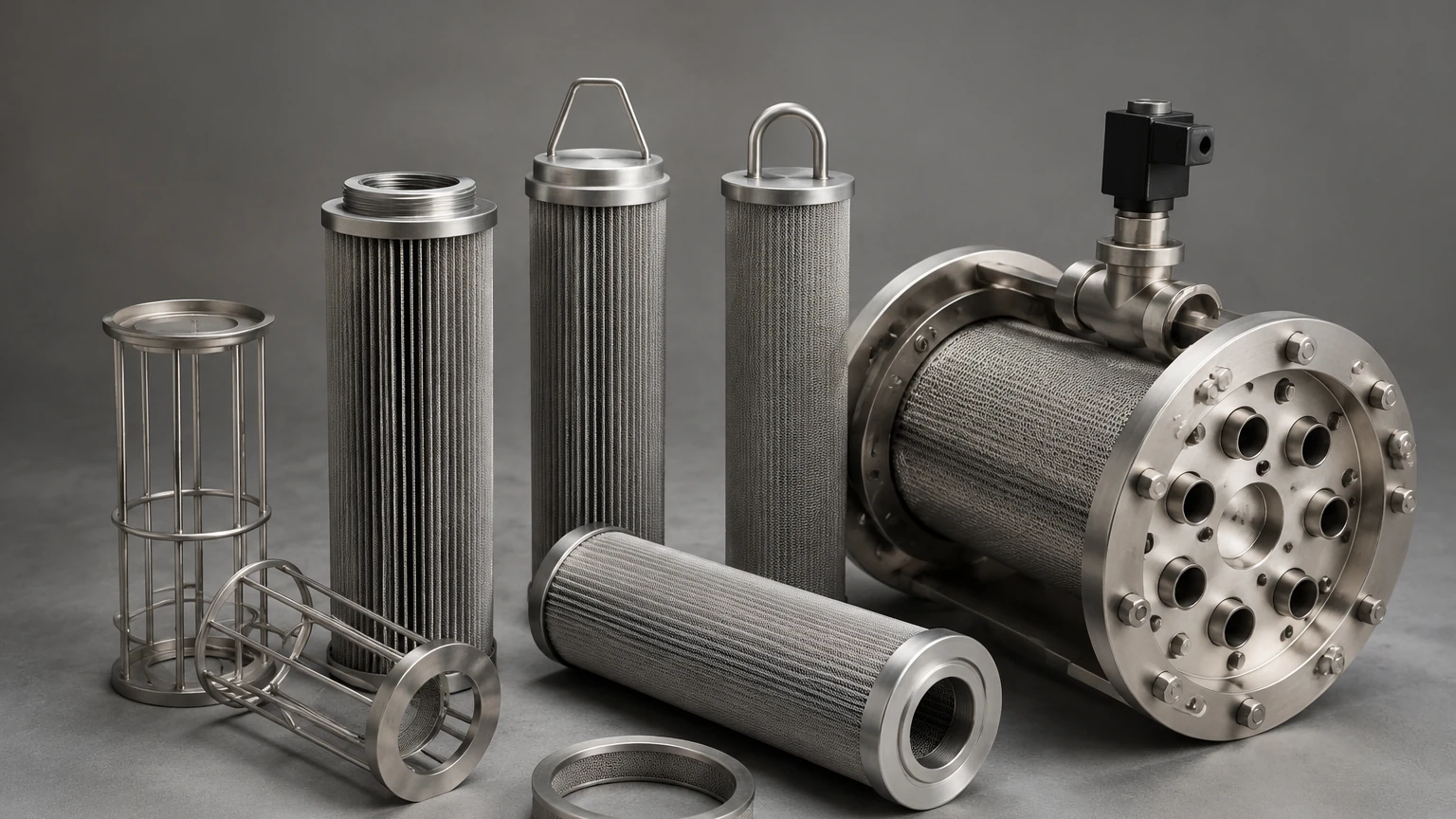
Kaifil specializes in the production of these high-durability components. By integrating advanced wire mesh structures with precision-engineered support cores, these filters ensure that the reverse pulse jet filter operates at peak efficiency even in the most hostile industrial environments.
Engineering Evaluation Criteria for System Design
When specifying a reverse pulse jet filter, engineers must look beyond the initial purchase price and focus on technical parameters that influence long-term performance. Several key metrics define the suitability of a system for a specific application.
Air-to-Cloth Ratio
The Air-to-Cloth (A/C) ratio, or filtration velocity, is the volume of air passing through each square foot of filter media per minute (CFM/ft²). A ratio that is too high can lead to "blinding," where particles are driven so deeply into the media that the pulse jet cannot remove them. Conversely, a ratio that is too low results in an oversized, unnecessarily expensive system. For metal-based media, the A/C ratio must be carefully calculated based on the particle size distribution and the specific gravity of the dust.
Can Velocity and Interstitial Velocity
Can velocity refers to the upward velocity of the air within the filter housing. If the can velocity is higher than the settling velocity of the dust particles, the dust dislodged during the pulse cycle will simply be re-entrained onto the filter rather than falling into the hopper. Proper housing design and filter spacing are critical to ensuring that the reverse pulse jet filter effectively clears the dust.
Compressed Air Quality
The pulse jet mechanism requires clean, dry compressed air. Moisture in the air lines can lead to the agglomeration of dust on the filter media, a condition known as "mudding." Furthermore, oil contamination from compressors can degrade fabric filters or clog the fine pores of stainless steel mesh. Engineers should ensure that the system includes adequate filtration and drying for the pulse-air supply.
Operational Challenges and Troubleshooting
Even a well-designed reverse pulse jet filter can encounter operational hurdles. Identifying these early through technical monitoring can prevent costly unplanned downtime.
1. High Differential Pressure: This is often the first sign of trouble. It may indicate that the cleaning cycle is too infrequent, the pulse pressure is too low, or the filter media has reached the end of its life due to irreversible blinding.
2. Pulse Valve Failure: If a solenoid valve sticks or the diaphragm ruptures, the cleaning pulse will be weak or non-existent. Regular inspection of the manifold and valves is a standard maintenance requirement.
3. Media Abrasion: In systems handling abrasive dusts (such as silica or metal fines), the high-velocity air can wear down the filter elements. Using reinforced stainless steel mesh or specialized coatings can significantly extend the replacement cycle.
For those seeking to optimize their current systems or design new filtration units, reviewing technical documentation is a vital first step. You can Review product options and application support on our Main Page to understand how custom-engineered metal components can mitigate these common operational risks.
Total Cost of Ownership and Maintenance Cycles
In a B2B procurement context, the Total Cost of Ownership (TCO) of a reverse pulse jet filter includes the initial capital expenditure, energy consumption (compressed air and fan power), and maintenance costs (replacement filters and labor).
While stainless steel filter elements have a higher upfront cost compared to disposable fabric bags, their TCO is often lower in demanding applications. The durability of metal allows for many more cleaning cycles and, in some cases, the ability to ultrasonically clean and reuse the elements multiple times. This reduces the frequency of replacement and the associated labor costs. Furthermore, the lower stable pressure drop achieved by high-quality metal media translates directly into reduced energy consumption for the system's primary induction fan.
Maintenance cycles should be data-driven. By tracking the differential pressure over time, maintenance teams can predict exactly when a filter set is nearing the end of its effective life. This proactive approach prevents the "emergency" replacements that disrupt production schedules.
Customization Options for Demanding Industrial Environments
No two industrial processes are identical, and a one-size-fits-all approach to filtration often leads to inefficiency. Customization is the hallmark of a high-performing reverse pulse jet filter system.
At Kaifil, we recognize that engineers require filtration components tailored to specific flow rates, chemical exposures, and micron ratings. Customization options include:
* Variable Mesh Weaves: Selecting specific weave patterns (such as Dutch weave or twilled weave) to balance flow resistance with particle retention.
* Sintered Laminates: Combining multiple layers of wire mesh into a single, rigid plate or tube to provide both fine filtration and high structural strength.
* Custom End Fittings: Ensuring that replacement cartridges fit perfectly into existing housings from any OEM, eliminating the need for expensive system modifications.
By focusing on these engineering details, we help our clients achieve filtration performance that meets the strict regulatory requirements of the pharmaceutical and food industries while maintaining the ruggedness needed for heavy industrial chemical processing.
Conclusion: Selecting the Right Partner for Filtration Excellence
The reverse pulse jet filter remains a cornerstone of industrial air and gas management. Its ability to provide continuous, high-efficiency filtration makes it indispensable for modern manufacturing. However, the success of the system depends on the quality of its components and the engineering logic behind its selection.
When evaluating filtration solutions, it is essential to partner with a manufacturer that understands the technical demands of your specific industry. From material selection to the precision of the final weld, every detail impacts the reliability of your process. For more information on our manufacturing capabilities and to explore our full range of stainless steel filtration products, visit our Main Page. Our team of experts is ready to assist you in developing a customized solution that optimizes your filtration performance and reduces your long-term operational costs.
