


Filtro Autopulente Automatico
In industrial fluid management, the efficiency of a filtration system directly impacts the longevity of downstream equipment and the overall quality of the final product. The transition from manual filtration to the use of a filtro autopulente automatico (automatic self-cleaning filter) represents a significant advancement in process engineering. These systems are designed to remove suspended solids from liquids without interrupting the flow, providing a continuous filtration process that is essential for high-demand industrial environments such as chemical processing, water treatment, and food production.
For engineers and procurement professionals, understanding the technical nuances of these systems is critical. Selecting the right filtration solution requires a deep dive into material compatibility, filtration precision, and the mechanical reliability of the self-cleaning mechanism itself. As a specialized manufacturer, Kaifil provides high-performance stainless steel filtration components that serve as the core of these advanced systems.
The Working Principle of Automatic Self-Cleaning Filters
The primary advantage of a filtro autopulente automatico is its ability to maintain a constant flow while cleaning its internal filter element. The process is typically governed by a control system that monitors the differential pressure (DP) between the inlet and the outlet. As contaminants accumulate on the surface of the filter element—usually a stainless steel wire mesh or wedge wire screen—the flow resistance increases, leading to a rise in DP.
Once a pre-set pressure threshold is reached, or after a specific time interval, the cleaning cycle is triggered. Depending on the design, this may involve several mechanisms:
1. Scraper Mechanism: A mechanical blade or brush moves across the surface of the filter element, dislodging the cake of accumulated solids. These solids then settle into a collection chamber at the bottom of the housing, where they are periodically purged.
2. Backwashing (Backflushing): A portion of the filtered fluid (or an external clean fluid) is forced back through the filter media in the reverse direction. This reverse flow lifts the particles from the mesh and flushes them out through a dedicated drain valve.
3. Suction Scanning: A nozzle rotates across the inner surface of the filter screen, creating a localized high-velocity vacuum effect that sucks away debris without requiring a full system shutdown or high volumes of flush water.
By automating these processes, facilities eliminate the need for manual cleaning, which reduces labor costs and prevents the risks associated with opening pressurized vessels.
Engineering Considerations: Material Selection and Durability
When specifying a filtro autopulente automatico, the choice of materials is the most critical factor for ensuring long-term performance. In industrial applications, stainless steel is the standard due to its mechanical strength and resistance to corrosion.
Stainless Steel Grades
* AISI 304: Suitable for general water treatment and less aggressive chemical environments. It provides excellent structural integrity and cost-effectiveness.
* AISI 316L: The preferred choice for pharmaceutical, food and beverage, and highly corrosive chemical applications. The lower carbon content and the addition of molybdenum enhance resistance to pitting and crevice corrosion, especially in chloride-rich environments.
Filter Media Types
The internal element is the heart of the filter. Engineers must choose between different structures based on the nature of the contaminants:
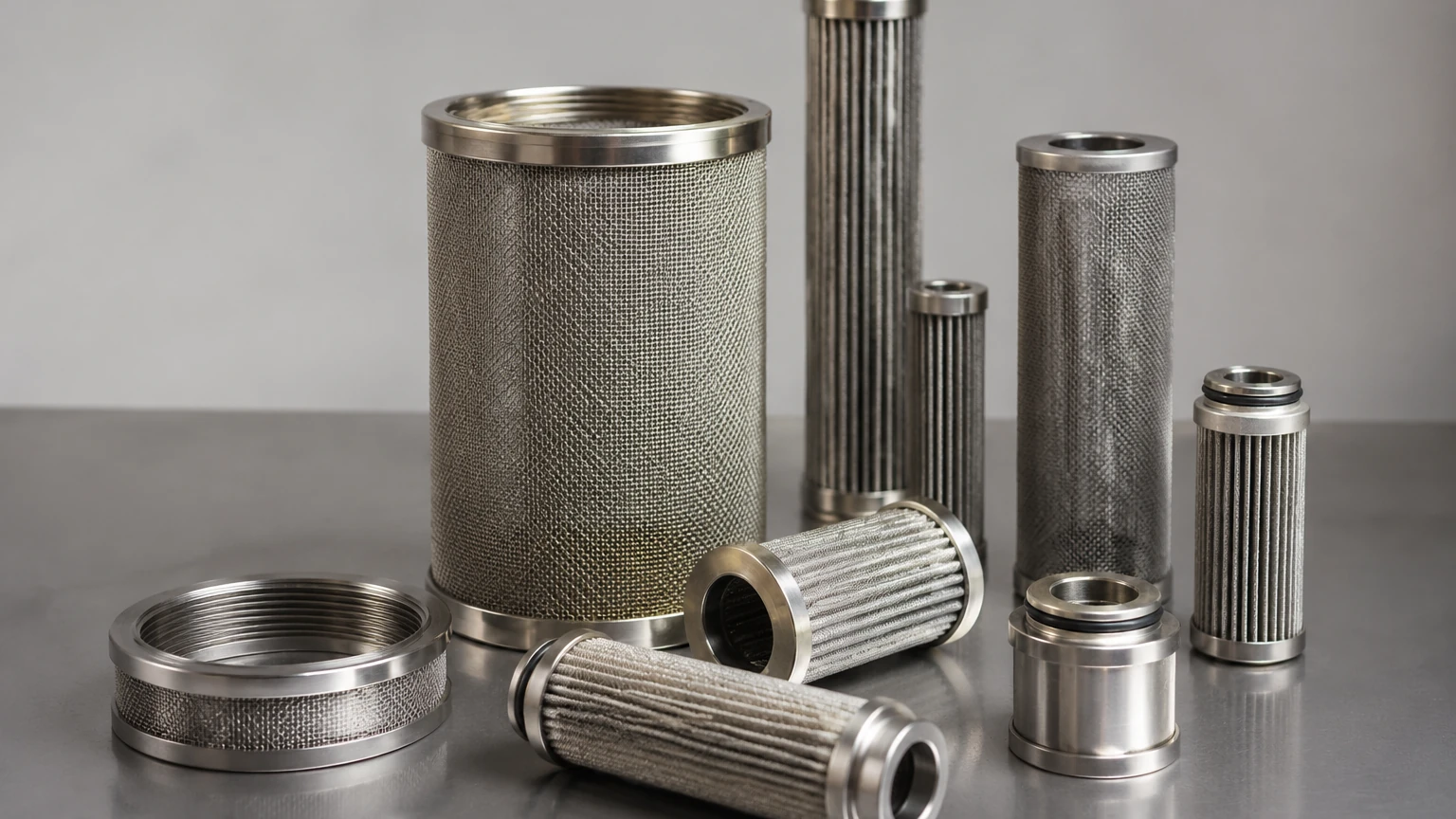
* Wedge Wire: Ideal for heavy-duty applications. Its V-shaped profile prevents clogging and is exceptionally easy to clean with a scraper mechanism.
* Sintered Wire Mesh: Offers high precision and multi-layer strength. It is often used when fine filtration (down to 1-5 microns) is required in high-pressure environments.
* Perforated Plate: Used for coarse filtration or as a support structure for finer meshes.
At Kaifil, we focus on the precision manufacturing of these components, ensuring that the filtration accuracy meets the exact requirements of the application. For more detailed technical specifications on our filter elements, you can visit our Main Page.
Filtration Accuracy and Performance Metrics
Selecting the correct micron rating is a balance between fluid clarity and cleaning frequency. If the micron rating is too fine for the application, the cleaning cycle will trigger too frequently, leading to increased wear on mechanical parts and higher water/fluid loss during purging. Conversely, a rating that is too coarse may allow harmful particles to pass through, damaging sensitive downstream components like high-pressure pumps or spray nozzles.
Key Metrics to Evaluate:
* Flow Rate (m³/h): The volume of fluid the filter can process at a given pressure drop. This must be calculated based on the fluid's viscosity; higher viscosity fluids require larger surface areas to maintain the same flow rate.
* Operating Pressure: Standard industrial filters often operate between 2 and 10 bar, though custom high-pressure versions are available for hydraulic and specialized chemical lines.
* Temperature Limits: The seals (EPDM, Viton, or PTFE) and the housing must be rated for the process temperature, especially in steam-cleaning or hot oil applications.
Operational Benefits in Industrial Environments
The implementation of a filtro autopulente automatico provides several measurable advantages over traditional bag or cartridge filters:
1. Elimination of Consumables: Unlike bag filters or disposable cartridges, the permanent stainless steel elements in self-cleaning filters do not need frequent replacement. This significantly reduces the total cost of ownership (TCO) and minimizes industrial waste.
2. Continuous Operation: Since the cleaning occurs while the system is online, there is no downtime for maintenance. This is vital for 24/7 manufacturing plants where even an hour of stoppage can result in significant financial loss.
3. Enhanced Safety: Operators are not exposed to potentially hazardous fluids, as the system remains closed during the cleaning and purging cycles.
4. Consistency: Automated cleaning ensures that the filter always operates within its optimal pressure range, leading to consistent flow and filtration quality.
Selection Criteria for Purchasing Teams
When evaluating suppliers for a filtro autopulente automatico, purchasing teams and engineers should confirm the following technical details to ensure the system is fit for purpose:
* Fluid Characteristics: Is the fluid Newtonian or non-Newtonian? What is the concentration and nature of the solids (fibrous, abrasive, or gelatinous)?
* Cleaning Trigger Logic: Does the system allow for both differential pressure and timer-based triggers? This redundancy is crucial for maintaining flow if a sensor fails.
* Seal Compatibility: Ensure that all O-rings and gaskets are chemically compatible with the process fluid to prevent leaks.
* Ease of Maintenance: Even an automatic filter requires occasional inspection. Look for designs that allow for easy access to the internal screen without specialized tools.
* Customization Options: Many industrial layouts have space constraints. A manufacturer that can customize the inlet/outlet orientation or the housing dimensions is often preferred.
Maintenance and Long-Term Reliability
While the "automatic" nature of these filters reduces daily intervention, a preventative maintenance schedule is necessary to ensure longevity. The moving parts—such as the motor, gearbox, and internal scraper—should be inspected annually. The stainless steel mesh should also be checked for signs of fatigue or abrasion, particularly if the fluid contains hard, sharp particles.
One of the common risks in self-cleaning filtration is the "short-cycling" of the cleaning mechanism, which occurs if the screen is blinded by sticky or oily substances that the standard cleaning cycle cannot remove. In such cases, specialized coatings or modified cleaning blade materials may be required.
Kaifil’s expertise in custom stainless steel filtration solutions allows us to address these specific engineering challenges. By providing durable, high-precision filter cartridges and wire mesh components, we support the reliable operation of automatic systems across various demanding sectors.
Conclusion
The filtro autopulente automatico is an essential component for modern industrial efficiency. By automating the removal of contaminants and utilizing high-quality stainless steel media, these systems protect critical infrastructure and ensure process continuity. When selecting a filtration partner, focusing on technical expertise, material quality, and customization capabilities is the most effective way to achieve a high return on investment and long-term operational success.
For engineers seeking to optimize their filtration processes or looking for high-quality replacement components and custom designs, exploring the options available at our Main Page provides a foundation for making informed technical decisions. Whether for chemical processing, food production, or water treatment, the right filtration solution is defined by its ability to perform reliably under the specific stresses of the application environment.
