


Spin Filter
In the landscape of industrial separation and fluid purification, the term "spin filter" encompasses a variety of specialized components designed to handle high-velocity flows, high-viscosity fluids, and demanding mechanical environments. From centrifugal separation units used in chemical processing to spin-on canisters in hydraulic systems and spin packs in synthetic fiber extrusion, these components are critical for maintaining system integrity and product quality. For engineers and procurement professionals, selecting the right filtration media and housing configuration requires a deep understanding of material science, fluid dynamics, and mechanical durability.
As a manufacturer of custom stainless steel filtration solutions, Kaifil provides the technical expertise necessary to navigate these complexities. Whether the application involves the precision of polymer melt filtration or the ruggedness of industrial hydraulic circuits, the performance of a spin filter is fundamentally tied to its engineering specifications and the quality of its construction.
Technical Principles of Spin Filtration
The operation of a spin filter typically relies on one of two mechanical principles: rotational force for separation or a modular "spin-on" design for ease of maintenance and high-pressure containment.
Centrifugal and Rotary Separation
In many chemical and wastewater applications, a spin filter utilizes centrifugal force to drive heavier particulates toward the outer walls of a housing, while the fluid passes through a central filter element. This method is highly effective for pre-filtration, as it prevents larger debris from prematurely clogging the fine mesh of the primary filter. The efficiency of this process depends on the rotational speed, the density of the particles, and the micron rating of the internal stainless steel mesh.
Spin-On and Modular Configurations
In hydraulic and lubrication systems, the "spin filter" often refers to a spin-on element—a self-contained canister that threads onto a permanent head. These are designed for rapid replacement and are engineered to withstand significant pressure spikes. Unlike disposable cellulose filters, high-performance industrial spin filters often utilize stainless steel wire mesh or sintered metal fibers. These materials offer superior structural integrity and can be cleaned and reused, providing a lower total cost of ownership in the long term.
Engineering Considerations: Material Selection
The choice of material is the most critical factor in the longevity and reliability of a spin filter. Industrial environments often involve corrosive chemicals, extreme temperatures, and high-pressure differentials that would cause standard materials to fail.
Stainless Steel Alloys
Stainless steel is the industry standard for high-performance filtration. Kaifil utilizes various grades to meet specific environmental challenges:
* AISI 304: Suitable for general industrial applications where basic corrosion resistance is required.
* AISI 316L: The preferred choice for chemical processing and marine environments due to its superior resistance to pitting and crevice corrosion, particularly in the presence of chlorides.
* Specialty Alloys: For extreme conditions involving high-temperature oxidation or highly acidic environments, alloys such as Inconel or Monel may be integrated into the filter design.
Wire Mesh and Sintered Media
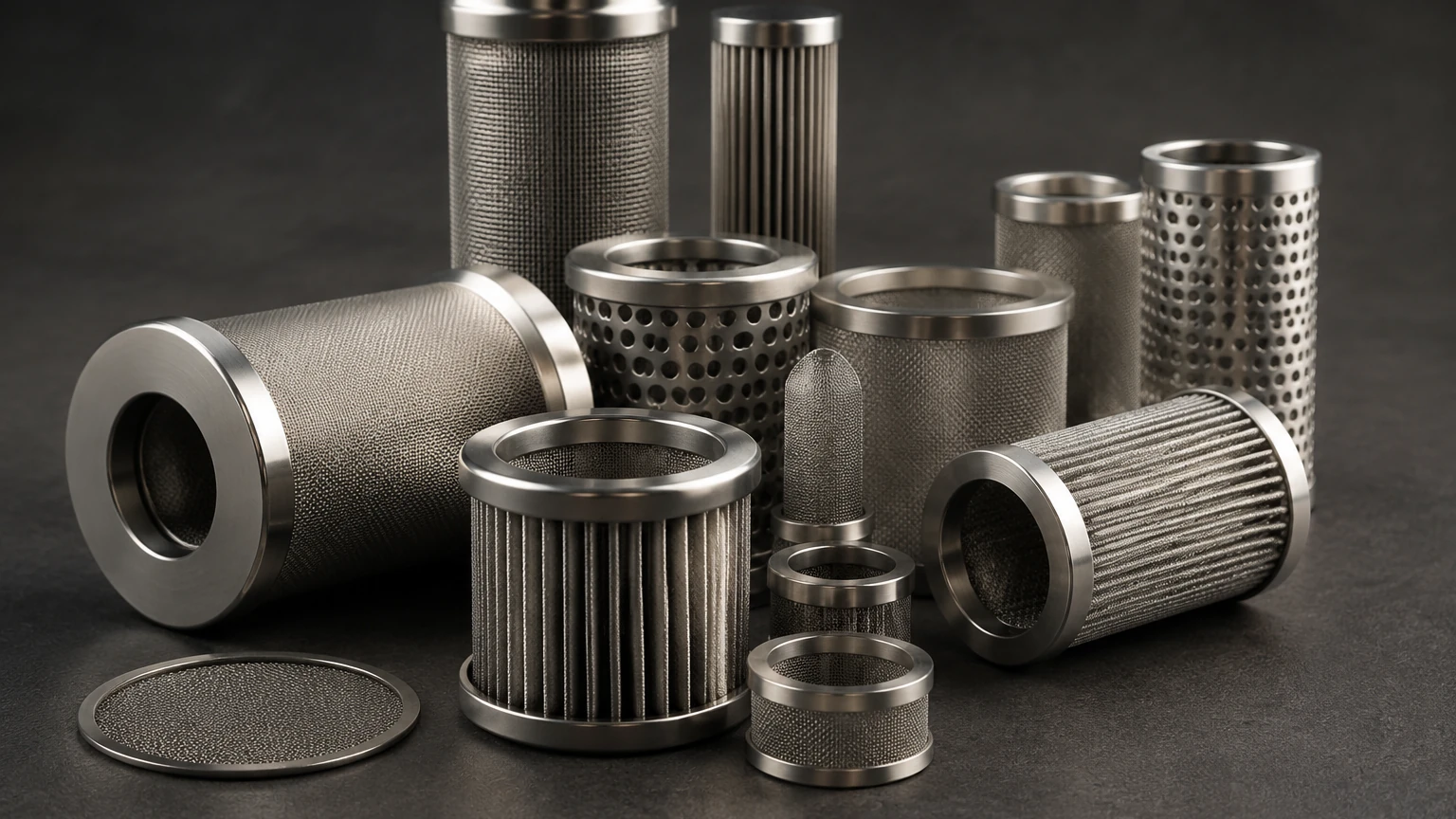
The filtration media within a spin filter determines its accuracy. Woven wire mesh provides a precise pore size and is ideal for surface filtration. For applications requiring higher dirt-holding capacity and finer filtration (down to sub-micron levels), sintered metal fiber felt is often employed. This material consists of non-woven stainless steel fibers that are thermally bonded, creating a porous structure that combines high permeability with excellent mechanical strength.
Applications Across Key Industries
Understanding where a spin filter is deployed helps in defining the necessary performance parameters. Each industry presents unique challenges regarding fluid chemistry and operational stress.
Polymer and Synthetic Fiber Production
In the production of synthetic fibers (such as polyester or nylon), "spin packs" are used to filter the polymer melt before it passes through the spinneret. These spin filters must operate at extremely high temperatures and pressures. Any degradation of the filter media could lead to fiber breakage or defects in the final product. Precision-engineered stainless steel mesh ensures that even the smallest gels or contaminants are removed from the melt stream.
Chemical and Petrochemical Processing
Chemical reactors and processing lines often require spin filters to protect downstream equipment from catalysts or particulate by-products. In these settings, the chemical compatibility of the filter seals and the metal mesh is paramount. Stainless steel spin filters are often chosen for their ability to withstand aggressive solvents and acidic solutions without losing structural integrity.
Food and Beverage Industry
Filtration in the food and beverage sector requires materials that are non-toxic and easy to sanitize. Stainless steel spin filters meet stringent hygienic standards. They are used in the filtration of oils, syrups, and beverages where they must resist the buildup of bacteria and withstand Clean-in-Place (CIP) procedures involving hot water and caustic detergents.
Key Evaluation Criteria for Industrial Spin Filters
When evaluating a spin filter for a new or existing system, engineers should focus on several quantitative and qualitative metrics to ensure optimal performance.
1. Micron Rating and Filtration Efficiency
It is essential to distinguish between nominal and absolute micron ratings. A nominal rating indicates the filter's ability to retain a majority of particles of a certain size, while an absolute rating (often expressed via a Beta ratio) defines the specific particle size at which the filter is 99.9% efficient. For critical applications, an absolute-rated stainless steel mesh is required to prevent bypass.
2. Pressure Drop (ΔP)
The initial pressure drop across a clean filter affects the overall energy efficiency of the system. A high-quality spin filter should offer low resistance to flow while maintaining high filtration accuracy. As the filter accumulates contaminants, the pressure drop increases; therefore, the element must be designed to withstand the maximum expected differential pressure without collapsing.
3. Dirt-Holding Capacity
This refers to the amount of contaminant a filter can retain before reaching its terminal pressure drop. Filters with pleated mesh designs offer significantly more surface area than cylindrical designs, leading to longer service intervals and reduced downtime.
4. Mechanical Strength and Fatigue Resistance
Spin filters in hydraulic systems or rotary separators are subject to constant pressure pulsations and mechanical vibrations. The welding and bonding techniques used in the manufacturing of the filter—such as plasma welding or vacuum brazing—are vital to ensure that the mesh does not separate from the end caps under stress.
Common Risks and Mitigation Strategies
Failure to properly specify a spin filter can lead to significant operational risks, including equipment damage and production halts.
* Media Migration: In lower-quality filters, fibers from the filter media can break off and enter the downstream flow. Using high-quality sintered stainless steel or securely woven wire mesh eliminates this risk.
* Chemical Incompatibility: While stainless steel is highly resistant, certain chemicals can still cause corrosion if the wrong grade is selected. A thorough chemical analysis of the process fluid is necessary during the design phase.
* Bypass Problems: If the seals or the threading of a spin-on filter are not precision-machined, unfiltered fluid may bypass the media entirely. Ensuring tight tolerances in the manufacturing of the filter housing and connectors is essential.
Customization and OEM Solutions
Standard off-the-shelf filters rarely meet the exact needs of specialized industrial machinery. Customization is often required to optimize flow patterns, fit within specific spatial constraints, or meet unique filtration targets.
Kaifil specializes in the design and production of custom metal filtration components. By working directly with a manufacturer, engineering teams can specify the exact mesh weave, layer configuration, and housing material needed for their specific application. This collaborative approach ensures that the spin filter is not just a replacement part, but a high-performance component tailored to the system's requirements.
For more information on our full range of custom stainless steel filtration products and technical support, please visit our Main Page.
Information to Confirm Before Procurement
Before initiating a purchase or a custom design project for a spin filter, the following data points should be confirmed to ensure the technical suitability of the product:
1. Fluid Characteristics: What is the viscosity, temperature range, and chemical composition of the fluid being filtered?
2. Flow Requirements: What are the minimum, normal, and maximum flow rates (GPM or L/min)?
3. Pressure Parameters: What is the maximum operating pressure and the maximum allowable pressure drop (ΔP)?
4. Contaminant Profile: What type of particles are being removed, and what is their typical concentration?
5. Interface Specifications: What are the threading requirements (e.g., BSP, NPT) or flange dimensions for the connection points?
6. Cleaning Requirements: Will the filter be discarded after use, or is a cleanable, reusable stainless steel element required to meet sustainability or cost goals?
Conclusion
The spin filter is a vital component in maintaining the efficiency and longevity of industrial systems. By moving away from generic solutions and toward engineered stainless steel components, facilities can achieve higher filtration precision, better durability, and improved process stability. Whether you are dealing with the high pressures of a hydraulic system or the delicate requirements of pharmaceutical filtration, understanding the technical nuances of material selection and structural design is the key to successful implementation.
Kaifil remains committed to providing the industrial sector with robust, high-precision metal filtration solutions. By focusing on quality manufacturing and technical partnership, we help engineers solve their most challenging filtration problems with reliable, custom-built components.
