


Filter Candle
In industrial filtration, the filter candle represents a critical component for high-precision liquid and gas separation. Characterized by its cylindrical shape and robust construction, the filter candle is designed to withstand high differential pressures, extreme temperatures, and corrosive environments. For engineers and procurement teams, understanding the technical nuances of these components is essential for optimizing process efficiency and ensuring the longevity of downstream equipment.
As a specialized manufacturer, Kaifil provides custom stainless steel filtration solutions that address the specific challenges of modern industrial processes. This guide explores the engineering principles, material considerations, and selection criteria for filter candles to assist technical professionals in making informed purchasing decisions.
Understanding the Design and Construction of Filter Candles
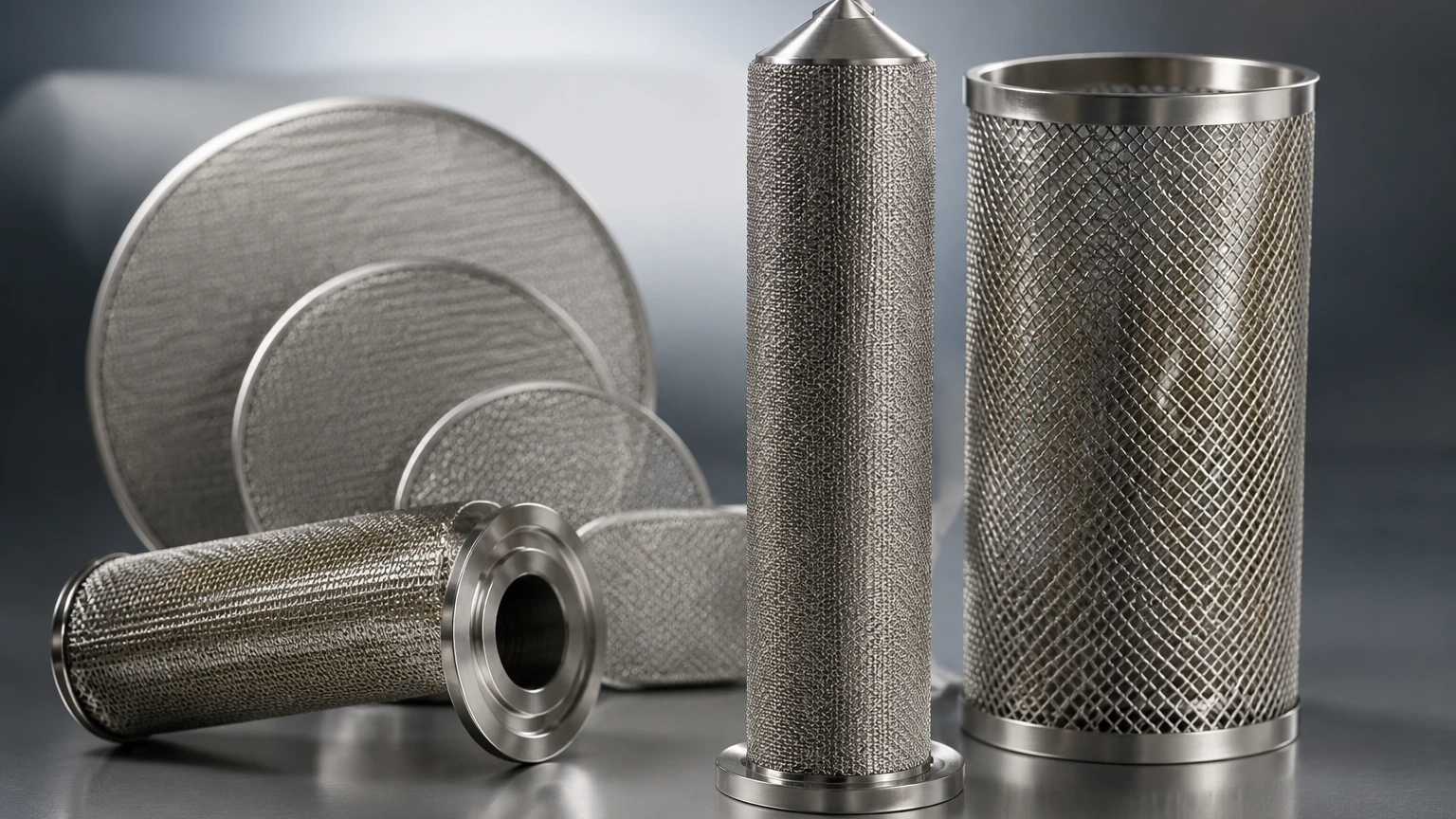
A filter candle is essentially a cylindrical filter element that provides a high surface area relative to its footprint. Unlike standard bag filters or disposable cartridges, industrial filter candles are often constructed from metallic materials—primarily stainless steel—to provide structural integrity and the ability to be cleaned and reused.
Structural Components
The typical architecture of a metal filter candle consists of three primary layers:
1. The Support Core: A perforated metal tube or high-strength spring that provides the structural backbone. This core ensures the filter does not collapse under high external pressure (outside-in flow) or burst during backwashing (inside-out flow).
2. The Filtration Media: The functional layer that determines the micron rating. This can be made of multi-layered stainless steel wire mesh, sintered metal powder, or wedge wire, depending on the required precision and mechanical strength.
3. The End Caps: Precision-machined fittings that ensure a leak-proof seal within the filter housing. These are typically welded using TIG (Tungsten Inert Gas) or plasma welding to maintain the purity of the process fluid.
Surface vs. Depth Filtration
Filter candles can be designed for either surface or depth filtration. Surface filtration, often achieved with fine wire mesh or wedge wire, traps particles on the exterior of the element, making it ideal for applications requiring frequent backwashing. Depth filtration, utilizing sintered metal fibers or multiple layers of graduated mesh, allows particles to be trapped within the thickness of the media, providing higher dirt-holding capacity for fluids with a broad range of particle sizes.
Material Science in Metal Filtration
The choice of material is perhaps the most significant factor in the performance and lifespan of a filter candle. While polymer-based candles are used in light-duty applications, industrial-grade candles rely on metallurgy to survive demanding conditions.
Stainless Steel Alloys
* 304/304L: The standard choice for general industrial applications, offering good corrosion resistance and mechanical strength at a cost-effective price point.
* 316/316L: Contains molybdenum, which significantly enhances resistance to chlorides and pitting. This is the preferred material for pharmaceutical, food and beverage, and marine environments.
* Exotic Alloys: For highly aggressive chemical processes, materials like Hastelloy, Monel, or Inconel may be utilized to prevent premature failure due to chemical attack or extreme thermal cycling.
Sintered Metal Technology
Sintering is a process where metal wires or powders are bonded together through heat and pressure without melting. This creates a porous structure that is exceptionally rigid. Sintered wire mesh candles are particularly valued in high-pressure hydraulic systems and chemical reactors because they do not suffer from "media migration"—the shedding of filter fibers into the filtrate.
Filtration Efficiency and Micron Ratings
When selecting a filter candle, engineers must distinguish between nominal and absolute micron ratings. A nominal rating indicates the ability of the filter to retain the majority of particles of a specific size, whereas an absolute rating guarantees the retention of 99.9% (or higher) of particles at that size.
Determining the Required Precision
* Coarse Filtration (50 – 500 microns): Used for pre-filtration or protecting large pumps from debris. Wedge wire candles are often used here due to their non-clogging "V" profile.
* Fine Filtration (5 – 50 microns): Common in water treatment and hydraulic oil polishing. Multi-layer woven mesh provides a balance of precision and flow rate.
* Ultra-Fine Filtration (0.5 – 5 microns): Required for pharmaceutical grade fluids and high-purity chemical processing. Sintered metal fiber felt is often the media of choice for these demanding specifications.
Operational Dynamics: Pressure Drop and Flow Management
The efficiency of a filtration system is often measured by the "clean pressure drop" (the initial resistance to flow) and the "terminal pressure drop" (the point at which the filter must be cleaned or replaced).
Factors Influencing Pressure Drop (ΔP)
1. Fluid Viscosity: Thicker fluids require more pressure to force through the same pore size. Heating the fluid can often reduce viscosity and improve filtration efficiency.
2. Flow Velocity: Higher flow rates increase turbulence and resistance. Designing a system with multiple filter candles in a "cluster" or "battery" configuration can distribute the flow and lower the ΔP across each individual element.
3. Contaminant Loading: As particles accumulate, the effective open area of the filter decreases, leading to an exponential rise in pressure.
Engineers should aim for a design where the initial pressure drop does not exceed 0.1 to 0.3 bar, allowing for a significant operational window before the terminal pressure drop (usually 1.5 to 2.5 bar) is reached.
Cleaning, Regeneration, and Maintenance Cycles
One of the primary advantages of a stainless steel filter candle is its cleanability. Unlike disposable cartridges, which contribute to waste and high recurring costs, metal candles can be regenerated multiple times.
Backwashing and Backpulsing
Many industrial systems utilize automated backwashing. By reversing the flow of the fluid (or using a compressed gas pulse), the accumulated "filter cake" is dislodged from the surface of the candle and flushed out through a drain valve. This process is highly effective for surface-filtration media like wedge wire or plain square weave mesh.
Ultrasonic and Chemical Cleaning
Over time, fine particles may become embedded deep within the pores of a sintered or multi-layer mesh candle. In these cases, off-line cleaning is required. Ultrasonic baths use high-frequency sound waves to create cavitation bubbles that scrub the internal surfaces of the mesh. Alternatively, chemical soaking in acids or caustic solutions can dissolve organic or mineral scaling, restoring the candle to near-original flow specifications.
Industry-Specific Applications
Filter candles are versatile components used across a wide spectrum of sectors, each with unique engineering requirements.
Chemical and Petrochemical Processing
In these environments, filter candles must handle high temperatures and aggressive solvents. They are used to protect catalysts in reactors, filter polymer melts, and clarify chemical intermediates. The use of 316L stainless steel or higher alloys is standard to prevent corrosion-related failures.
Food and Beverage Industry
Hygiene is the priority here. Filter candles used for beer clarification, syrup filtration, or bottled water processing must feature smooth, crevice-free welds and comply with FDA or EHEDG standards. Stainless steel's ability to withstand Steam-In-Place (SIP) and Clean-In-Place (CIP) sterilization makes it the ideal material.
Water Treatment and Desalination
Filter candles serve as essential pre-filters for Reverse Osmosis (RO) membranes. By removing suspended solids and biological matter, they prevent the expensive RO membranes from fouling, thereby extending the overall system life and reducing energy consumption.
Customization and OEM Considerations for Industrial Systems
Off-the-shelf filtration products often fail to meet the specific spatial or performance requirements of complex industrial machinery. Customization is frequently necessary to optimize the filtration process.
Engineering the Perfect Fit
When partnering with a manufacturer like Kaifil, engineers should provide detailed specifications, including:
* Dimensional Constraints: Total length, outer diameter, and connection type (e.g., threaded, DOE, 222/226 O-rings).
* Environmental Factors: Maximum operating temperature, chemical composition of the fluid, and potential for pressure spikes.
* Filtration Goals: Target particle size, allowable pressure drop, and desired cleaning interval.
Customized filter candles can be engineered with reinforced cores for high-viscosity fluids or pleated mesh designs to maximize surface area within a restricted housing volume. This level of tailoring ensures that the filtration system performs reliably under the specific stresses of the application.
Total Cost of Ownership (TCO) vs. Initial Investment
While stainless steel filter candles have a higher initial purchase price compared to plastic or paper disposables, their Total Cost of Ownership is significantly lower in most industrial contexts. The durability of metal allows for years of service, eliminating the costs associated with frequent replacement parts, labor for filter changes, and the environmental impact of disposing of contaminated filter media.
Furthermore, the reliability of a high-quality metal candle reduces the risk of bypass—where unfiltered fluid leaks past a damaged or poorly seated filter—which can cause catastrophic damage to expensive downstream components like high-pressure nozzles, turbines, or sensitive analytical instruments.
Conclusion
The filter candle is an indispensable tool for achieving precise, reliable, and cost-effective filtration in demanding industrial environments. By selecting the appropriate materials, micron ratings, and structural designs, engineers can significantly enhance process stability and product quality. Whether for chemical processing, food production, or hydraulic systems, the integration of high-performance stainless steel filtration components is a strategic investment in operational excellence.
For technical teams seeking to optimize their filtration processes, partnering with an experienced manufacturer is the most effective way to ensure that every component meets the rigorous demands of the field. To explore the full range of customized filtration solutions, including wire mesh filters and precision metal components, Review product options and application support to find the right fit for your specific industrial requirements.
