


Thermosiphon Reboiler Design
In industrial distillation and chemical processing, the thermosiphon reboiler is a critical component responsible for providing the necessary heat to the bottom of a fractionating column. Unlike forced-circulation systems that rely on mechanical pumps, a thermosiphon reboiler utilizes natural convection—driven by density differences between the liquid and vapor phases—to circulate process fluids. Effective thermosiphon reboiler design requires a deep understanding of fluid dynamics, heat transfer coefficients, and the physical layout of the piping system to ensure stable operation and optimal thermal efficiency.
For engineers and plant operators, the selection of a reboiler type is often dictated by the properties of the process fluid, the available plot space, and the required heat duty. Because these systems operate on natural circulation, they are highly sensitive to pressure drops and fouling. Integrating high-performance filtration solutions, such as those offered on the Main Page of Kaifil’s technical catalog, is often a prerequisite for maintaining the longevity and reliability of these heat exchangers.
Understanding the Principles of Natural Circulation
The fundamental principle behind thermosiphon reboiler design is the hydrostatic pressure imbalance between two columns of fluid. In a typical vertical thermosiphon setup, a column of relatively cool, dense liquid from the bottom of the distillation tower flows into the bottom of the reboiler. As heat is applied through the tube walls (usually via steam or a hot process oil), a portion of the liquid vaporizes.
This mixture of liquid and vapor has a significantly lower bulk density than the liquid in the downcomer. The resulting buoyancy force drives the mixture upward through the heat exchanger tubes and back into the distillation column. The efficiency of this "driving head" is dependent on the height of the liquid level in the column relative to the reboiler and the total pressure drop within the circuit. If the pressure drop in the piping or the exchanger tubes exceeds the available hydrostatic head, circulation will stall, leading to localized overheating and potential equipment failure.
Key Engineering Considerations in Thermosiphon Reboiler Design
Designing a thermosiphon system is an iterative process that balances thermal requirements with hydraulic constraints. Engineers must evaluate several configurations before finalizing the specification.
Vertical vs. Horizontal Configurations
Vertical thermosiphon reboilers are the most common choice due to their high heat transfer coefficients and small footprint. They are typically "once-through" or recirculating. However, they require significant vertical clearance and can be difficult to maintain if the tubes require frequent mechanical cleaning. Horizontal thermosiphon reboilers, while requiring more ground space, are often preferred for vacuum services or when the process fluid has a high fouling tendency, as the shell-side boiling allows for easier cleaning of the tube bundle.
The Importance of the Static Head
The liquid level in the distillation column provides the static head necessary to overcome the frictional resistance in the reboiler loop. If the level is too low, the circulation rate decreases, increasing the vapor fraction at the tube exit. This can lead to "dry-out," where the liquid film on the tube wall vanishes, causing a sharp drop in the heat transfer rate and accelerating the formation of scale or coke.
Piping Layout and Pressure Drop
In thermosiphon reboiler design, the inlet and outlet piping must be sized to minimize pressure loss. Every elbow, valve, and expansion joint adds resistance. Engineers typically aim for a design where the pressure drop in the return line (the vapor-liquid mixture) is kept low to ensure the driving force remains positive under all operating conditions.
Heat Transfer Mechanisms and Flow Regimes
The boiling process inside a thermosiphon reboiler is complex, transitioning through various flow regimes as the fluid travels up the tubes. Understanding these regimes is vital for calculating the overall heat transfer coefficient ($U$).
1. Subcooled Liquid Region: At the very bottom of the tubes, the fluid is heated until it reaches its bubble point. Heat transfer here is primarily through sensible heat exchange.
2. Nucleate Boiling: As bubbles begin to form on the tube surface, the heat transfer rate increases dramatically. This is the most efficient zone of the reboiler.
3. Annular Flow: As the vapor fraction increases, vapor flows up the center of the tube while a thin film of liquid travels along the walls. Most of the evaporation occurs at the interface of this liquid film.
4. Mist or Dispersed Flow: If the vapor fraction becomes too high, the liquid film breaks into droplets. This is generally avoided in design as it leads to poor heat transfer and high tube wall temperatures.
To prevent film boiling—a state where a continuous vapor film blankets the tube surface and acts as an insulator—designers must ensure the heat flux ($Q/A$) remains below the Critical Heat Flux (CHF) limit.
Managing Fouling and the Role of Precision Filtration
Fouling is perhaps the greatest challenge in maintaining the performance of a thermosiphon reboiler. Because these units rely on boiling, any suspended solids, polymers, or salts in the process stream tend to concentrate and deposit on the heat transfer surfaces. Even a thin layer of scale can significantly increase thermal resistance, forcing operators to increase the heating medium temperature, which in turn can lead to further coking and accelerated degradation.
To mitigate these risks, precision filtration is integrated into the process loop. Protecting the reboiler from particulate matter is essential for maintaining the calculated heat transfer coefficients and extending the intervals between scheduled cleanings.
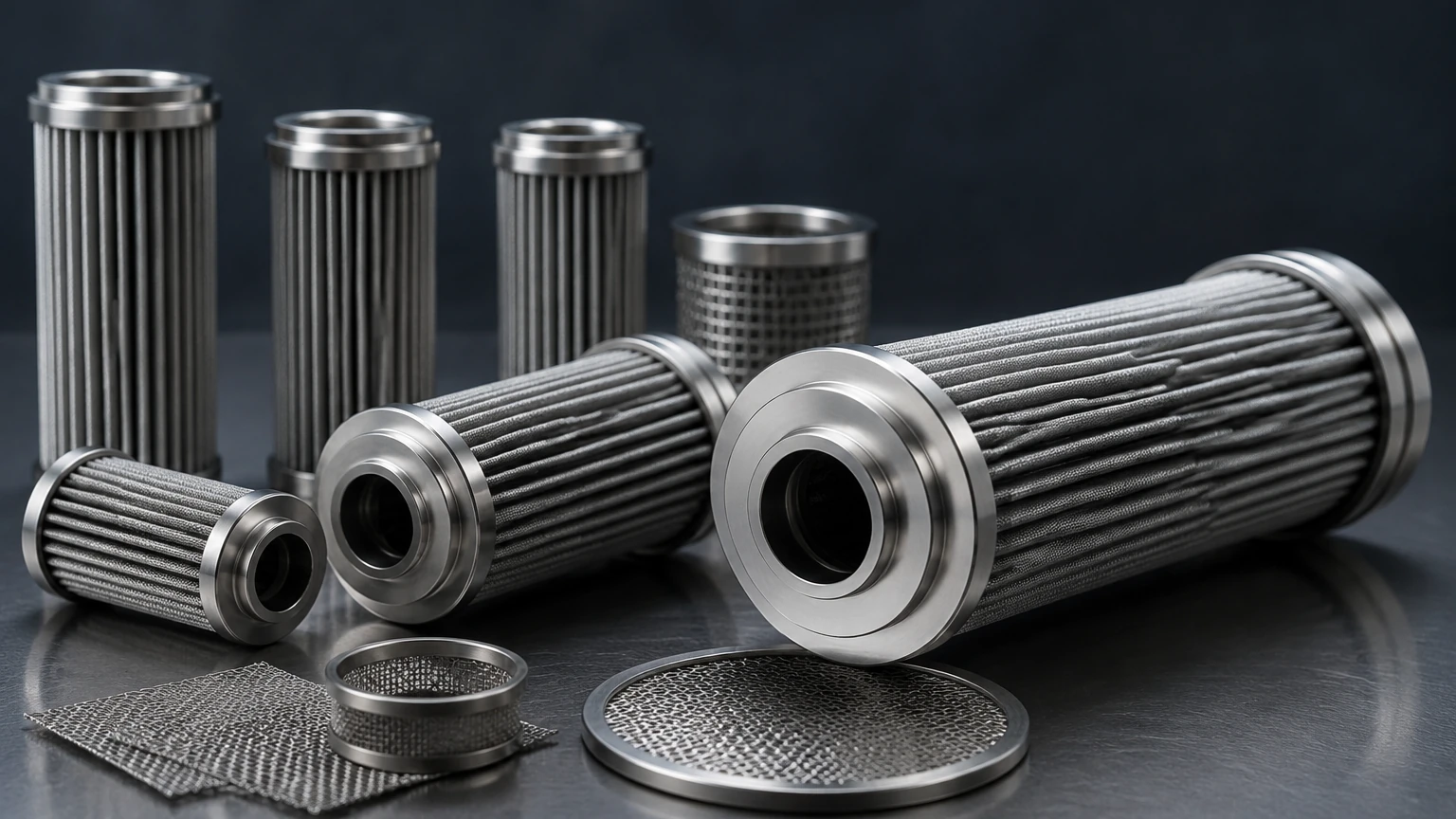
Kaifil specializes in manufacturing custom stainless steel filtration components designed for these demanding industrial environments. By utilizing high-quality wire mesh filters or sintered metal cartridges, engineers can remove fine contaminants before they enter the reboiler. These filtration solutions are engineered to handle high temperatures and corrosive chemical environments, ensuring that the reboiler tubes remain clear of debris that could disrupt the natural circulation flow or cause localized hot spots.
Stability and Operational Reliability
A common issue in thermosiphon reboiler design is flow instability, often referred to as "chugging" or density wave oscillations. This occurs when the pressure drop and the buoyancy force are out of sync, causing the flow to fluctuate or even reverse momentarily.
Instability can lead to mechanical vibration, which risks damaging tube-to-tubesheet joints. To ensure stability, designers often incorporate a "stability margin" in their hydraulic calculations. This might involve installing an orifice plate in the liquid inlet line to increase the single-phase pressure drop, which paradoxically helps stabilize the two-phase flow in the tubes.
Furthermore, the "percent vaporization" is a key metric. For most recirculating vertical thermosiphons, designers limit the weight percent of vapor at the exit to between 10% and 35%. Exceeding these limits increases the risk of flow instability and fouling.
Material Selection for Demanding Chemical Environments
Since reboilers are often subjected to the most aggressive conditions in a distillation system—high temperatures, phase changes, and concentrated impurities—material selection is paramount. While carbon steel may suffice for non-corrosive hydrocarbons, many chemical and pharmaceutical applications require stainless steel or high-nickel alloys.
Stainless steel provides the necessary corrosion resistance to prevent pitting and stress corrosion cracking, which can be exacerbated by the boiling process. When designing the filtration system to protect these reboilers, the materials must match or exceed the specifications of the heat exchanger itself. Kaifil’s expertise in custom stainless steel fabrication ensures that the filtration components provide a seamless fit within the overall system architecture, offering durability that matches the expected service life of the reboiler.
Information for Engineering and Procurement Teams
Before proceeding with a thermosiphon reboiler design or upgrade, technical teams should confirm several critical parameters to ensure the system performs as intended:
* Fluid Properties: Accurate data on viscosity, surface tension, and latent heat of vaporization are required for both the liquid and vapor phases at operating pressure.
* Fouling Factor: A realistic fouling factor based on historical data or pilot studies should be used to size the heat transfer area.
* Piping Geometry: The physical distance between the column and the reboiler, including the number of fittings, must be finalized to calculate the available driving head.
* Filtration Requirements: Identify the particle size and concentration of solids in the process stream. Implementing a robust filtration strategy early in the design phase can prevent costly downtime later.
By focusing on these technical boundaries, engineers can develop a reboiler system that operates efficiently with minimal intervention. The synergy between optimized heat exchanger design and high-quality filtration components is the key to achieving long-term operational excellence in industrial processing. For those seeking reliable filtration components to support these systems, reviewing specialized manufacturing capabilities is a necessary step in the procurement process.
