


Types of Vacuum Filters
In industrial liquid-solid separation, vacuum filtration remains a cornerstone process due to its efficiency in handling high-volume slurries and its ability to operate continuously. Unlike pressure filtration, which forces liquid through a medium using positive pressure, vacuum filtration utilizes a pressure differential created by a vacuum pump to pull filtrate through a filter medium, leaving the solids (cake) on the surface. Selecting the appropriate equipment requires a deep understanding of the various types of vacuum filters and the specific engineering requirements of the application, ranging from chemical processing to pharmaceutical manufacturing.
For engineers and procurement teams, the choice of a vacuum filter is not merely about the mechanical housing but also about the compatibility of the filter media, the required micron rating, and the long-term durability of the components. As a specialist in stainless steel filtration solutions, Kaifil provides the technical components necessary to ensure these systems operate at peak performance. For more information on custom filtration components, you can visit the Main Page.
Classification of Vacuum Filters by Mechanical Design
Vacuum filters are generally categorized by their mechanical structure and how they handle the solids and liquids. Each type offers distinct advantages depending on whether the process requires continuous operation, high cake purity, or precision clarity.
Rotary Drum Vacuum Filters (RDVF)
Rotary drum vacuum filters are perhaps the most common type used in large-scale industrial applications. The system consists of a large rotating drum covered with a filter medium, partially submerged in a trough containing the slurry. As the drum rotates, a vacuum is applied to the interior, drawing liquid through the medium and forming a cake on the outer surface.
RDVFs are ideal for continuous processes where high throughput is required. They are frequently used in wastewater treatment, mining, and chemical processing. The primary engineering consideration here is the method of cake discharge—whether using a scraper, roller, or string discharge—which depends on the stickiness and thickness of the solids.
Vacuum Disc Filters
Vacuum disc filters operate on a similar principle to drum filters but utilize multiple vertical discs mounted on a central shaft. This design significantly increases the filtration surface area within a smaller footprint compared to a drum filter. These are often used in mineral processing and pulp and paper industries where floor space is at a premium. However, they are less effective than drum filters for applications requiring intensive cake washing.
Horizontal Belt Vacuum Filters
For applications where thorough cake washing is critical, horizontal belt vacuum filters are the preferred choice. The slurry is fed onto a moving horizontal belt. As the belt moves over vacuum boxes, the liquid is extracted. This configuration allows for multiple washing stages to be performed in sequence along the length of the belt, making it indispensable in the production of high-purity chemicals and pharmaceuticals.
Vacuum Leaf Filters
Vacuum leaf filters consist of a series of flat, rectangular or circular "leaves" coated with filter media and submerged in a tank. The vacuum pulls the filtrate into the center of the leaf. These are typically used for batch processing and are excellent for clarifying liquids with low solids concentrations. Because the leaves can be made from robust materials like stainless steel wire mesh, they offer high durability in corrosive environments.
Engineering Considerations for Filter Media
While the mechanical structure of the filter defines the process flow, the filter medium defines the filtration efficiency. When evaluating different types of vacuum filters, engineers must prioritize the material and structure of the filter element.
Stainless Steel Wire Mesh
In demanding industrial environments, stainless steel wire mesh is often the superior choice over synthetic fabrics or paper. Stainless steel (typically 304 or 316L) offers excellent thermal stability, chemical resistance, and mechanical strength. In vacuum systems, where the media is subjected to constant pressure differentials, the rigidity of metal prevents the medium from deforming, which ensures a consistent micron rating throughout the production cycle.
Sintered Metal Media
For high-precision vacuum filtration, sintered metal mesh or sintered metal powder cartridges are used. These are created by bonding multiple layers of wire mesh or metal particles through a heat-treatment process. The result is a highly porous but incredibly strong structure that can withstand aggressive backwashing and ultrasonic cleaning, significantly extending the service life of the filter.
Key Performance Criteria for Selection
When selecting between various types of vacuum filters, technical professionals must confirm several performance parameters to ensure the system meets the application's demands.
1. Micron Rating and Filtration Accuracy: Is the requirement for nominal or absolute filtration? In vacuum systems, the cake itself often acts as a secondary filter, but the initial medium must be precise enough to prevent "bleeding" of solids into the filtrate.
2. Flow Rate and Flux: The volume of liquid processed per unit of area per hour. This is influenced by the viscosity of the fluid and the porosity of the filter medium.
3. Differential Pressure ($ΔP$): Vacuum filters are limited by the atmospheric pressure (effectively 1 bar or 14.7 psi max). If the slurry has high resistance, a vacuum filter may not be sufficient, and a pressure filter might be required.
4. Chemical and Thermal Compatibility: The filter must resist corrosion from the filtrate and maintain structural integrity at operating temperatures. This is where stainless steel components from manufacturers like Kaifil excel over plastic or fabric alternatives.
Maintenance and Total Cost of Ownership (TCO)
A common mistake in purchasing industrial filters is focusing solely on the initial capital expenditure. For vacuum filtration systems, the total cost of ownership is heavily influenced by the replacement cycle of the filter media and the downtime required for cleaning.
Disposable media, such as paper or certain synthetic cloths, have low upfront costs but require frequent replacement and generate significant waste. In contrast, permanent stainless steel filter elements represent a higher initial investment but offer a much lower TCO over time. These elements can be cleaned using:
* Backwashing: Reversing the flow of fluid to dislodge particles.
* Chemical Cleaning: Using solvents or acids to dissolve contaminants (highly effective with 316L stainless steel).
* Ultrasonic Cleaning: Using high-frequency sound waves in a liquid bath to remove fine particles trapped deep within the mesh.
By choosing durable, cleanable components, facilities can reduce their environmental footprint and ensure more predictable production schedules.
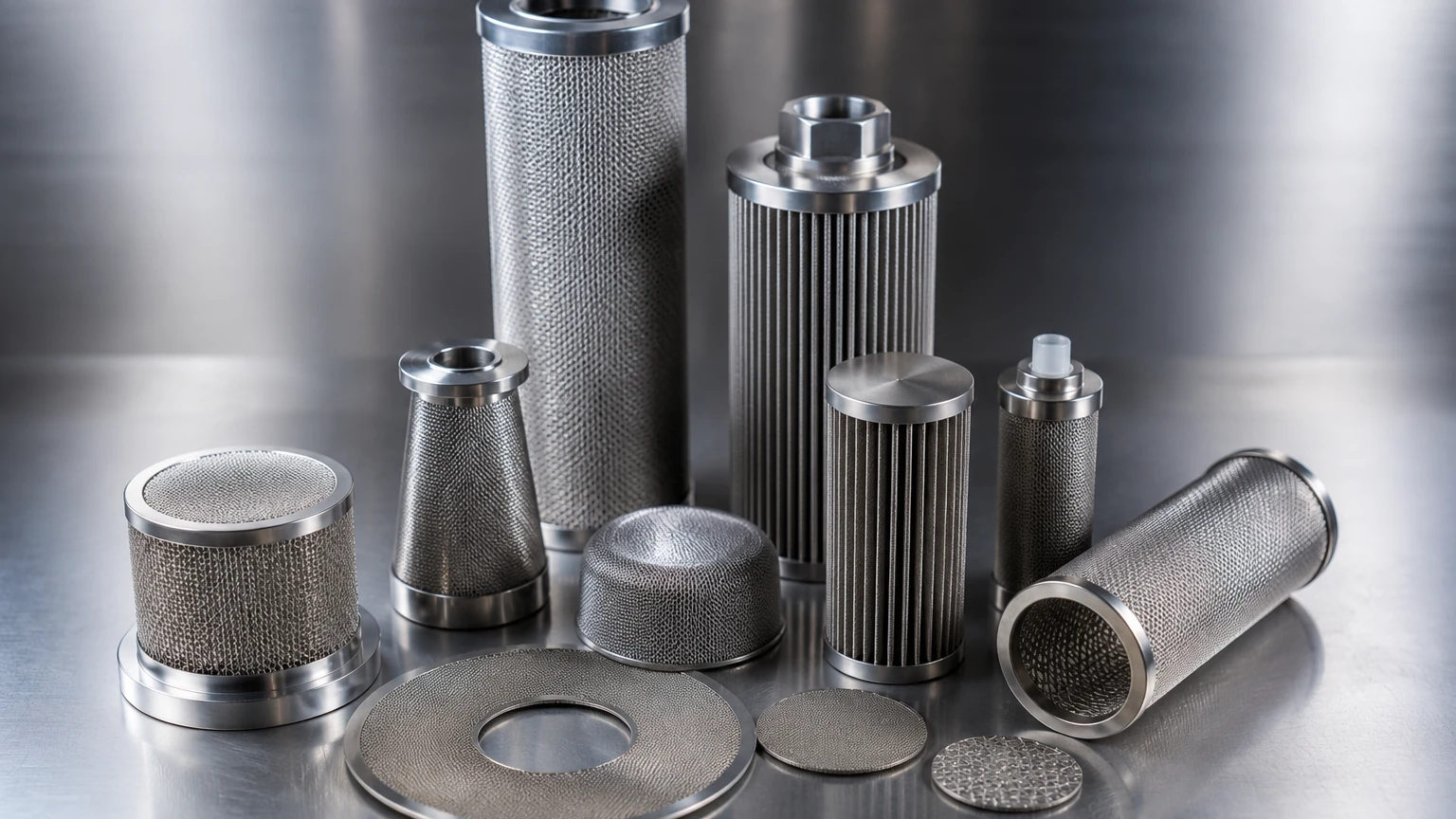
Customization and OEM Solutions
Every industrial process has unique variables, from the specific gravity of the solids to the acidity of the liquid. Standard off-the-shelf vacuum filters often fail to meet the exact needs of specialized chemical or food-grade applications. This is where customization becomes essential.
Customization options often include:
* Tailored Micron Ratings: Engineering the mesh weave to capture specific particle sizes while maximizing flow.
* Reinforced Structures: Adding support layers to filter cartridges to prevent collapse under high vacuum.
* Specialized Alloys: Utilizing Hastelloy or Monel for environments where standard stainless steel may succumb to pitting or stress corrosion cracking.
Kaifil specializes in these types of custom engineering challenges, providing OEM components that integrate seamlessly into existing vacuum filtration systems. Whether you are designing a new system or retrofitting an old one, confirming the technical specifications of your filter elements is a critical step. You can explore these options further on the Main Page.
Risks of Improper Filter Selection
Choosing the wrong type of vacuum filter or an inappropriate medium can lead to several operational risks:
* Media Blinding: When particles become permanently lodged in the medium, reducing flow and requiring premature replacement.
* Filtrate Contamination: If the micron rating is too coarse or the medium fails mechanically, solids will bypass the filter, potentially damaging downstream equipment like vacuum pumps.
* Cake Cracking: In horizontal belt or drum filters, if the vacuum is not properly balanced with the cake thickness, the cake can crack, leading to a loss of vacuum and inefficient drying.
Conclusion: Making an Informed Decision
Understanding the different types of vacuum filters is the first step toward optimizing your industrial separation process. Engineers must balance the mechanical requirements of the slurry—such as cake thickness and washing needs—with the material requirements of the filter media.
Before finalizing a purchase or design, it is recommended to confirm the chemical compatibility of all wetted parts, the expected cleaning intervals, and the availability of custom-engineered components that can withstand the rigors of your specific environment. By focusing on high-quality, durable filtration media, such as the stainless steel solutions provided by Kaifil, industrial operators can achieve higher purity, lower maintenance costs, and more reliable long-term performance.
