


Filters Glass
In industrial filtration, the term "filters glass" encompasses two primary technical areas: the use of glass microfiber as a high-efficiency filtration medium and the integration of sight glasses within filter housings to monitor process fluid clarity and flow. For engineers and procurement specialists, understanding the technical trade-offs between glass-based components and stainless steel alternatives is essential for optimizing system performance, ensuring safety, and managing the total cost of ownership (TCO).
While glass fiber media offers exceptional particle retention for specific applications, stainless steel filtration solutions—such as those manufactured by Kaifil—provide the structural integrity and cleanability required for heavy-duty industrial environments. This guide explores the engineering considerations, material properties, and selection criteria for filters involving glass components and their metal counterparts.
Understanding Glass Microfiber vs. Stainless Steel Mesh Media
When evaluating filtration media, engineers must choose between depth filtration (typically glass fiber) and surface filtration (typically stainless steel wire mesh). Each has distinct performance profiles regarding dirt-holding capacity, pressure drop, and micron ratings.
Glass Microfiber Characteristics
Glass microfiber media is constructed from fine borosilicate glass fibers bonded with resin. These filters operate on the principle of depth filtration, where particles are trapped throughout the thickness of the material.
* High Efficiency: Glass fiber filters often achieve high Beta ratios (efficiency) for sub-micron and low-micron particles. They are frequently used in hydraulic systems and laboratory settings where high-purity filtrate is required.
* Disposable Nature: Unlike stainless steel mesh, glass fiber is a non-cleanable, depth-loading medium. Once the differential pressure reaches a terminal limit, the element must be replaced.
* Chemical Sensitivity: While borosilicate glass is resistant to many acids, it is susceptible to degradation in high-pH alkaline environments and is strictly incompatible with hydrofluoric acid.
Stainless Steel Wire Mesh Characteristics
In contrast, stainless steel filters, such as those found on the Main Page of industrial manufacturers like Kaifil, utilize precise geometric weaves to provide surface filtration.
* Durability and Reusability: Stainless steel elements can be cleaned via backwashing, ultrasonic cleaning, or chemical baths, making them ideal for continuous processes where downtime for replacement is costly.
* Structural Integrity: Metal filters maintain their pore structure under high differential pressures and extreme temperatures, conditions that would cause glass fiber media to compress or migrate.
* No Media Migration: A significant risk with glass fiber is the potential for fiber shedding into the downstream flow. Stainless steel wire mesh is a fixed-pore medium, eliminating the risk of downstream contamination from the filter itself.
The Role of Sight Glasses in Industrial Filter Housings
The second critical aspect of "filters glass" in a B2B context is the sight glass—a transparent window integrated into a filter housing or pipeline. These components allow operators to visually inspect the condition of the filter element and the turbidity of the fluid without interrupting the process.
Material Selection for Sight Glasses
Not all glass is suitable for industrial pressure vessels. Engineers must specify the correct type based on thermal and chemical requirements:
1. Borosilicate Glass (e.g., Borosilicate 3.3): This is the industry standard for sight glasses in chemical and pharmaceutical applications. It offers high resistance to thermal shock and excellent chemical durability.
2. Soda-Lime Glass: Generally used for low-pressure, low-temperature applications. It is more cost-effective but lacks the thermal and chemical resilience of borosilicate.
3. Quartz Glass: Reserved for extremely high-temperature applications (up to 1000°C), though it is significantly more expensive and brittle.
Engineering Standards and Safety
Sight glasses must comply with international standards such as DIN 7080 or ASTM E438. Because glass is a brittle material, the mounting assembly is critical. The glass is typically cushioned between non-asbestos or PTFE gaskets and held in place by a metal retaining flange. For high-pressure systems, "fused sight glasses" are used, where the glass is thermally fused into a metal ring, creating a pre-stressed component that is much more resistant to mechanical failure.
Engineering Considerations for Glass-Based Filtration Components
When designing or purchasing systems that utilize glass filters or sight components, several engineering factors must be addressed to prevent premature failure or process contamination.
Thermal Shock and Expansion
Glass has a much lower coefficient of thermal expansion than stainless steel. In a filter housing where a glass component is mated to a metal body, rapid temperature changes can create significant mechanical stress. Engineers must ensure that the sealing system (gaskets and O-rings) can compensate for this differential expansion. Borosilicate glass is preferred in these scenarios due to its lower expansion rate compared to soda-lime glass.
Pressure Ratings and Stress Concentration
Glass components are the weakest point in a pressurized filtration system. The thickness of the glass must be calculated based on the maximum allowable working pressure (MAWP) and the unsupported diameter of the glass. Any scratches or surface defects on the glass act as stress concentrators, which can lead to catastrophic failure under pressure. Regular inspection protocols are mandatory for any system using glass viewing ports.
Compatibility with Process Fluids
While stainless steel (304, 316L) is the standard for corrosion resistance, certain fluids require the inertness of glass. However, in the food and beverage industry, the use of glass is often restricted due to the risk of fragmentation. In these cases, engineers may opt for "shatter-proof" laminated glass or transition to fully stainless steel systems where monitoring is performed via electronic sensors (turbidity meters) rather than visual sight glasses.
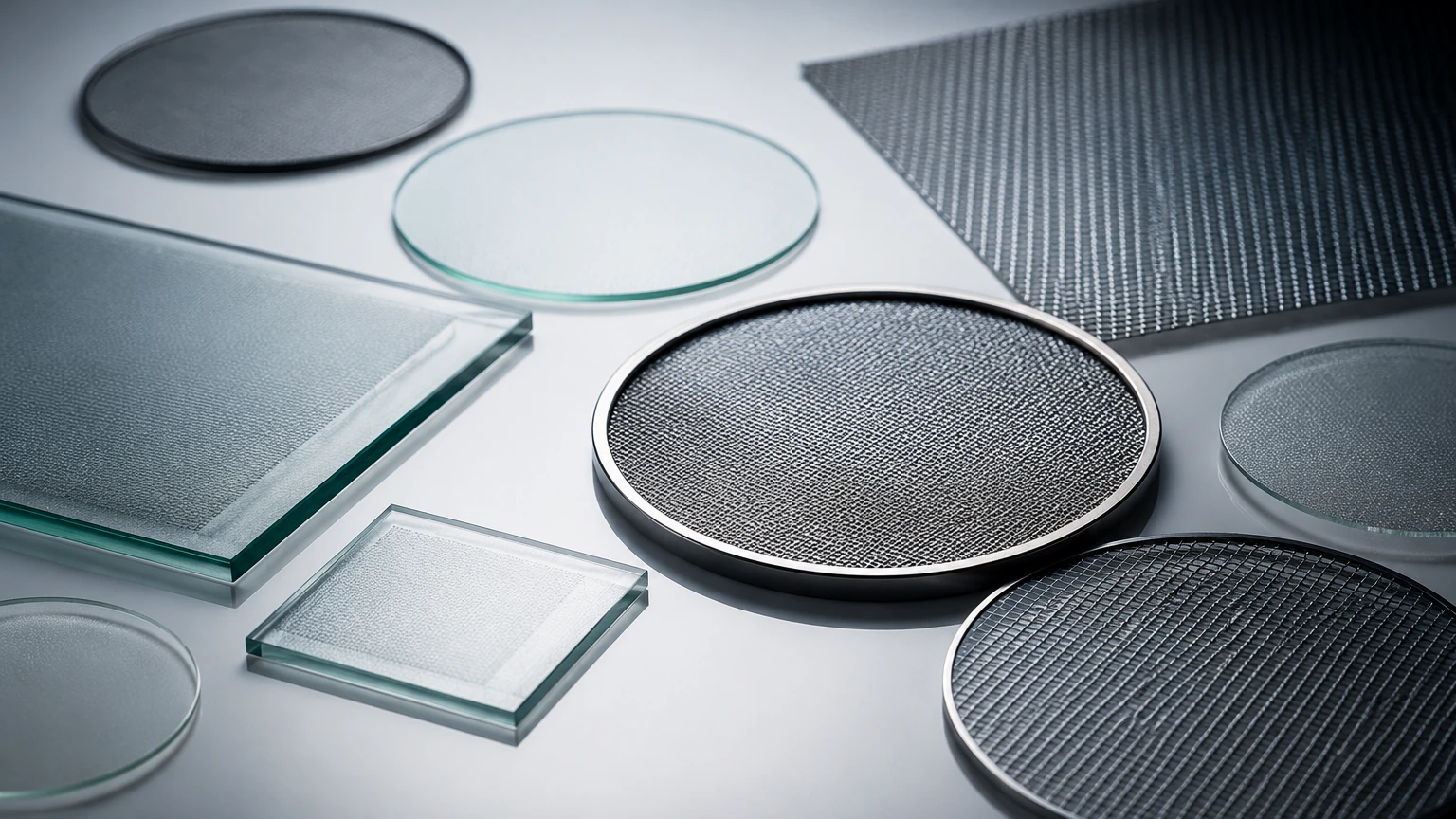
Comparative Analysis: When to Choose Stainless Steel Over Glass Media
For many industrial applications, the transition from disposable glass fiber filters to permanent stainless steel filtration components offers significant long-term advantages.
| Feature | Glass Microfiber | Stainless Steel Wire Mesh |
| :— | :— | :— |
| Filtration Type | Depth (Disposable) | Surface (Cleanable) |
| Temperature Limit | Typically < 250°C (binder limited) | Up to 600°C+ (alloy dependent) |
| Pressure Resistance | Moderate (subject to compression) | Very High (structural stability) |
| Chemical Resistance | Good (except HF and strong alkalis) | Excellent (customizable alloys) |
| Initial Cost | Low | Higher |
| Operational Cost | High (replacement + disposal) | Low (cleaning + reuse) |
High-Viscosity Fluids
In applications involving high-viscosity fluids, such as polymers or heavy oils, glass fiber media often fails due to the high differential pressure required to force the fluid through the depth of the media. Stainless steel pleated elements provide a larger surface area and the mechanical strength to withstand these pressures without collapsing.
Sterilization and Hygiene
In the pharmaceutical and food industries, equipment must undergo Steam-In-Place (SIP) or Clean-In-Place (CIP) procedures. Glass fiber media cannot survive repeated sterilization cycles. Stainless steel 316L filters are the preferred choice as they can be sterilized repeatedly without losing filtration efficiency or structural integrity.
Maintenance and Replacement Cycles for Industrial Filters
Effective maintenance of a filtration system requires a combination of visual inspection (via sight glasses) and instrumentation (differential pressure gauges).
Monitoring Differential Pressure (ΔP)
For both glass fiber and stainless steel filters, ΔP is the primary indicator of filter health.
* For Glass Fiber: A rapid rise in ΔP indicates the depth media is saturated. Because these filters cannot be cleaned, replacement must occur before the "burst pressure" of the media is reached, which could release contaminants downstream.
* For Stainless Steel: A rise in ΔP signals that it is time for a cleaning cycle. Because the mesh is robust, these elements can be cleaned and returned to service multiple times, provided the cleaning process does not damage the wire weave.
Sight Glass Maintenance
Sight glasses must be kept clean to remain functional. In many filter housings, internal wipers are installed to clear the glass surface without opening the vessel. If a sight glass becomes clouded or "frosted," it often indicates chemical etching of the glass, necessitating immediate replacement with a more compatible material.
Conclusion: Selecting the Right Filtration Solution
Choosing between glass-based filtration components and stainless steel alternatives depends on the specific demands of the application. Glass microfiber remains a valuable tool for high-efficiency, single-use filtration in controlled environments. However, for industrial processes requiring durability, high-pressure tolerance, and long-term cost-efficiency, custom stainless steel solutions are often superior.
Engineers should confirm the following before finalizing a filter specification:
1. Fluid Compatibility: Does the process fluid contain HF or high-pH bases that might attack glass?
2. Operating Conditions: Will the system experience thermal shock or high-pressure spikes?
3. Regulatory Requirements: Does the industry (e.g., Food/Pharma) have specific bans on glass components due to fragmentation risks?
4. Cleaning Capabilities: Is the facility equipped to clean and validate stainless steel elements, or is a disposable glass-fiber element more practical for the workflow?
By carefully weighing these factors, technical teams can ensure they select a filtration system that provides reliable performance and safety. For those seeking durable, precision-engineered metal filtration components, manufacturers like Kaifil provide the expertise necessary to develop customized solutions for the most demanding industrial applications. Review product options and application support on the Main Page to determine the best fit for your specific filtration requirements.
