


Filtersun
In the landscape of industrial filtration, the demand for high-efficiency, durable, and chemically resistant components has led to the development of advanced filtration technologies. Filtersun represents a specialized segment of high-performance filtration solutions designed to meet the rigorous requirements of modern industrial processes. For engineers and procurement professionals, understanding the technical nuances of these systems is essential for optimizing process uptime and ensuring product purity. As a manufacturer specializing in custom stainless steel filtration, Kaifil provides the engineering expertise required to implement these high-standard solutions across diverse sectors, including chemical processing, pharmaceuticals, and food production.
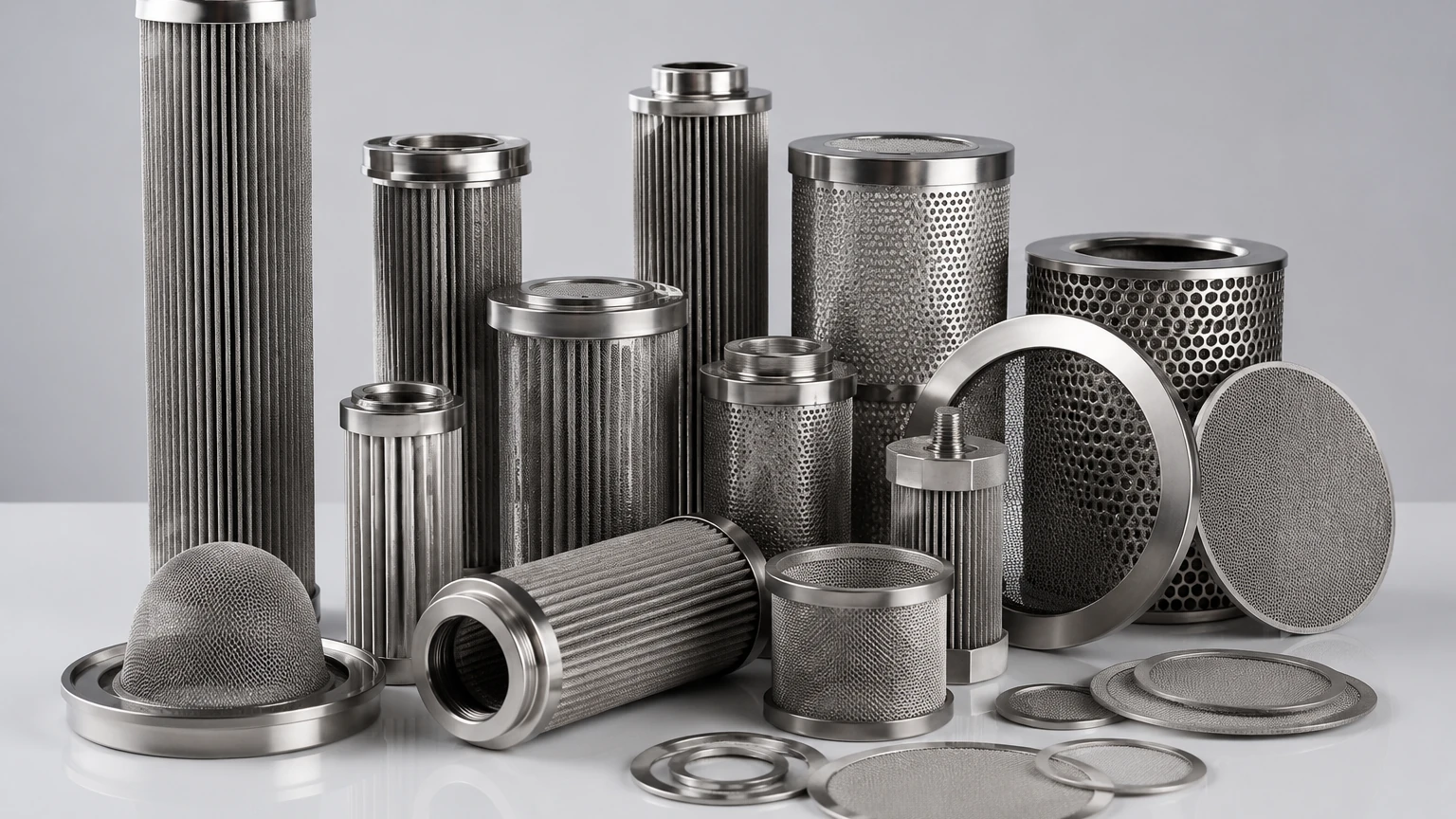
Industrial filtration is not merely about removing particulates; it is about managing fluid dynamics, pressure differentials, and material integrity under stress. The adoption of Filtersun-style configurations—often characterized by pleated designs and robust metal construction—addresses the limitations of traditional disposable filters. By focusing on surface area optimization and material longevity, these components offer a sustainable and cost-effective alternative for demanding applications.
The Role of High-Performance Filtration in Industrial Systems
High-performance filtration serves as a critical safeguard in industrial systems. Whether protecting sensitive downstream equipment like high-pressure pumps and nozzles or ensuring the final quality of a chemical batch, the reliability of the filter element is paramount. Filtersun technology is frequently integrated into systems where failure is not an option, providing a consistent barrier against contaminants.
In hydraulic systems, for instance, microscopic particles can cause catastrophic wear on precision valves. In the food and beverage industry, filtration must not only be effective but also compliant with stringent sanitary standards. The transition toward high-performance metal filters is driven by the need for components that can withstand high temperatures, aggressive cleaning cycles, and high differential pressures without compromising structural integrity.
Technical Specifications and Structural Design of Filtersun Components
The efficiency of a filter is largely determined by its structural design. Filtersun elements typically utilize a pleated architecture. Pleating significantly increases the effective filtration area within a fixed footprint. This increased surface area results in a lower face velocity—the speed at which the fluid passes through the filter media—which in turn reduces the pressure drop across the element and extends the dirt-holding capacity.
Pleated Wire Mesh vs. Sintered Fiber Felt
When selecting a Filtersun component, engineers must choose between different types of media based on the required filtration accuracy:
1. Stainless Steel Wire Mesh: This media offers precise pore sizes and is ideal for surface filtration. It is easily cleaned and provides excellent mechanical strength. It is commonly used for coarse to fine filtration where the particle size distribution is relatively uniform.
2. Sintered Metal Fiber Felt: For applications requiring high porosity and deep filtration, sintered fiber felt is preferred. It consists of thin stainless steel fibers that are randomly laid and sintered together, creating a complex three-dimensional labyrinth. This structure allows for exceptionally high dirt-holding capacity and is effective at capturing irregular particles.
Structural Reinforcement
To prevent the pleats from collapsing under high differential pressure, these elements are often supported by internal and external perforated cores. The choice of core material and thickness is a critical engineering consideration, especially in high-viscosity applications or systems prone to pressure surges. For more information on structural options, professionals can visit the Main Page to review specific engineering configurations.
Material Engineering: Stainless Steel and Alloy Selection
Material selection is the foundation of filter performance in corrosive or high-temperature environments. Filtersun solutions primarily utilize stainless steel alloys due to their versatility and resistance to oxidation.
* AISI 304/304L: The standard choice for general industrial applications where moderate corrosion resistance is required. It is widely used in water treatment and less aggressive chemical environments.
* AISI 316/316L: Containing molybdenum, these alloys offer superior resistance to chlorides and organic acids. 316L (low carbon) is preferred for welded components to prevent intergranular corrosion in the heat-affected zones.
* Specialty Alloys: In extreme cases involving highly concentrated acids or high-temperature steam (exceeding 500°C), alloys like Inconel or Hastelloy may be employed. These materials maintain their mechanical properties under conditions that would cause standard stainless steel to fail.
Understanding the chemical compatibility of the filter media with the process fluid is a prerequisite for selection. Engineers must account for the pH levels, operating temperatures, and the presence of oxidizing agents to ensure the long-term viability of the filter element.
Evaluating Filtration Efficiency and Flow Characteristics
Performance evaluation of Filtersun elements centers on two primary metrics: filtration rating and pressure drop.
Micron Ratings: Absolute vs. Nominal
It is vital to distinguish between absolute and nominal ratings. A nominal rating refers to a filter's ability to retain a major weight percentage of particles of a certain size. In contrast, an absolute rating indicates the diameter of the largest hard spherical particle that will pass through the filter under specified test conditions. For critical pharmaceutical or fine chemical processes, absolute-rated Filtersun elements are necessary to guarantee the exclusion of contaminants.
Pressure Drop (Delta P)
The pressure drop across a filter is a function of the fluid's viscosity, flow rate, and the clean resistance of the filter media. As the filter accumulates debris, the Delta P increases. Engineering a system with a Filtersun element involves calculating the "clean" pressure drop to ensure that the pump has sufficient head to maintain the required flow rate even as the filter reaches its terminal pressure drop. Minimizing initial Delta P through optimized pleat geometry is a hallmark of high-quality manufacturing.
Application Scenarios: From Chemical Processing to Food and Beverage
The versatility of Filtersun technology allows it to be deployed across a wide spectrum of industries, each with unique challenges.
Chemical and Petrochemical Processing
In these environments, filters must handle aggressive solvents and high-pressure catalysts. Stainless steel Filtersun cartridges are used to recover expensive catalysts from process streams and to protect downstream reactors from particulate contamination. Their ability to be cleaned and reused is a significant advantage over disposable polymer filters, which may degrade in the presence of certain chemicals.
Food and Beverage Production
Sanitary filtration requires components that are free of dead spaces where bacteria can proliferate. Filtersun elements designed for this sector often feature electropolished surfaces and specialized end caps (such as 222 or 226 configurations with O-rings) to ensure a leak-proof, hygienic seal. Applications include the filtration of steam for sterilization, the removal of yeast in brewing, and the clarification of syrups.
Hydraulic and Lubrication Systems
In heavy machinery, maintaining oil cleanliness is essential for preventing component failure. Filtersun elements provide the high-collapse strength required for hydraulic return lines and suction strainers, ensuring that even under cold-start conditions with high-viscosity oil, the filter remains intact.
Customization and OEM Manufacturing Considerations
Off-the-shelf filtration solutions often fail to meet the specific spatial or performance constraints of specialized industrial equipment. This is where customization becomes a strategic advantage. As a dedicated manufacturer, Kaifil works with OEM partners to develop Filtersun components tailored to exact specifications.
Customization options include:
* Dimensional Adjustments: Modifying length, diameter, and pleat depth to fit existing housings or to optimize flow in compact spaces.
* End Cap Configurations: Engineering custom fittings, threads, or flanges to ensure seamless integration with proprietary systems.
* Multi-Layer Composites: Combining different grades of mesh or felt to create a graduated filtration effect, which maximizes dirt-holding capacity and extends the time between cleaning cycles.
By collaborating with a manufacturer that understands the intersection of metallurgy and fluid dynamics, purchasing teams can secure components that enhance the overall efficiency of their machinery. Detailed technical support for custom projects is available through the Main Page.
Maintenance Strategies and Lifecycle Management
One of the primary B2B advantages of stainless steel Filtersun elements is their cleanability. Unlike disposable filters that contribute to waste streams and recurring procurement costs, metal filters can be restored through various cleaning methods:
1. Ultrasonic Cleaning: High-frequency sound waves create cavitation bubbles that dislodge fine particles from deep within the mesh or fiber felt.
2. Backwashing: Reversing the flow of the fluid can effectively remove surface-loaded contaminants in automated systems.
3. Chemical Cleaning: Soaking the elements in compatible solvents or acids can dissolve organic or inorganic scaling.
4. Burn-off/Pyrolysis: For filters used in polymer or resin processing, high-temperature ovens can be used to burn off organic residues, leaving the metal structure intact.
Total Cost of Ownership (TCO)
While the initial purchase price of a stainless steel Filtersun element is higher than a plastic or paper equivalent, the Total Cost of Ownership is often significantly lower. When factoring in the cost of frequent replacements, disposal fees for contaminated waste, and the labor associated with filter changes, a permanent metal solution provides a better return on investment over a 2-to-5-year horizon.
Selecting the Right Filtration Solution for Demanding Environments
When engineers evaluate a Filtersun provider, they should confirm several key parameters to ensure the product is fit for purpose:
* Operating Pressure and Temperature: Ensure the materials and welding techniques (such as TIG or plasma welding) are rated for the maximum process conditions.
* Fluid Compatibility: Verify that the alloy and seal materials (Viton, EPDM, PTFE) are compatible with the process fluid.
* Filtration Target: Define the particle size and concentration that must be removed.
* Cleaning Infrastructure: Determine if the facility has the equipment necessary to clean and validate the filters for reuse.
By addressing these factors during the design phase, companies can avoid costly mid-process failures and optimize their filtration performance. For those seeking to explore the full range of custom metal filtration components and engineering services, the Main Page serves as a comprehensive resource for technical data and application support.
In conclusion, Filtersun technology represents the pinnacle of industrial filtration durability and precision. By leveraging the mechanical strength of stainless steel and the efficiency of pleated designs, these components provide a reliable solution for the world's most demanding industrial processes. Whether for a new installation or the optimization of an existing system, selecting high-quality metal filtration is a decision that impacts both operational efficiency and long-term profitability.
