


Flask Filter
In both laboratory and industrial processing environments, the flask filter serves as a fundamental component for solid-liquid separation. While often associated with small-scale vacuum filtration in research settings, the engineering principles behind the flask filter—specifically the media used to perform the separation—are critical for scaling up to industrial production. For engineers and procurement specialists, understanding the technical nuances of filtration media, material compatibility, and structural integrity is essential for ensuring process efficiency and product purity.
Industrial filtration often requires moving beyond standard laboratory glassware toward robust, high-performance materials. As a specialized manufacturer, Kaifil provides the precision metal components that drive these systems, ensuring that even the most demanding chemical or pharmaceutical processes maintain rigorous standards. You can explore our full range of technical solutions on our Main Page.
Understanding the Mechanics of Flask Filtration
The primary function of a flask filter is to separate solids from a liquid medium using a pressure differential. In most applications, this is achieved through vacuum filtration, where a vacuum pump reduces the pressure inside a receiving flask, drawing the liquid through a filter medium while the solids are retained on the surface.
Vacuum vs. Gravity Filtration
While gravity filtration relies solely on the weight of the liquid to pass through the media, vacuum-assisted flask filtration is significantly faster and more effective for capturing fine particulates. The efficiency of this process is dictated by three main factors:
1. Pressure Differential (ΔP): The difference in pressure between the top of the filter and the inside of the flask.
2. Viscosity of the Fluid: Thicker fluids require higher pressure or more porous media.
3. Filter Media Resistance: The physical barrier provided by the mesh or membrane.
In industrial settings, the "flask" may evolve into a large-scale vacuum receiver, but the requirement for a high-quality, durable filter element remains constant. Engineers must select media that can withstand the mechanical stress of the vacuum without deforming or bypassing.
Material Selection: Why Stainless Steel Dominates
When selecting a flask filter for industrial-scale operations, material science is the most critical variable. While polymer membranes and glass fiber are common in disposable lab settings, industrial applications demand the longevity and chemical resistance of stainless steel.
Chemical Compatibility
Stainless steel, particularly grades 304 and 316L, offers exceptional resistance to a wide array of solvents, acids, and bases. In pharmaceutical and chemical processing, where the filtrate may be corrosive or processed at high temperatures, stainless steel filter elements prevent leaching and contamination that could occur with plastic housings or synthetic membranes.
Temperature and Pressure Resistance
Unlike synthetic filters that may soften or degrade at elevated temperatures, stainless steel components maintain their structural integrity. This is vital for processes involving hot solvents or steam sterilization (SIP). Furthermore, the mechanical strength of metal wire mesh allows for higher pressure differentials, enabling faster throughput without the risk of media rupture.
Reusability and Sustainability
A significant advantage of stainless steel flask filter components is their cleanability. In a B2B context, the total cost of ownership is often lower for permanent metal filters compared to a high volume of single-use disposables. These components can be cleaned via ultrasonic baths, backwashing, or chemical cleaning, making them a sustainable choice for long-term operations.
Key Engineering Specifications for Filter Selection
Selecting the right flask filter component requires a deep dive into technical specifications. Engineers must balance filtration fineness with flow rate to optimize the process.
Micron Rating and Pore Size Distribution
The micron rating defines the size of particles the filter is intended to capture. However, it is important to distinguish between nominal and absolute ratings:
* Nominal Rating: Indicates the ability to retain a majority of particles of a specific size (e.g., 90% of 10-micron particles).
* Absolute Rating: Refers to the diameter of the largest hard spherical particle that will pass through the filter under specified test conditions.
For precision applications, such as catalyst recovery or fine chemical purification, absolute-rated stainless steel mesh is often required to ensure no oversized contaminants pass into the flask.
Effective Filtration Area (EFA)
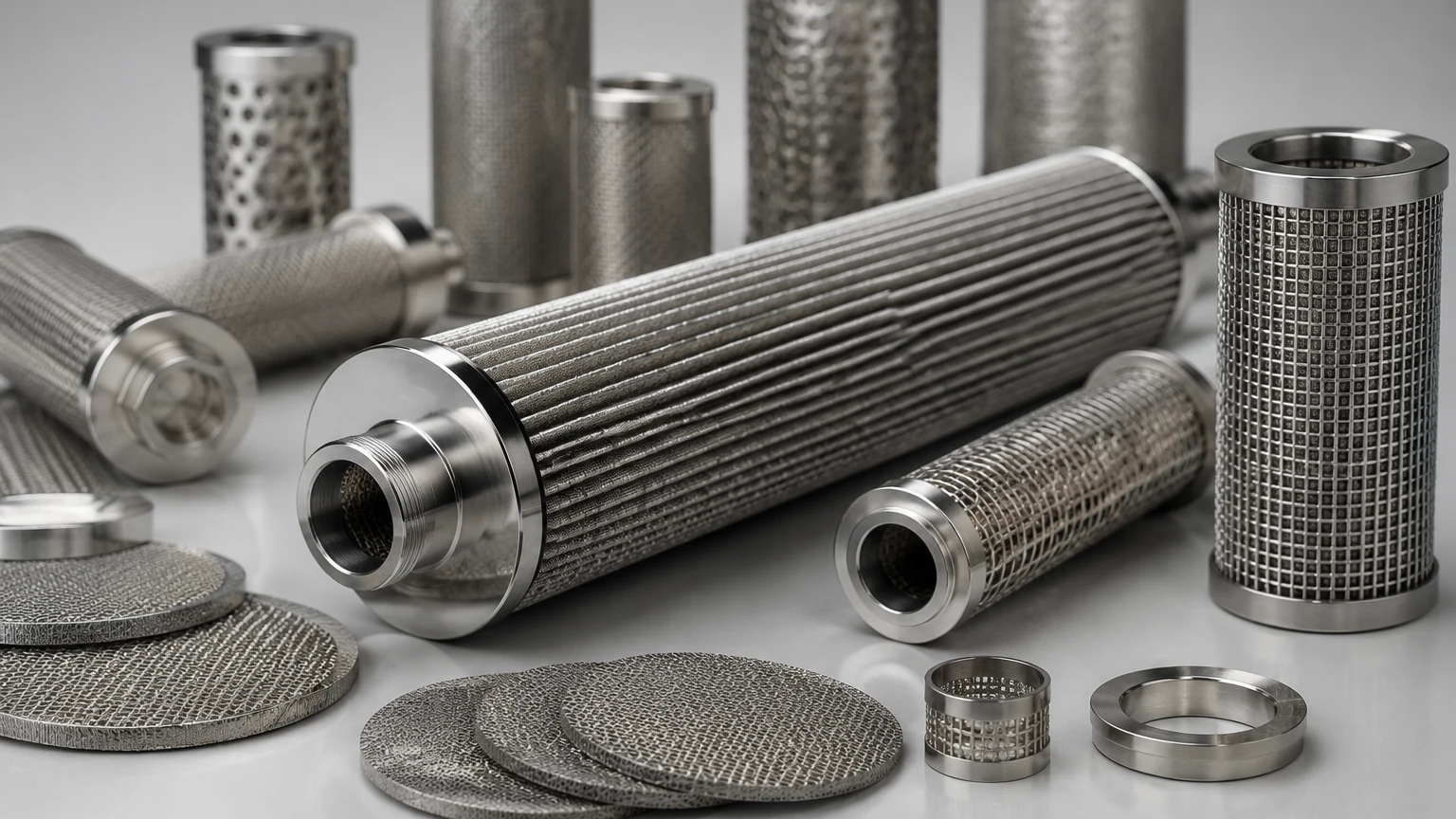
The EFA determines the capacity of the filter before it becomes blinded by solids. A larger EFA allows for longer run times and lower pressure drops. In custom industrial designs, pleating the stainless steel mesh can significantly increase the EFA within the same footprint as a flat disc filter, providing a more efficient solution for high-solids loading.
Flow Rate and Pressure Drop
Every filter medium introduces a pressure drop. If the drop is too high, the vacuum pump must work harder, increasing energy costs and potentially causing the liquid to boil under vacuum. Engineering the mesh weave—such as plain weave, twilled weave, or Dutch weave—allows for the optimization of flow paths to minimize resistance while maintaining strict particle retention.
Applications Across Demanding Industries
The utility of a robust flask filter system extends across various sectors, each with unique regulatory and technical requirements.
Pharmaceutical and Biotechnology
In drug manufacturing, sterility and pyrogen-free components are non-negotiable. Stainless steel filters are preferred because they can be polished to a high surface finish (Ra < 0.8 µm) to prevent bacterial growth and facilitate thorough sterilization. They are commonly used in the filtration of active pharmaceutical ingredients (APIs) and intermediate buffers.
Chemical Processing
Chemical plants often deal with aggressive solvents that would dissolve standard laboratory filter components. Custom-engineered metal filters provide the necessary durability for catalyst recovery, solvent purification, and the removal of impurities from bulk chemicals.
Food and Beverage
For food-grade applications, filters must comply with FDA and EU regulations. Stainless steel is the gold standard for hygiene. Flask filtration setups are used in pilot plants for the clarification of extracts, oils, and concentrated flavorings, where maintaining the sensory profile of the product is as important as its purity.
Selection Criteria for Purchasing Teams
When procuring flask filter components for industrial use, purchasing teams should look beyond the initial price tag and evaluate the long-term value and technical support provided by the manufacturer.
1. Customization Options: Does the application require a specific diameter, a reinforced rim, or a multi-layer sintered structure? Off-the-shelf solutions often fail to meet the exact needs of specialized industrial equipment.
2. Certification and Traceability: For regulated industries, material certificates (MTRs) and compliance documentation are essential. Ensure the supplier can provide proof of material grade and filtration performance.
3. Replacement Cycles: While stainless steel is durable, it is not infinite. Understanding the expected lifespan and the ease of obtaining replacement elements is crucial for preventing unplanned downtime.
4. Technical Support: A reliable manufacturer should be able to assist with calculations regarding flow rates and pressure drops to ensure the filter element is correctly sized for the vacuum system.
Maintenance and Longevity of Metal Filter Components
To maximize the ROI of a high-quality flask filter, proper maintenance protocols must be established. Unlike disposable paper or polymer filters, metal mesh requires a systematic approach to cleaning.
Cleaning Protocols
* Ultrasonic Cleaning: This is the most effective method for removing fine particles trapped within the depths of the mesh. High-frequency sound waves create cavitation bubbles that dislodge contaminants without damaging the wire structure.
* Chemical Cleaning: Depending on the nature of the residue, soaking the filter in compatible detergents or mild acids can dissolve organic or inorganic build-up.
* Backwashing: In some integrated systems, reversing the flow of clean fluid through the filter can flush out the filter cake, extending the interval between deep cleanings.
Inspection for Wear
Engineers should regularly inspect filter elements for signs of mechanical fatigue, such as wire displacement, pinholes, or corrosion. Even 316L stainless steel can succumb to pitting in high-chloride environments if not monitored. Regular inspection ensures that the integrity of the filtration process is never compromised.
Conclusion
The flask filter is more than just a piece of laboratory equipment; it represents a critical stage in the separation science that powers modern industry. By selecting high-quality stainless steel components, engineers can ensure their processes are efficient, repeatable, and compliant with the highest industry standards. Whether you are refining a chemical process or developing a new pharmaceutical product, the choice of filtration media is a fundamental engineering decision.
Kaifil specializes in the design and manufacture of these high-performance filtration components, offering the technical expertise required to solve complex separation challenges. For more information on our customized solutions and to view our full product catalog, please visit our Main Page.
