


Filter Mesh Micron
In industrial filtration, the term "micron" is perhaps the most critical specification used by engineers to define the performance and efficiency of a separation system. When selecting stainless steel wire mesh for critical applications in chemical processing, pharmaceuticals, or hydraulic systems, understanding the nuances of the filter mesh micron rating is essential for ensuring process integrity and equipment longevity. This guide provides a technical deep dive into the relationship between mesh count and micron size, the distinction between nominal and absolute ratings, and the engineering considerations required to optimize filtration performance.
Understanding the Micron in Industrial Filtration
A micron, or micrometer (µm), is a unit of length equal to one-millionth of a meter (0.001 mm). In the context of filtration, it refers to the size of the particles that a filter medium is designed to capture. For industrial professionals, the filter mesh micron rating determines the "fineness" of the mesh.
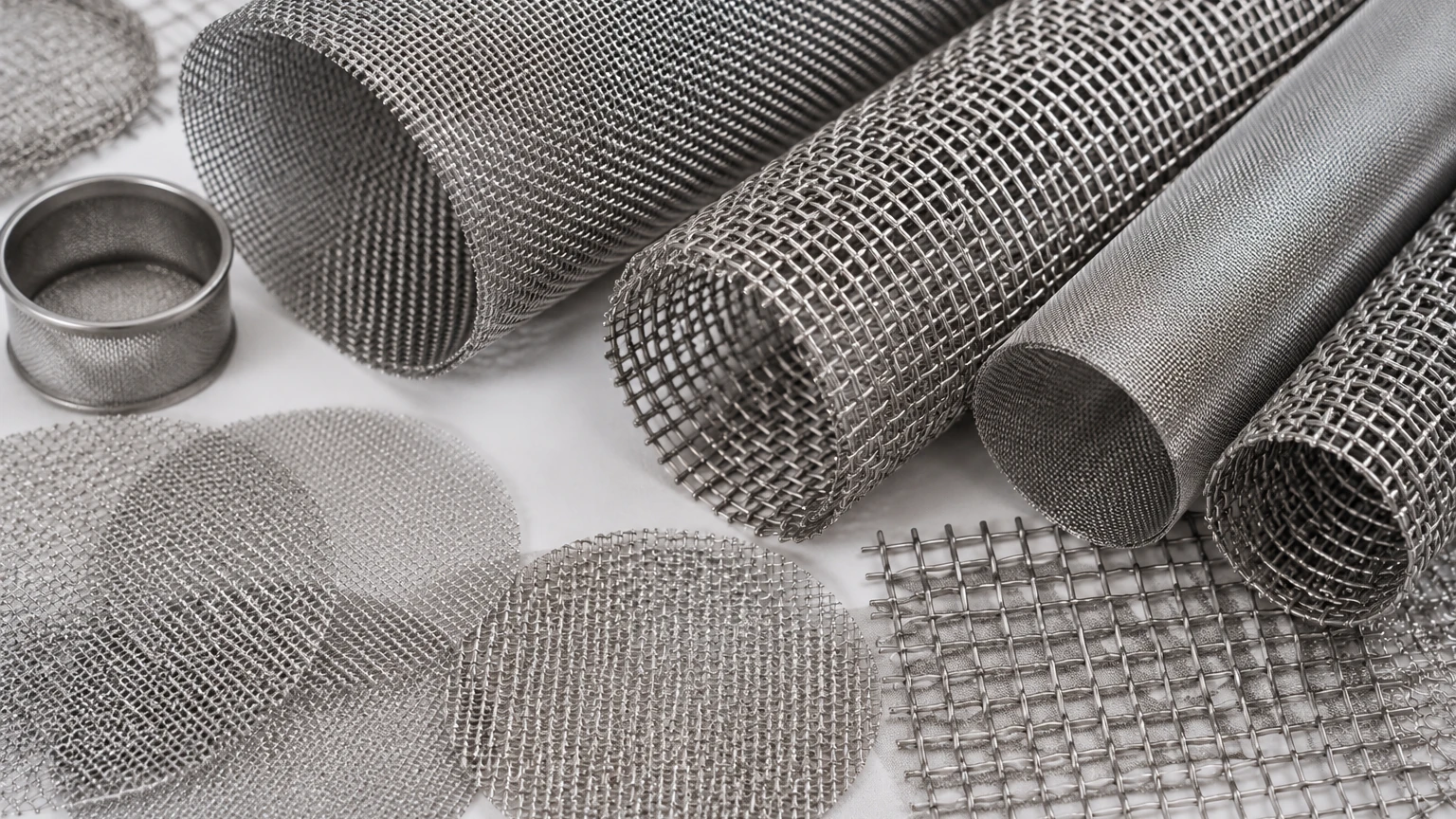
Stainless steel wire mesh is unique because it offers a rigid, fixed pore structure. Unlike polymer membranes or felt media that may deform under pressure, a well-manufactured stainless steel filter maintains its micron rating even under high differential pressures. Kaifil specializes in manufacturing these high-precision components, ensuring that the physical dimensions of the mesh openings align strictly with the required engineering specifications.
The Relationship Between Mesh Count and Micron Rating
One of the most common points of confusion in procurement is the difference between "mesh" and "micron." While they are related, they describe different physical attributes of the filter cloth.
1. Mesh Count: This refers to the number of wires per linear inch (25.4 mm). A 100-mesh screen has 100 wires running in one direction and 100 wires running perpendicular to them within a single inch.
2. Micron Rating: This refers to the actual width of the opening between those wires.
The mathematical relationship between the two is governed by the wire diameter. The formula for determining the opening size is:
Opening (Microns) = [(25,400 / Mesh Count) – Wire Diameter in Microns]
For example, if you have a 200-mesh screen with a wire diameter of 53 microns, the calculation would be (25,400 / 200) – 53 = 74 microns. This illustrates why two different 200-mesh screens can have different micron ratings if they utilize different wire diameters. When specifying requirements on the Main Page, engineers must provide both the mesh count and the wire diameter, or the target micron rating, to ensure the resulting component meets the application's flow and retention needs.
Nominal vs. Absolute Micron Ratings
When evaluating a filter mesh micron specification, it is vital to distinguish between nominal and absolute ratings. This distinction often dictates the success or failure of a filtration process in high-stakes environments like pharmaceutical manufacturing or aerospace hydraulics.
Nominal Micron Rating
A nominal rating is an indicative value. It suggests that the filter can retain a certain percentage (typically 60% to 90%) of particles of a specific size. Nominal filters are often used for pre-filtration or in applications where 100% retention is not critical. Because nominal ratings are not standardized across the industry, they can vary significantly between manufacturers.
Absolute Micron Rating
An absolute rating refers to the diameter of the largest spherical particle that will pass through the filter under specific laboratory test conditions. For stainless steel wire mesh, the absolute rating is generally determined by the physical size of the largest opening in the weave. In precision engineering, an absolute rating implies a filtration efficiency of 99% or higher. For critical tasks, such as protecting sensitive fuel injectors or high-pressure hydraulic valves, an absolute filter mesh micron rating is mandatory to prevent catastrophic component wear.
The Impact of Weave Types on Micron Precision
The way wires are interlaced—the weave type—directly impacts the available filter mesh micron range and the structural integrity of the filter cartridge.
Plain Weave
This is the most common weave, where each warp wire crosses alternately over and under each shute wire. Plain weave is typically used for coarser filtration, generally ranging from 75 microns up to several millimeters. It offers high flow rates and is easy to clean, making it ideal for strainers and primary water treatment.
Twill Weave
In a twill weave, each shute wire passes alternately over and under two warp wires. This allow for the use of heavier wires in a given mesh count, providing greater strength. Twill weaves are often used when a fine micron rating is required in a mesh that must also withstand significant mechanical stress.
Dutch Weave (Plain and Twill)
Dutch weaves utilize different diameters for the warp and shute wires. The wires are driven closely together, creating a "tortuous path" for the fluid. This weave type is essential for fine filtration.
* Plain Dutch Weave can achieve ratings down to 20-40 microns.
* Twill Dutch Weave can achieve incredibly fine filtration, often down to 1-5 microns.
Because Dutch weaves do not have "straight-through" openings, they provide superior depth filtration characteristics compared to plain square mesh, effectively increasing the dirt-holding capacity while maintaining a precise micron cutoff.
Material Selection and Micron Stability
The material used to manufacture the mesh is as important as the weave itself. In industrial environments, chemical corrosion or thermal expansion can alter the filter mesh micron openings during operation.
Kaifil primarily utilizes stainless steel grades 304, 316, and 316L.
* Grade 304: Suitable for general industrial use where high corrosion resistance is not the primary concern.
* Grade 316/316L: Contains molybdenum, which provides superior resistance to chlorides and acids. This is the standard for chemical processing and marine applications.
Stainless steel is preferred over synthetic fibers because it does not "migrate." In many polymer filters, the fibers can shift or shed, which changes the micron rating during the filter's life cycle. Stainless steel wire mesh provides a stable, fixed aperture that ensures consistent performance from the first hour of service to the last.
Engineering Considerations: Pressure Drop and Flow Rate
Choosing the finest filter mesh micron rating available is not always the best engineering decision. There is an inverse relationship between filtration fineness and flow capacity.
Pressure Drop (Delta P)
As the micron rating decreases (becoming finer), the open area of the mesh typically decreases as well. This leads to a higher initial pressure drop across the filter. If the micron rating is too fine for the application, the filter will reach its terminal pressure drop too quickly, leading to frequent cleaning cycles or system bypass.
Particle Size Distribution (PSD)
Engineers should analyze the particle size distribution of the contaminant in their fluid. If 90% of the contaminants are 50 microns or larger, using a 5-micron absolute filter may be inefficient. A staged approach—using a coarse pre-filter followed by a fine secondary filter—often results in the lowest total cost of ownership by extending the life of the more expensive fine-micron elements.
Customization and OEM Solutions
Every industrial process has unique requirements regarding temperature, pressure, and chemical exposure. Off-the-shelf filtration products often fail to meet the exact micron requirements or physical dimensions needed for specialized machinery.
Kaifil provides comprehensive OEM and customized filtration solutions, allowing engineers to specify the exact filter mesh micron performance required for their specific equipment. This includes custom-shaped wire mesh filters, pleated stainless steel cartridges for increased surface area, and reinforced filter components for high-pressure hydraulic applications. By working directly with a manufacturer, purchasing teams can ensure that the filtration components are optimized for both performance and manufacturability.
Quality Control and Verification
To ensure that a filter mesh micron rating is accurate, rigorous testing is required. Common methods include:
* Bubble Point Test: Used to determine the pore size of the mesh by measuring the pressure required to force air bubbles through a liquid-saturated medium.
* Glass Bead Test: Passing calibrated glass beads of known sizes through the mesh to determine the absolute retention capability.
* Microscopic Inspection: Using high-resolution imaging to measure wire diameter and aperture size across multiple points of the mesh roll to ensure uniformity.
These quality control measures prevent "off-spec" material from entering the production line, which is critical for industries like food and beverage where a single failed filter can lead to product recalls.
Conclusion: Selecting the Right Micron Rating
Selecting the correct filter mesh micron rating is a balance of science and practical application. It requires an understanding of the fluid dynamics, the nature of the contaminants, and the structural requirements of the filter element. For engineers and procurement specialists, focusing on absolute ratings, appropriate weave types, and high-quality materials like 316L stainless steel will yield the most reliable results.
Whether you are designing a new chemical processing line or replacing filters in an existing hydraulic system, the technical expertise of the manufacturer is a vital resource. For detailed specifications and to explore custom engineering options, visit the Kaifil Main Page to review product options and application support. By prioritizing precision in the filter mesh micron selection process, industrial operations can achieve higher efficiency, reduced downtime, and superior product purity.
