


Wastewater Filtration for Wash Rack Equipment
Industrial wash racks are essential for the maintenance and longevity of heavy machinery, vehicles, and industrial components. However, the process of cleaning equipment used in construction, mining, agriculture, and transportation generates significant volumes of contaminated water. Effective wastewater filtration for wash rack equipment is not merely a regulatory requirement but a critical operational strategy to ensure environmental compliance, protect downstream plumbing, and enable water recycling.
For engineers and facility managers, selecting the right filtration system involves understanding the complex nature of wash rack effluent, which often contains a mixture of suspended solids, hydrocarbons, detergents, and heavy metals. Utilizing high-performance filtration components, such as those found on our Main Page, ensures that these contaminants are removed efficiently, protecting both the environment and the equipment itself.
The Complexity of Wash Rack Wastewater
Wastewater generated by wash racks is significantly more difficult to treat than standard municipal sewage. The contaminants are typically concentrated and vary depending on the specific application. Understanding these components is the first step in designing an effective filtration sequence.
Total Suspended Solids (TSS)
Wash racks for heavy equipment often deal with large amounts of mud, silt, sand, and gravel. These solids can quickly clog standard filtration systems if not managed through a multi-stage approach. Large particles are usually settled out in primary pits, but finer particles require precision filtration to prevent damage to high-pressure pumps used in the washing process.
Fats, Oils, and Grease (FOG)
Hydrocarbons from engine leaks, hydraulic fluids, and lubricants are ubiquitous in wash rack wastewater. These substances can coat filtration media, reducing efficiency and increasing maintenance frequency. Effective filtration must either incorporate oil-water separators or use filtration materials that can withstand oil loading without permanent fouling.
Chemical Contaminants
Detergents and degreasers used in the cleaning process can emulsify oils, making them harder to separate. Additionally, the wastewater may contain heavy metals like lead, copper, and zinc, which are often regulated by local discharge permits. Specialized filtration media or stainless steel cartridges with specific coatings may be required to address these dissolved or finely dispersed constituents.
Filtration Technologies for Heavy-Duty Wash Racks
To manage the high demands of wash rack operations, several filtration technologies are commonly employed. The choice of technology depends on the desired water quality—whether the goal is simple discharge to a sewer or high-quality water for a closed-loop recycling system.
Stainless Steel Wire Mesh Filters
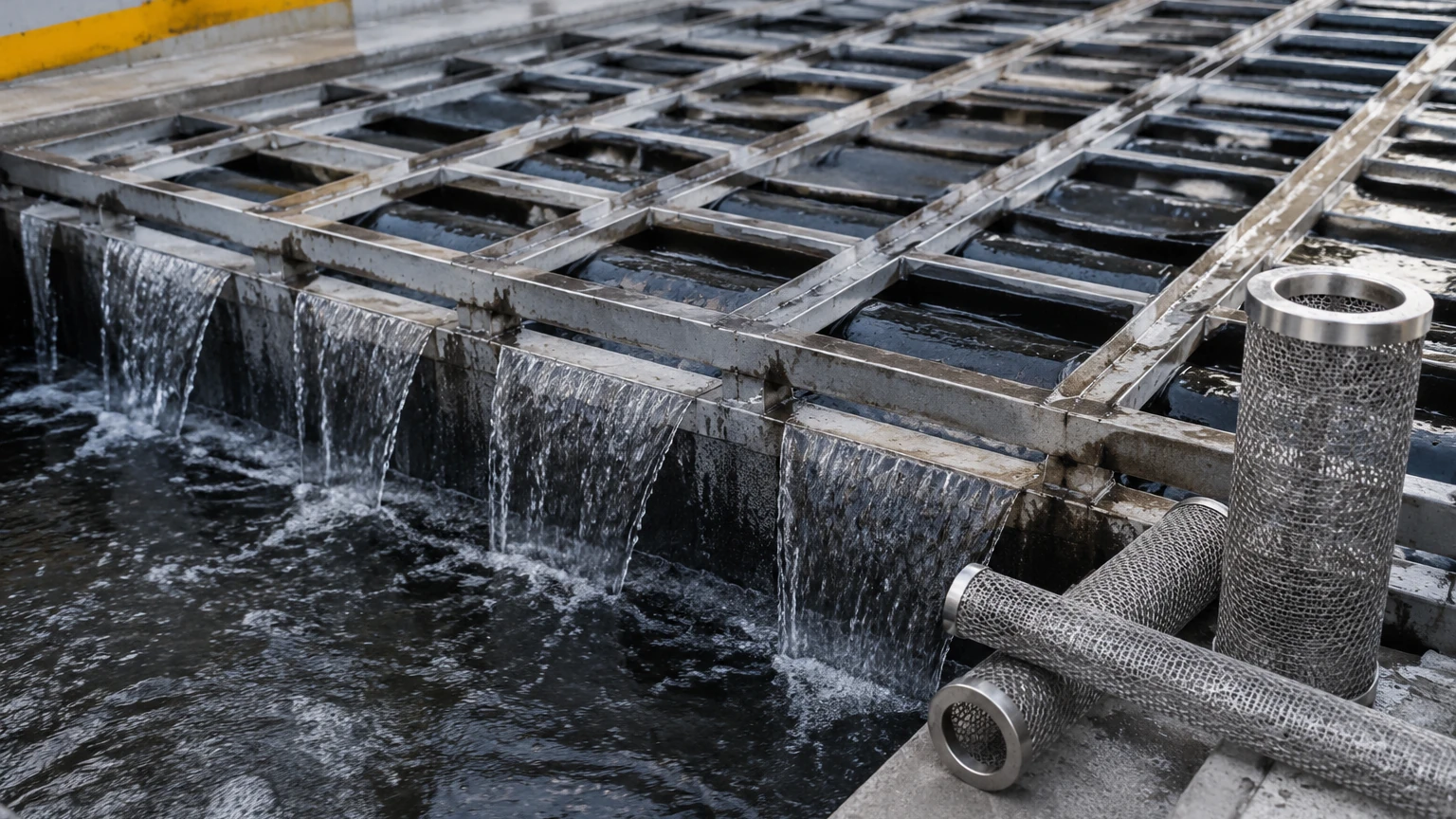
Stainless steel wire mesh is a preferred choice for primary and secondary filtration in wash rack environments. Its mechanical strength allows it to handle high flow rates and high-pressure differentials. Unlike synthetic bags or cartridges, stainless steel mesh is cleanable and reusable, providing a lower total cost of ownership in high-solids applications. These filters are particularly effective at removing abrasive grit that would otherwise cause premature wear on wash rack pumps.
Precision Metal Filter Cartridges
For finer filtration requirements, such as protecting sensitive spray nozzles or meeting strict discharge limits, precision metal filter cartridges offer absolute micron ratings. These components provide consistent performance under varying temperature and pressure conditions, which is common in steam cleaning or hot water wash applications. Their rigid structure prevents "bypass," a common failure in soft media where particles are forced through the filter under pressure.
Multi-Stage Filtration Systems
Most effective wastewater filtration for wash rack equipment utilizes a tiered approach:
1. Primary Separation: Gravity-based settling tanks or pits to remove heavy solids and free-floating oil.
2. Secondary Filtration: Coarse stainless steel mesh filters (typically 100 to 500 microns) to protect downstream equipment.
3. Tertiary Filtration: Fine filtration (5 to 50 microns) using cartridges or specialized media to polish the water for reuse or discharge.
Critical Engineering Parameters for Filter Selection
When specifying filtration components for a wash rack system, engineers must evaluate several technical factors to ensure the system meets performance expectations without becoming a maintenance burden.
Flow Rate and Pressure Drop
The filtration system must be sized to handle the maximum output of the wash rack’s pressure washers. A filter that is too small will create a significant pressure drop (Delta P), reducing the cleaning power of the wash rack. Conversely, an oversized system may lead to inefficient use of space and higher initial costs. It is essential to calculate the clean pressure drop and the terminal pressure drop (the point at which the filter must be cleaned or replaced).
Micron Rating: Nominal vs. Absolute
In the context of industrial filtration, understanding the difference between nominal and absolute micron ratings is vital. A nominal rating indicates the filter can trap a large percentage of particles of a certain size, while an absolute rating guarantees that no particles larger than the specified size will pass through. For protecting high-pressure ceramic pump plungers, absolute-rated stainless steel cartridges are often the safest choice.
Material Compatibility
Wash rack wastewater can be chemically aggressive due to the presence of degreasers and acidic or alkaline cleaners. Stainless steel (304 or 316L) is the industry standard for these applications because of its resistance to corrosion and chemical attack. Choosing the correct grade of stainless steel ensures the filter housing and elements will not degrade over time, even when exposed to harsh industrial chemicals.
Operational Challenges: Managing High Solids and Oil Loading
The primary failure mode for wastewater filtration in wash rack environments is premature clogging or "blinding" of the filter media. This is often caused by a combination of fine silt and sticky hydrocarbons.
Addressing Filter Blinding
When oil and fine solids combine, they form a sludge that can be difficult to remove from standard filter media. In these scenarios, using wedge wire or pleated stainless steel elements can be advantageous. The geometry of wedge wire reduces the surface area where particles can become trapped, making backwashing more effective. Pleated designs increase the available surface area, extending the time between cleaning cycles.
Automated Backwashing Systems
For high-volume wash racks, manual filter cleaning can lead to significant downtime. Automated backwashing systems, which use a portion of the filtered water or compressed air to flush the filter element when a specific pressure drop is reached, are becoming increasingly common. These systems rely on the durability of metal filter elements to withstand the reverse-flow forces during the cleaning cycle.
Maintenance and Durability: The Advantage of Stainless Steel
In the harsh environment of a vehicle wash facility, equipment durability is paramount. Filtration components are subjected to vibration, pressure spikes, and abrasive materials.
Longevity and Reusability
One of the most significant advantages of stainless steel filtration components is their longevity. While synthetic filters are often treated as consumables, stainless steel elements can last for years with proper maintenance. This reduces the environmental impact of the facility by minimizing waste and lowers the long-term operational budget. Engineers should look for filter designs that allow for easy removal and cleaning, such as those with quick-release housings or accessible internal elements.
Cleaning Procedures
Cleaning stainless steel filters typically involves ultrasonic cleaning, high-pressure water washing, or chemical soaking to remove stubborn oils. Because the material is robust, these aggressive cleaning methods can be used repeatedly without compromising the integrity of the filter mesh or the micron rating. This is a critical consideration for wash racks that operate 24/7 or in remote locations where sourcing replacement filters is difficult.
Strategic Implementation for Regulatory Compliance
Environmental regulations regarding wastewater discharge are becoming increasingly stringent. Many jurisdictions require wash rack operators to prove that their effluent meets specific standards for TSS and oil content before it enters the municipal sewer system.
Implementing a robust wastewater filtration for wash rack equipment strategy allows businesses to:
* Avoid Fines: Consistent filtration ensures that discharge remains within legal limits.
* Reduce Water Costs: By recycling filtered water back into the wash process, facilities can reduce their fresh water consumption by up to 80%.
* Protect Infrastructure: Removing solids prevents the buildup of sediment in pipes and drainage systems, which can lead to costly plumbing repairs and backups.
Conclusion
Effective wastewater filtration is a cornerstone of modern industrial wash rack operations. By selecting high-quality, durable filtration components—specifically those made from stainless steel—engineers can build systems that withstand the rigors of heavy-duty cleaning while maintaining high performance. Whether the goal is to protect expensive high-pressure pumps or to meet environmental discharge standards, the right filtration solution provides the reliability and efficiency needed for demanding industrial environments. For more information on custom filtration solutions and technical specifications, visit our Main Page to explore our range of stainless steel filter cartridges and wire mesh products designed for industrial excellence.
Download Wastewater Filtration for Wash Rack Equipment as a PDF
