


Cartridge Filter Housing
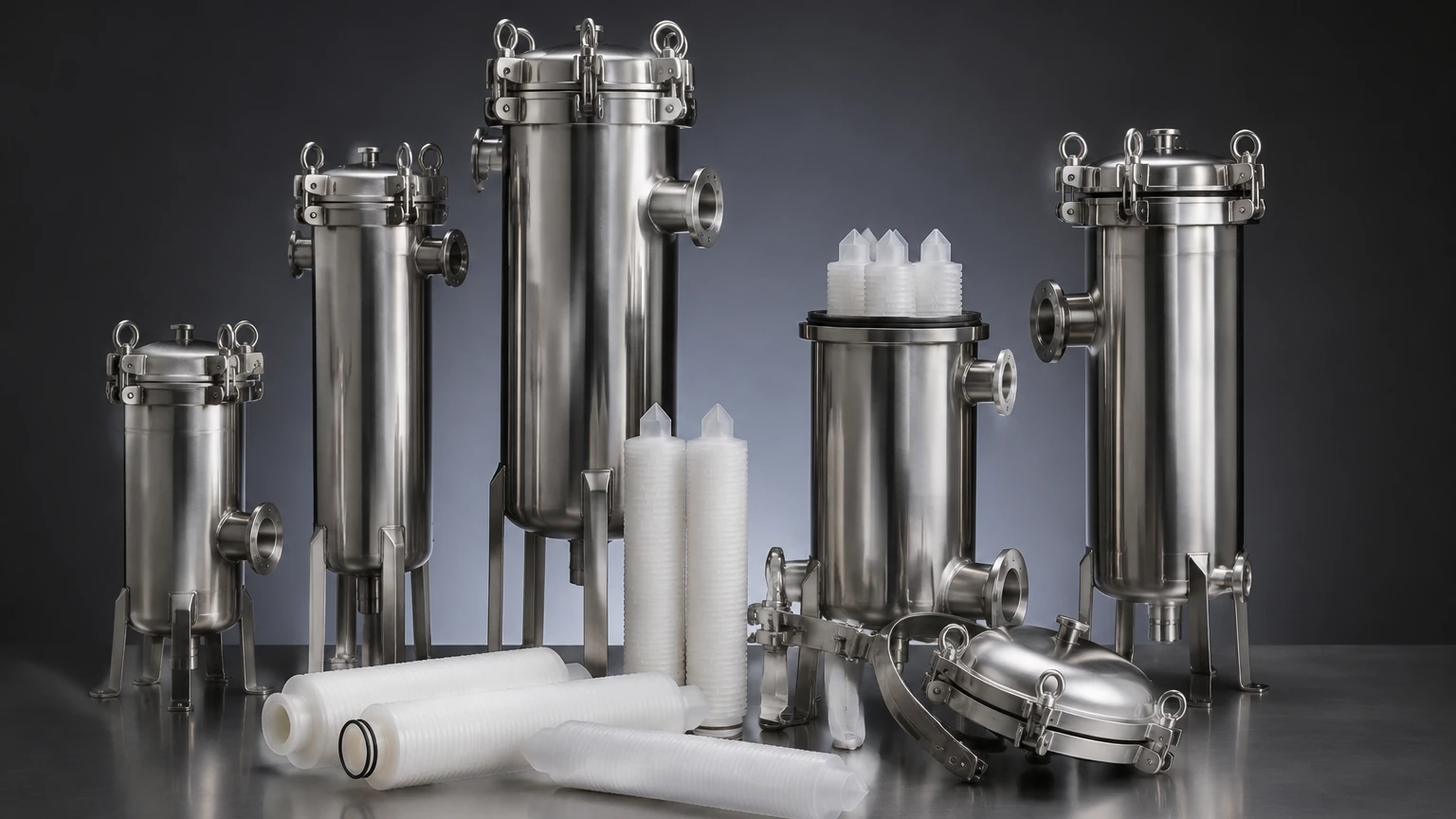
In industrial filtration systems, the cartridge filter housing serves as the critical pressure vessel that contains and supports the filter elements. It is the interface between the process fluid and the filtration media, ensuring that the fluid is directed through the filter cartridge without bypass. For engineers and procurement teams, selecting the appropriate cartridge filter housing involves more than just matching a size; it requires a deep understanding of fluid dynamics, material compatibility, and mechanical design standards.
As a specialized manufacturer, Kaifil provides high-performance stainless steel filtration solutions designed to meet the rigorous demands of chemical processing, pharmaceutical manufacturing, and the food and beverage industry. Navigating the complexities of housing selection ensures the longevity of the filter elements and the overall efficiency of the industrial process. For comprehensive technical details on available systems, engineers can refer to the Main Page for a broader overview of custom metal filtration components.
The Fundamental Role of Cartridge Filter Housing
A cartridge filter housing is designed to hold one or more filter cartridges, providing a sealed environment where contaminated fluid enters, passes through the filter media, and exits as clean filtrate. Its primary functions include maintaining structural integrity under pressure, preventing fluid bypass, and facilitating the easy replacement of spent cartridges.
From an engineering perspective, the housing must be viewed as a pressure vessel. It must withstand the maximum operating pressure of the system, including potential pressure spikes. Furthermore, the internal geometry of the housing must minimize turbulence and pressure drop, as excessive resistance within the housing can reduce the overall flow rate and efficiency of the filtration system.
In many high-purity applications, such as those found in the pharmaceutical or semiconductor industries, the housing must also meet sanitary standards. This involves specialized surface finishes (often measured in Ra) and the elimination of "dead legs" or crevices where bacteria could proliferate or cross-contamination could occur.
Engineering Specifications and Material Selection
The choice of material for a cartridge filter housing is dictated by the chemical nature of the fluid, the operating temperature, and the environmental conditions of the installation site. Stainless steel is the industry standard for most heavy-duty B2B applications due to its durability and corrosion resistance.
Stainless Steel 304 vs. 316L
Stainless steel 304 is commonly used for general industrial water filtration and non-corrosive chemical applications. It offers excellent strength and basic corrosion resistance at a cost-effective price point. However, for more demanding environments, such as those involving chlorides, acids, or high-purity requirements, Stainless Steel 316L is the preferred choice. The "L" denotes low carbon content, which improves weldability and reduces the risk of intergranular corrosion. 316L also contains molybdenum, which significantly enhances resistance to pitting and crevice corrosion in saline or chemically aggressive environments.
Seal and Gasket Materials
The integrity of the housing depends heavily on the elastomers used for sealing. The choice of O-ring or gasket material must be compatible with the process fluid. Common materials include:
* EPDM: Excellent for water and steam applications, but poor resistance to oils.
* Viton (FKM): High resistance to chemicals and high temperatures, ideal for fuels and oils.
* PTFE (Teflon): Nearly universal chemical resistance, though less resilient than elastomers, often used as an encapsulated seal.
* Silicone: Primarily used in food and beverage and pharmaceutical applications due to its inert nature and high-temperature stability.
Key Design Features and Component Analysis
To ensure reliable performance, a cartridge filter housing incorporates several critical design elements. Understanding these components allows engineers to specify the right equipment for their specific operational needs.
Closure Types
The method by which the housing is opened for maintenance is a key consideration for operational downtime.
* Swing Bolt Closures: These are robust and designed for high-pressure applications. They allow for quick access without the need for special tools, making them ideal for systems requiring frequent cartridge changes.
* V-Band Clamps: Often used in lower-pressure or sanitary applications, these provide a secure seal and are relatively lightweight.
* Threaded Caps: Typically found on single-cartridge housings used in low-flow applications.
Inlet and Outlet Configurations
The orientation of the inlet and outlet ports affects the ease of installation. Common configurations include "In-line" (where the ports are on opposite sides at the same level) and "T-style" (where the inlet and outlet are on the same side or at right angles). Connection types—such as NPT threads, RF flanges, or Tri-clamp fittings—must be matched to the existing piping infrastructure.
Internal Support and Alignment
Proper alignment of the filter cartridge within the housing is essential to prevent bypass. High-quality housings feature internal guides, compression plates, and springs that ensure the cartridge remains seated against the seal, even during flow fluctuations or pressure surges.
Comparing Single-Round and Multi-Round Housings
The scale of the filtration task determines whether a single-round or multi-round housing is required.
Single-Round Housings
These are designed to hold a single filter cartridge. They are typically used for low-flow applications, pilot plants, or as point-of-use filters. Because of their smaller volume, they are easier to clean and have a smaller footprint. They are often used in laboratories or for small-batch chemical processing.
Multi-Round Housings
When flow rates exceed the capacity of a single cartridge, multi-round housings are employed. These vessels can hold anywhere from three to over a hundred cartridges. The primary advantage of a multi-round cartridge filter housing is the ability to handle high volumes of fluid while maintaining a low face velocity across the filter media. This extends the life of the cartridges and reduces the frequency of maintenance. Multi-round housings are common in municipal water treatment, large-scale chemical manufacturing, and cooling water loops.
Critical Factors for Filter Housing Selection
When selecting a housing, engineers must evaluate several technical parameters to ensure the system performs as expected.
1. Flow Rate and Velocity: The housing must be sized to accommodate the maximum flow rate without creating excessive velocity, which can lead to erosion of the housing walls or damage to the filter media.
2. Design Pressure and Temperature: Always specify the maximum operating conditions. Standard industrial housings are often rated for 150 psi (10 bar), but high-pressure variants are available for hydraulic or specialized process applications.
3. Filtration Accuracy Requirements: While the cartridge determines the micron rating, the housing must be compatible with the specific end-cap style of the cartridge (e.g., DOE – Double Open End, or SOE – Single Open End with 222 or 226 O-rings). The SOE 226 locking tab configuration is often preferred in critical applications to ensure a positive, leak-proof seal.
4. Pressure Drop (Delta P): Every housing introduces some resistance. It is vital to calculate the clean pressure drop of the housing and cartridge combined to ensure the pump system has sufficient head pressure.
Maintenance and Operational Best Practices
The longevity of a cartridge filter housing is largely dependent on proper maintenance. Even the most robust stainless steel vessel requires periodic inspection.
* Venting and Draining: Before opening the housing, it must be completely depressurized and drained. Most industrial housings include dedicated vent and drain ports for this purpose. Failure to vent properly can lead to air pockets that reduce filtration efficiency or cause water hammer.
* Seal Inspection: Every time the housing is opened, the O-rings and gaskets should be inspected for nicks, compression set, or chemical degradation. Replacing seals regularly is a low-cost way to prevent expensive leaks.
* Cleaning the Vessel: Over time, sediment can accumulate at the bottom of the housing. During cartridge changes, the interior of the vessel should be cleaned to prevent the buildup of contaminants that could eventually bypass the filter or cause corrosion.
* Monitoring Differential Pressure: Installing pressure gauges on the inlet and outlet of the housing allows operators to monitor the differential pressure. A sudden drop in differential pressure may indicate a ruptured cartridge or a bypass issue within the housing, while a rapid increase indicates the cartridges are reaching their dirt-holding capacity.
Customization for Demanding Applications
Standard off-the-shelf housings may not always meet the specific needs of a complex industrial process. This is where custom manufacturing becomes essential. Kaifil specializes in tailoring filtration components to meet unique engineering challenges.
Customization options can include:
* Specialized Coatings: For extremely aggressive chemicals, housings can be lined with materials like ETFE or PFA.
* Jacketed Housings: For fluids that must be maintained at a specific temperature (such as resins or food products), steam or hot water jackets can be integrated into the housing design.
* Unique Dimensions: In retrofit situations where space is limited, custom port locations and vessel heights can be engineered to fit existing footprints.
* Advanced Metallurgy: Beyond 316L, housings can be fabricated from Duplex stainless steel or Hastelloy for extreme environments.
Conclusion
The cartridge filter housing is a foundational component of any industrial filtration system. By focusing on material integrity, mechanical design, and application-specific requirements, engineers can ensure high-performance filtration that protects downstream equipment and maintains product quality. Whether the application requires a simple single-round vessel for water or a complex multi-round system for chemical processing, the choice of housing directly impacts the total cost of ownership and operational reliability.
For technical professionals seeking reliable, custom-engineered filtration solutions, understanding the nuances of housing design is the first step toward optimization. By partnering with an experienced manufacturer like Kaifil, companies can leverage technical expertise to develop filtration systems that are both durable and efficient. To explore the full range of stainless steel cartridges and custom filtration components that complement these housings, visit the Main Page for detailed product specifications and engineering support.
