


Mesh 100 Micron Filter
In industrial filtration, the precision of a mesh 100 micron filter represents a critical threshold for many liquid and gas processing applications. A 100-micron rating, which corresponds to approximately 0.1 millimeters or 0.0039 inches, is a common requirement for removing visible particulates, protecting downstream equipment, and ensuring the purity of process fluids. Selecting the right filtration component requires a deep understanding of wire mesh specifications, material science, and the mechanical stresses of the operating environment.
At Kaifil, we specialize in manufacturing high-performance stainless steel filtration solutions designed to meet these exact technical requirements. For engineers and procurement teams, navigating the complexities of mesh counts, wire diameters, and structural integrity is essential to achieving optimal system performance and longevity.
Understanding the Technical Relationship Between Mesh and Micron
The term "mesh" refers to the number of openings per linear inch of the wire cloth. However, the relationship between mesh count and micron rating is not always linear because it depends heavily on the wire diameter used in the weaving process. A mesh 100 micron filter typically utilizes a stainless steel wire mesh where the aperture (the clear opening between wires) is precisely 100 microns.
In standard industrial specifications, a 100-micron opening often aligns with a mesh count between 140 and 150, depending on the wire thickness. For example, a 140-mesh screen with a wire diameter of 0.08mm would yield an aperture of approximately 101 microns. When specifying these filters, engineers must define both the required filtration accuracy (micron rating) and the necessary mechanical strength, which is dictated by the wire gauge. Thicker wires increase the durability and pressure resistance of the filter but decrease the open area, which can impact flow rates and increase initial pressure drop.
Material Selection for Demanding Industrial Environments
The performance of a mesh 100 micron filter is largely determined by its material composition. While various metals can be used, stainless steel remains the industry standard due to its exceptional corrosion resistance, thermal stability, and mechanical strength. Kaifil provides filtration solutions in several key grades:
* Stainless Steel 304: The most common grade, offering excellent value and good corrosion resistance for general industrial applications, water treatment, and food processing where high acidity is not a concern.
* Stainless Steel 316: Contains molybdenum, providing superior resistance to chlorides and pitting. This is the preferred choice for marine environments and many chemical processing applications.
* Stainless Steel 316L: A low-carbon version of 316 that minimizes carbide precipitation during welding, ensuring the integrity of the filter in highly corrosive environments or where specialized welding techniques are required.
For specialized applications involving extreme temperatures or aggressive chemicals, other alloys like Monel or Inconel may be considered, though stainless steel 316L covers the vast majority of industrial 100-micron filtration needs.
Structural Design: Pleated vs. Cylindrical Configurations
How the mesh is integrated into the filter housing significantly affects the efficiency of the system. There are two primary configurations for a mesh 100 micron filter: cylindrical and pleated.
Cylindrical Filter Cartridges
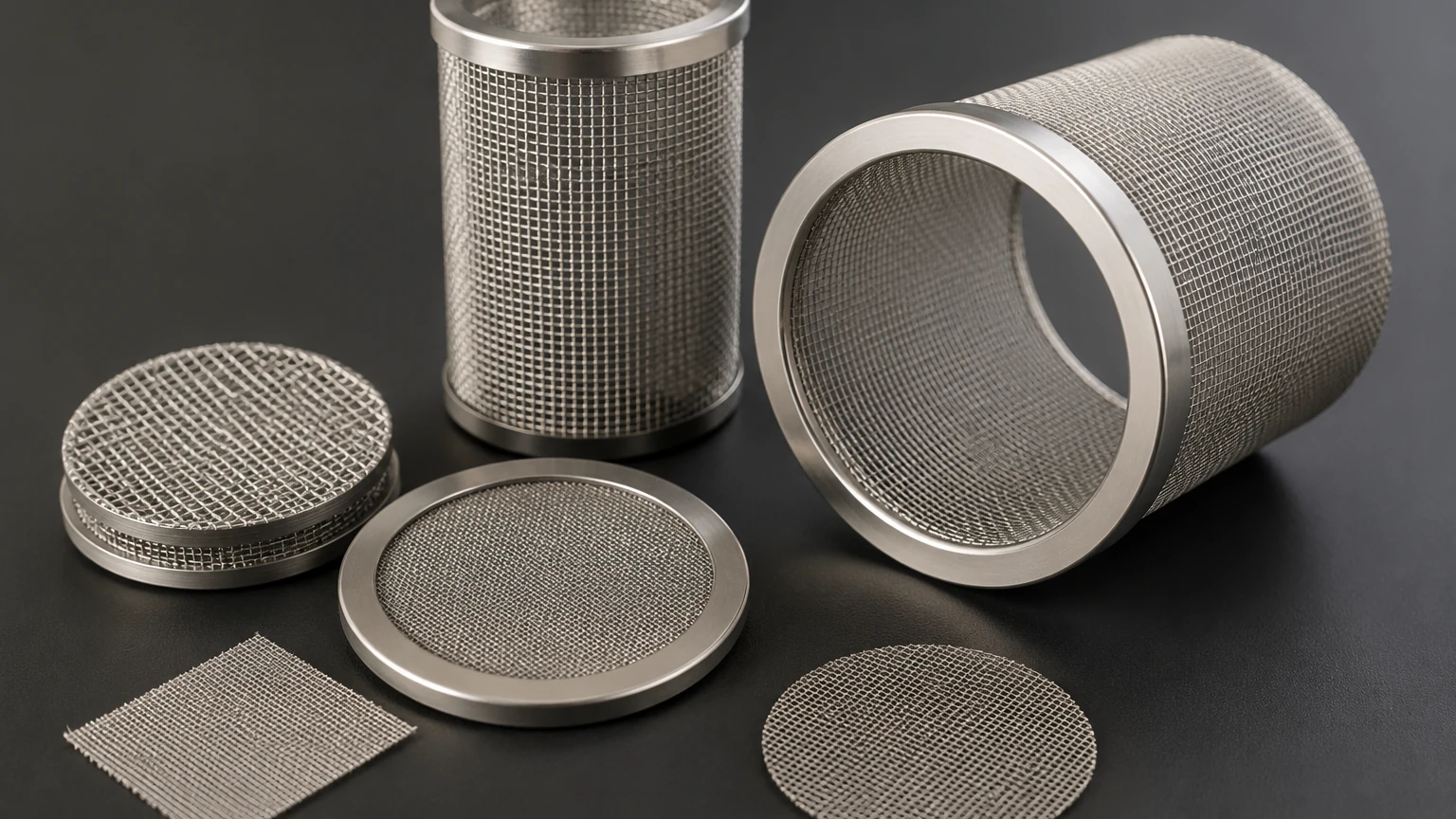
Cylindrical designs consist of a single or multi-layer mesh wrapped around a perforated support core. These are robust and easy to clean, making them ideal for high-viscosity fluids or applications where heavy particulate loading is expected. However, they have a limited surface area compared to pleated designs.
Pleated Filter Cartridges
Pleating involves folding the wire mesh to significantly increase the effective filtration surface area within the same footprint. For a 100-micron application, a pleated cartridge can offer up to 2-3 times the surface area of a cylindrical one. This results in:
* Lower clean pressure drop.
* Higher dirt-holding capacity.
* Extended service intervals between cleaning or replacement.
* Lower flux rates across the media, which can improve filtration efficiency for deformable particles.
Kaifil's engineering team works with clients to determine which structure best suits their specific flow dynamics and space constraints on the Main Page.
Performance Metrics: Flow Rate and Pressure Drop
When integrating a mesh 100 micron filter into a hydraulic or process system, engineers must calculate the expected pressure drop ($ΔP$). The total pressure drop is the sum of the housing pressure drop and the clean media pressure drop.
Key factors influencing $ΔP$ include:
1. Fluid Viscosity: Higher viscosity fluids require more pressure to pass through the 100-micron apertures.
2. Flow Velocity: As the flow rate increases, the pressure drop increases exponentially.
3. Open Area Percentage: A mesh with thinner wires has a higher percentage of open area, allowing for higher flow rates at lower pressures, albeit with reduced physical strength.
In a well-designed system, the initial clean pressure drop should typically not exceed 2-3 psi (0.14-0.21 bar). Monitoring the increase in $ΔP$ over time is the standard method for determining when a filter requires cleaning or replacement. For most 100-micron stainless steel filters, a terminal pressure drop of 15-25 psi is common before maintenance is mandatory.
Application Scenarios for 100 Micron Filtration
The mesh 100 micron filter serves as a versatile tool across multiple sectors, often acting as a "workhorse" for intermediate filtration stages.
* Water Treatment: Used as a pre-filter for reverse osmosis (RO) systems or ultrafiltration (UF) membranes to remove sand, scale, and larger organic debris that could foul more expensive downstream components.
* Food and Beverage: Employed in the filtration of syrups, juices, and oils to ensure product clarity and remove any particulates introduced during the processing or transport stages.
* Chemical Processing: Protecting pumps and valves from solid contaminants in chemical feed lines. The 100-micron rating is often sufficient to capture catalyst fines or undissolved solids.
* Hydraulic and Lubrication Systems: Filtering hydraulic fluids and lubricating oils to prevent wear on precision-machined components. In these systems, 100-micron mesh is often used in suction strainers to protect the pump from catastrophic failure due to large debris.
Customization and OEM Integration Capabilities
Industrial filtration is rarely a one-size-fits-all solution. Different housings, flow directions, and chemical environments require customized filter components. Kaifil provides comprehensive OEM services to ensure that every mesh 100 micron filter fits perfectly within the intended assembly.
Customization options include:
* End Cap Configurations: Including DOE (Double Open End), SOE (Single Open End) with various O-ring codes (Code 7, Code 3, etc.), and threaded connections (NPT, BSP).
* Reinforcement Layers: For high-pressure applications, the 100-micron mesh can be sintered or layered with coarser support meshes to prevent media migration and pleat collapse.
* Dimensions: Custom lengths, diameters, and core thicknesses to match existing proprietary filter housings.
By working closely with Kaifil, engineers can specify the exact mechanical tolerances and material certifications required for their specific project, ensuring that the filtration component is a seamless part of the larger industrial system.
Maintenance, Cleaning, and Total Cost of Ownership
One of the primary advantages of a stainless steel mesh 100 micron filter over disposable synthetic filters is its cleanability. In many industrial processes, the ability to reuse the filter media significantly reduces the total cost of ownership (TCO) and minimizes waste.
Cleaning Methods
* Backwashing: Reversing the flow of fluid through the filter to dislodge particles trapped on the surface of the mesh.
* Ultrasonic Cleaning: Using high-frequency sound waves in a cleaning solvent to remove fine particulates trapped within the mesh intersections.
* Chemical Cleaning: Using mild acids or bases to dissolve organic or mineral scaling, provided the chemical is compatible with the stainless steel grade.
Replacement Cycles
While stainless steel filters are durable, they are not infinite. Factors such as fatigue from pressure cycling, mechanical abrasion from sharp particulates, or aggressive chemical exposure will eventually necessitate replacement. Regular inspection for "blinded" areas (where pores are permanently blocked) or mesh deformation is essential for maintaining process safety.
Conclusion
Selecting a mesh 100 micron filter involves more than just picking a micron rating; it requires a balance of material science, structural engineering, and an understanding of fluid dynamics. Whether the goal is protecting a high-pressure pump or ensuring the clarity of a food product, the quality of the stainless steel mesh and the precision of its construction are paramount.
Kaifil remains committed to providing the technical expertise and manufacturing precision necessary to support these demanding applications. By focusing on durable materials and customized designs, we help industrial professionals achieve reliable, cost-effective filtration performance across a wide range of global industries.
