


Filtri Industriali
In the landscape of modern manufacturing and chemical processing, the efficiency of a production line often depends on the precision of its separation and purification components. Industrial filters, or filtri industriali, serve as critical safeguards for equipment, ensuring product purity and protecting downstream components from contamination. For engineers and procurement specialists, selecting the right filtration medium is not merely a matter of finding a physical barrier; it requires a deep understanding of fluid dynamics, material science, and the specific environmental rigors of the application.
Industrial filtration is a diverse field encompassing various technologies, but stainless steel solutions remain the gold standard for demanding environments. As a professional manufacturer, Kaifil specializes in custom stainless steel filtration solutions that address the complexities of high-pressure, high-temperature, and corrosive processes. This guide explores the technical parameters, material considerations, and selection criteria essential for optimizing industrial filtration performance.
Understanding the Fundamentals of Industrial Filtration Systems
At its core, industrial filtration is the process of removing solid particles from a liquid or gaseous stream. In the context of filtri industriali, this is typically achieved through mechanical straining or depth filtration. Stainless steel filters are primarily utilized where polymer-based or paper filters fail due to thermal or chemical limitations.
Surface vs. Depth Filtration
Surface filtration occurs when particles larger than the pore size of the filter medium are trapped on the upstream side of the filter. Stainless steel wire mesh is the primary example of a surface filter. It offers precise pore sizes and is easily cleaned through backwashing or ultrasonic methods.
In contrast, depth filtration utilizes a thicker medium—such as sintered metal fiber or multi-layered mesh—to trap particles throughout the thickness of the material. This is particularly effective for removing deformable particles or when a high dirt-holding capacity is required. Engineers must decide between these two based on the particle size distribution of the contaminant and the desired service life of the filter element.
The Role of Stainless Steel in Filtration
Stainless steel is the preferred material for industrial filters because of its mechanical strength and resistance to oxidation. Unlike synthetic fibers, stainless steel components do not shed fibers into the filtrate, making them ideal for pharmaceutical and food-grade applications. Furthermore, the ability to weld and form stainless steel allows for the creation of complex geometries, such as pleated cartridges, which significantly increase the effective filtration area within a compact footprint.
Material Selection and Engineering Specifications for Filtri Industriali
The performance of a filter is dictated by the alloy and the structure of the filtration media. Selecting the wrong material can lead to premature failure via pitting corrosion, stress corrosion cracking, or mechanical collapse.
Common Alloys: SS304 vs. SS316L
* Stainless Steel 304: The most common grade, offering good corrosion resistance for water treatment and general industrial use. It is cost-effective but may struggle in high-chloride environments.
* Stainless Steel 316L: Containing molybdenum, 316L provides superior resistance to chlorides and acids. The "L" denotes low carbon content, which is crucial for components that require welding, as it prevents carbide precipitation and subsequent intergranular corrosion.
* Exotic Alloys: For extreme environments involving highly concentrated acids or temperatures exceeding 500°C, manufacturers like Kaifil may utilize Inconel, Monel, or Hastelloy to ensure structural integrity.
Weave Types and Pore Geometry
The geometry of the wire mesh determines the filtration accuracy (micron rating) and the flow resistance. Common weave types include:
* Plain Weave: A simple over-and-under pattern providing high flow rates but limited to larger micron ratings.
* Twill Weave: Allows for heavier wires and finer meshes by passing each shute wire over and under two warp wires.
* Dutch Weave: Uses larger diameter warp wires and smaller shute wires driven close together. This creates a dense, strong mesh with very fine triangular openings, ideal for high-pressure applications.
Performance Evaluation: Flow Rate, Pressure Drop, and Efficiency
When specifying filtri industriali, engineers must balance three competing factors: filtration efficiency, flow rate, and pressure drop ($ΔP$).
Micron Ratings: Absolute vs. Nominal
A common point of confusion in filter procurement is the distinction between nominal and absolute micron ratings.
* Nominal Rating: An arbitrary value indicating the filter's ability to retain a percentage (often 60% to 90%) of particles of a specific size. It does not guarantee total removal.
* Absolute Rating: The diameter of the largest hard spherical particle that will pass through the filter under specified test conditions. For critical applications, such as protecting high-pressure nozzles or sensitive catalysts, an absolute rating is mandatory.
Calculating Pressure Drop
The pressure drop across a filter is a function of the fluid's velocity, viscosity, and the clean resistance of the filter medium. As the filter accumulates contaminants, the $ΔP$ increases. If the initial $ΔP$ is too high, the system's pump must work harder, increasing energy costs and reducing the available service life before the filter reaches its terminal pressure drop.
To optimize this, Kaifil focuses on maximizing the filtration surface area through pleating and specialized mesh configurations. By increasing the surface area, the flux (flow per unit area) is reduced, which lowers the initial pressure drop and extends the time between cleaning cycles.
Sector-Specific Applications of Stainless Steel Filtration
Different industries impose unique demands on filtration systems. Understanding these requirements is essential for selecting the appropriate filtri industriali.
Chemical and Petrochemical Processing
In chemical plants, filters must withstand aggressive solvents and high temperatures. Stainless steel filter cartridges are used to protect reactors from catalyst fines and to clarify final products. The ability of metal filters to maintain pore stability under high differential pressures is a key advantage here.
Food and Beverage Industry
Filtration in the food sector requires materials that are non-toxic and easy to sterilize. Stainless steel mesh filters are used in the production of edible oils, beverages, and syrups. They must comply with stringent hygienic standards, ensuring there are no dead zones where bacteria can accumulate. Kaifil’s precision manufacturing ensures smooth surfaces and high-quality welds that meet these sanitary requirements.
Pharmaceutical Manufacturing
Pharmaceutical applications often require sub-micron filtration and complete batch traceability. Sintered metal fiber media are frequently used for steam filtration (SIP – Sterilization in Place) and for the recovery of expensive active pharmaceutical ingredients (APIs). The durability of stainless steel allows these filters to endure repeated sterilization cycles without losing integrity.
Hydraulic and Lubrication Systems
In hydraulic systems, even microscopic metal shavings can cause catastrophic pump failure. High-pressure stainless steel wire mesh filters are integrated into the return lines and suction lines to maintain fluid cleanliness levels according to ISO 4406 standards.
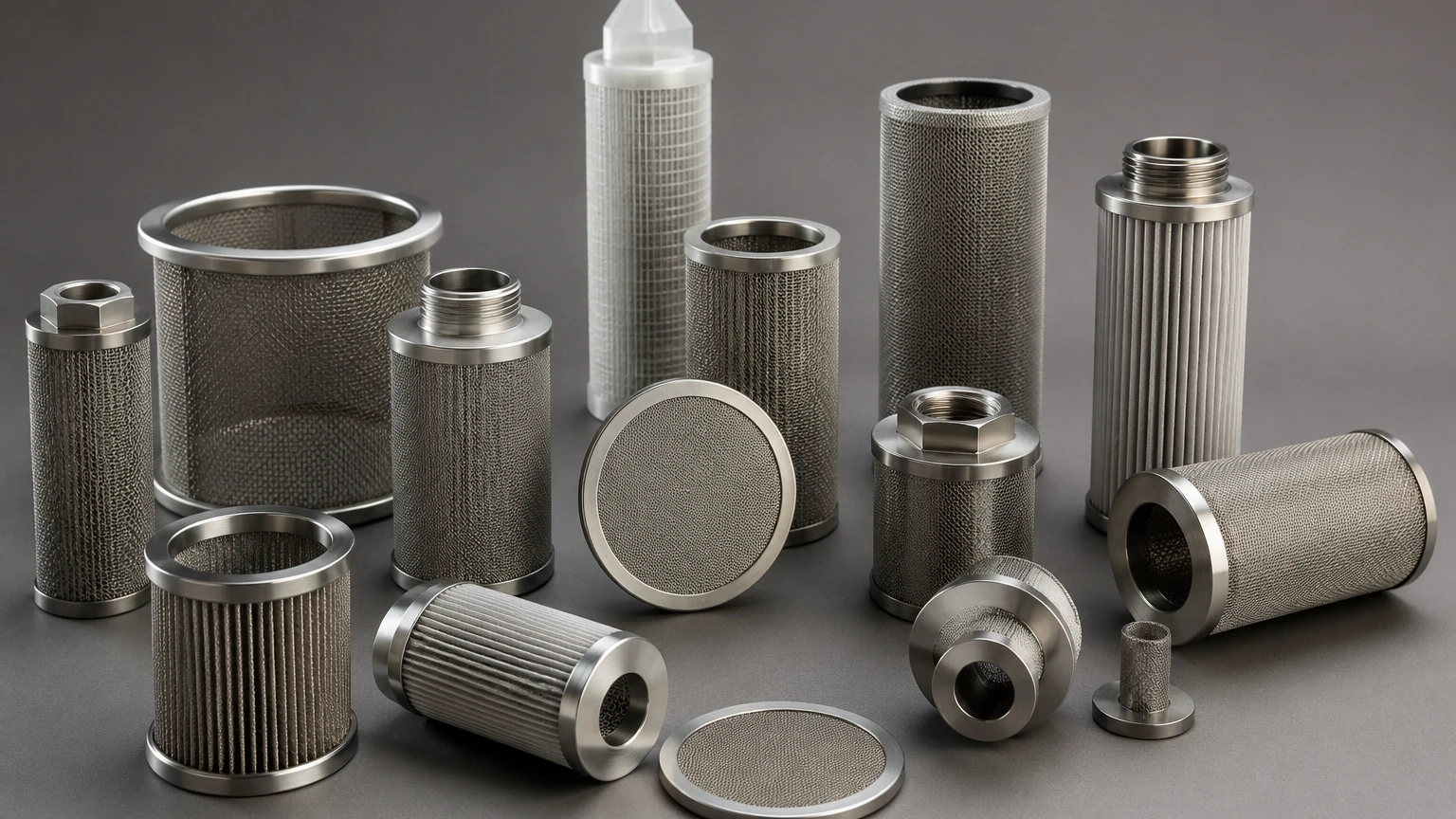
Customization and OEM Integration for Specialized Equipment
Off-the-shelf filtration solutions often fall short when integrated into specialized industrial machinery. This is where the value of a dedicated manufacturer becomes apparent. Customization involves more than just changing dimensions; it encompasses the engineering of the entire filter assembly to fit specific performance profiles.
Engineering for Custom Requirements
When developing a custom filter, engineers must confirm several variables:
1. Housing Compatibility: Ensuring the filter element fits existing housings with the correct seal type (O-rings, gaskets, or metal-to-metal seals).
2. Structural Support: For high-pressure applications, the filter medium may require internal or external support cores (perforated tubes) to prevent collapsing or bursting.
3. End Cap Configurations: Custom end caps (threaded, flanged, or bayonet-style) are often required for seamless integration into OEM equipment.
Kaifil works closely with global customers to develop these high-performance components. By visiting the Main Page, technical teams can explore the breadth of customization options available, from material selection to specialized welding techniques like TIG or plasma welding, which ensure the longevity of the filter in demanding environments.
Maintenance, Cleaning, and the Total Cost of Ownership
While the initial cost of stainless steel filtri industriali is higher than that of disposable alternatives, the Total Cost of Ownership (TCO) is often significantly lower. This is primarily due to the cleanability and durability of metal media.
Cleaning Methodologies
Unlike disposable cartridges, stainless steel filters can be regenerated. Common cleaning methods include:
* Backwashing: Reversing the flow of the fluid to dislodge particles from the surface.
* Ultrasonic Cleaning: Using high-frequency sound waves in a cleaning solvent to remove fine particles trapped deep within the mesh.
* Chemical Cleaning: Using acids or alkalis to dissolve organic or inorganic deposits, provided the filter alloy is compatible with the cleaning agent.
* Burn-off/Pyrolysis: Heating the filter to high temperatures to carbonize organic contaminants, followed by ultrasonic cleaning to remove the ash.
Determining Replacement Cycles
Despite their durability, industrial filters are not infinite. Mechanical fatigue from pressure pulsations or gradual erosion of the wire mesh can eventually necessitate replacement. Monitoring the pressure drop and conducting periodic visual inspections for mesh distortion or bypass leaks are essential maintenance practices. A well-maintained stainless steel filter can last for several years, providing a sustainable and cost-effective solution for industrial processes.
Conclusion: Selecting the Right Partner for Industrial Filtration
The selection of filtri industriali is a technical decision that impacts the safety, efficiency, and profitability of industrial operations. By focusing on material integrity, precise micron ratings, and structural durability, engineers can ensure their systems operate at peak performance.
Kaifil’s commitment to quality and engineering expertise makes them a reliable partner for those seeking customized filtration solutions. Whether the application involves high-viscosity polymers, corrosive chemicals, or sensitive food products, the right stainless steel filter provides the necessary reliability. To review product options and application support, technical professionals are encouraged to consult with specialists who understand the nuances of metal filtration. For more detailed technical specifications and to view the full range of custom capabilities, visit the Main Page to begin the selection process for your specific industrial needs.
