


Self Cleaning Oil Filter
In industrial environments where machinery operates continuously, the purity of lubricating and hydraulic oils is a critical factor in maintaining system integrity and operational longevity. Traditional filtration methods often require manual intervention, leading to scheduled or unscheduled downtime and increased labor costs. The adoption of a self cleaning oil filter addresses these challenges by providing a mechanism that removes contaminants without interrupting the flow of the process fluid. This article explores the technical engineering behind these systems, the importance of material selection, and the criteria engineers must consider when integrating self-cleaning technology into industrial oil circuits.
The Engineering Principles of Self-Cleaning Mechanisms
A self cleaning oil filter is designed to maintain a consistent flow rate and filtration efficiency by automatically removing the accumulated debris from the filter element. Unlike standard cartridges that must be replaced once they reach a specific differential pressure, self-cleaning systems use mechanical or fluid-dynamic forces to clear the filter surface. There are two primary methods used in industrial oil applications: mechanical scraping and backwashing.
Mechanical Scraper Systems
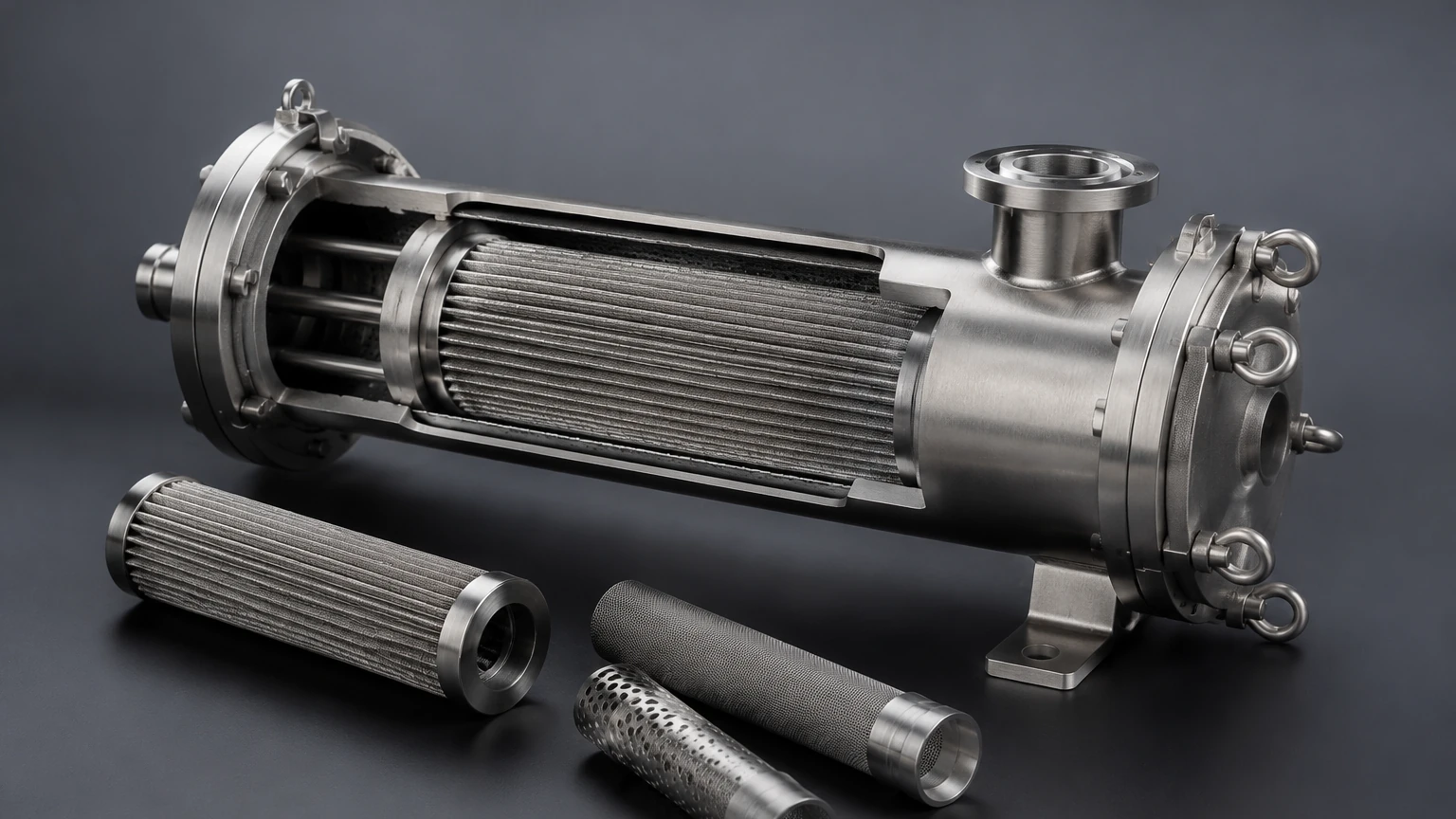
In a mechanical scraper filter, the oil passes through a cylindrical stainless steel screen—often constructed from wedge wire or high-strength woven mesh. As contaminants build up on the internal or external surface of the screen, a scraper blade (driven by an electric motor or pneumatic actuator) moves across the surface. This action dislodges the "filter cake," which then settles into a collection chamber at the bottom of the housing. This process is particularly effective for high-viscosity oils where debris might adhere more stubbornly to the filtration media.
Backwash Filtration
Backwash systems utilize a portion of the filtered fluid or an external clean fluid source to reverse the flow through a section of the filter element. This reverse flow flushes the particles off the mesh and into a discharge valve. In multi-element designs, one chamber can be backwashed while the others remain in operation, ensuring there is no drop in system pressure. For engineers, selecting between these methods depends largely on the nature of the contaminants and the viscosity of the oil being processed.
Material Science in Oil Filtration: The Role of Stainless Steel
The durability of a self cleaning oil filter is heavily dependent on the materials used for the internal components, particularly the filter element itself. In industrial oil applications, stainless steel is the industry standard due to its mechanical strength and resistance to chemical degradation. As a specialized manufacturer, Kaifil emphasizes the use of precision-engineered stainless steel components to ensure the longevity of the filtration system.
304 vs. 316L Stainless Steel
While Grade 304 stainless steel is suitable for many general-purpose oil applications, Grade 316L is often required for environments involving synthetic oils, additives, or potential moisture contamination that could lead to corrosion. 316L contains molybdenum, which provides superior resistance to pitting and crevice corrosion. For high-temperature oil circuits, such as those found in heavy industrial gearboxes or power generation turbines, the thermal stability of stainless steel ensures that the filtration accuracy does not degrade under heat stress.
Wedge Wire vs. Woven Mesh
Engineers must choose the appropriate media structure based on the required micron rating. Wedge wire elements offer high structural integrity and are ideal for the heavy mechanical stress of scraper systems. Woven wire mesh, on the other hand, can achieve much finer filtration levels, often down to 5 or 10 microns, which is necessary for protecting sensitive hydraulic components. To explore technical specifications for these components, professionals can visit the Main Page of the manufacturer’s site for detailed material data.
Addressing Oil Viscosity and Flow Dynamics
One of the most significant challenges in designing a self cleaning oil filter is managing the viscosity of the fluid. Unlike water filtration, oil viscosity changes dramatically with temperature. A system designed for oil at an operating temperature of 80°C may fail to clean itself effectively during a cold start when the oil is thick and resistant to flow.
Differential Pressure (Delta P) Management
The trigger for the cleaning cycle is typically the differential pressure across the filter element. As the mesh becomes blinded by particles, the pressure on the inlet side rises relative to the outlet. In an automated system, a differential pressure transmitter sends a signal to the PLC (Programmable Logic Controller) to initiate the cleaning stroke or backwash sequence. For high-viscosity oils, the "clean" differential pressure is naturally higher, requiring precise calibration of the sensors to avoid unnecessary cleaning cycles that could lead to premature wear of the mechanical seals.
Flow Rate and Velocity
The velocity of the oil through the filter media must be carefully calculated. If the velocity is too high, particles may be forced through the mesh or become deeply embedded, making the self-cleaning mechanism less effective. Conversely, if the velocity is too low, the system may not provide enough force for effective backwashing. Engineering teams must provide accurate flow data, including minimum and maximum flow rates, to ensure the filter housing and element are sized correctly for the application.
Applications Across Industrial Sectors
The versatility of the self cleaning oil filter makes it a staple in several demanding industries. Each sector presents unique challenges regarding contaminant types and environmental conditions.
1. Chemical and Petrochemical Processing: In these environments, filters must handle aggressive fluids and maintain high safety standards. Self-cleaning systems reduce the risk of operator exposure to hazardous chemicals since the system remains sealed during the cleaning process.
2. Marine and Power Generation: Large diesel engines and turbines require massive volumes of clean fuel and lubricating oil. A self-cleaning system ensures that these engines can run for thousands of hours without the risk of a filter bypass, which could lead to catastrophic engine failure.
3. Hydraulic Systems: Precision hydraulics are extremely sensitive to particulate matter. Even microscopic debris can cause valve sticking or pump wear. High-pressure self-cleaning filters are used to protect these systems while maintaining the continuous operation required in automated manufacturing lines.
4. Food and Beverage: When processing edible oils, filtration must meet stringent hygiene standards. Stainless steel self-cleaning filters are preferred here because they can be easily integrated into CIP (Clean-In-Place) systems, ensuring that no bacterial growth occurs within the filter housing.
Evaluating Total Cost of Ownership (TCO)
When purchasing a self cleaning oil filter, the initial capital expenditure (CAPEX) is higher than that of a standard duplex or simplex cartridge filter. However, a technical evaluation must look at the Total Cost of Ownership over the lifespan of the equipment.
Reduction in Consumables
Standard filters require the constant purchase, storage, and disposal of filter cartridges. In high-contaminant applications, these costs can reach thousands of dollars annually. A self-cleaning system utilizes a permanent stainless steel element, virtually eliminating the cost of consumables.
Labor and Downtime
Manual filter changes require maintenance personnel to take the system offline, bleed the pressure, open the housing, and replace the elements. This process involves labor costs and, more importantly, the cost of lost production. A self-cleaning system operates autonomously, allowing maintenance staff to focus on more critical tasks and ensuring the production line remains active.
Waste Management and Environmental Impact
Used oil-soaked cartridges are often classified as hazardous waste, requiring specialized disposal services. By using a self-cleaning system, the only waste produced is the concentrated contaminant sludge, which significantly reduces the environmental footprint of the facility.
Technical Checklist for Purchasing Engineers
Before finalizing the specifications for a self cleaning oil filter, engineers should confirm several key parameters with the manufacturer. This ensures that the custom solution will perform as expected under real-world conditions.
* Fluid Characteristics: Confirm the oil type, specific gravity, and the viscosity range from cold start to peak operating temperature.
* Contaminant Profile: Identify the nature of the solids (hard, soft, fibrous) and the expected concentration (PPM). This determines whether a scraper or backwash design is more appropriate.
* Filtration Accuracy: Define the required micron rating. It is important to balance the need for purity with the risk of frequent cleaning cycles if the mesh is unnecessarily fine.
* Operating Pressure and Temperature: Ensure the housing and seals are rated for the maximum system pressure, including potential pressure spikes.
* Control Requirements: Determine if the system needs to be fully automated with a dedicated control panel or if it will be integrated into an existing plant-wide DCS (Distributed Control System).
Customization and OEM Solutions
Many industrial applications require more than an "off-the-shelf" filter. Customization may involve unique housing dimensions to fit into restricted spaces, specialized coating for the scraper blades to handle abrasive particles, or the integration of magnetic separators to capture fine metallic shavings that might otherwise pass through a standard mesh.
Kaifil specializes in these customized stainless steel filtration solutions, working directly with OEM partners and end-users to develop components that meet exact engineering standards. By focusing on the precision of the wire mesh and the robustness of the filter cartridge, the resulting system provides a reliable barrier against oil contamination.
Conclusion
The implementation of a self cleaning oil filter is a strategic investment for any industrial operation that prioritizes uptime and efficiency. By understanding the mechanical principles of scraping and backwashing, the nuances of oil viscosity, and the long-term economic benefits of stainless steel media, engineers can significantly improve the reliability of their machinery. Whether the application is in chemical processing, marine engineering, or heavy manufacturing, the transition from manual to automated filtration represents a move toward modern, sustainable, and cost-effective industrial maintenance. For those seeking technical guidance on custom filter elements and industrial filtration hardware, the Main Page provides a comprehensive overview of the capabilities and materials available to support these advanced systems.
