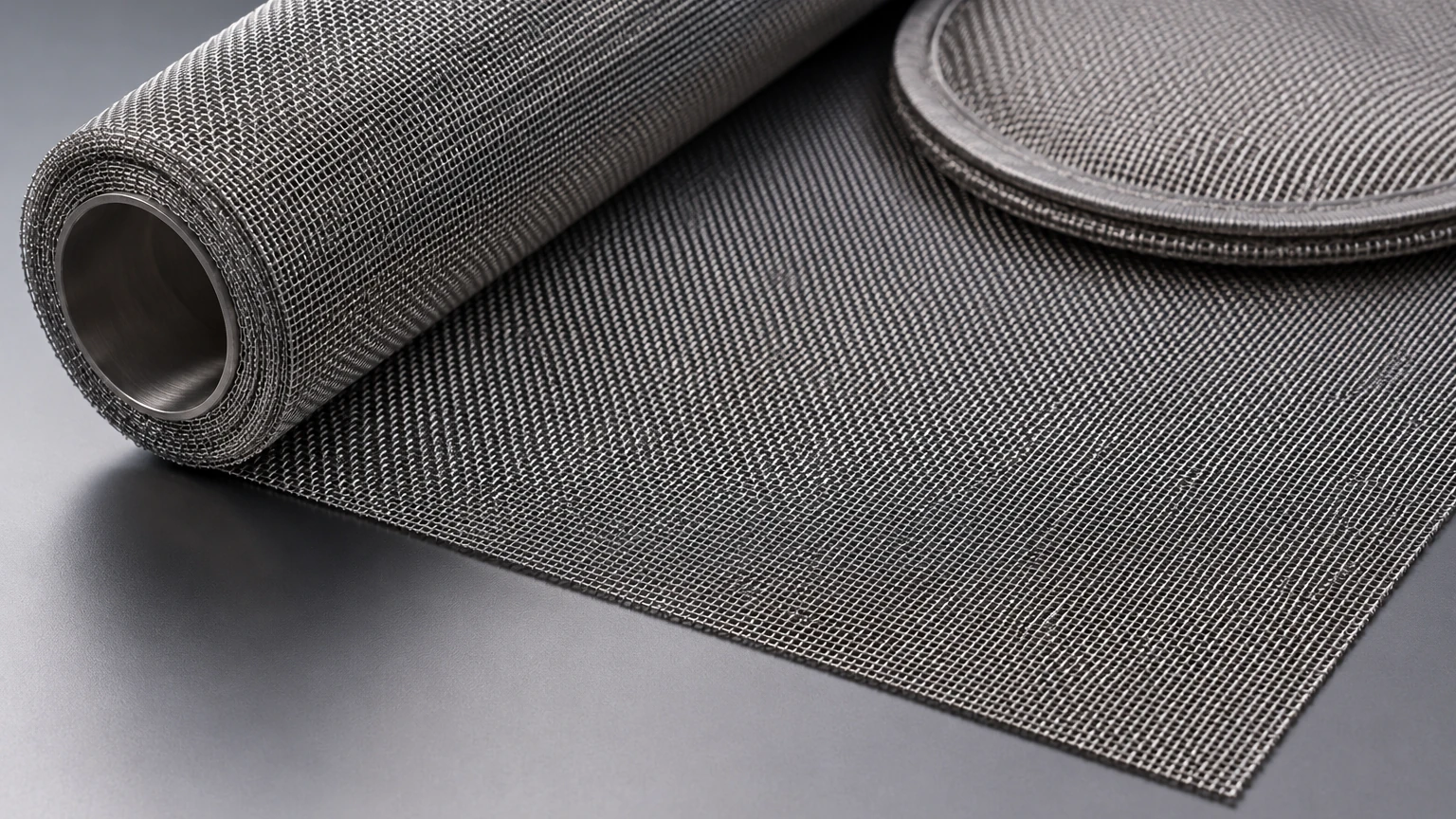
Mesh 500 Micron
In industrial filtration, the selection of the correct aperture size is critical to balancing flow efficiency with particle retention. A mesh 500 micron specification represents a specific threshold in coarse to medium filtration, commonly utilized as a primary separation stage in liquid and gas processing. Understanding the technical nuances of this specification—ranging from the conversion between mesh counts and microns to the mechanical properties of the wire cloth—is essential for engineers and procurement teams sourcing components from a professional Main Page of a specialized manufacturer.
Understanding the Relationship Between Mesh Count and 500 Micron Rating
The term "mesh" refers to the number of openings per linear inch of a woven wire cloth. However, the micron rating (micrometer) defines the actual distance between the wires, known as the aperture or pore size. A 500-micron opening is equivalent to 0.5 millimeters.
The relationship between mesh count and micron rating is not fixed; it is influenced by the wire diameter. For a standard stainless steel wire mesh with a 500-micron aperture, the mesh count typically falls around 30 to 35 mesh. For example, a 35-mesh screen using a wire diameter of 0.22 mm would result in an aperture of approximately 506 microns.
When specifying mesh 500 micron for industrial applications, engineers must confirm whether they require a "nominal" or "absolute" rating. A nominal rating indicates that the mesh will retain the majority of particles at 500 microns, whereas an absolute rating (often achieved through specialized weaves like Dutch weave) ensures that no particle larger than the specified size can pass through the medium. For most coarse filtration tasks involving 500-micron requirements, plain square weaves are the industry standard due to their predictable flow characteristics and ease of cleaning.
Material Selection for 500 Micron Filtration Components
Material integrity is paramount in industrial environments where filters are exposed to corrosive chemicals, high pressures, or extreme temperatures. As a manufacturer specializing in custom stainless steel filtration solutions, Kaifil emphasizes the use of high-grade alloys to ensure long-term durability.
1. Stainless Steel 304: This is the most common material for 500-micron mesh. It offers excellent strength and basic corrosion resistance, making it suitable for water treatment, food processing, and general industrial use where high acidity or chloride levels are not present.
2. Stainless Steel 316L: For more demanding environments, such as pharmaceutical manufacturing or marine applications, 316L is preferred. The addition of molybdenum provides superior resistance to pitting and crevice corrosion, particularly in chloride-rich environments.
3. High-Temperature Alloys: In specialized petrochemical or exhaust filtration, mesh 500 micron components may be fabricated from Inconel or Monel to withstand temperatures exceeding 800°C while maintaining structural rigidity.
Selecting the right material involves evaluating the chemical compatibility of the filtrate and the cleaning agents used during maintenance cycles. Using a lower-grade material in a corrosive environment leads to wire thinning, which eventually alters the 500-micron aperture size and compromises filtration accuracy.
Key Performance Metrics: Flow Rate and Pressure Drop
One of the primary advantages of a mesh 500 micron filter is its high "Open Area" percentage. The open area is the ratio of the total area of the apertures to the total area of the mesh surface. A higher open area results in a lower initial pressure drop (ΔP) and allows for higher flow rates.
In a typical 35-mesh configuration with a 500-micron aperture, the open area may range between 45% and 60%, depending on the wire diameter. For engineers, calculating the flow velocity and the resulting pressure drop is critical to pump sizing and system design.
* Low Pressure Drop: Because 500 microns is a relatively large aperture in the context of precision filtration, it allows for the passage of high volumes of fluid with minimal resistance. This makes it ideal for gravity-fed systems or suction-side strainers where preventing pump cavitation is a priority.
* Dirt Holding Capacity: The geometry of the square weave in a 500-micron mesh provides a specific surface area for particle entrapment. While it does not offer the depth filtration of sintered felt, it provides excellent surface filtration for rigid, non-deformable particles.
Industrial Applications of 500 Micron Wire Mesh Filters
The versatility of mesh 500 micron makes it a staple in various sectors. Its role is often that of a "protecting filter," ensuring that larger debris does not reach sensitive downstream equipment like high-pressure pumps, spray nozzles, or fine membrane filters.
* Water Treatment: Used in intake screens for river or seawater to remove sand, grit, and organic debris. It serves as an essential pre-filtration step to extend the life of sand filters or RO membranes.
* Food and Beverage: In the processing of juices, syrups, or oils, 500-micron filters remove pulp, seeds, or larger particulates without stripping the product of its essential characteristics or viscosity.
* Hydraulic and Lubrication Systems: Coarse mesh 500 micron strainers are installed in reservoirs to catch metal shavings or large contaminants that could cause catastrophic failure in hydraulic cylinders or valves.
* Chemical Processing: Used for catalyst recovery or the removal of oversized granules in powder processing. The stainless steel construction ensures that the filter does not react with the chemical media.
Engineering Considerations for Custom Filter Design
Standard wire cloth is rarely used in its raw form in industrial settings. It must be engineered into a functional component, such as a filter cartridge, basket, or disc. When designing a custom mesh 500 micron solution, several structural factors must be addressed:
1. Reinforcement and Support
At high flow velocities, a single layer of 500-micron mesh may deform or "balloon." To prevent this, manufacturers often use a perforated metal core or an external support cage. For high-pressure applications, the mesh can be sintered—a process where multiple layers of mesh are bonded together using heat and pressure without the use of binders—creating a single, robust filtration plate that maintains the 500-micron rating under extreme stress.
2. Pleating for Surface Area
To increase the service life between cleanings, the mesh can be pleated. Pleating significantly increases the effective filtration area (EFA) within the same footprint as a cylindrical filter. This reduces the flux (flow per unit area), which in turn lowers the pressure drop and increases the dirt-holding capacity.
3. Sealing and End Caps
The method of joining the mesh to the filter housing is a common point of failure. Professional OEM services utilize TIG welding, plasma welding, or epoxy bonding to ensure a bypass-free seal. The choice of end caps (e.g., DOE, 222, 226) must be compatible with existing filter housings to ensure a leak-proof fit.
Evaluating Durability and Maintenance Cycles
The total cost of ownership (TCO) for a mesh 500 micron filter is largely determined by its cleanability. Unlike disposable polymer filters, stainless steel mesh is designed for long-term reuse.
* Cleaning Methods: 500-micron mesh is particularly easy to clean due to its smooth surface and large apertures. Common methods include backwashing (reversing the flow to dislodge particles), ultrasonic cleaning (using high-frequency sound waves in a solvent bath), or high-pressure water jetting.
* Replacement Cycles: While durable, the mesh will eventually suffer from mechanical fatigue or permanent fouling (blinding). Regular inspection for "wire shifting" or broken weaves is necessary. In abrasive applications, the wires may wear down over time, increasing the aperture size beyond 500 microns and allowing oversized contaminants to pass.
For procurement teams, it is vital to partner with a manufacturer that provides detailed material certifications and technical support. Reviewing product options and application support on a professional Main Page ensures that the selected filtration components meet the specific rigors of the intended industrial environment.
Conclusion for Engineering Procurement
Specifying a mesh 500 micron solution requires more than just selecting a pore size. It involves a comprehensive evaluation of wire diameter, material grade, structural reinforcement, and the specific flow dynamics of the application. By focusing on high-quality stainless steel construction and precision manufacturing, industries can achieve reliable filtration performance that protects downstream equipment and maintains process integrity. Whether used as a simple strainer or a complex sintered component, the 500-micron mesh remains a fundamental tool in the engineer's toolkit for effective particle separation.