


Gas Coalescers
In industrial gas processing, the presence of liquid contaminants—such as water, lubricating oils, and hydrocarbon condensates—can lead to significant operational challenges. These contaminants, often appearing as sub-micron aerosols, can damage downstream equipment, foul catalysts, and compromise the quality of the final product. Gas coalescers are specialized filtration components designed to solve this problem by merging fine liquid droplets into larger masses that can be easily separated from the gas stream. For engineers and procurement professionals, understanding the technical nuances of gas coalescers is essential for maintaining system integrity and optimizing the total cost of ownership.
The Role of Gas Coalescers in Industrial Systems
Gas coalescers serve a critical function in protecting high-value assets. Unlike standard particulate filters that simply trap solid debris, a coalescer must manage a multi-phase flow involving gas and liquid. The primary objective is to take a gas stream containing mist or fog and return a dry gas stream while recovering or discharging the liquid phase.
In applications such as natural gas compression, coalescers protect compressor valves and cylinders from liquid slugging. In chemical processing, they prevent the poisoning of expensive catalysts by removing oil carryover from upstream machinery. Because these environments often involve high pressures and corrosive substances, the choice of filtration media and structural design is paramount. Kaifil specializes in manufacturing these precision components, focusing on stainless steel solutions that withstand the rigors of industrial use. For more information on custom filtration engineering, you can visit the Main Page to review product options and application support.
Principles of Operation: How Coalescence Works
Coalescence is a continuous, three-stage process. To select the right gas coalescers for a specific application, engineers must understand the fluid dynamics occurring within the filter media.
1. Capture and Interception
As the contaminated gas enters the filter media, the liquid aerosols must be captured. This occurs through three primary mechanisms:
* Direct Interception: Larger particles follow the gas streamlines and come into contact with the fibers of the filter media.
* Inertial Impingement: Heavier droplets, unable to navigate the rapid changes in gas direction through the media, collide with the fibers due to their momentum.
* Brownian Diffusion: For extremely small particles (typically less than 0.1 microns), random molecular movement causes them to collide with the media fibers.
2. Coalescence
Once captured, the liquid droplets reside on the surface of the media fibers. As more gas passes through, these droplets are pushed along the fibers until they encounter other droplets. Through surface tension, they merge into larger drops. The design of the media—specifically its porosity and surface energy—determines how effectively these droplets grow.
3. Drainage
Once the droplets reach a sufficient size and mass, the force of gravity or the velocity of the gas stream moves them toward the outer surface of the coalescing element. In a properly designed system, this liquid then drains into a collection sump at the bottom of the housing, where it can be removed manually or via an automatic drain valve.
Critical Design Parameters for Engineering Teams
When specifying gas coalescers, several engineering factors must be evaluated to ensure performance matches application requirements. A "one-size-fits-all" approach often leads to premature failure or insufficient filtration.
Micron Rating and Efficiency
Coalescers are often rated by their ability to remove particles of a specific size, typically 0.3 microns. Efficiency is frequently expressed as a percentage (e.g., 99.98% removal of 0.3-micron aerosols). However, engineers should also look for the "Beta Ratio," which provides a more accurate picture of filtration performance across a range of particle sizes.
Flux and Face Velocity
Flux refers to the volume of gas passing through a unit area of filter media. If the velocity is too high, the gas may "re-entrain" the liquid droplets, stripping them off the media before they can drain properly. Conversely, if the velocity is too low, the inertial impingement mechanism becomes less effective. Balancing the surface area of the filter element with the system's flow rate is a core part of the design process.
Pressure Drop (ΔP)
Every filter introduces a restriction to flow. In gas coalescing, there are two types of pressure drop to consider: the clean pressure drop (the resistance of the dry media) and the saturated pressure drop (the resistance when the media is full of liquid). A high pressure drop increases energy costs for compressors and pumps, making it a critical factor in the total cost of ownership.
Material Compatibility and Stainless Steel Advantages
The choice of material for the filter housing and internal support structures is as important as the media itself. While fiberglass and synthetic polymers are common for the coalescing media, the structural components must be robust.
Stainless steel, particularly grades 304 and 316L, is the industry standard for demanding environments. Its advantages include:
* Corrosion Resistance: Essential for gases containing H2S (sour gas), CO2, or acidic vapors.
* Temperature Stability: Unlike many plastics, stainless steel maintains its structural integrity at high operating temperatures.
* Mechanical Strength: In high-pressure systems, the filter element must resist collapsing or bursting during pressure surges.
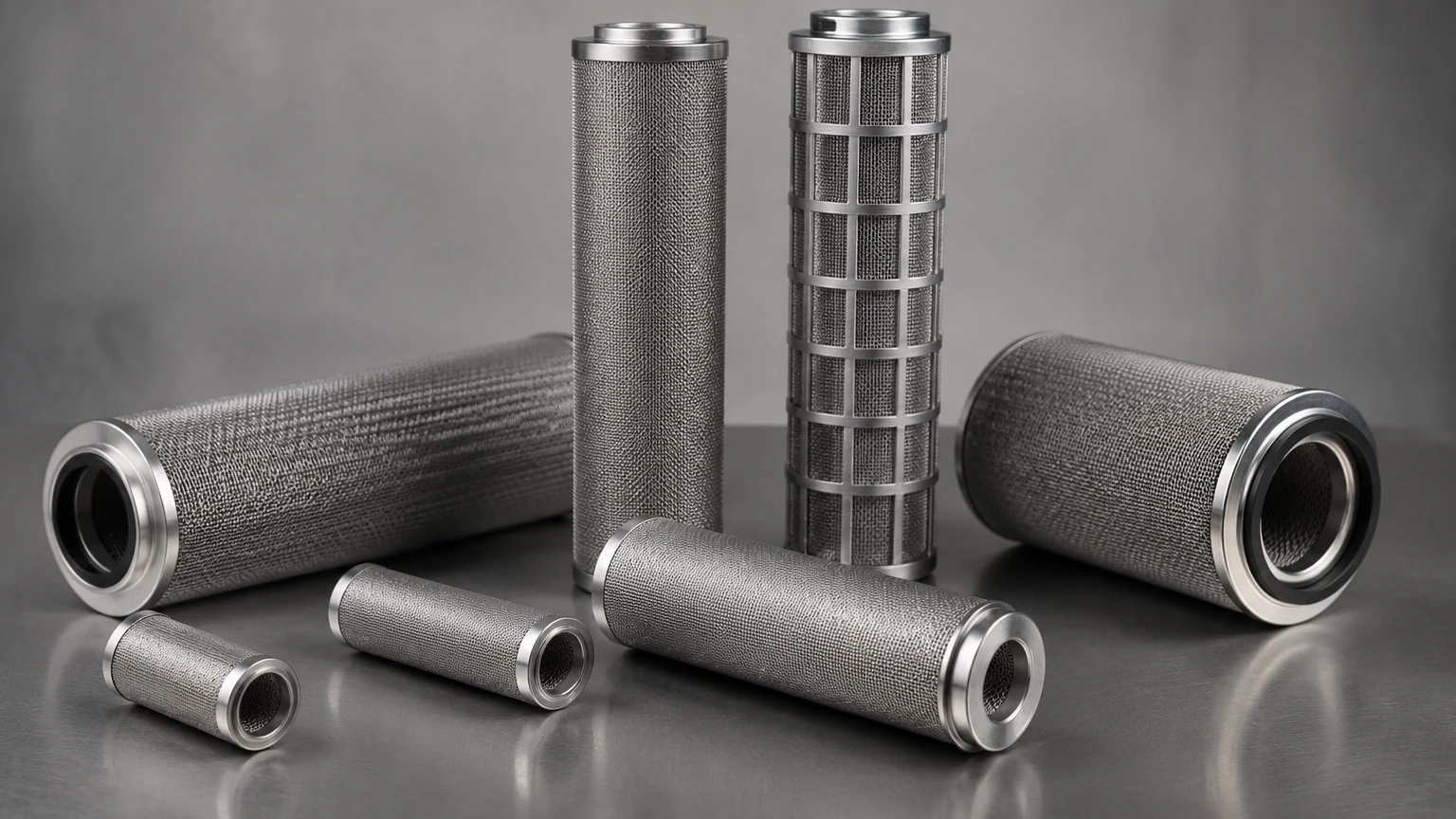
Kaifil’s expertise in stainless steel wire mesh and precision metal components ensures that the gas coalescers can be tailored to these specific environmental stressors. By utilizing advanced manufacturing techniques, components can be customized to fit existing housings or designed for entirely new OEM systems.
Common Applications Across Industrial Sectors
Gas coalescers are ubiquitous in modern industry, though their specific configuration varies by sector.
Natural Gas and Petrochemical
In the midstream sector, coalescers are used at compressor stations to remove lube oil from the discharge gas. In downstream refining, they protect molecular sieves and amine treated units from hydrocarbon aerosols that would otherwise lead to foaming and reduced efficiency.
Power Generation
Gas turbines require extremely clean fuel gas. Even small amounts of liquid can cause nozzle fouling and uneven combustion, leading to vibration and potential turbine failure. Coalescers ensure the fuel gas meets the strict cleanliness standards set by turbine manufacturers.
Food and Beverage
Compressed air used in food packaging or as an ingredient must be free of oil and water. Stainless steel coalescers are preferred here due to their ability to be cleaned and sanitized, meeting stringent hygienic standards.
Identifying Risks and Optimizing Replacement Cycles
Failure to maintain gas coalescers can lead to "carryover," where liquid contaminants bypass the filter and enter the downstream process. Understanding common risks helps in developing a proactive maintenance strategy.
Media Saturation and Plugging
While coalescers are designed to handle liquids, they can become plugged by solid particulates if upstream pre-filtration is inadequate. When the media pores are filled with solids, the pressure drop rises rapidly, and the coalescing efficiency drops. Monitoring the differential pressure (ΔP) is the most effective way to determine when an element needs replacement.
Chemical Attack
In some chemical processes, the gas stream may contain trace amounts of solvents that can degrade synthetic binders used in fiberglass coalescers. This leads to "media migration," where bits of the filter itself are carried downstream. Using all-metal or specialized stainless steel mesh coalescers can mitigate this risk in aggressive chemical environments.
Bypassing and Seal Failure
A coalescer is only as good as its seals. If the O-rings or gaskets fail due to thermal expansion or chemical incompatibility, the gas will take the path of least resistance, bypassing the filter media entirely. Regular inspection of seals during element changes is a mandatory maintenance step.
Customization and Technical Support for Filtration Systems
In many industrial scenarios, standard off-the-shelf coalescers do not meet the specific spatial or performance constraints of a facility. This is where customization becomes a strategic advantage. Working with a manufacturer like Kaifil allows engineers to specify dimensions, connection types, and filtration grades that align perfectly with their operational goals.
When evaluating a custom solution, engineers should confirm the following with their supplier:
* Operating Conditions: Maximum and minimum flow rates, pressure, and temperature.
* Fluid Properties: Gas composition, liquid density, and surface tension.
* Contaminant Loading: The expected concentration of liquid aerosols (usually measured in ppm).
* Space Constraints: The physical footprint available for the filter housing.
By addressing these factors during the design phase, companies can avoid the high costs associated with retrofitting and unplanned downtime. Reliable filtration components are an investment in the longevity of the entire industrial process.
Conclusion
Gas coalescers are more than just simple filters; they are engineered components critical to the efficiency and safety of industrial gas streams. From protecting turbines to ensuring the purity of chemical products, the performance of these units depends on precise material selection, informed design, and consistent maintenance. By focusing on high-quality materials like stainless steel and understanding the mechanics of liquid separation, technical professionals can ensure their systems operate at peak performance.
For those seeking to optimize their filtration processes or develop custom OEM components, exploring the capabilities of a dedicated manufacturer is the next logical step. You can find detailed technical specifications and support for your specific projects by visiting the Main Page of Kaifil, where expertise in stainless steel filtration solutions meets the demands of global industry.
