


Bag Filter Housing
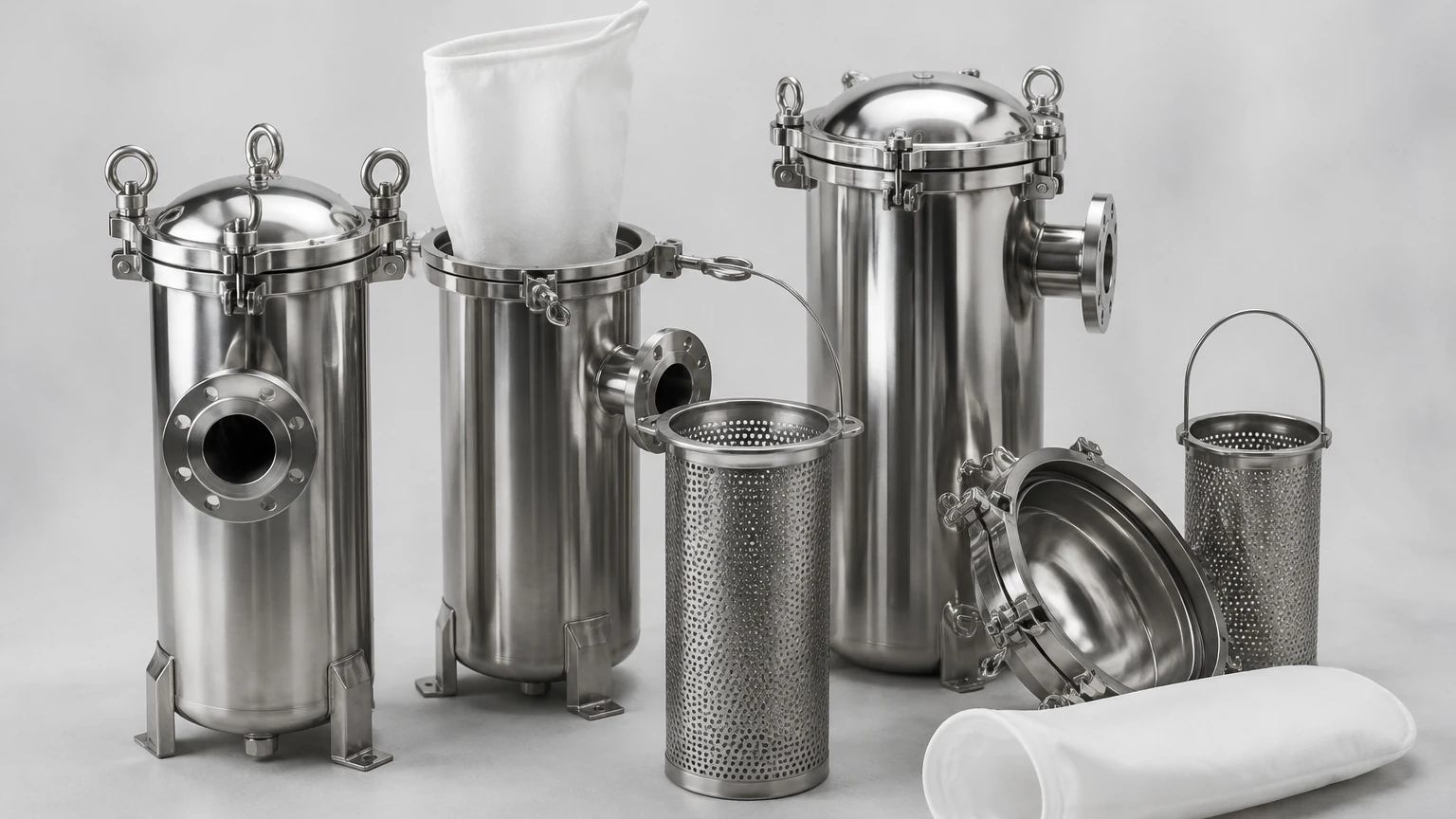
In industrial liquid filtration, the bag filter housing serves as the critical pressure vessel that contains and supports the filter media. Designed to handle high flow rates and significant volumes of particulate matter, these systems are a staple in chemical processing, water treatment, and food and beverage production. For engineers and procurement teams, selecting the correct bag filter housing requires a deep understanding of fluid dynamics, material compatibility, and the mechanical requirements of the specific application.
As a specialized manufacturer of stainless steel filtration solutions, Kaifil provides high-performance components that ensure these housings operate at peak efficiency. Understanding the technical nuances of housing design is the first step toward optimizing a filtration process for durability and cost-effectiveness.
Engineering Fundamentals of Bag Filter Housing Design
A bag filter housing is more than just a container; it is a precision-engineered component designed to manage the flow of pressurized fluids through a filter bag. The primary function of the housing is to provide a secure, leak-proof environment where the liquid is forced through the filter media, leaving contaminants trapped inside the bag.
Pressure Vessel Standards
Most industrial bag filter housings are designed to meet specific pressure ratings, often adhering to ASME (American Society of Mechanical Engineers) standards. The wall thickness, weld quality, and closure mechanism are all calculated based on the maximum allowable working pressure (MAWP) and the operating temperature. For high-pressure applications, the housing must be robust enough to prevent deformation, which could lead to bypass—a condition where unfiltered liquid escapes around the edges of the filter bag.
Sealing Mechanisms
The integrity of a bag filter housing depends heavily on its sealing mechanism. There are two primary areas where seals are critical: the housing lid and the bag-to-housing interface. Common lid seals include O-rings made from EPDM, Viton, or PTFE-encapsulated silicone, chosen based on the chemical nature of the fluid. The bag-to-housing seal often utilizes a compression fit or a specialized V-ring to ensure that 100% of the fluid passes through the media.
Material Selection and Chemical Compatibility
The choice of material for a bag filter housing is dictated by the chemical properties of the process fluid and the environmental conditions of the facility. Stainless steel is the industry standard due to its corrosion resistance and mechanical strength.
1. 304 Stainless Steel: This is the most common material for general industrial applications. It offers excellent durability and resistance to many organic chemicals and water-based solutions. It is widely used in cooling water systems and pre-filtration for reverse osmosis.
2. 316L Stainless Steel: For more demanding environments, such as pharmaceutical manufacturing or chemical processing involving chlorides and acids, 316L is preferred. The addition of molybdenum provides superior resistance to pitting and crevice corrosion. This material is also the standard for food and beverage applications where strict hygiene and CIP (Clean-in-Place) protocols are required.
3. Surface Finishes: The internal and external surface finish of the housing affects both performance and maintenance. A bead-blasted finish is standard for industrial use, while electropolishing is often required in high-purity sectors to minimize particulate adhesion and facilitate easier cleaning.
For more information on material specifications and custom filtration components, you can visit the Main Page of our technical resource center.
Technical Comparison: Single-Bag vs. Multi-Bag Configurations
When specifying a bag filter housing, engineers must choose between single-bag and multi-bag configurations based on the required flow rate and the frequency of maintenance.
Single-Bag Housings
Single-bag housings are ideal for batch processes or applications with lower flow rates (typically up to 100 GPM, depending on the fluid viscosity and bag type). They are compact and easier to install in tight spaces. Within this category, there are top-entry and side-entry designs. Top-entry housings are often preferred because the lid compresses the bag seal directly, reducing the risk of bypass and making bag changes cleaner by minimizing liquid spillover.
Multi-Bag Housings
For high-volume industrial processes, multi-bag housings are necessary. These vessels can contain anywhere from 2 to 24 or more bags in a single unit, allowing for flow rates in the thousands of gallons per minute. Multi-bag systems are designed with a common manifold and a heavy-duty davit arm or spring-assisted lid to facilitate the handling of the large cover. The primary advantage of a multi-bag system is the extended surface area, which leads to longer intervals between bag changes and reduced downtime.
Critical Performance Factors: Flow Rate and Pressure Drop
The efficiency of a bag filter housing is measured by its ability to maintain a high flow rate while keeping the differential pressure ($\\Delta P$) within acceptable limits.
Initial vs. Terminal Pressure Drop
When a clean filter bag is installed in the housing, there is an initial pressure drop caused by the resistance of the housing's internal geometry and the clean media. As contaminants accumulate, the pressure drop increases. Engineers typically design systems to operate until a terminal pressure drop is reached (often between 15 and 25 psi). Exceeding this limit can result in bag failure, where the media ruptures and releases contaminants back into the downstream flow.
Flow Velocity and Turbulence
The internal design of the bag filter housing must minimize turbulence. High-velocity fluid entering the housing can cause the filter bag to flutter or shift, which may lead to mechanical wear against the support basket. Quality housings feature flow distributors or baffles to ensure the liquid enters the bag evenly, maximizing the use of the entire surface area and preventing localized clogging.
Maintenance Protocols and Filter Bag Replacement Cycles
Maintaining a bag filter housing is relatively straightforward, but adherence to technical protocols is essential for safety and performance.
The Replacement Process
Before opening a bag filter housing, the system must be depressurized and drained. Many professional-grade housings include vent valves and drain ports for this purpose. Once the lid is opened, the used bag is removed from the internal support basket. It is critical to inspect the support basket at this stage for any signs of damage or debris buildup.
The Role of the Support Basket
The support basket is a perforated or mesh component, typically made of stainless steel, that prevents the filter bag from bursting under pressure. Kaifil specializes in manufacturing these high-precision metal components, ensuring they provide a smooth interior surface to prevent bag snagging and a high open-area ratio to minimize flow resistance. If the support basket is compromised, even the highest quality filter bag will fail.
Sealing Ring Inspection
Every time a bag is replaced, the housing's O-rings and the bag's sealing ring should be inspected. A flattened or cracked O-ring is a primary cause of external leaks and internal bypass. Replacing these low-cost components regularly is a standard best practice to avoid costly process interruptions.
Customization and Integration with Precision Metal Components
While standard bag filter housings meet many needs, certain industrial applications require customized solutions to handle unique fluids or specific space constraints. Customization often involves modifying the inlet/outlet orientations, adding specialized instrumentation ports (for pressure gauges or sensors), or integrating heating jackets for high-viscosity fluids like resins and oils.
Furthermore, the internal filtration assembly can be enhanced. In some cases, a stainless steel wire mesh filter cartridge can be used inside a bag filter housing to replace a fabric bag. This is particularly useful in high-temperature applications or where a permanent, cleanable filter element is more economical than disposable bags. As a manufacturer of custom stainless steel filtration solutions, Kaifil works with engineers to design these internal components to fit existing housings perfectly, providing a bridge between traditional bag filtration and high-precision metal filtration.
Conclusion: Selecting the Right Housing for Your Application
Choosing the right bag filter housing involves a balance of mechanical requirements, chemical compatibility, and operational goals. By focusing on high-quality materials like 316L stainless steel and ensuring the housing design minimizes bypass and pressure drop, facilities can achieve reliable filtration performance.
Before finalizing a purchase, engineers should confirm the following:
* Chemical Compatibility: Does the housing and seal material withstand the process fluid?
* Flow Capacity: Is the housing sized correctly for the maximum expected flow rate and fluid viscosity?
* Pressure Rating: Does the vessel meet the safety standards required for the operating environment?
* Maintenance Ease: Is there sufficient clearance for bag changes, and is the closure mechanism appropriate for the frequency of service?
By addressing these technical considerations, you ensure that your filtration system remains a dependable part of your industrial infrastructure. For technical support and to explore our range of custom stainless steel filter components, visit the Main Page for detailed product specifications and engineering assistance.
