


Understanding Industrial Filtration: What Is Woven Wire Mesh?
In the realm of industrial separation and filtration, precision and durability are the primary metrics of performance. Engineers and procurement specialists often start their search for reliable filtration media by asking: what is woven wire mesh? At its core, woven wire mesh is a metallic fabric-like material produced by interlacing individual wires to form a grid of precise apertures. Unlike welded wire mesh or expanded metal, woven wire mesh relies on the mechanical tension and friction of the weaving process to maintain its structure, offering a unique combination of flexibility, strength, and accurate pore sizing.
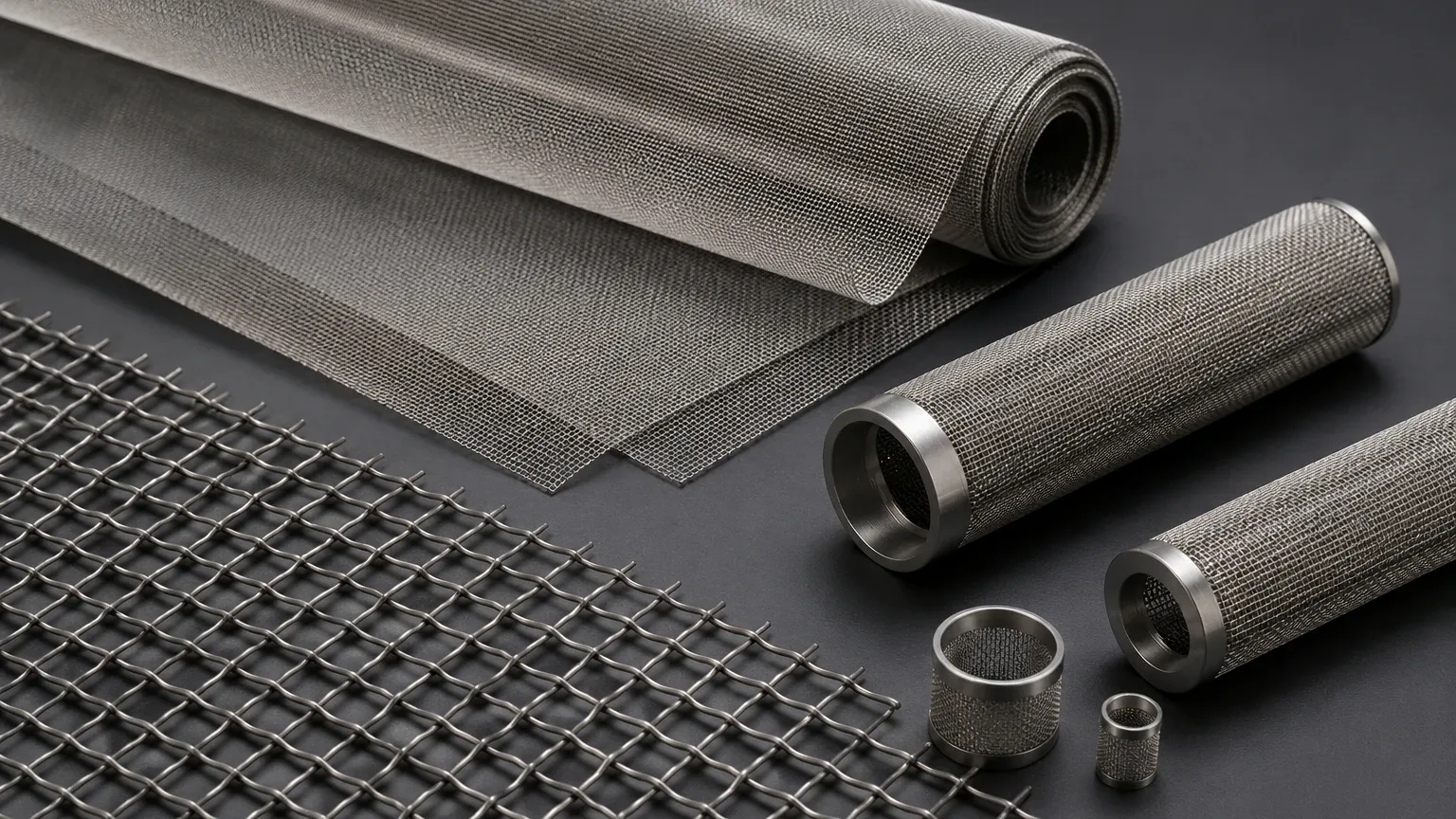
For industrial applications—ranging from chemical processing to pharmaceutical manufacturing—Woven Wire Mesh serves as a critical component in filter cartridges, strainers, and sieves. Understanding the technical nuances of this material is essential for selecting the right specification for demanding environments.
The Fundamentals of Woven Wire Mesh Construction
To answer the question of what is woven wire mesh from an engineering perspective, one must look at the manufacturing process. The material is produced on specialized looms that interweave "warp" wires (running lengthwise) and "shute" or "weft" wires (running crosswise). This process creates a stable, repeatable pattern of openings.
Key Terminology for Engineers
When evaluating woven wire mesh for industrial use, several technical terms define its performance characteristics:
* Mesh Count: The number of openings per linear inch, measured from the center of one wire to the center of another. A higher mesh count indicates a finer mesh with smaller openings.
* Wire Diameter: The thickness of the individual wires used in the weave. This significantly impacts the mechanical strength and the "open area" of the mesh.
* Aperture (Opening Size): The clear distance between two adjacent warp or shute wires. This is the most critical factor in determining the filtration rating.
* Open Area Percentage: The ratio of the area of the openings to the total area of the mesh. A higher open area allows for greater flow rates and lower pressure drops.
Common Weave Patterns and Their Applications
The way wires are interlaced determines the mesh's filtration efficiency, strength, and suitability for specific pressures. There are three primary weave types used in high-performance industrial filtration:
1. Plain Weave
This is the most common and straightforward weave pattern. Each shute wire passes alternately over and under each warp wire. It provides a square opening and is ideal for general-purpose filtration and screening where high flow rates are required. Plain, twill and dutch woven wire mesh in SS304/316L — rolls, cut mesh and framed panels. Send mesh count or micron target for a technical quote.
2. Twill Weave
In a twill weave, each shute wire passes over and under two warp wires in a staggered pattern. This allows for the use of heavier wires than a plain weave of the same mesh count, increasing the mechanical strength and durability of the mesh. It is often used in applications involving high-pressure differentials or abrasive materials.
3. Dutch Weave (Plain and Twill)
Dutch weaves utilize different diameters for the warp and shute wires. Typically, the warp wires are thicker and spaced further apart, while the shute wires are thinner and woven tightly together. This creates a "zero-open" appearance where the openings are not visible when looking directly at the mesh. Instead, the fluid must follow a tortuous path through the mesh, providing superior filtration for fine particles while maintaining high mechanical stability.
Material Selection: Why Stainless Steel Dominates
When discussing what is woven wire mesh, material composition is as important as the weave pattern. In industrial settings, stainless steel is the gold standard due to its resistance to corrosion, oxidation, and extreme temperatures.
* SS304: The standard grade for general industrial use. It offers excellent corrosion resistance in most environments and is cost-effective for food and beverage or water treatment applications.
* SS316L: Contains molybdenum, which provides enhanced resistance to chlorides and pitting. This is the preferred material for marine environments, chemical processing, and pharmaceutical applications where hygiene and chemical stability are paramount.
* Specialty Alloys: For extreme conditions, materials like Monel, Inconel, or Hastelloy may be used to withstand highly acidic or high-temperature environments.
Technical Specifications: Mesh Count vs. Micron Rating
One of the most common points of confusion for purchasing teams is the difference between mesh count and micron rating. While mesh count describes the density of the weave (openings per inch), the micron rating describes the size of the particles the mesh can effectively capture.
* Absolute Micron Rating: The size of the largest spherical particle that will pass through the mesh under specified test conditions. This is critical for precision filtration in hydraulic systems or pharmaceutical processing.
* Nominal Micron Rating: An indicative value representing the mesh's ability to retain a percentage of particles of a certain size.
When specifying woven wire mesh, engineers must provide both the desired micron rating and the required mechanical strength to ensure the mesh does not deform under the operating pressure of the system.
Industrial Applications of Woven Wire Mesh
Because of its versatility, woven wire mesh is integrated into various industrial systems. Its primary role is to protect downstream equipment, ensure product purity, and facilitate separation processes.
Chemical and Petrochemical Processing
Woven wire mesh is used in catalyst recovery, filtration of corrosive fluids, and as support structures for finer filter media. Its ability to withstand high temperatures and aggressive chemical reactions makes it indispensable in refinery operations.
Food and Beverage Industry
In this sector, hygiene is the priority. Stainless steel woven wire mesh is used for straining juices, filtering oils, and in sifting equipment. Its smooth surface allows for easy cleaning (CIP – Clean-In-Place) and prevents bacterial growth.
Pharmaceutical and Biotechnology
Precision is non-negotiable in pharmaceutical manufacturing. Woven wire mesh provides the exact aperture control needed for powder classification, fluid bed drying, and sterile filtration processes. The use of SS316L ensures no metallic contamination occurs during the production of sensitive medications.
Hydraulic and Water Treatment
In hydraulic systems, wire mesh filter cartridges protect sensitive valves and pumps from particulate contamination. In water treatment, it serves as a pre-filtration stage to remove sand, debris, and organic matter before the water reaches more delicate membranes.
Engineering Considerations for Selection
Choosing the right woven wire mesh involves more than just picking a micron size. Engineers must consider the total cost of ownership and the operational lifecycle of the filter component.
1. Pressure Drop: A mesh with a low open area will cause a significant pressure drop across the filter. This requires more energy from pumps and can lead to system inefficiency. Balancing filtration fineness with flow capacity is key.
2. Cleanability and Reusability: Unlike disposable synthetic filters, stainless steel woven wire mesh can often be cleaned via backwashing or ultrasonic cleaning. This reduces long-term waste and operational costs.
3. Mechanical Stability: In high-flow or high-pressure applications, the mesh must be supported by a perforated metal core or a coarser mesh layer to prevent "ballooning" or structural failure.
4. Customization: Many industrial applications require specific shapes, such as pleated cartridges, conical strainers, or framed panels. Working with a manufacturer that offers OEM customization ensures the mesh integrates perfectly into existing machinery.
Why Quality Control Matters in Woven Wire Mesh
Not all woven wire mesh is created equal. Inconsistencies in wire diameter or irregular weaving can lead to "off-spec" apertures, allowing oversized particles to pass through. For critical applications, it is essential to verify that the mesh meets international standards (such as ISO 9044). Quality manufacturers like Kaifil utilize advanced inspection techniques to ensure uniformity across the entire roll or component.
When sourcing these materials, technical professionals should confirm the material grade through MTRs (Material Test Reports) and request specific data on the absolute filtration rating to avoid premature failure of downstream components.
Conclusion
Understanding what is woven wire mesh is the first step toward optimizing industrial filtration performance. By selecting the appropriate weave pattern, material grade, and technical specifications, engineers can significantly improve the reliability and efficiency of their processes. Whether you are looking for high-flow plain weaves or high-precision Dutch weaves, the durability and versatility of stainless steel woven wire mesh remain unmatched in the industrial sector.
For those requiring tailored solutions, Kaifil provides extensive expertise in manufacturing custom stainless steel filtration components. From material selection to precision design, our goal is to help you achieve the most cost-effective and high-performing filtration outcomes for your specific application requirements.
