


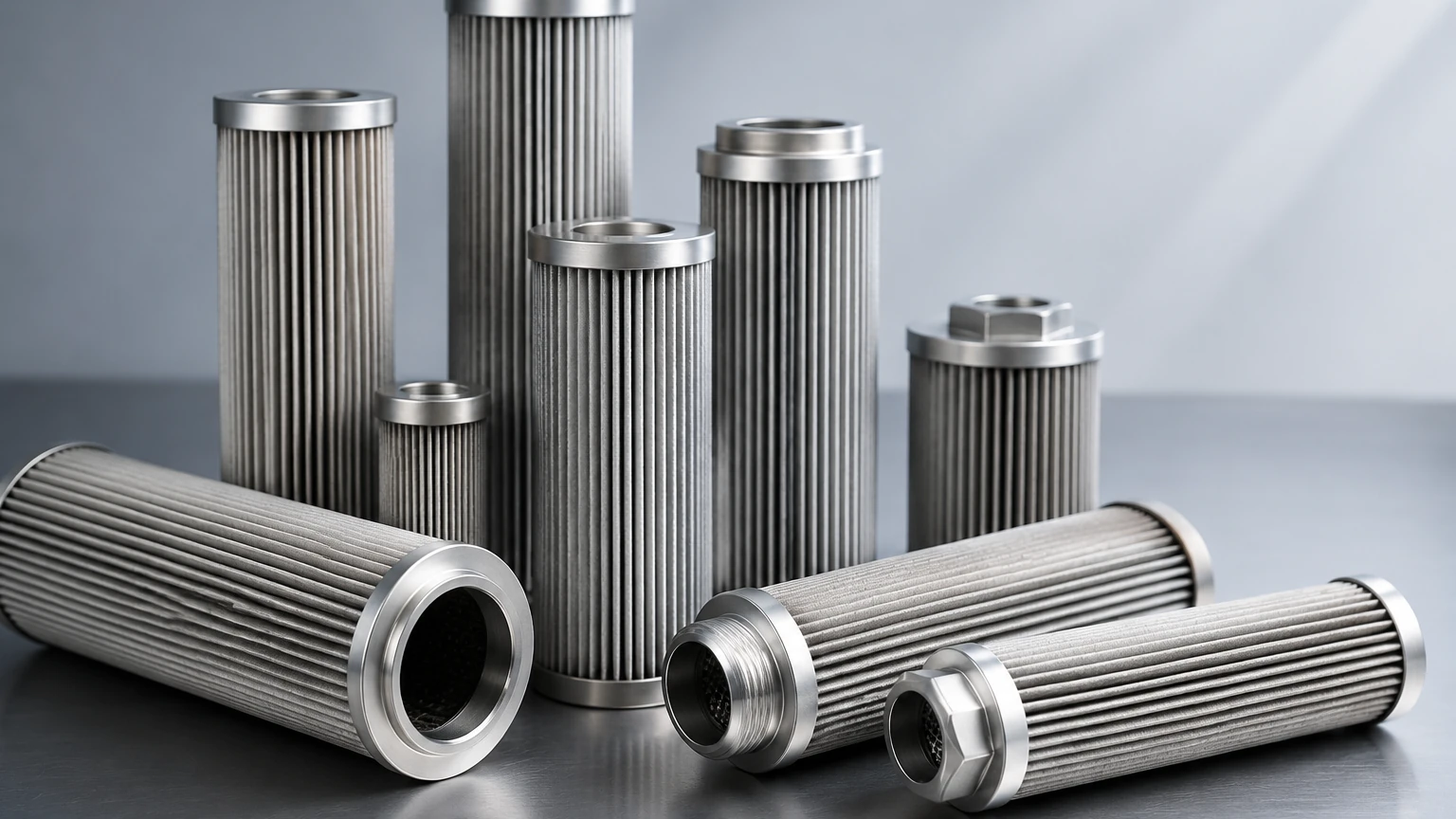
Pleated Filter Cartridge
In the realm of industrial fluid management, the pleated filter cartridge stands as a critical component for achieving high-efficiency separation in demanding environments. Unlike traditional cylindrical depth filters, the pleated design utilizes a folded geometry to maximize the effective filtration area within a confined space. For engineers and procurement professionals in sectors such as chemical processing, pharmaceuticals, and food and beverage production, understanding the technical nuances of these components is essential for optimizing system performance and controlling operational costs.
At its core, a pleated filter cartridge is engineered to provide a higher dirt-holding capacity and lower initial pressure drop compared to non-pleated alternatives. By increasing the surface area, the flux—or the volume of fluid passing through a unit area of the filter media—is reduced, which directly enhances the longevity of the filter and the quality of the filtrate. For high-temperature or corrosive applications, stainless steel pleated filters are often the preferred choice due to their structural integrity and regenerative capabilities.
Understanding the Pleated Design in Industrial Filtration
The primary engineering objective of a pleated filter cartridge is the optimization of the surface-area-to-volume ratio. In a standard 10-inch or 20-inch housing, the available space is fixed. By pleating the media—whether it is stainless steel wire mesh, sintered metal fiber, or a polymer membrane—manufacturers can increase the filtration surface by as much as 5 to 10 times compared to a simple wrap or sleeve design.
This increased area has several immediate technical benefits:
1. Reduced Differential Pressure (ΔP): With more surface area available for the fluid to pass through, the velocity of the fluid at any single point on the mesh is lower. This results in a lower initial pressure drop across the cartridge, which reduces the energy requirements for pumps.
2. Extended Service Life: Because the contaminant load is distributed over a much larger area, it takes significantly longer for the filter to reach its terminal pressure drop. This translates to fewer change-outs and reduced downtime.
3. Improved Particle Retention: Lower face velocities through the media reduce the likelihood of "particle breakthrough," where high pressure forces contaminants through the pores of the filter.
For those seeking comprehensive technical specifications and customized designs, visiting the Main Page of a specialized manufacturer like Kaifil provides a deeper look into how these engineering principles are applied to specific industrial challenges.
Material Science: Stainless Steel and Alloy Selection
While pleated filters are available in various materials, industrial applications involving high pressures, extreme temperatures, or aggressive chemicals necessitate the use of metallic media. Stainless steel is the industry standard, typically utilized in two primary grades: 304 and 316L.
304 Stainless Steel
304 stainless steel is suitable for general industrial use where corrosion resistance is required but the environment is not excessively acidic or saline. It is commonly used in hydraulic oil filtration, cooling water systems, and basic chemical processing.
316L Stainless Steel
The "L" in 316L stands for low carbon, which improves weldability and resistance to intergranular corrosion. 316L contains molybdenum, making it significantly more resistant to chlorides and pitting. This makes it the material of choice for pharmaceutical, marine, and high-end food and beverage applications where hygiene and chemical stability are paramount.
Sintered Mesh vs. Wire Mesh
Within the pleated filter cartridge category, the media itself can vary. Woven wire mesh provides precise pore sizes and is excellent for surface filtration. Sintered metal fiber, on the other hand, consists of non-woven stainless steel fibers that are fused together through a high-temperature sintering process. Sintered media offers higher porosity and depth-filtration characteristics, which can be particularly beneficial for capturing gelatinous or irregular contaminants.
Performance Metrics: Filtration Efficiency and Micron Ratings
When selecting a pleated filter cartridge, engineers must distinguish between nominal and absolute micron ratings. A nominal rating refers to the filter's ability to retain a major percentage (usually 60% to 90%) of particles of a specific size. An absolute rating, however, implies that 99.9% or more of particles at that size are captured.
In critical processes, such as the filtration of active pharmaceutical ingredients (APIs) or the protection of high-pressure hydraulic valves, absolute-rated pleated filters are required. The pleating process must be carefully controlled to ensure that the integrity of the pores is maintained at the folds. If the pleating is too tight or the manufacturing process is imprecise, the mesh may stretch or tear, leading to bypass and system failure.
Another key metric is the collapse pressure. In high-viscosity applications or systems prone to pressure surges, the pleated cartridge must be reinforced with an inner support core and sometimes an outer guard. Stainless steel cartridges are particularly valued here, as they can often withstand differential pressures exceeding 300-500 PSI, far beyond the capabilities of most plastic-based filters.
Engineering Considerations for System Integration
Integrating a pleated filter cartridge into an existing or new system requires a thorough analysis of the fluid dynamics and chemical environment. Engineers should confirm the following parameters before finalizing a selection:
* Fluid Viscosity: Higher viscosity fluids require larger surface areas to maintain acceptable flow rates. A pleated design is often the only way to achieve this without increasing the housing size.
* Chemical Compatibility: Beyond the filter media, the seals and end caps must be compatible with the process fluid. Options typically include Viton, EPDM, PTFE, or Silicone.
* End Cap Configuration: Standard configurations like DOE (Double Open End), Code 7 (226 O-ring with fin), or Code 3 (222 O-ring) must be matched to the filter housing to ensure a leak-proof seal.
* Temperature Fluctuations: Metal pleated filters excel in environments where temperatures exceed 250°F (121°C), where polymer filters would soften or degrade.
By consulting the Main Page of a professional manufacturer, engineering teams can access CAD drawings and material compatibility charts that assist in these technical evaluations.
Maintenance, Cleaning, and Longevity
One of the most significant advantages of a stainless steel pleated filter cartridge over disposable alternatives is its cleanability. In many industrial processes, the total cost of ownership (TCO) is greatly reduced by the ability to regenerate the filter media.
Cleaning Methods
1. Backwashing: Reversing the flow of the fluid to dislodge particles from the surface of the pleats. This is often automated in continuous flow systems.
2. Ultrasonic Cleaning: Using high-frequency sound waves in a cleaning solvent to remove fine particulates trapped deep within the mesh or sintered fibers.
3. Chemical Cleaning: Using acids, alkalis, or surfactants to dissolve organic or inorganic scaling. Because 316L stainless steel is highly resistant to many chemicals, aggressive cleaning agents can be used without damaging the filter.
Replacement Cycles
While metal filters are durable, they are not infinite. Over many cleaning cycles, the metal may experience work hardening or the mesh may eventually deform. Engineers should monitor the "clean pressure drop" after each cleaning cycle. If the initial pressure drop begins to rise steadily, it indicates that the media is becoming permanently fouled and the cartridge should be replaced to maintain system efficiency.
Customization for Specialized Industrial Applications
No two industrial processes are identical, and off-the-shelf filtration solutions often fall short of specific performance requirements. Customization of the pleated filter cartridge is a core service provided by manufacturers like Kaifil. This involves more than just changing the dimensions; it includes engineering the pleat density and depth to match the specific contaminant profile of the fluid.
For example, in applications with high concentrations of "soft" or deformable particles, a wider pleat spacing may be used to prevent the pleats from pinching shut under pressure, which would prematurely blind the filter. Conversely, for very fine, hard particulates, a high-density pleat configuration maximizes the available surface area for cake filtration.
OEM (Original Equipment Manufacturer) services allow for the development of proprietary filter designs that fit unique housing geometries or meet specific regulatory standards, such as FDA compliance for food contact or ASME standards for pressure vessels. This level of customization ensures that the filtration system is a perfectly integrated part of the larger industrial process rather than a generic add-on.
Conclusion: Making Informed Purchasing Decisions
Selecting the right pleated filter cartridge is a balance of material science, fluid dynamics, and economic reality. While the initial investment in a high-quality stainless steel pleated filter may be higher than a disposable alternative, the long-term benefits of durability, cleanability, and superior flow characteristics often lead to a lower total cost of ownership.
For technical professionals tasked with maintaining system integrity, the focus should remain on the specific requirements of the application—temperature, pressure, chemical nature, and particle size. By working with a manufacturer that understands these variables and offers robust customization options, companies can ensure their filtration processes are both efficient and reliable. For further technical guidance and to explore the full range of available filtration components, engineers are encouraged to review product options and application support on the Main Page of the manufacturer’s site.
