


Oil Filteration Machine
In modern industrial operations, the reliability of hydraulic systems, lubrication circuits, and power transmission units is inextricably linked to the cleanliness of the fluids they utilize. An oil filteration machine serves as a critical piece of maintenance equipment designed to remove solid particulates, water, and oxidation products from industrial oils. By maintaining fluid purity, these machines prevent premature component wear, reduce downtime, and significantly extend the service life of both the oil and the machinery it protects. For engineers and maintenance managers, selecting the right filtration system requires a deep understanding of the core filtration components, the specific contaminants involved, and the operational environment.
At the heart of any effective oil filteration machine is the filter element. While the machine provides the housing, pump, and control systems, the filtration performance is dictated by the quality and design of the filter media. As a specialist manufacturer, Kaifil provides high-performance stainless steel filtration solutions that are often integrated into these machines to handle demanding industrial conditions where standard disposable filters may fail. To explore the full range of technical capabilities and custom filter elements, professionals can visit the Main Page for detailed product specifications.
Understanding the Role of an Oil Filteration Machine in Industrial Reliability
Industrial oils, whether hydraulic, gear, or turbine-based, are subject to continuous degradation. Contamination enters the system through several pathways: built-in debris from manufacturing, ingressed contaminants from seals and breathers, and internally generated wear particles. An oil filteration machine, often configured as a portable cart or a stationary "kidney-loop" system, works independently of the main system's primary filtration to provide deep cleaning of the fluid reservoir.
Contamination Control Standards
The performance of these machines is typically measured against the ISO 4406 cleanliness standard, which counts particles at three size levels: >4μm, >6μm, and >14μm. A high-efficiency oil filteration machine aims to lower these counts to levels that meet or exceed the original equipment manufacturer (OEM) requirements. For high-pressure hydraulic systems, maintaining a cleanliness level of ISO 16/14/11 or better is often necessary to prevent valve sticking and pump cavitation.
Moisture and Varnish Removal
Beyond particulate matter, many advanced filtration machines are equipped to handle moisture and varnish. Water in oil leads to hydrolysis, additive depletion, and corrosion. Varnish, a byproduct of oil oxidation, can coat internal surfaces and cause mechanical tolerances to tighten. The use of specialized stainless steel mesh and sintered metal components in the filtration stage ensures that the system can withstand the pressures required to push oil through multi-stage media designed to capture these complex contaminants.
Core Components: The Importance of Stainless Steel Filter Media
When specifying an oil filteration machine, the choice of filter media is paramount. While cellulose and fiberglass are common in light-duty applications, industrial-grade machines often require the durability and precision of stainless steel. Kaifil specializes in manufacturing stainless steel wire mesh filters and cartridges that offer distinct advantages in heavy-duty oil processing.
Durability and Pressure Resistance
Stainless steel filters are inherently robust. In an oil filteration machine, the pump may generate significant differential pressure, especially when dealing with high-viscosity oils or cold-start conditions. Stainless steel mesh can withstand these pressure spikes without the risk of media migration or structural collapse, which is a common failure mode for paper-based elements.
Material Selection: SS304 vs. SS316L
The choice of material depends on the chemical composition of the oil and the environment.
- SS304: Suitable for standard mineral oils and general hydraulic applications. It provides excellent mechanical strength and basic corrosion resistance.
- SS316L: Preferred for synthetic oils, phosphate esters, or applications in corrosive environments (such as offshore or chemical plants). The addition of molybdenum in SS316L enhances resistance to pitting and chemical degradation.
Sintered Metal Technology
For applications requiring extreme precision, sintered metal filter elements are used. Sintering bonds multiple layers of wire mesh or metal powder together at high temperatures, creating a porous structure with fixed pore sizes. This ensures absolute filtration ratings, meaning the filter will consistently capture 100% of particles above a specific micron size, providing a level of reliability that nominal-rated filters cannot match.
Engineering Considerations for Filter Selection
Engineers must evaluate several technical parameters when integrating filtration components into an oil filteration machine. These factors determine the efficiency of the purification process and the overall energy consumption of the unit.
Micron Rating and Beta Ratio
The micron rating indicates the size of particles the filter can trap. However, the Beta Ratio (β) is a more accurate measure of efficiency. A filter with a βx = 1000 means that for every 1000 particles of size 'x' entering the filter, only one passes through. When configuring an oil filteration machine, it is essential to balance the micron rating with the flow requirements. Finer filtration (e.g., 3-micron) provides cleaner oil but increases the resistance to flow, requiring a more powerful pump and potentially leading to more frequent filter cleaning or replacement.
Flow Rate and Viscosity
Oil viscosity changes significantly with temperature. A machine designed for ISO VG 32 hydraulic oil will behave differently when processing ISO VG 460 gear oil. The filter element must be sized to handle the maximum expected viscosity at the lowest operating temperature to prevent the bypass valve from opening. If the bypass opens, unfiltered oil circulates back into the reservoir, defeating the purpose of the oil filteration machine.
Effective Filtration Area
To maximize the time between maintenance intervals, the filter element should have a large surface area. Pleated stainless steel cartridges are a standard solution here. By pleating the wire mesh, the surface area is increased several-fold within the same cylindrical footprint. This reduces the flux (flow per unit area), lowers the initial pressure drop, and increases the dirt-holding capacity of the machine.
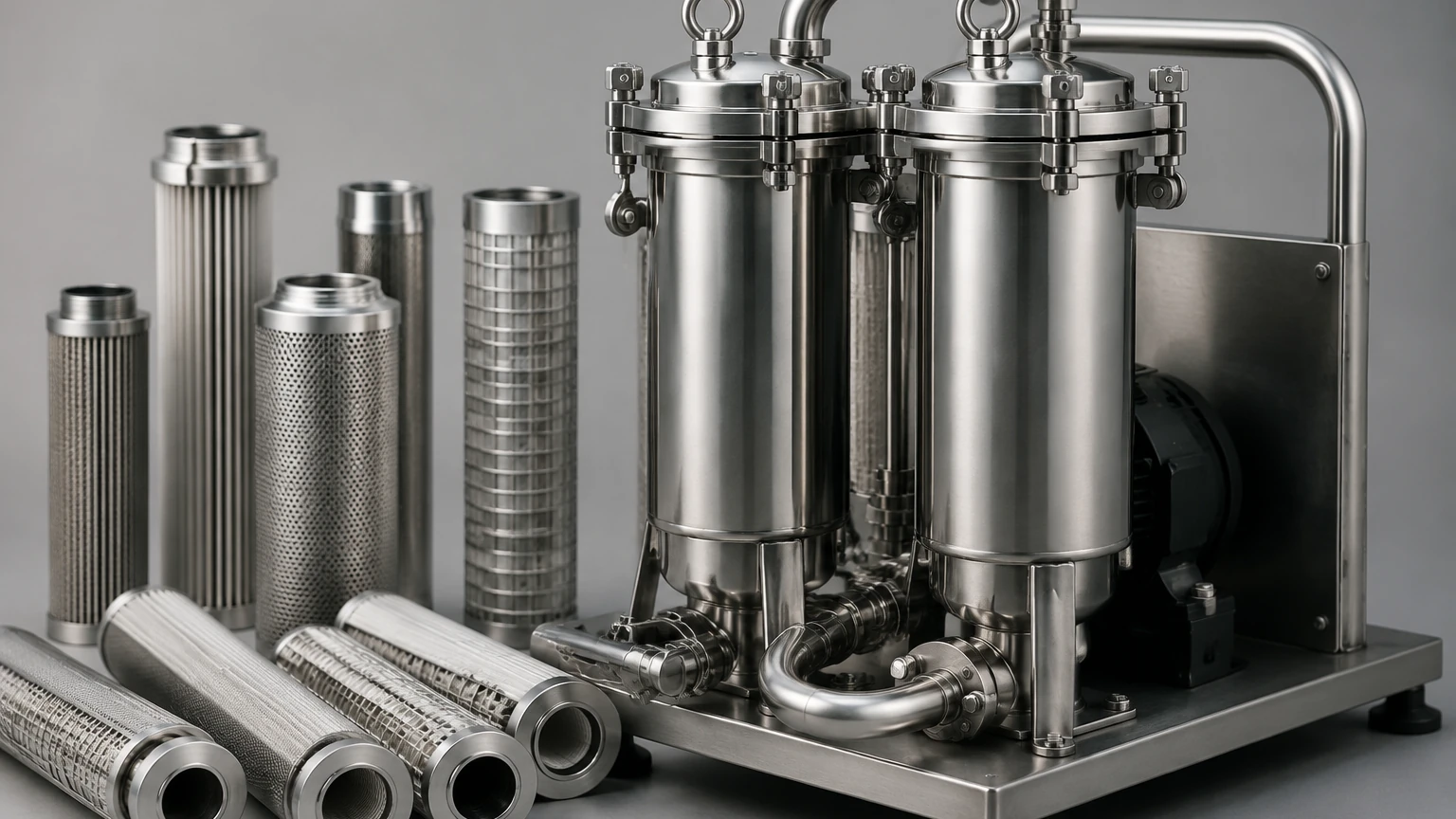
Customization and OEM Solutions for Specialized Machinery
Not every industrial application can be served by off-the-shelf filtration units. Customization is often required to meet specific spatial constraints, flow paths, or extreme operating conditions. Kaifil’s expertise in OEM and customized filtration solutions allows for the development of bespoke components tailored to unique oil filteration machine designs.
Custom End Caps and Seals
The interface between the filter element and the machine housing must be leak-proof. Customization options include various end cap configurations (such as Code 7, 222, or 226) and specialized sealing materials. For high-temperature oil filtration, Viton or EPDM O-rings are used to ensure seal integrity where standard Nitrile (NBR) would fail.
Multi-Stage Filtration Arrays
Some oil filteration machines utilize a multi-stage approach, moving from coarse to fine filtration. A typical setup might include a 100-mesh stainless steel suction strainer to protect the pump, followed by a 25-micron pleated pre-filter, and finally a 5-micron high-efficiency sintered element. Customizing these stages based on the specific contaminant profile of the application—such as heavy metal shavings in a machining center versus fine silt in a hydraulic press—optimizes the machine's performance.
Maintenance, Cleaning, and Total Cost of Ownership
One of the primary advantages of using stainless steel filtration components in an oil filteration machine is the potential for cleaning and reuse. This significantly impacts the total cost of ownership (TCO) compared to systems that rely on frequent purchases of disposable cartridges.
The Cleaning Process
Unlike cellulose filters, which must be discarded once saturated, stainless steel wire mesh filters can often be cleaned using ultrasonic baths, backwashing, or chemical solvents. This is particularly valuable in applications with high contamination rates where the cost of replacement filters would otherwise be prohibitive. However, it is vital to confirm the manufacturer’s guidelines for cleaning to ensure the structural integrity of the mesh is not compromised.
Monitoring Differential Pressure
To maintain efficiency, an oil filteration machine should be equipped with differential pressure gauges or sensors. As the filter captures debris, the pressure drop across the media increases. Monitoring this allows maintenance teams to clean or replace the element at the optimal time—before the bypass valve opens or the flow rate drops below effective levels.
Long-Term Value
While the initial investment in a high-quality oil filteration machine with stainless steel elements is higher than simpler alternatives, the long-term savings are substantial. Reduced waste disposal costs (from fewer discarded filters), lower oil procurement costs, and the prevention of catastrophic machinery failure provide a clear return on investment (ROI) for industrial facilities.
Selecting the Right Filtration Solution for Your Application
Before finalizing the specifications for an oil filteration machine or its replacement elements, engineers should confirm several key pieces of information with their supplier:
1. Fluid Compatibility: Ensure the filter media and seals are compatible with the specific oil chemistry and any additives present.
2. Operating Temperature: Define the full range of temperatures the oil will reach during the filtration cycle.
3. Target Cleanliness Level: Determine the required ISO 4406 code for the target application to select the appropriate micron rating.
4. Flow Requirements: Calculate the necessary flow rate to ensure the entire oil volume can be turned over within the desired timeframe.
5. Environmental Conditions: Consider if the machine will be used in wash-down areas, outdoors, or in explosive atmospheres (requiring ATEX-certified components).
By addressing these factors, purchasing teams can ensure they acquire a system that provides reliable, long-term performance. Kaifil’s commitment to quality and precision ensures that every filtration component contributes to the overall efficiency of the industrial process.
For more information on customized stainless steel filtration components and to view our full product catalog, please visit the Main Page. Whether you are designing a new oil filteration machine or seeking to optimize an existing system, technical expertise and high-quality manufacturing are the foundations of successful industrial filtration.
