


Technical Guide to Braided Wire Electric Fence and Industrial Wire Solutions
In industrial and agricultural perimeter management, the selection of wire materials and structures is a critical engineering decision that impacts security, longevity, and maintenance costs. Among the various options available, the braided wire electric fence has emerged as a preferred solution for applications requiring a balance of high visibility, flexibility, and reliable conductivity. Unlike traditional solid-strand wires, braided configurations utilize multiple filaments to achieve specific mechanical and electrical properties.
For engineers and procurement professionals, understanding the technical nuances of braided wire—specifically when compared to industrial Woven Wire Mesh—is essential for optimizing system performance in demanding environments. This guide examines the material science, structural engineering, and selection criteria for braided wire systems within the broader context of stainless steel wire technologies.
1. Engineering Fundamentals: Braided vs. Woven Structures
To specify the correct wire product, it is necessary to distinguish between the two primary manufacturing methods: braiding and weaving. While both involve interlacing wires, their mechanical behaviors differ significantly.
Braided Wire Construction
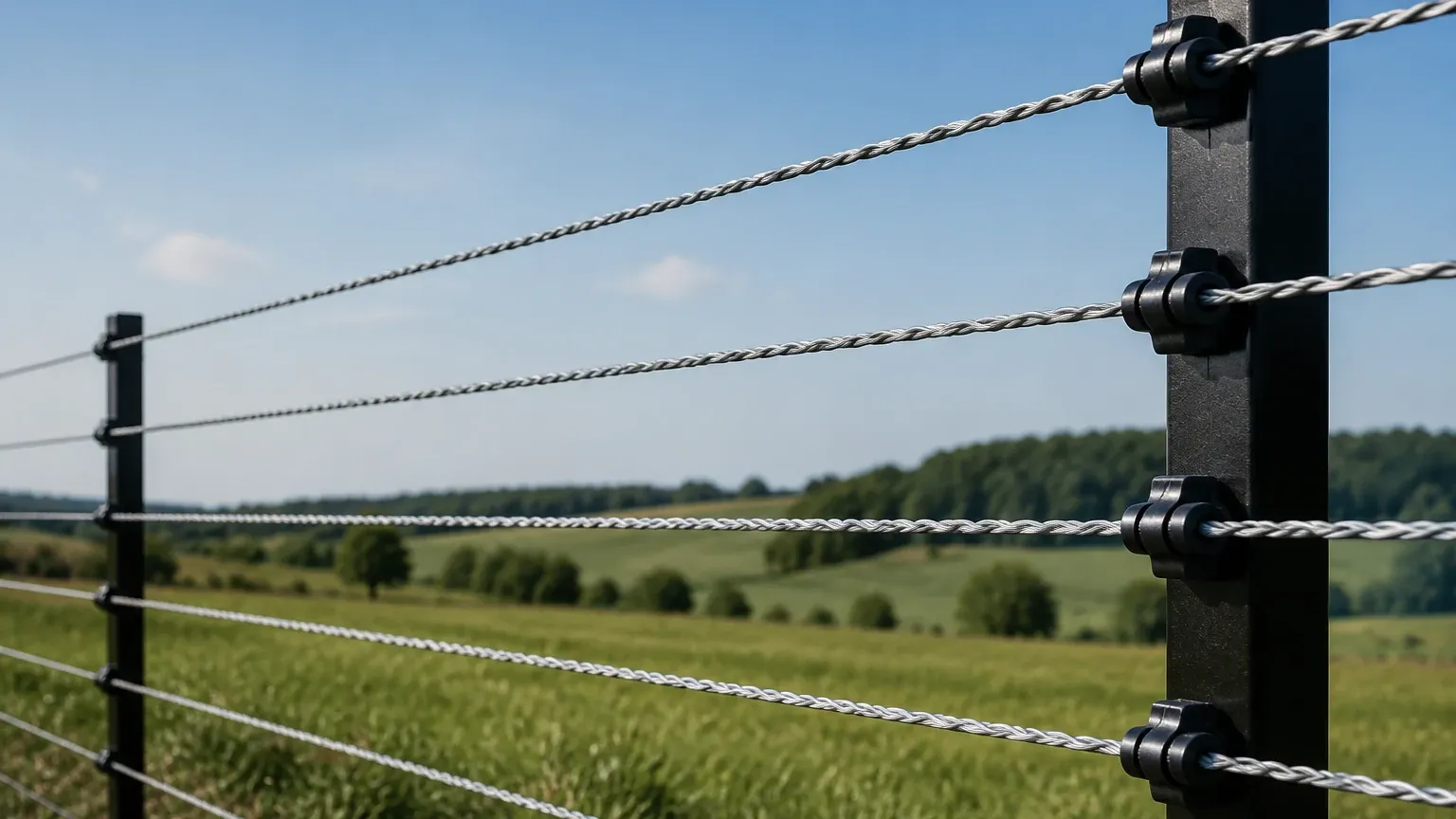
A braided wire electric fence typically consists of several fine stainless steel or copper filaments intertwined in a tubular or flat pattern. This construction offers several advantages:
* Flexibility: Braided structures can withstand repeated bending and tensioning without work-hardening or snapping, making them ideal for portable or temporary fencing.
* Surface Area: The multi-strand nature increases the total surface area, which can be beneficial for electrical contact, though it also increases exposure to corrosive elements if the material grade is insufficient.
* Energy Dissipation: In the event of physical impact, the braided structure can distribute stress across multiple strands, reducing the likelihood of a complete break.
Woven Wire Mesh Comparison
In contrast, industrial woven wire mesh is manufactured by weaving individual wires over and under one another at 90-degree angles. This results in a dimensionally stable fabric with precise aperture sizes. While braided wire excels in linear tension applications like fencing, Plain, twill and dutch woven wire mesh in SS304/316L — rolls, cut mesh and framed panels. Send mesh count or micron target for a technical quote. is the standard for filtration, screening, and rigid containment where aperture integrity is paramount.
2. Material Science: The Role of Stainless Steel Alloys
The performance of a braided wire electric fence is largely dictated by its metallurgy. Because these systems are exposed to the elements and carry electrical loads, the choice of alloy is a primary factor in the Total Cost of Ownership (TCO).
Stainless Steel 304
Grade 304 is the most common stainless steel used in wire production. It offers a good balance of tensile strength and corrosion resistance. In standard inland environments, 304 provides sufficient protection against oxidation. However, in industrial zones with high chemical emissions, it may be prone to pitting over time.
Stainless Steel 316L
For high-salinity coastal environments or heavy industrial applications, 316L (low carbon) is the superior choice. The addition of molybdenum enhances resistance to chloride-induced pitting. When specifying a braided wire electric fence for critical infrastructure, 316L ensures that the electrical conductivity is not compromised by surface corrosion, which can increase resistance and reduce the effectiveness of the shock pulse.
Conductivity Considerations
Stainless steel has higher electrical resistance than copper or aluminum. To compensate for this in fencing applications, manufacturers often interweave highly conductive copper strands within the stainless steel braid. This "hybrid" approach combines the high tensile strength and corrosion resistance of stainless steel with the low resistance of copper.
3. Performance Evaluation Criteria for Industrial Fencing
When evaluating a braided wire electric fence for an industrial project, engineers should focus on four key performance metrics:
Tensile Strength and Breaking Load
The breaking load determines how much physical pressure the fence can withstand from livestock, wildlife, or accidental impact. Braided wires generally offer higher breaking loads than poly-ropes but may have lower absolute strength than high-tensile solid steel wire of the same diameter. Engineers must calculate the required tension to prevent sagging while remaining within the elastic limit of the material.
Electrical Resistance (Ohms per Meter)
For long-distance perimeters, low resistance is vital. If the resistance is too high, the voltage at the end of the line will drop below the effective threshold. Braided wires with more stainless steel filaments generally have higher resistance, while those with more copper or silver-plated strands have lower resistance. It is critical to match the wire's resistance to the output of the energizer.
UV Stability and Weathering
In many braided products, synthetic fibers (like polyethylene) are used as a core or carrier for the metal filaments. These fibers must be UV-stabilized to prevent brittleness and failure under prolonged sunlight exposure. For permanent industrial installations, a 100% metal braided wire or a high-grade stainless steel woven mesh is often preferred to eliminate the risk of polymer degradation.
Visibility and Aesthetics
In security applications, visibility serves as a psychological deterrent. Braided wires are often thicker than single-strand wires, making them easier to see. This reduces the risk of accidental contact by personnel or equipment.
4. Common Risks and Mitigation Strategies
Implementing a braided wire electric fence system involves technical risks that can lead to premature failure if not addressed during the design phase.
* Electrolytic Corrosion: When dissimilar metals (e.g., copper and stainless steel) are in contact in a moist environment, galvanic corrosion can occur. Quality braided wires use specialized coatings or strand geometries to minimize this effect.
* Arcing and Short Circuits: If the braided wire is not properly tensioned, it may come into contact with grounded objects or other fence strands, causing an arc. This not only drains the energizer but can also cause localized melting of the wire filaments.
* Strain Insulator Failure: The points where the wire attaches to posts are high-stress areas. Using low-quality insulators can lead to voltage leakage. For industrial-grade systems, heavy-duty porcelain or UV-stabilized glass-reinforced polymers are recommended.
5. Selection Guide: Confirming Specifications Before Purchase
Before finalizing a procurement order for wire components, whether for fencing or filtration, technical professionals should confirm the following data points with the manufacturer:
1. Filament Count and Diameter: The number of individual wires in the braid and their respective gauges. This affects both flexibility and total breaking strength.
2. Alloy Certification: Request Mill Test Reports (MTRs) to verify that the stainless steel meets ASTM standards for 304 or 316L. This is especially important for Woven Wire Mesh used in sensitive chemical or food processing environments.
3. Resistance Rating: The exact Ohms/km rating to ensure compatibility with the planned energizer and fence length.
4. Customization Options: For specialized industrial applications, determine if the wire can be supplied in custom lengths, specific spool sizes, or with specialized end-fittings to reduce installation time.
6. Maintenance and Longevity in Industrial Environments
A well-engineered braided wire electric fence can have a service life exceeding 10–15 years, provided proper maintenance protocols are followed. Regular inspections should include:
* Voltage Testing: Using a digital voltmeter to check for drops in performance that may indicate a break or a short.
* Tension Adjustment: Seasonal temperature changes can cause metal to expand and contract. Braided wires may require periodic re-tensioning to maintain their structural integrity.
* Cleaning: In areas with high atmospheric pollution, salt or chemical deposits can build up on the wire surface. While stainless steel is resistant, heavy buildup can eventually lead to surface staining or reduced conductivity.
Conclusion
Selecting the right wire solution requires a deep understanding of the application's mechanical and environmental demands. While a braided wire electric fence offers the flexibility and visibility required for perimeter security and animal containment, precision industrial tasks often demand the rigid specifications of woven wire mesh. By prioritizing high-grade materials like 304 and 316L stainless steel and carefully evaluating conductivity and tensile requirements, engineers can ensure a reliable, long-lasting installation. For those requiring precise filtration or specialized metal components, exploring the capabilities of Woven Wire Mesh provides the necessary technical foundation for high-performance industrial systems.
