


Bag Filters Hvac
In the landscape of industrial and commercial air management, bag filters—often referred to as pocket filters—serve as a critical component for maintaining air quality and protecting sensitive downstream equipment. For engineers and facility managers, selecting the right bag filters HVAC configuration is not merely about air cleanliness; it is an exercise in balancing filtration efficiency, energy consumption, and long-term operational costs.
As industrial environments become more regulated and equipment more sophisticated, the demand for high-capacity filtration has grown. While many associate filtration primarily with liquid processing, the principles of particle capture and pressure management remain consistent across media. Understanding the technical nuances of HVAC bag filters allows procurement teams to optimize their systems for both performance and durability.
Technical Fundamentals of HVAC Bag Filters
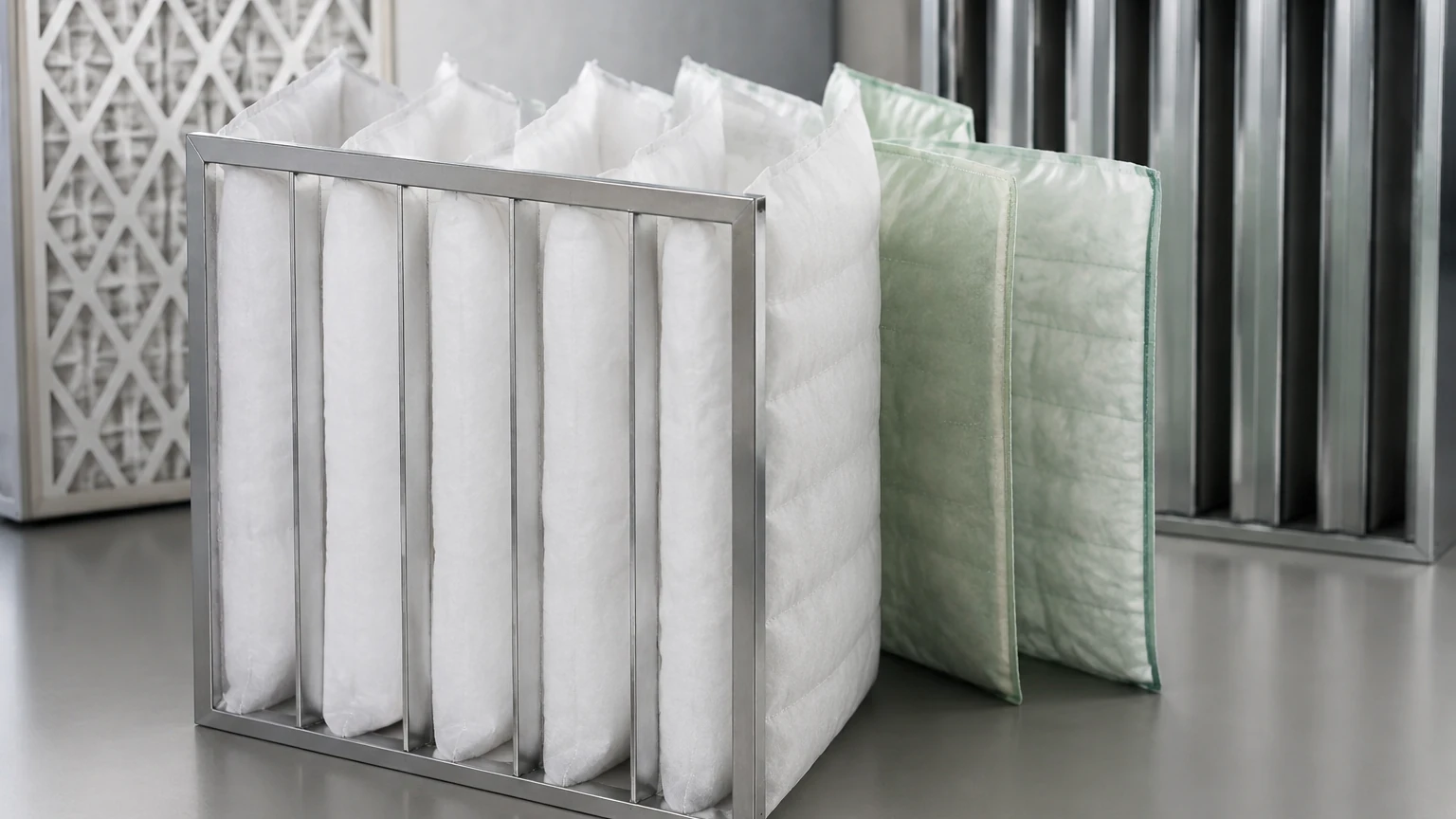
Bag filters are extended-surface filters designed to handle high air volumes while maintaining a low resistance to airflow. Their unique structure consists of multiple pockets or "bags" stitched or thermally bonded together, providing a significantly larger surface area compared to flat-panel or pleated filters. This increased surface area is the primary driver behind their high dust-holding capacity (DHC).
MERV Ratings and Efficiency
The performance of bag filters HVAC systems is typically measured by the Minimum Efficiency Reporting Value (MERV), as defined by ASHRAE Standard 52.2. For most industrial applications, bag filters fall within the MERV 11 to MERV 15 range.
* MERV 11-12: Effective at capturing particles between 1.0 and 3.0 microns. These are commonly used as secondary filters in commercial buildings and light industrial settings.
* MERV 13-14: Capable of capturing smaller sub-micron particles. These are standard in healthcare facilities and precision manufacturing environments.
* MERV 15: Provides the highest level of efficiency for bag filters, often used as pre-filtration for HEPA systems in cleanrooms or pharmaceutical laboratories.
Media Composition
Modern bag filters utilize two primary types of media: synthetic and fiberglass. Synthetic media, often made from melt-blown polypropylene, is favored for its durability and resistance to moisture. It does not shed fibers, making it suitable for food and beverage or pharmaceutical applications. Fiberglass media, while more fragile, offers exceptional consistency in filtration efficiency throughout the filter's lifecycle, though it requires careful handling to prevent media fracture.
Engineering Considerations: Pressure Drop and Energy Consumption
From an engineering perspective, the most significant factor in the total cost of ownership (TCO) for bag filters HVAC is the pressure drop. The initial resistance of a clean filter and the rate at which that resistance increases as the filter loads with dust directly impact the energy consumption of the HVAC blower motors.
Initial vs. Final Pressure Drop
Every filtration system has a design limit for pressure drop. A high-quality bag filter is engineered with aerodynamic pockets that stay inflated during operation, ensuring even air distribution and minimizing turbulence. When the pressure drop reaches a predetermined "final resistance" (typically double the initial resistance or as specified by the system designer), the filter must be replaced.
Engineers must calculate the energy cost of pushing air through a loaded filter versus the cost of premature replacement. In many large-scale industrial facilities, the energy saved by replacing filters slightly earlier can outweigh the procurement cost of the filters themselves.
Pocket Configuration and Airflow
The number of pockets and their length are critical variables. A filter with more pockets provides more surface area, which generally leads to a lower initial pressure drop and a longer service life. However, if pockets are spaced too closely, they may touch during operation—a phenomenon known as "blinding"—which reduces the effective filtration area and increases resistance. Standard depths typically range from 12 to 36 inches, depending on the available space in the air handling unit (AHU).
Industrial Applications and Environmental Challenges
While standard HVAC systems in office buildings face relatively consistent dust loads, industrial HVAC systems must contend with diverse contaminants, ranging from chemical vapors to abrasive metallic dust.
Chemical and Pharmaceutical Processing
In environments where chemical purity is paramount, bag filters act as a vital barrier. Here, the integrity of the filter frame is as important as the media. While many commercial filters use plastic or galvanized steel frames, heavy-duty industrial applications often require precision-engineered components to ensure a leak-proof seal. For specialized filtration needs, including those involving corrosive air streams or high-temperature requirements, consulting a specialist like Main Page can provide insights into custom metal components and support structures that enhance system reliability.
Food and Beverage Industry
In food processing, moisture and microbial growth are constant concerns. Bag filters in these settings must be resistant to humidity and often require antimicrobial treatments or synthetic media that does not support mold growth. The structural rigidity of the filter is essential to prevent bypass—where unfiltered air leaks around the edges of the filter—which could contaminate production lines.
Comparing Bag Filters to Metal Filtration Solutions
In many industrial processes, air filtration and liquid filtration work in tandem. While bag filters HVAC systems manage the ambient environment, precision metal filters are often used within the production machinery itself.
Durability and Reusability
One of the primary differences between standard HVAC bag filters and the stainless steel filtration solutions manufactured by Kaifil is reusability. HVAC bag filters are almost exclusively disposable. Once they reach their dust-holding limit, they are replaced. In contrast, stainless steel wire mesh filters and cartridges are designed for extreme durability and can often be cleaned and reused, making them ideal for high-pressure hydraulic systems or aggressive chemical filtration where disposable media would fail.
Structural Support
Even in air filtration, metal components play a supportive role. High-velocity HVAC systems may require metal headers or reinforced support grids to prevent bag filters from collapsing or tearing under pressure. The engineering expertise required to manufacture precision wire mesh and metal filter components translates directly to the structural integrity needed in industrial air housing units.
Selection Criteria: What Engineers Should Confirm
Before finalizing a purchase for bag filters HVAC, technical teams should confirm several key specifications to ensure compatibility and performance:
1. Face Velocity: Ensure the filter is rated for the actual velocity of the air moving through the AHU. Standard ratings are often at 500 feet per minute (fpm), but actual conditions may vary.
2. Burst Strength: In systems with variable frequency drives (VFDs) that can cause sudden pressure spikes, the burst strength of the filter pockets is a critical safety factor.
3. Temperature Limits: Standard synthetic filters may soften or lose efficiency at temperatures exceeding 150°F (65°C). For high-heat industrial exhausts, specialized media or metal filtration components are required.
4. Gasket Integrity: A filter is only as good as its seal. Confirm that the header and gasket material are compatible with any chemicals present in the air stream.
Maintenance and Best Practices
Proper maintenance of bag filters HVAC systems extends beyond simply changing the filters when they look dirty. A data-driven approach involves the use of differential pressure gauges (manometers) to monitor the actual state of the filter media.
Monitoring and Replacement
* Install Manometers: Every AHU should have a calibrated gauge to measure the pressure drop across the filter bank.
* Scheduled Inspections: Check for "pocket sagging" or moisture accumulation, which can lead to bacterial growth or structural failure.
* Pre-filtration: To extend the life of expensive high-efficiency bag filters, engineers often use low-cost pleated pre-filters (MERV 8) to capture larger particles. This staged approach significantly reduces the total cost of the filtration system.
Total Cost of Ownership (TCO) Analysis
When evaluating different bag filter options, engineers should look at the TCO, which includes:
* Purchase Price: The initial cost of the units.
* Energy Cost: The calculated cost of electricity to overcome the average pressure drop over the filter's life.
* Labor and Disposal: The cost to physically change the filters and dispose of the used media, which may be classified as hazardous waste depending on the contaminants captured.
Conclusion
Bag filters HVAC systems are a cornerstone of industrial air management, providing the necessary balance of high-efficiency particle capture and operational economy. By understanding the technical specifications—from MERV ratings to pressure drop dynamics—engineers can select filtration solutions that not only protect indoor air quality but also optimize the energy efficiency of the entire facility.
For industries requiring more robust, permanent, or highly customized filtration solutions, particularly in liquid processing or extreme environments, exploring specialized metal filtration components is a logical next step. Companies like Kaifil provide the engineering depth and manufacturing precision needed to handle the most demanding industrial filtration challenges, ensuring that whether the media is air or liquid, the results remain consistent and reliable.
