


Self Cleaning Filters
In modern industrial processing, the transition from manual filtration to automated systems is driven by the need for continuous uptime, reduced labor costs, and consistent product quality. Self cleaning filters represent a critical advancement in this field, offering a solution that removes suspended solids from liquid streams without necessitating process interruptions. For engineers and facility managers, understanding the mechanical nuances, material constraints, and operational logic of these systems is essential for optimizing filtration performance in demanding environments.
As a specialized manufacturer of stainless steel filtration components, Kaifil provides the precision-engineered elements that form the core of these automated systems. Whether the application involves high-viscosity fluids or high-flow water treatment, the selection of the internal filter medium and the cleaning mechanism determines the long-term reliability of the installation.
Understanding the Role of Self-Cleaning Filters in Industrial Automation
Manual filtration systems, such as basket strainers or bag filters, require periodic downtime for cleaning or replacement. This downtime not only halts production but also exposes operators to potentially hazardous process fluids and increases the risk of environmental contamination. Self cleaning filters mitigate these risks by integrating an automated cleaning cycle triggered by either a timer or a differential pressure (DP) sensor.
When the accumulated debris on the filter element reaches a specific threshold, the system initiates a cleaning sequence. This process occurs while the main flow continues, ensuring that downstream equipment—such as heat exchangers, spray nozzles, and high-pressure pumps—remains protected from particulate damage. For organizations looking to streamline their filtration infrastructure, reviewing technical specifications on our Main Page can provide insights into the component-level requirements for these automated systems.
Core Operating Principles and Mechanical Designs
There are several primary methods used to achieve self-cleaning functionality. The choice of mechanism depends largely on the nature of the contaminants, the viscosity of the fluid, and the required filtration fineness.
Mechanical Scraper Systems
Mechanical scraper filters are frequently used for high-viscosity liquids or fluids with a high concentration of sticky solids. In this design, a scraper blade (manufactured from stainless steel or high-performance polymers) moves across the internal or external surface of the filter element. As the blade passes, it physically displaces the accumulated "filter cake," pushing it toward a collection chamber at the bottom of the housing. This chamber is periodically purged through a flush valve.
Backwash Filtration
Backwash systems are common in water treatment and low-viscosity chemical processing. During the cleaning cycle, a portion of the filtered fluid (or an external clean fluid source) is diverted and forced backward through the filter element. This reverse flow dislodges particles trapped in the mesh or wedge wire. Backwash filters are highly effective for removing non-deformable particles and are valued for their relatively simple mechanical design.
Suction Scanning
Suction scanning technology utilizes a rotating internal assembly with suction nozzles that scan the entire surface of the filter screen. The pressure differential between the internal process and the atmospheric pressure at the waste outlet creates a high-velocity vacuum effect at the nozzle tip. This localized cleaning is exceptionally efficient at removing fine particles without requiring a large volume of flush water, making it an ideal choice for large-scale water filtration.
Material Selection and Engineering Considerations
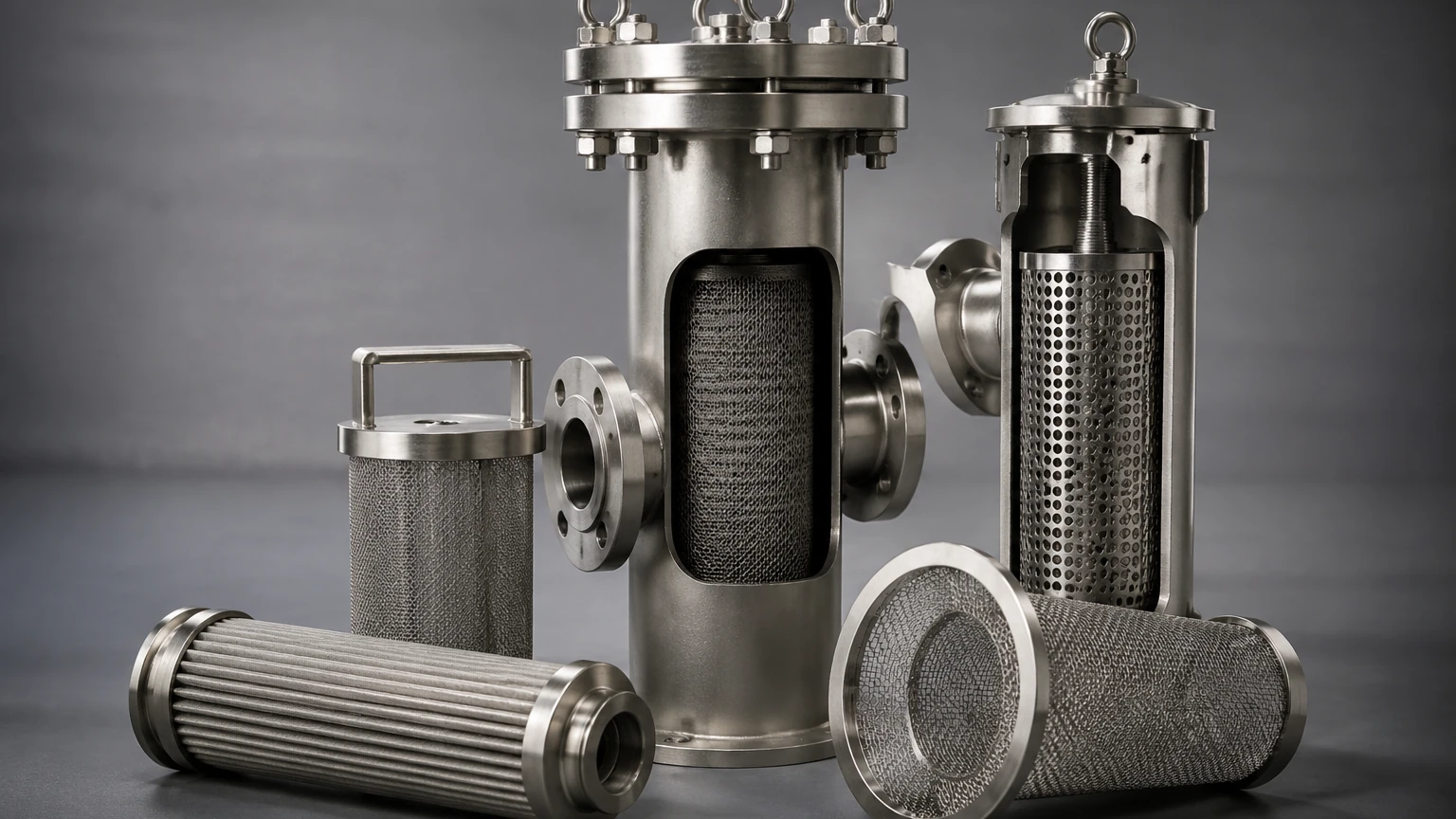
The durability of self cleaning filters is fundamentally tied to the materials used for the filter element. Because these components are subject to constant mechanical stress from scrapers or high-pressure backwash cycles, stainless steel is the industry standard.
1. Stainless Steel 304/316L: These alloys offer excellent corrosion resistance and structural integrity. 316L is preferred in pharmaceutical and food applications due to its superior resistance to pitting and crevice corrosion in chloride-rich environments.
2. Wedge Wire vs. Woven Mesh: For scraper-based systems, wedge wire (V-wire) is often the preferred medium. The V-shaped profile prevents particles from becoming wedged in the screen, and the smooth surface allows the scraper to operate with minimal friction. Woven wire mesh, often sintered for added strength, is used when finer micron ratings (below 50 microns) are required.
3. Surface Coatings: In some instances, specialized coatings are applied to the stainless steel elements to reduce friction or enhance chemical resistance against aggressive solvents.
Key Performance Indicators for Filter Selection
When specifying self cleaning filters, engineers must evaluate several technical parameters to ensure the system meets the application's demands. Failure to account for these variables can lead to frequent clogging, excessive fluid loss during flush cycles, or premature component failure.
Micron Rating and Filtration Efficiency
The micron rating defines the size of particles the filter is intended to remove. It is important to distinguish between nominal and absolute ratings. In self-cleaning applications, the goal is to balance filtration fineness with the frequency of the cleaning cycle. A filter that is too fine for the particle load will trigger cleaning cycles too frequently, leading to increased wear and fluid waste.
Differential Pressure (DP) Threshold
The DP is the difference in pressure between the inlet and the outlet of the filter. As the filter element captures debris, the DP increases. Engineers must set the cleaning trigger at a point that maximizes the interval between cleanings without compromising the structural integrity of the filter element or reducing the downstream flow below critical levels.
Flow Rate and Flux
Flux refers to the volume of fluid passing through a unit area of the filter medium. High flux rates can drive particles deeper into the mesh, making them harder to remove during the cleaning cycle. Properly sizing the filter housing to maintain an optimal flux rate is essential for the longevity of the self-cleaning mechanism.
Industry-Specific Applications and Challenges
Self cleaning filters are utilized across a broad spectrum of industries, each presenting unique challenges for filtration design.
* Chemical Processing: Filters must handle aggressive chemicals and varying temperatures. Stainless steel's compatibility with a wide range of pH levels makes it the primary choice for these environments.
* Food and Beverage: Clean-in-place (CIP) compatibility is mandatory. The filter must be designed without "dead zones" where bacteria can proliferate, and the materials must meet FDA or equivalent regulatory standards.
* Cooling Water Systems: In power plants and manufacturing facilities, self-cleaning systems protect heat exchangers from organic growth, sand, and scale. These systems often handle very high flow rates and require robust construction to withstand outdoor environments.
* Pulp and Paper: The removal of fibers and adhesive "stickies" requires aggressive mechanical scraping and durable wedge wire elements that can resist abrasion.
Total Cost of Ownership and Maintenance Cycles
While the initial capital expenditure for self cleaning filters is higher than for manual systems, the Total Cost of Ownership (TCO) is typically lower when evaluated over a three-to-five-year period. The reduction in labor costs associated with manual cleaning, the elimination of disposable filter bags or cartridges, and the minimization of product loss during cleaning cycles contribute to a rapid Return on Investment (ROI).
Maintenance for these systems focuses on the moving parts: seals, bearings, and the scraper or backwash assembly. Regular inspection of the stainless steel filter element is also necessary to check for signs of mechanical wear or chemical erosion. Because Kaifil specializes in custom stainless steel components, we often assist engineers in designing replacement elements that improve upon the original equipment manufacturer (OEM) specifications, extending the interval between major overhauls.
Customization and OEM Integration
Every industrial process has unique characteristics, and off-the-shelf filtration solutions may not always provide the necessary performance. Customization is often required in terms of:
* Connection Sizes and Types: Matching existing piping (ANSI, DIN, or JIS flanges).
* Housing Orientation: Vertical or horizontal configurations to fit within limited floor space.
* Control Logic: Integrating the filter's PLC with the facility's central SCADA system for remote monitoring and data logging.
* Specialized Media: Engineering multi-layered sintered mesh or reinforced wedge wire to handle extreme pressure differentials.
For technical teams involved in the design of new processing lines or the retrofitting of existing ones, selecting a partner with deep manufacturing expertise in metal filtration is vital. By focusing on the precision of the filter element, Kaifil ensures that the heart of the self-cleaning system performs reliably under the most strenuous conditions.
Conclusion
Self cleaning filters are indispensable tools for modern industry, providing a level of operational efficiency that manual systems cannot match. By understanding the mechanical principles of scrapers and backwash systems, and by prioritizing high-quality stainless steel construction, engineers can ensure their processes remain continuous and cost-effective.
When evaluating filtration components for your next project, consider the long-term benefits of precision-engineered metal media. For more information on our manufacturing capabilities and to explore our range of custom filtration solutions, please visit our Main Page. Selecting the right filtration partner is the first step toward achieving optimized process performance and sustainable industrial growth.
