


Melt Filters
In high-temperature industrial processing, particularly within the polymer and chemical sectors, the purity of the molten medium is a critical factor in determining the quality of the final product. Melt filters serve as the primary defense against contaminants, gels, and degraded materials that can compromise structural integrity or aesthetic standards. For engineers and procurement professionals, selecting the appropriate melt filtration solution requires a deep understanding of material science, fluid dynamics, and mechanical engineering to ensure the system can withstand extreme pressures and temperatures while maintaining precise filtration accuracy.
Industrial melt filtration is not a one-size-fits-all process. It involves the removal of solid impurities from high-viscosity fluids, often at temperatures exceeding 300°C and pressures that can reach several hundred bar. To navigate these demanding environments, manufacturers like Kaifil specialize in custom stainless steel solutions that offer the durability and precision required for continuous operation. When evaluating options, technical teams must look beyond the initial purchase price and focus on performance metrics such as pressure drop, dirt-holding capacity, and the ability to be cleaned and reused.
Understanding Melt Filters in Industrial Processing
Melt filters are specialized filtration components designed to remove particulate matter from molten polymers, resins, and other high-viscosity chemical streams. In the plastics industry, they are essential components of the extrusion and recycling processes. As raw materials or recycled pellets are heated and pushed through an extruder, any non-melted particles, metal fragments, or cross-linked polymers (gels) must be captured before the melt reaches the die.
The role of a melt filter extends beyond simple contamination removal. It also helps to homogenize the melt stream, ensuring a consistent temperature and pressure distribution. This stability is vital for downstream processes such as film blowing, fiber spinning, or injection molding, where even minor fluctuations in melt quality can lead to product defects like "fish eyes," streaks, or mechanical failure. By implementing high-quality filtration, facilities can reduce scrap rates and improve the overall efficiency of their production lines.
Key Components and Construction of Melt Filters
The construction of a melt filter is dictated by the severity of the application. Most industrial melt filters are fabricated from stainless steel due to its excellent thermal stability and resistance to corrosion. The primary filtration medium is typically a wire mesh or a sintered metal structure.
Stainless Steel Wire Mesh
Wire mesh is a common choice for melt filtration due to its versatility. It can be woven in various patterns, such as plain weave, twill weave, or Dutch weave, to achieve specific micron ratings. For melt applications, multi-layer sintered wire mesh is often preferred. This process involves bonding multiple layers of mesh together using heat and pressure without the use of binders. The result is a robust, integrated structure that combines a fine filtration layer with coarser support layers, providing both high precision and mechanical strength.
Sintered Metal Fiber
For applications requiring even higher dirt-holding capacity and lower pressure drops, sintered metal fiber (non-woven) media are used. These consist of fine stainless steel fibers that are randomly laid and then sintered. This creates a highly porous structure with a high void volume, allowing for deeper filtration compared to the surface filtration provided by standard wire mesh. This is particularly beneficial in the production of high-quality synthetic fibers and optical-grade plastics.
Support Structures
Because of the high differential pressures (Delta P) encountered in melt processing, the filter medium must be supported by a sturdy core or frame. Perforated metal tubes or heavy-duty wire cages prevent the filter from collapsing or deforming under the force of the high-viscosity melt stream. The integrity of these support structures is just as important as the filtration rating itself.
Critical Performance Metrics for Engineering Selection
When specifying melt filters, engineers must evaluate several technical parameters to ensure the component is fit for purpose. These metrics directly impact the frequency of filter changes and the energy consumption of the extrusion system.
Filtration Accuracy (Micron Rating)
The micron rating defines the size of the particles the filter is intended to capture. It is important to distinguish between "nominal" and "absolute" ratings. In critical melt applications, absolute ratings are generally required to ensure that 99.9% of particles above a certain size are removed. Choosing a micron rating that is too fine can lead to premature clogging and excessive pressure build-up, while a rating that is too coarse may allow contaminants to pass through.
Pressure Drop and Flow Rate
The pressure drop across a clean filter is a function of the filter's permeability, the viscosity of the melt, and the flow rate. A high initial pressure drop limits the available "headroom" for the filter to accumulate contaminants before it reaches the maximum allowable pressure of the system. Engineers should aim for designs that maximize the effective filtration area, such as pleated cartridges, to keep the initial Delta P low and extend the service life.
Dirt-Holding Capacity
This refers to the amount of contaminant a filter can retain before the pressure drop reaches a critical level. Filters with high dirt-holding capacity are essential for processes involving recycled materials, which typically contain higher levels of impurities. Sintered metal fiber media often outperform standard wire mesh in this regard due to their three-dimensional pore structure.
Materials and Chemical Compatibility
The choice of material is paramount in melt filtration, as the filters are often exposed to aggressive chemical environments and extreme thermal cycling. Stainless steel 304 and 316L are the industry standards, but specialized alloys are available for specific needs.
* Stainless Steel 304: Suitable for standard polymer processing where corrosion is not a significant concern.
* Stainless Steel 316L: Contains molybdenum, providing superior resistance to corrosion, particularly in applications involving acidic polymers or cleaning processes using harsh chemicals.
* High-Nickel Alloys: For processing fluoropolymers or other highly corrosive melts, alloys like Hastelloy may be required to prevent degradation of the filter medium.
Thermal expansion must also be considered. The filter and its housing must be designed to expand and contract at similar rates to maintain a proper seal and prevent bypass. Leakage around the filter element can lead to "dead zones" where the polymer can degrade, eventually breaking off and contaminating the main melt stream.
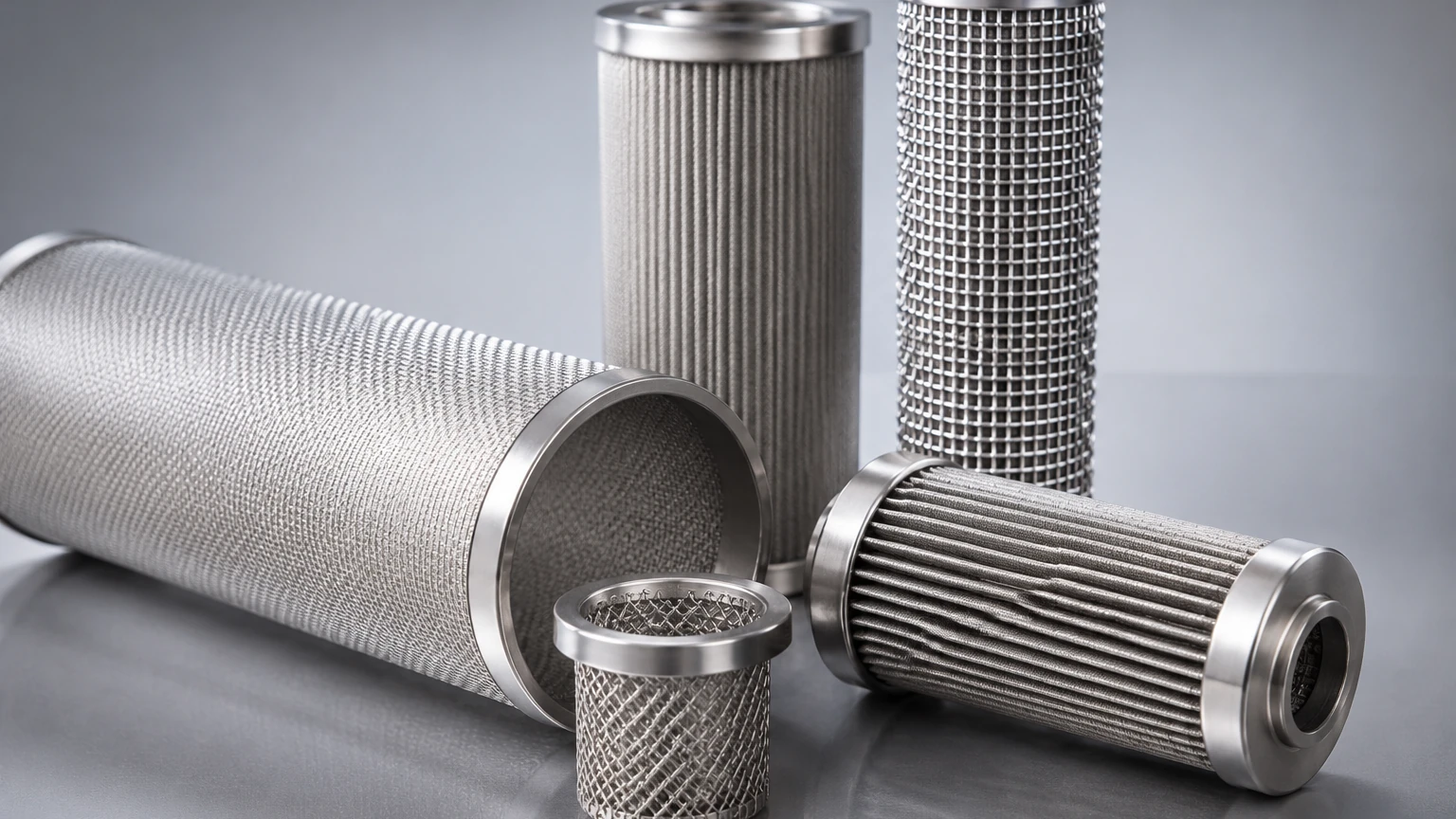
Customization Options for Melt Filtration Systems
Every industrial process has unique requirements based on the machinery used and the specific characteristics of the material being processed. Standard off-the-shelf filters rarely provide the optimized performance needed for high-output lines. This is where OEM and customized filtration solutions become essential.
Customization options typically include:
* Custom Dimensions: Tailoring the length, diameter, and end-cap configurations to fit existing filter housings (such as screen changers or candle filter vessels).
* Layer Configuration: Adjusting the number and type of mesh layers to balance filtration precision with mechanical durability.
* End-Cap Styles: Designing specific threaded, flanged, or bayonet connections to ensure a leak-proof fit and ease of installation.
* Reinforcement: Adding external guards or internal cores for applications with exceptionally high pressure spikes.
By working with a specialized manufacturer like Kaifil, engineering teams can develop bespoke melt filters that are optimized for their specific rheological conditions. For more information on custom stainless steel filtration components, you can visit the Main Page to review product options and application support.
Maintenance, Cleaning, and Replacement Cycles
One of the primary advantages of stainless steel melt filters is that they are often cleanable and reusable, which significantly reduces the total cost of ownership compared to disposable filters. However, the cleaning process must be handled carefully to avoid damaging the delicate filter media.
Cleaning Methods
* Pyrolysis (Burn-off): The filter is placed in a vacuum pyrolysis furnace where the polymer is thermally decomposed. This is an effective way to remove organic material without exposing the metal to oxygen, which prevents oxidation.
* Ultrasonic Cleaning: After the bulk of the polymer is removed, ultrasonic baths with specialized cleaning agents can dislodge fine particles trapped deep within the mesh or fiber structure.
* Chemical Solvent Cleaning: Certain polymers can be dissolved using specific solvents, though this method requires careful handling of hazardous materials.
Determining Replacement Cycles
While filters can be cleaned multiple times, they eventually reach a point where the "clean" pressure drop remains high even after cleaning. This indicates that inorganic contaminants (such as metal fines or minerals) have become permanently lodged in the media. Monitoring the trend of the initial pressure drop after each cleaning cycle is the best way to predict when a filter has reached its end-of-life and needs replacement.
Selecting the Right Melt Filter for Your Application
To ensure the best results, engineers should confirm several factors before finalizing a filter specification. A thorough assessment of the process conditions will prevent costly downtime and equipment damage.
1. What is the maximum operating temperature and pressure? Ensure the filter and its seals are rated for these extremes.
2. What is the viscosity of the melt at processing temperature? Higher viscosity requires more robust support and potentially a larger filtration area.
3. What is the nature of the contaminants? Soft gels require different filtration strategies than hard metallic fragments.
4. Is the process continuous or batch? Continuous processes often require duplex filter systems or automatic screen changers to allow for filter replacement without stopping production.
5. What are the cleaning capabilities on-site? If cleaning facilities are not available, the design should prioritize ease of transport or consider a disposable model if the economics allow.
In conclusion, melt filters are a vital link in the industrial production chain, ensuring that high-performance materials meet the rigorous standards of modern manufacturing. By focusing on technical specifications, material integrity, and customization, engineers can optimize their filtration processes for maximum reliability and product quality.
