


Porous Metal Plate
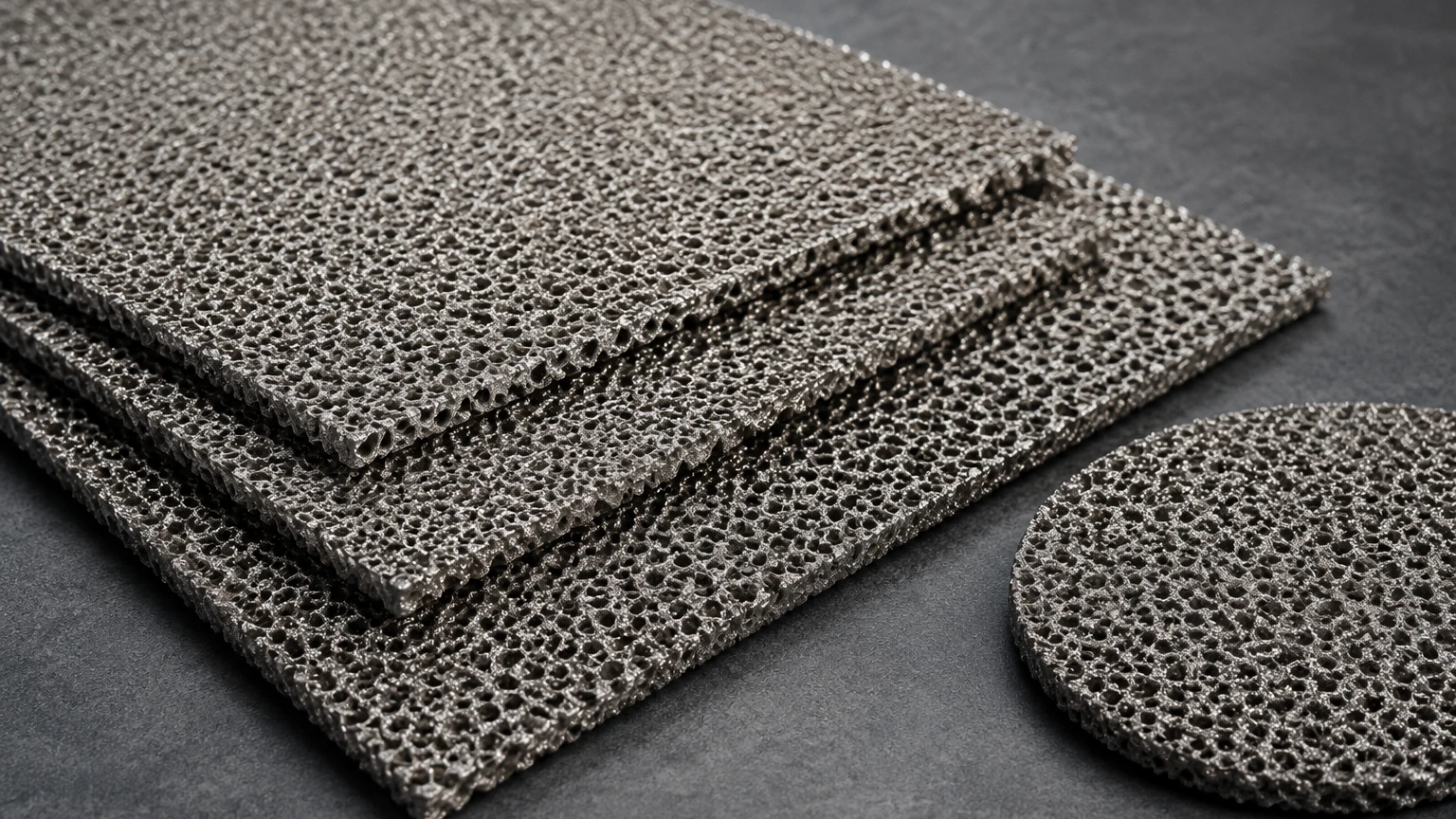
In industrial filtration and fluid control, the selection of media is often dictated by the severity of the operating environment. While polymer-based membranes and disposable paper filters serve various commercial purposes, heavy-duty industrial processes require the mechanical integrity and thermal stability of a porous metal plate. These components are engineered structures characterized by a controlled network of interconnected pores, allowing for precise filtration, gas diffusion, and flow control in environments where high temperatures, corrosive chemicals, and extreme pressures are the norm.
As a specialized manufacturer, Kaifil provides advanced stainless steel filtration solutions designed to meet these rigorous demands. Understanding the engineering principles, material science, and performance metrics of a porous metal plate is essential for engineers and procurement teams seeking to optimize their filtration systems and reduce the total cost of ownership.
Engineering and Manufacturing of Porous Metal Plates
The performance of a porous metal plate begins with its manufacturing process, typically involving powder metallurgy and sintering. Unlike woven wire mesh, which relies on the overlapping of wires to create openings, a sintered porous plate is formed by bonding metallic particles together under high heat and controlled atmospheres.
The Sintering Process
Sintering involves heating metallic powders—most commonly 316L stainless steel—to a temperature just below their melting point. This causes the particles to bond at their contact points through a process of atomic diffusion. The result is a rigid, self-supporting structure with a "tortuous path" internal geometry. This complexity is what provides superior depth filtration compared to surface-loading screens.
Controlling Porosity and Pore Size
The characteristics of the final porous metal plate are determined by the size and shape of the original metal powder, as well as the compaction pressure applied before sintering. By precisely controlling these variables, manufacturers can achieve specific micron ratings, typically ranging from 0.2 microns up to 100 microns or more. Porosity, or the volume of open space within the plate (void volume), usually falls between 30% and 50%, balancing the need for high flow rates with the requirement for structural strength.
Key Performance Criteria for Industrial Selection
When evaluating a porous metal plate for a specific application, engineers must look beyond simple micron ratings. Several technical factors determine whether a plate will perform reliably over its intended service life.
Permeability and Pressure Drop
Permeability refers to the ability of the plate to allow fluids or gases to pass through at a given pressure. A high-quality porous metal plate must provide a low initial pressure drop (Delta P) to minimize energy consumption in pumps and compressors. Because the internal structure is a complex network, the flow is often calculated using Darcy’s Law, which accounts for the fluid's viscosity, the plate's thickness, and the face velocity.
Mechanical Strength and Pressure Resistance
One of the primary advantages of metal plates over ceramic or polymer media is their inherent toughness. These plates can withstand significant differential pressures without deforming or migrating media. In high-pressure hydraulic systems or vacuum filtration processes, the rigidity of the plate ensures that the pore geometry remains stable, maintaining consistent filtration efficiency even under fluctuating loads.
Thermal and Chemical Compatibility
Industrial processes in the chemical and pharmaceutical sectors often involve aggressive solvents or high-temperature steam. Sintered 316L stainless steel is the industry standard due to its excellent corrosion resistance and ability to operate in temperatures exceeding 450°C (842°F) in oxidizing environments, and even higher in reducing atmospheres. For specialized applications, other alloys such as Monel, Inconel, or Hastelloy may be utilized to combat specific chemical attacks.
Primary Applications of Porous Metal Plates
Due to their versatility, porous metal plates are utilized across a broad spectrum of industrial sectors. Their role extends beyond simple particulate removal into the realms of mass transfer and safety.
Gas and Liquid Filtration
In the chemical processing industry, these plates are used to remove catalysts from process streams or to protect sensitive downstream equipment from particulate contamination. Their ability to be cleaned and reused makes them a cost-effective alternative to disposable cartridges in high-volume liquid filtration.
Sparging and Carbonation
In the food and beverage and biotechnology sectors, a porous metal plate is often used as a sparger. By forcing gas through the fine pores of the plate, thousands of tiny, uniform bubbles are created. This increases the surface area for gas-liquid contact, which is critical for efficient carbonation, aeration in bioreactors, or oxygen stripping in water treatment.
Fluidization and Bulk Material Handling
In the processing of powders and granular materials, porous plates serve as fluidizing media. By introducing a uniform flow of air through the plate at the bottom of a silo or conveyor, the solid particles behave like a fluid. This prevents bridging and ensures a consistent, gravity-driven flow of materials like flour, cement, or plastic resins.
Flame Arrestors and Vacuum Shields
The uniform pore structure and high thermal mass of sintered metal make it an ideal material for flame arrestors. The plate allows gas to flow through but absorbs the heat of a flame front, cooling it below the ignition temperature and preventing the spread of fire or explosions in volatile gas lines.
Customization and OEM Capabilities
Standard off-the-shelf components rarely meet the exact needs of specialized industrial machinery. Customization is a core component of the value provided by manufacturers like Kaifil. When specifying a porous metal plate, several physical and functional attributes can be tailored:
* Geometry and Dimensions: Plates can be manufactured in various shapes, including discs, rectangular sheets, or custom-contoured profiles to fit specific housing designs.
* Thickness: Depending on the required pressure rating and filtration depth, thicknesses can range from less than 1mm to over 10mm.
* Graded Porosity: For advanced applications, plates can be engineered with multiple layers of different pore sizes, providing a coarse pre-filter layer and a fine final filtration layer within a single monolithic component.
* Integrated Fittings: To simplify installation, porous plates can be welded or bonded to solid metal rings, threaded connectors, or flanges.
For more information on the full range of custom filtration components and engineering support, visit the Main Page of the Kaifil website.
Maintenance, Cleaning, and Service Life
The total cost of ownership for a porous metal plate is significantly lower than disposable media because of its cleanability. However, maintaining performance requires a disciplined approach to cleaning and maintenance.
Cleaning Methodologies
Depending on the nature of the contaminant, several methods can be employed to restore the plate’s permeability:
* Backpulsing/Backwashing: For surface-loaded particles, reversing the flow of the fluid can dislodge the filter cake and clear the pores.
* Ultrasonic Cleaning: High-frequency sound waves in a cleaning solution create cavitation bubbles that penetrate deep into the tortuous path of the plate, removing fine particulates that backwashing might miss.
* Chemical Cleaning: Soaking the plate in caustic or acidic solutions can dissolve organic or inorganic scaling. It is vital to ensure the cleaning agent is compatible with the plate material (e.g., 316L stainless steel).
* Thermal Burn-off: In cases where organic polymers or carbonaceous deposits clog the pores, controlled heating in a furnace can oxidize the contaminants without damaging the metallic structure.
Determining Replacement Cycles
While highly durable, a porous metal plate is not infinite. Over many cleaning cycles, the mechanical integrity may eventually degrade, or "permanent fouling" may occur where sub-micron particles become irreversibly lodged in the structure. Engineers should monitor the stabilized pressure drop after each cleaning; once the "clean" pressure drop exceeds a certain threshold (often 2-3 times the original value), replacement is recommended to maintain process efficiency.
Technical Evaluation: A Checklist for Engineers
Before finalizing a purchase order for porous metal plates, technical teams should confirm the following parameters with their supplier:
1. Operating Temperature: What is the maximum continuous and excursion temperature the plate will face?
2. Chemical Environment: Are there chlorides, strong acids, or high-temperature steam that require specific alloy selections?
3. Flow Characteristics: What is the required flow rate, and what is the maximum allowable pressure drop across the media?
4. Contaminant Profile: Is the contaminant hard, soft, deformable, or abrasive? This influences the choice between surface and depth filtration characteristics.
5. Mechanical Interface: How will the plate be sealed into the system? Does it require a gasket, an O-ring, or a welded transition?
By addressing these factors during the design phase, companies can ensure that their filtration system operates with maximum reliability and minimal downtime. Kaifil’s expertise in custom stainless steel filtration allows for the development of high-performance components that are precisely matched to these demanding industrial requirements.
For technical specifications, product catalogs, and application-specific advice, please refer to the Main Page to connect with our engineering team.
