Auto Clean Filter
In modern industrial processing, the transition from batch operations to continuous manufacturing has necessitated advancements in filtration technology. Manual filtration systems, while effective for low-volume or intermittent tasks, often become a bottleneck in high-capacity production lines due to the downtime required for cleaning and element replacement. The auto clean filter, also known as a self-cleaning filter, addresses these inefficiencies by providing a mechanism to remove accumulated contaminants from the filter media without interrupting the fluid flow. For engineers and procurement teams, understanding the mechanical principles, material requirements, and integration parameters of these systems is essential for optimizing plant performance and reducing the total cost of ownership.
Principles of Operation in Auto Clean Filtration
Auto clean filters operate based on a pressure differential or a timed cycle. As fluid passes through the filter element—typically a stainless steel wedge wire or perforated mesh—solids are retained on the surface. Over time, this buildup creates a flow restriction, leading to an increase in the pressure drop (ΔP) between the inlet and outlet. Once a pre-set threshold is reached, the cleaning mechanism is triggered.
There are several primary mechanical methods used to achieve self-cleaning:
1. Backwashing (Reverse Flow): This method utilizes a portion of the filtered fluid or an external clean fluid source to flow in the reverse direction through the filter media. The reverse pressure dislodges the cake layer from the mesh, flushing it out through a dedicated discharge valve. This is highly effective for suspended solids in water treatment and low-viscosity chemical applications.
2. Mechanical Scraping: In systems handling high-viscosity fluids or sticky contaminants (such as resins, paints, or food oils), a mechanical scraper—either a blade or a brush—moves across the surface of the filter element. This physically removes the debris, which then settles into a collection chamber at the bottom of the housing for periodic purging.
3. Suction Scanning: This involves a rotating suction scanner that moves across the interior surface of the filter screen. It creates a localized low-pressure zone that draws the contaminants off the screen and into the waste line. This method is noted for its low water consumption during the cleaning cycle.
Engineering Considerations for Industrial Selection
Selecting an auto clean filter requires a rigorous analysis of the process fluid and the operational environment. Engineering teams must evaluate several technical variables to ensure the system meets the required filtration efficiency without compromising the integrity of the downstream equipment.
Filtration Grade and Micron Rating
The choice of micron rating is the most critical factor. In industrial applications, specifying a filter that is too fine can lead to excessive cleaning cycles and premature wear of the mechanical components. Conversely, a filter that is too coarse will fail to protect downstream components like high-pressure pumps or spray nozzles. For stainless steel wire mesh elements, the aperture size must be balanced against the particle size distribution of the influent.
Flow Rate and Pressure Ratings
Auto clean filters must be sized to handle the peak flow rate of the system. It is standard engineering practice to size the filter so that the initial clean pressure drop does not exceed 2–3 psi (0.14–0.21 bar). Furthermore, the housing and internal components must be rated for the maximum operating pressure and temperature of the process, particularly in hydraulic or high-temperature chemical processing environments.
Material Compatibility
Given that these filters are often used in demanding environments, material selection is paramount. Stainless steel 304 is suitable for general industrial water and non-corrosive fluids. However, for pharmaceutical, food and beverage, or chemical applications involving chlorides or acids, stainless steel 316L is the industry standard due to its superior corrosion resistance. For highly aggressive media, specialized alloys or coatings may be required for the internal scraping mechanisms and seals.
Key Components and Material Selection
The performance of an auto clean filter is largely dictated by the quality of its internal filtration element. As a professional manufacturer, Kaifil emphasizes the use of precision-engineered metal components to ensure durability under the mechanical stress of cleaning cycles.
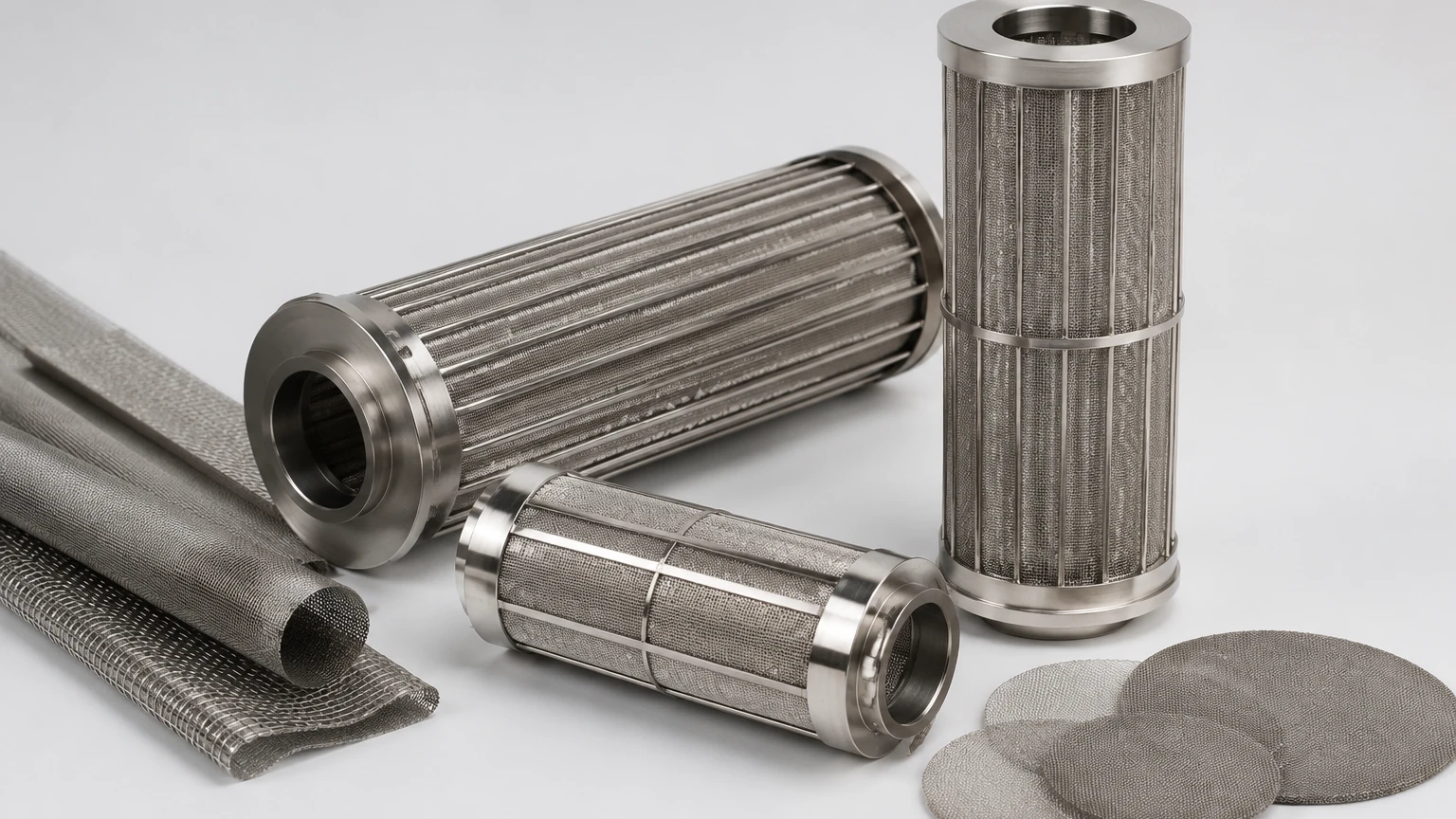
* Wedge Wire Elements: These are preferred for many auto clean applications because of their "V" shaped profile. This design reduces the risk of particles becoming wedged in the screen, as the opening widens inward. It provides a robust surface for mechanical scrapers to operate against without damaging the media.
* Sintered Wire Mesh: For applications requiring high precision and fine filtration (down to 1-5 microns), multi-layer sintered mesh provides the necessary structural integrity. Sintering bonds the layers of wire cloth together, preventing media migration and ensuring the pore size remains constant even under high differential pressure.
* Reinforced Support Structures: Because self-cleaning mechanisms (especially scrapers) exert physical force on the filter media, internal support cages are often necessary to prevent deformation. These must be manufactured with high concentricity to ensure the scraper maintains even contact across the entire surface.
Performance Expectations and System Integration
Integrating an auto clean filter into an existing industrial circuit requires careful planning regarding the control system and the waste management strategy. Modern systems are typically equipped with a PLC (Programmable Logic Controller) that monitors the pressure transducers.
When evaluating performance, engineers should look for:
* Continuous Flow Capability: Does the cleaning cycle require the main flow to stop? Most high-end auto clean filters are designed to continue delivering filtered fluid to the process even during the backwash or scraping phase.
* Waste Ratio: This is the volume of fluid lost during the cleaning cycle compared to the total throughput. Minimizing this ratio is essential for cost-efficiency, especially when processing expensive chemicals or treated water.
* Automation Compatibility: The filter’s control panel should ideally interface with the plant’s central SCADA system to provide real-time data on filtration status, cleaning frequency, and potential alarm conditions.
For those looking to explore specific configurations and technical specifications, you can Review product options and application support to understand how different filter structures align with various industrial needs.
Total Cost of Ownership and Maintenance
While the initial capital expenditure (CAPEX) for an auto clean filter is higher than that of a simple bag or cartridge housing, the total cost of ownership (TCO) is often significantly lower over the life of the equipment. The primary drivers of TCO in filtration include:
1. Labor Costs: Manual filters require technicians to break the seal of the pressure vessel, remove the dirty element, clean or dispose of it, and restart the system. Auto clean filters eliminate these labor-intensive steps.
2. Consumable Savings: By using permanent stainless steel elements, plants eliminate the recurring cost of purchasing, stocking, and disposing of single-use filter bags or plastic cartridges.
3. Product Loss: In manual systems, the fluid contained within the housing is often lost during element changes. Auto clean systems use targeted purging to minimize the volume of product discharged with the contaminants.
4. Replacement Cycles: Although the main filter element is permanent, certain wear parts like seals, gaskets, and scraper blades require periodic inspection. In a well-maintained system, a high-quality stainless steel element can last for several years, even in continuous 24/7 operation.
Customization and OEM Solutions for Specific Industries
No two industrial processes are identical, and off-the-shelf filtration units often require modification to meet specific spatial or functional requirements. Customization is a core aspect of industrial filtration procurement.
* Food and Beverage: Filters must adhere to sanitary standards, featuring polished surfaces (Ra < 0.8 μm) and tri-clamp connections to prevent bacterial growth in "dead zones."
* Chemical Processing: Customization may involve the use of specialized O-ring materials like Kalrez or Viton to withstand aggressive solvents.
* Hydraulic Systems: Filters must be designed to handle high-pressure surges and high-viscosity oils, often requiring reinforced mesh designs to prevent element collapse.
Kaifil provides extensive OEM capabilities, allowing engineers to specify the exact dimensions, connection types, and filtration accuracies needed for their unique equipment configurations. This level of customization ensures that the auto clean filter integrates seamlessly into the existing infrastructure without requiring extensive piping modifications.
Conclusion
The implementation of an auto clean filter is a strategic investment in process reliability and operational efficiency. By automating the removal of solids, these systems protect sensitive downstream equipment, reduce manual intervention, and lower the environmental impact of industrial operations through reduced consumable waste. When selecting a system, focusing on the technical integrity of the filter element, the suitability of the cleaning mechanism for the specific fluid, and the manufacturer's ability to provide customized engineering support will ensure long-term success in even the most demanding industrial environments.