


Filtre Coalescent Fonctionnement
In industrial environments where the purity of gases and liquids is paramount, the coalescing filter stands as a critical component for separating sub-micronic contaminants. Understanding the technical nuances of filtre coalescent fonctionnement (coalescing filter operation) is essential for engineers and maintenance professionals tasked with protecting downstream equipment, ensuring product quality, and maintaining system efficiency. Unlike standard particulate filters that simply trap solid debris, coalescing filters are engineered to merge small droplets of liquid into larger ones, which can then be easily removed from the stream.
At Kaifil, we specialize in manufacturing high-precision stainless steel filtration solutions designed to withstand the rigorous demands of chemical processing, hydraulic systems, and food production. This guide explores the engineering principles behind coalescence, the factors influencing performance, and the selection criteria necessary for industrial applications.
The Fundamental Principles of Coalescing Filtration
The primary objective of a coalescing filter is the separation of liquid aerosols—such as oil and water—from a gas stream or the separation of two immiscible liquids. The term "coalescence" refers to the process where small droplets come together to form a larger whole. In an industrial context, this process typically occurs within a multi-layered filter medium.
The filtre coalescent fonctionnement relies on a flow pattern that is usually "inside-to-outside." As the contaminated fluid passes through the inner core of the filter element, it encounters a dense matrix of fibers. These fibers are designed to capture microscopic droplets that are too small to be removed by gravity alone. As these droplets are trapped, they migrate along the fibers, colliding with other droplets to form larger beads of liquid. Once these beads reach a sufficient mass, gravity pulls them to the bottom of the filter housing, where they are collected in a sump and discharged through a drain.
Mechanism of Action: Three Stages of Capture
To appreciate the efficiency of a coalescing filter, one must understand the three physical mechanisms that allow the media to capture particles and droplets ranging from 0.01 to 1 micron:
1. Direct Interception
This occurs when a particle or droplet following a fluid streamline comes within one-half of its diameter of a fiber. The particle touches the fiber and is captured. This mechanism is most effective for larger particles (typically greater than 1 micron) where the physical size of the particle makes contact inevitable given the density of the filter matrix.
2. Inertial Impaction
Inertial impaction happens when a particle is too heavy to follow the curved path of the fluid as it moves around a fiber. Due to its momentum, the particle continues in a straight line, striking the fiber and adhering to it. This is particularly relevant in high-velocity gas streams where the kinetic energy of the liquid aerosols is significant.
3. Brownian Diffusion
For extremely small particles (less than 0.1 micron), their movement is influenced by molecular collisions, causing them to move in a random, zigzag pattern known as Brownian motion. This erratic movement increases the probability that the particle will eventually collide with a fiber. This mechanism is critical for achieving high-efficiency filtration in sterile air and high-purity gas applications.
Engineering Considerations for Industrial Filter Selection
When evaluating a coalescing filter for a specific B2B application, engineers must look beyond basic flow rates. Several technical variables dictate the long-term viability and efficiency of the filtration system.
Pressure Drop (Delta P)
The differential pressure across the filter is a key indicator of energy consumption and filter life. A high initial pressure drop suggests that the filter media might be too restrictive for the required flow rate, leading to increased operational costs. In filtre coalescent fonctionnement, the pressure drop will naturally increase as the filter becomes saturated with liquids and trapped solids. Selecting a filter with a large surface area, such as those found on our Main Page, can help maintain a low Delta P over a longer service life.
Flow Velocity and Re-entrainment
If the fluid velocity through the filter media is too high, it can lead to "re-entrainment." This occurs when the air or gas stream strips the coalesced droplets off the outer surface of the filter before they can drain away, carrying them back into the downstream system. Proper sizing of the filter housing and element is vital to ensure that the face velocity remains within the manufacturer’s specified limits.
Temperature and Chemical Compatibility
Industrial filtration often involves aggressive chemicals or high-temperature environments. Coalescing filters used in chemical processing or steam applications must be constructed from materials that resist corrosion and thermal degradation. Stainless steel wire mesh and sintered metal components are often preferred in these scenarios due to their mechanical strength and resistance to a wide range of pH levels and temperatures.
Material Selection and Structural Integrity
The effectiveness of the filtre coalescent fonctionnement is largely dependent on the quality of the filter media. While borosilicate glass microfibers are common for standard air filtration, demanding industrial applications often require the durability of stainless steel.
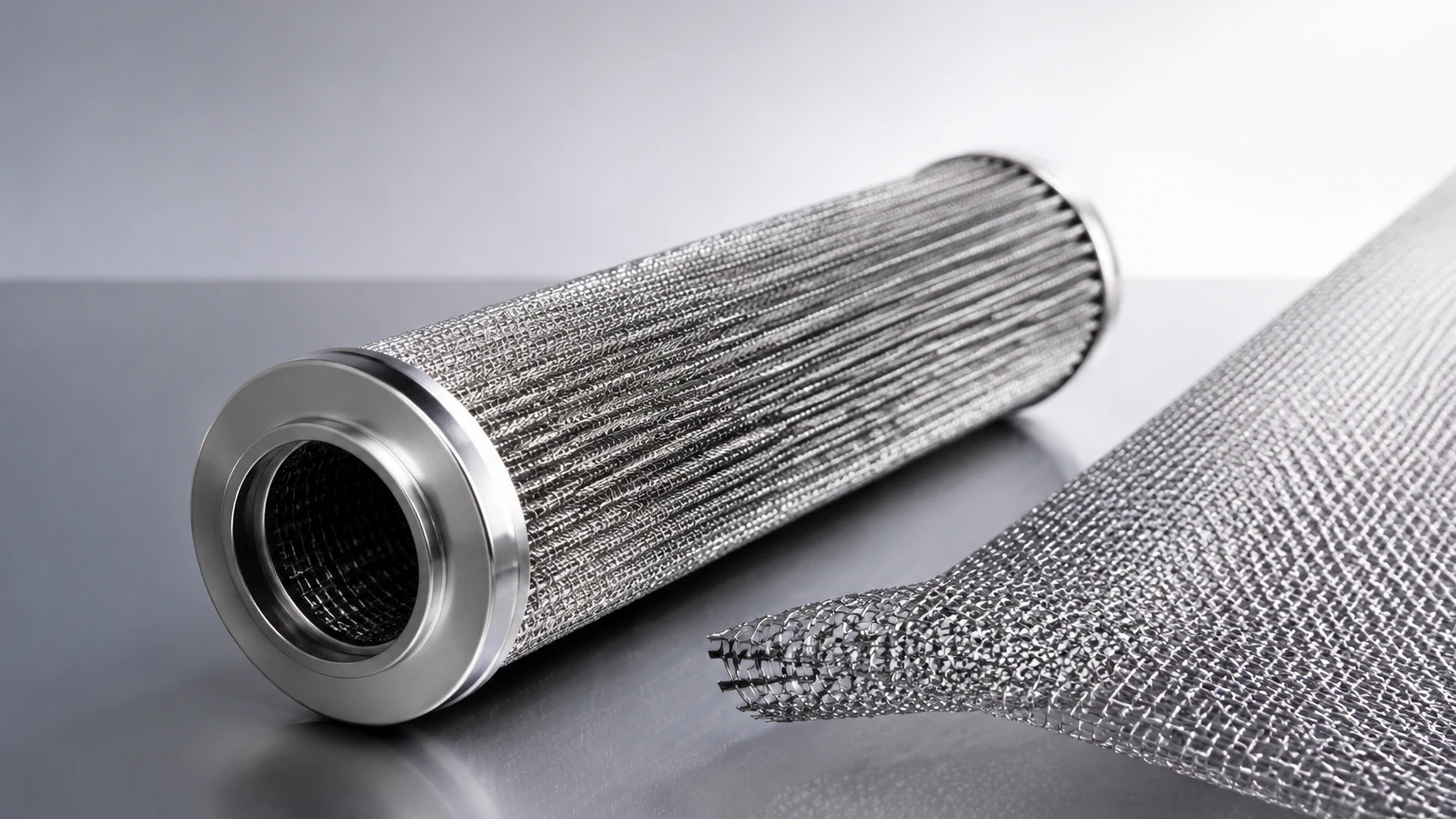
Kaifil’s custom stainless steel filter cartridges are designed to provide structural support for the coalescing media, preventing collapse under high-pressure conditions. Stainless steel is not only durable but also cleanable in certain configurations, offering a lower total cost of ownership compared to disposable synthetic filters. For hydraulic systems, where oil must be separated from water or air, the choice of a stainless steel support mesh ensures that the filter maintains its geometry even when subjected to pressure surges.
Evaluating Performance and Efficiency Ratings
Efficiency in coalescing filtration is usually measured by the "carryover" of oil or liquid remaining in the stream after filtration, often expressed in parts per million (ppm) or milligrams per cubic meter (mg/m³). A high-quality coalescing filter can reduce oil carryover to as little as 0.01 ppm.
Engineers should verify the following performance metrics before procurement:
* Filtration Grade: The micron rating (e.g., 0.3 micron) at which the filter achieves its maximum efficiency.
* Saturated Pressure Drop: The pressure differential when the filter is fully wetted and operating at its rated capacity.
* Liquid Loading Capacity: The amount of liquid the filter can handle before performance begins to degrade.
It is important to note that coalescing filters are sensitive to solid particulate. If the incoming stream contains high levels of dust, scale, or rust, a particulate pre-filter should be installed upstream. This prevents the coalescing media from becoming blinded by solids, which would significantly shorten the replacement cycle.
Operational Challenges and Maintenance Cycles
Maintaining the efficiency of a coalescing filter requires proactive monitoring. The most common indicator of a need for maintenance is the pressure differential. Most industrial systems utilize a differential pressure gauge to alert operators when the element has reached its terminal pressure drop, typically between 0.5 and 0.7 bar (7 to 10 psi).
Failure to replace or clean a saturated filter can lead to:
1. Contaminant Bypass: The pressure may force contaminants through the media or around seals.
2. Element Rupture: Excessive pressure can cause structural failure of the filter media.
3. Downstream Damage: Liquid carryover can damage sensitive pneumatic tools, contaminate food products, or cause chemical reactions to fail.
In systems where filtre coalescent fonctionnement is critical, such as pharmaceutical manufacturing, scheduled replacements are often mandated based on operating hours rather than just pressure drop to ensure absolute purity.
Customization and OEM Solutions for Specialized Applications
Every industrial process has unique requirements regarding space constraints, connection types, and filtration accuracy. Standard off-the-shelf filters may not always meet the specific needs of a complex hydraulic circuit or a specialized chemical reactor.
Kaifil provides extensive OEM and customized filtration solutions. By working closely with global customers, we develop filter components that are tailored to specific application requirements. Whether you need a specific grade of stainless steel wire mesh or a custom-designed filter cartridge that fits into an existing housing, our engineering team focuses on delivering reliable and durable components. For those looking to optimize their filtration systems, reviewing the options available on our Main Page is the first step toward a high-performance solution.
Conclusion: Optimizing Your Filtration Strategy
Understanding filtre coalescent fonctionnement is more than a theoretical exercise; it is a practical necessity for maintaining industrial productivity. By selecting the right media, ensuring proper sizing, and adhering to rigorous maintenance schedules, companies can significantly reduce downtime and equipment repair costs.
When selecting a partner for your filtration needs, consider the importance of material quality and manufacturing precision. Stainless steel filtration components offer the resilience required for the most demanding environments, providing a dependable barrier against liquid and solid contaminants. For engineers and purchasing teams, the goal remains clear: achieving efficient, durable, and cost-effective filtration performance through informed selection and high-quality components.
