


Sanitary Filter Housing
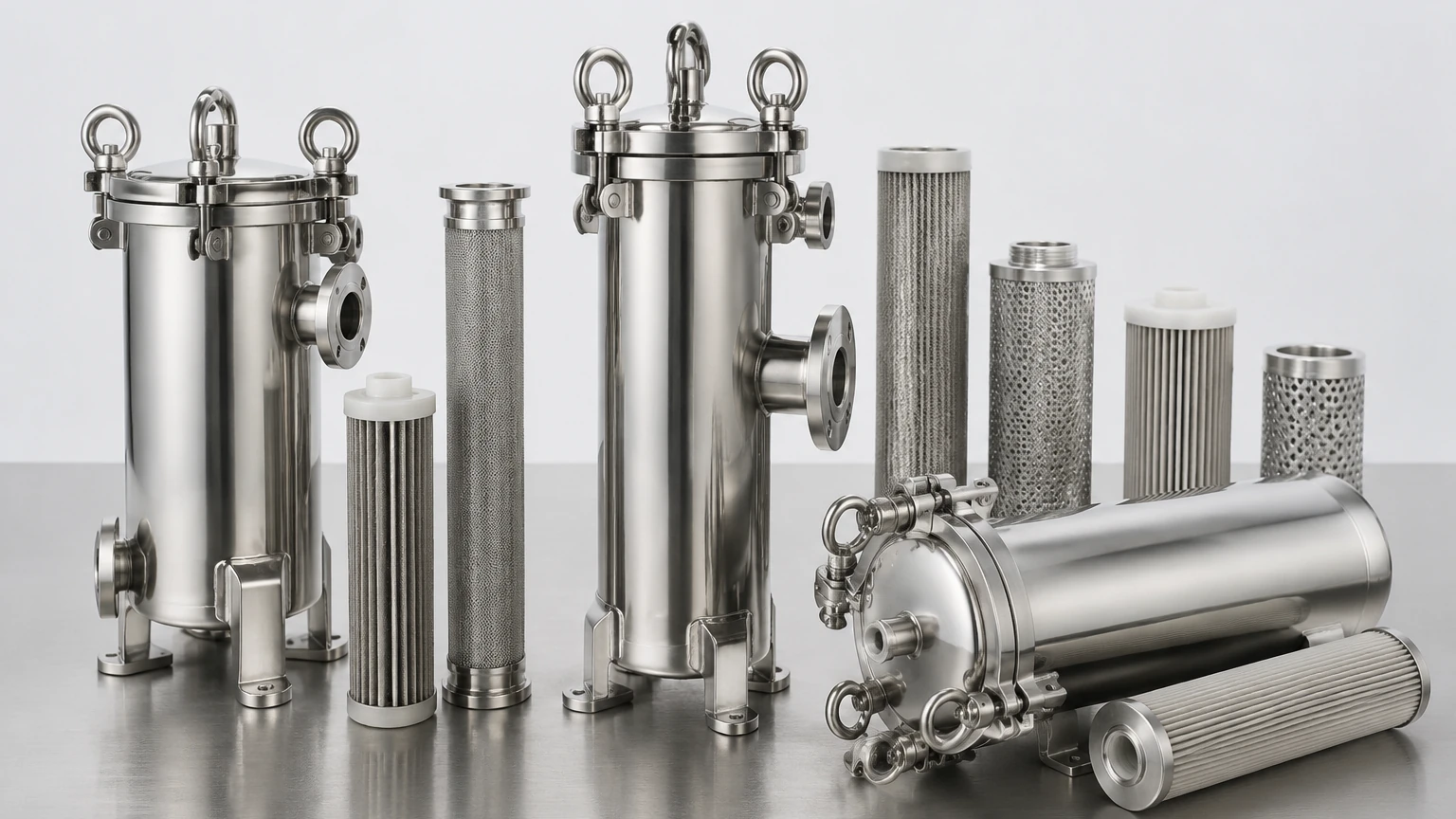
In high-purity industrial processing, the integrity of the filtration system is a critical factor in ensuring product safety and operational efficiency. A sanitary filter housing is a specialized pressure vessel designed to hold filter cartridges or bags while maintaining an aseptic environment. Unlike standard industrial housings, sanitary versions are engineered to eliminate areas where bacteria can grow and to withstand rigorous cleaning protocols. For engineers and procurement teams, selecting the correct sanitary filter housing requires a deep understanding of material science, fluid dynamics, and regulatory compliance.
As a manufacturer of custom stainless steel filtration solutions, Kaifil provides the technical expertise necessary to navigate these complex requirements. Whether for pharmaceutical, food and beverage, or biotechnology applications, understanding the engineering nuances of these housings is the first step toward optimizing a production line. For more information on comprehensive filtration components, you can visit the Main Page.
Engineering Standards and Material Selection
The primary requirement for any sanitary filter housing is the use of non-corrosive, non-leaching materials. In almost all high-purity applications, Stainless Steel 316L (low carbon) is the industry standard. The "L" designation is crucial because it reduces the risk of carbide precipitation during welding, which prevents intergranular corrosion in the heat-affected zones.
Surface Finish and Ra Values
One of the most significant differences between a standard housing and a sanitary filter housing is the internal surface finish. In the B2B filtration sector, surface roughness is measured by the Roughness Average (Ra).
* Mechanical Polishing: Standard sanitary housings often feature a mechanical polish of Ra < 0.8 μm (32 micro-inches).
* Electropolishing: For more demanding pharmaceutical or biotech applications, electropolishing is used to achieve Ra < 0.4 μm (15-20 micro-inches).
Electropolishing does more than just smooth the surface; it removes a microscopic layer of metal, eliminating burrs and peaks where microorganisms or process debris could lodge. This process also enhances the chromium-to-iron ratio on the surface, significantly improving corrosion resistance. When evaluating a supplier, engineers should confirm that the surface finish meets the specific requirements of their process to ensure successful sterilization.
Structural Design for Hygiene Integrity
The design of a sanitary filter housing is governed by the principle of "cleanability." This means every part of the housing that comes into contact with the process fluid must be accessible to cleaning agents and steam.
Elimination of Dead Legs
A "dead leg" is an area in a piping system or housing where the fluid can stagnate, creating a breeding ground for bacteria. In a high-quality sanitary filter housing, the design ensures that there are no sharp corners or stagnant pockets. All internal transitions are radiused, and the inlet/outlet ports are positioned to promote full drainage.
Connection Types and Sealing Mechanisms
Sanitary housings typically utilize Tri-Clamp (TC) connections, which are the industry standard for easy assembly and disassembly without tools. These connections provide a smooth, crevice-free internal transition when paired with the correct gasket.
Common sealing materials include:
* EPDM: Excellent for steam and general chemicals, though not suitable for oils.
* Viton (FKM): High temperature and chemical resistance, often used in aggressive chemical processing.
* Silicone: Highly flexible and widely used in pharmaceutical applications due to its biocompatibility.
* PTFE/Teflon: Used for extreme chemical resistance, though less flexible than elastomers.
Engineers must ensure that all seals and O-rings are FDA-compliant and, in many cases, USP Class VI certified for pharmaceutical use.
Sizing and Performance Evaluation
Selecting the right size for a sanitary filter housing involves more than just matching the pipe diameter. It requires a calculation of the total flow rate, fluid viscosity, and the allowable pressure drop (ΔP).
Flow Rate and Pressure Drop
Every housing introduces a certain amount of resistance to the flow. The total pressure drop of a filtration system is the sum of the pressure drop across the clean filter media and the pressure drop across the housing itself.
1. Housing ΔP: Depends on the internal geometry and port sizes.
2. Media ΔP: Depends on the pore size and the effective filtration area of the cartridge.
In sanitary applications, it is generally recommended to size the system so that the initial clean pressure drop does not exceed 0.1 to 0.2 bar (1.5 to 3 psi). Sizing the housing too small leads to high fluid velocity, which can cause turbulence, shear sensitive products, and reduce the lifespan of the filter cartridges.
Cartridge Compatibility
Sanitary housings are designed to accommodate specific cartridge end-cap configurations. The most common in the sanitary sector is the Code 7 (226 O-rings with a locking tab and a fin) or Code 2 (222 O-rings with a flat end). These designs ensure a secure, bypass-free seal, which is critical when the goal is sterile filtration. The housing must be precisely machined to ensure these O-rings seat correctly under pressure.
Operational Considerations: CIP and SIP
In industrial B2B environments, downtime for manual cleaning is costly. Therefore, a sanitary filter housing must be compatible with Clean-in-Place (CIP) and Steam-in-Place (SIP) protocols.
Clean-in-Place (CIP)
CIP involves circulating chemical cleaning solutions through the housing at high velocities. The housing must be designed to withstand these chemicals (often caustic or acidic) without pitting or corrosion. The internal geometry must allow the cleaning fluid to reach every surface, including the undersides of the cartridge plates and the vent/drain valves.
Steam-in-Place (SIP)
SIP is the process of sterilizing the housing and the installed filter using saturated steam. A sanitary filter housing must be rated for the temperatures and pressures associated with steam sterilization (typically 121°C to 134°C).
Key features for SIP compatibility include:
* Condensate Drainage: The housing must have a low-point drain to remove steam condensate, as trapped water can create cold spots that prevent complete sterilization.
* Venting: High-point vents are necessary to remove air, ensuring that steam reaches all internal surfaces.
Maintenance and Replacement Cycles
While the stainless steel body of a sanitary filter housing is designed for long-term durability, certain components require regular inspection and replacement.
* Gaskets and O-rings: These should be inspected after every cleaning cycle or SIP event. Heat and chemicals can cause elastomers to harden, crack, or take a "set," which leads to leaks or bypass.
* Closure Mechanisms: Whether using a heavy-duty tri-clamp or swing bolts, the closure must be checked for wear and proper tension to ensure the vessel remains pressure-rated.
* Surface Integrity: Periodically, the internal surfaces should be inspected for signs of "rouging" (a form of iron oxide buildup common in high-purity water systems) or pitting. If the Ra value is compromised, the housing may require re-passivation or electropolishing.
Implementing a preventative maintenance schedule reduces the risk of batch contamination and extends the total life of the filtration equipment.
Customization for Specific Industrial Applications
Standard off-the-shelf housings may not meet the specific spatial or functional requirements of every facility. Customization is often necessary to integrate the filtration stage into existing piping or to handle unique process conditions.
Multi-Round vs. Single-Round Housings
For low-flow applications or laboratory settings, a single-round sanitary filter housing is sufficient. However, for large-scale production in the food, beverage, or chemical industries, multi-round housings (holding 3 to 50+ cartridges) are required. Customizing the internal manifold and the footprint of these large vessels is a common engineering request to optimize floor space.
Heating Jackets and Insulation
In applications involving viscous fluids (like syrups or certain chemicals) or processes that must maintain a specific temperature to prevent crystallization, a sanitary filter housing can be equipped with a heating jacket. These jackets allow hot water or steam to circulate around the exterior of the housing, maintaining the fluid's temperature during the filtration process.
Conclusion: Selecting a Reliable Filtration Partner
Choosing a sanitary filter housing is a technical decision that impacts the safety and quality of the final product. Engineers must confirm that the supplier provides full traceability for materials (MTRs), surface finish certifications, and pressure test reports.
By focusing on high-grade SS316L construction, precise surface finishes, and designs that support CIP/SIP, industrial facilities can ensure long-term operational reliability. As a specialist in custom stainless steel filtration, Kaifil supports global customers by delivering high-performance components tailored to these demanding specifications. For technical support or to explore our full range of filtration solutions, please visit our Main Page.
When evaluating your next filtration project, consider the total cost of ownership—not just the initial purchase price. A well-engineered sanitary housing reduces cleaning time, prevents batch losses due to contamination, and provides a durable foundation for your process for years to come.
