


Woven Wire Electrical: Engineering Guide for Shielding and Conductive Applications
In modern industrial engineering, the intersection of mechanical filtration and electrical performance is a critical design consideration. While woven wire mesh is traditionally recognized for its role in particle separation and fluid dynamics, its application in electrical systems—often referred to as woven wire electrical components—is equally vital. From providing electromagnetic interference (EMI) shielding to facilitating static dissipation in hazardous environments, the technical specifications of the mesh determine the reliability of the entire system.
For engineers and procurement specialists, selecting the right mesh involves balancing conductivity, structural integrity, and environmental resistance. This guide explores the technical foundations of using Plain, twill and dutch woven wire mesh in SS304/316L — rolls, cut mesh and framed panels. Send mesh count or micron target for a technical quote. in electrical and electronic contexts, focusing on performance evaluation and material selection.
Understanding the Role of Woven Wire Mesh in Electrical Systems
Woven wire mesh serves as a versatile medium in electrical engineering because it combines the properties of a solid conductor with the permeability of a fabric. In a woven wire electrical application, the mesh functions as a porous conductive barrier. This dual-purpose nature allows for the passage of air or liquids while maintaining an electrical circuit or a protective shield.
The primary electrical functions of woven wire mesh include:
1. Electromagnetic Shielding (EMI/RFI): Attenuating unwanted signals to protect sensitive electronics.
2. Static Dissipation: Preventing the buildup of electrostatic discharge (ESD) in filtration systems handling volatile fluids.
3. Grounding and Bonding: Providing a low-resistance path to the earth for safety and signal integrity.
4. Current Collection: Acting as a substrate in battery electrodes or fuel cells.
Kaifil specializes in manufacturing precision stainless steel mesh that meets the stringent tolerances required for these high-stakes applications. By controlling the wire diameter and the precision of the weave, manufacturers can tune the electrical impedance and shielding effectiveness of the material.
Material Science: Conductivity and Corrosion Resistance
The choice of alloy is the most significant factor in the performance of woven wire electrical components. While copper and silver offer superior conductivity, stainless steel is often the preferred choice in industrial B2B applications due to its mechanical strength and resistance to oxidation.
Stainless Steel 304 and 316L
Stainless steel is the industry standard for woven wire mesh used in demanding environments. SS304 provides excellent physical properties and adequate conductivity for most grounding and shielding tasks. However, in environments exposed to chlorides or high humidity—such as marine electronics or chemical processing—SS316L is required. The molybdenum content in 316L enhances corrosion resistance, ensuring that the electrical contact points do not degrade over time, which would otherwise increase resistance and reduce shielding effectiveness.
Specialty Alloys
For applications requiring higher conductivity than standard stainless steel, engineers may specify nickel or copper-clad steel. However, for the majority of industrial filtration and shielding needs, precision-woven stainless steel provides the best total cost of ownership by eliminating the need for frequent replacements due to environmental wear.
EMI and RFI Shielding: The Faraday Cage Principle
One of the most common uses for woven wire electrical mesh is the creation of a Faraday cage. This is a grounded conductive enclosure that blocks external static and non-static electric fields. The effectiveness of the shield depends on the wavelength of the interference relative to the mesh opening size.
Shielding Effectiveness (SE)
Shielding effectiveness is measured in decibels (dB) and is influenced by three main factors: reflection, absorption, and multiple reflections. For woven wire mesh, reflection is the primary mechanism. The formula for determining the maximum hole size in a shield is generally calculated as 1/10th of the wavelength of the frequency being blocked.
* Low-Frequency Shielding: Requires high-permeability materials and often thicker wire diameters to handle magnetic fields.
* High-Frequency Shielding: Requires a higher mesh count (more wires per inch) to ensure the apertures are small enough to prevent wave leakage.
When specifying Woven Wire Mesh for EMI shielding, engineers must consider the "skin effect," where high-frequency currents flow primarily on the surface of the wire. A smooth, consistent weave produced by advanced manufacturing processes ensures uniform surface conductivity across the entire panel.
Static Dissipation and Grounding in Industrial Filtration
In industries such as chemical processing and fuel filtration, the movement of non-conductive fluids through a filter can generate significant static electricity. If this charge is not dissipated, it can lead to arcing, which poses a severe fire and explosion risk.
Woven wire electrical grounding involves integrating the mesh into the filter housing in a way that ensures continuous electrical continuity. Unlike synthetic filter media, which are often insulators, stainless steel wire mesh provides an inherent path to ground.
Engineering Considerations for Static Control:
* Contact Resistance: The interface between the mesh and the filter frame must be securely welded or mechanically fastened to ensure low resistance.
* Mesh Continuity: Every wire in the warp and shute directions must contribute to the conductive path. Precision weaving ensures that the wires are in constant contact at every intersection.
* Surface Area: Larger surface areas in the mesh allow for faster dissipation of accumulated charges.
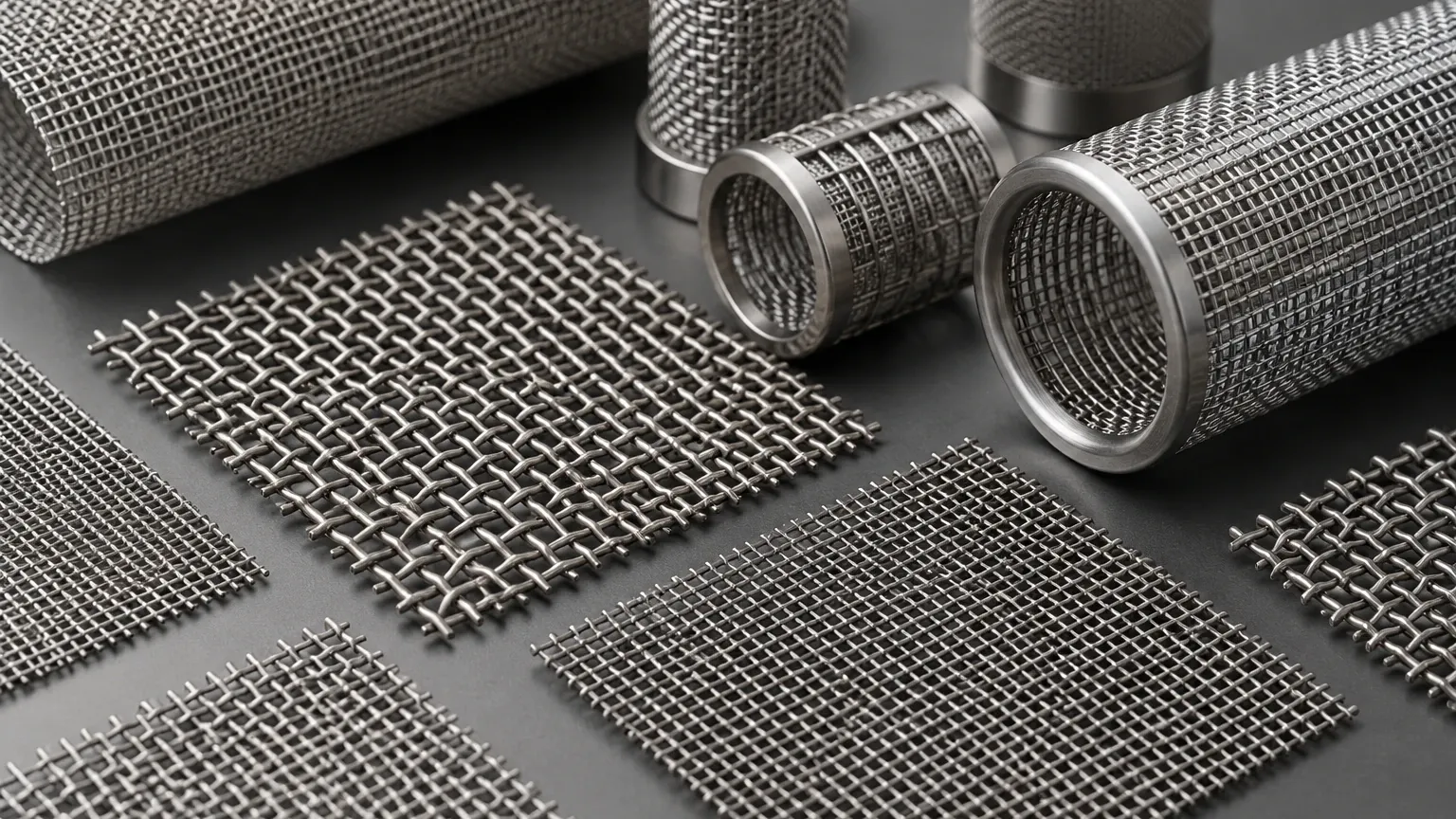
Technical Parameters: Mesh Count, Wire Diameter, and Open Area
The performance of a woven wire electrical component is defined by its geometric properties. These parameters must be precisely calculated during the design phase to ensure both filtration efficiency and electrical performance.
1. Mesh Count: The number of wires per linear inch. A higher mesh count generally provides better EMI shielding but increases the pressure drop in filtration applications.
2. Wire Diameter: Thicker wires provide lower electrical resistance and greater mechanical durability but reduce the percentage of open area.
3. Aperture (Opening Size): This defines the filtration rating (micron rating). In electrical applications, the aperture determines the cutoff frequency for shielding.
4. Percentage of Open Area: This is critical for applications requiring airflow or fluid throughput. The challenge for engineers is to maximize the open area for flow while maintaining enough metal mass for electrical conductivity.
Kaifil provides detailed technical data sheets that allow engineers to compare these variables. For instance, a twill weave might be selected over a plain weave if a higher mesh count is needed for shielding without significantly sacrificing the wire diameter.
Customizing Woven Wire Electrical Components for OEM Applications
Off-the-shelf mesh rarely meets the specific needs of complex industrial equipment. Customization is essential for integrating woven wire electrical functionality into OEM products.
Fabrication and Integration
* Framing and Edging: For EMI gaskets or grounding panels, the mesh must be framed in a conductive material (like a stainless steel U-binder) to facilitate installation and ensure electrical contact.
* Sintering: In high-pressure environments, multiple layers of mesh can be sintered together. This process bonds the wires at every contact point, significantly reducing electrical resistance and increasing structural rigidity.
* Shape and Form: Advanced cutting techniques, such as laser or plasma cutting, allow for the production of mesh components that fit perfectly into electronic enclosures or specialized filter housings.
Kaifil’s manufacturing capabilities allow for the production of customized filtration solutions that serve as both a mechanical sieve and an electrical shield. By working closely with global customers, Kaifil ensures that the material selection and fabrication methods align with the final application’s performance requirements.
Evaluation Criteria and Quality Assurance
Before finalizing a purchase of woven wire mesh for electrical applications, technical teams should confirm several key performance indicators:
* Electrical Continuity Testing: Ensuring there are no breaks in the weave that could interrupt the conductive path.
* Dimensional Accuracy: Verifying that the mesh count and wire diameter meet the specified tolerances, as even minor deviations can alter shielding effectiveness.
* Material Certification: Providing mill test reports (MTRs) to confirm the chemical composition of the alloy, ensuring it will withstand the operating environment.
* Total Cost of Ownership: Evaluating the longevity of stainless steel versus cheaper, less durable alternatives that may require frequent maintenance due to corrosion or mechanical failure.
Conclusion
The use of woven wire mesh in electrical applications is a sophisticated engineering task that requires a deep understanding of both material science and electromagnetic theory. Whether the goal is to protect sensitive medical electronics from RFI or to ensure the safe grounding of a high-pressure hydraulic system, the quality of the woven wire electrical component is paramount.
By selecting a manufacturer like Kaifil, engineers gain access to high-performance stainless steel filtration and shielding solutions tailored to their specific needs. With expertise in material selection, precision weaving, and custom fabrication, Kaifil supports the development of reliable, durable, and efficient industrial systems across the globe.
