


Stainless Steel Filter Supplier
In industrial processing, the efficiency of a filtration system often dictates the quality of the final product and the longevity of downstream equipment. Selecting a stainless steel filter supplier is a critical decision for engineering and procurement teams in the chemical, pharmaceutical, and food and beverage sectors. Unlike disposable polymer filters, stainless steel components offer durability, high-temperature resistance, and the ability to be cleaned and reused, making them a cornerstone of sustainable industrial operations.
To make an informed decision, technical professionals must look beyond surface-level specifications. A reliable supplier should not only manufacture components but also act as a technical partner capable of navigating complex material science, fluid dynamics, and custom engineering requirements.
The Engineering Logic Behind Stainless Steel Filter Selection
Industrial filtration is rarely a one-size-fits-all application. The selection of a filter involves a deep understanding of the medium being filtered, the operating environment, and the desired level of purity. Stainless steel is the preferred material for demanding environments because it maintains structural integrity under high pressure and resists degradation when exposed to corrosive chemicals.
When engaging with a stainless steel filter supplier, the first point of discussion should be the mechanical requirements of the application. This includes the maximum operating pressure, the potential for pressure surges (water hammer), and the temperature range. Stainless steel filters, particularly those using sintered mesh or multi-layer constructions, provide the necessary rigidity to prevent media migration—a common failure point in fiber-based filters where the filter material itself breaks off and contaminates the filtrate.
Material Science: Choosing the Right Alloy
The chemical compatibility of the filter material with the process fluid is paramount. Most industrial filters are constructed from 300-series stainless steel, but the specific grade can significantly impact the total cost of ownership.
* Grade 304: This is the standard industrial grade, offering good corrosion resistance and excellent forming and welding characteristics. It is suitable for most water treatment and food-grade applications where the environment is not excessively acidic or saline.
* Grade 316L: Containing molybdenum, 316L provides superior resistance to chlorides and acids. The "L" denotes low carbon content, which is essential for components that require extensive welding. Low carbon prevents carbide precipitation during the welding process, ensuring that the welded joints remain as corrosion-resistant as the base metal. This grade is typically the minimum requirement for pharmaceutical and aggressive chemical processing.
* Exotic Alloys: In extreme cases involving high concentrations of sulfuric acid or high-temperature oxidation, suppliers may offer Hastelloy, Monel, or Inconel. A competent supplier should be able to provide material traceability and certifications to ensure the alloy delivered matches the specification.
Understanding Micron Ratings and Weave Structures
The performance of a wire mesh filter is defined by its weave and its micron rating. It is important for engineers to distinguish between "nominal" and "absolute" micron ratings. A nominal rating refers to the ability of the filter to retain a certain percentage of particles of a specific size, whereas an absolute rating indicates the diameter of the largest spherical particle that can pass through the mesh under laboratory conditions.
Common Weave Types
1. Plain Weave: The simplest pattern, where wires cross over and under each other. It offers high flow rates but is generally limited to coarser filtration tasks.
2. Twilled Weave: Each shute wire passes successively over and under two warp wires. This allows for a heavier wire diameter and higher mesh counts, providing greater strength for fine filtration.
3. Dutch Weave (Plain and Twilled): These weaves use a larger diameter warp wire and a smaller diameter shute wire. This creates a dense, strong mesh with small, tortuous paths. Dutch weaves are ideal for high-pressure applications and fine particle retention.
4. Reverse Dutch Weave: This is the opposite of the standard Dutch weave, offering high mechanical strength and excellent backwashing capabilities, making it a preferred choice for continuous filtration systems.
Customization and OEM Capabilities: Beyond Standard Sizes
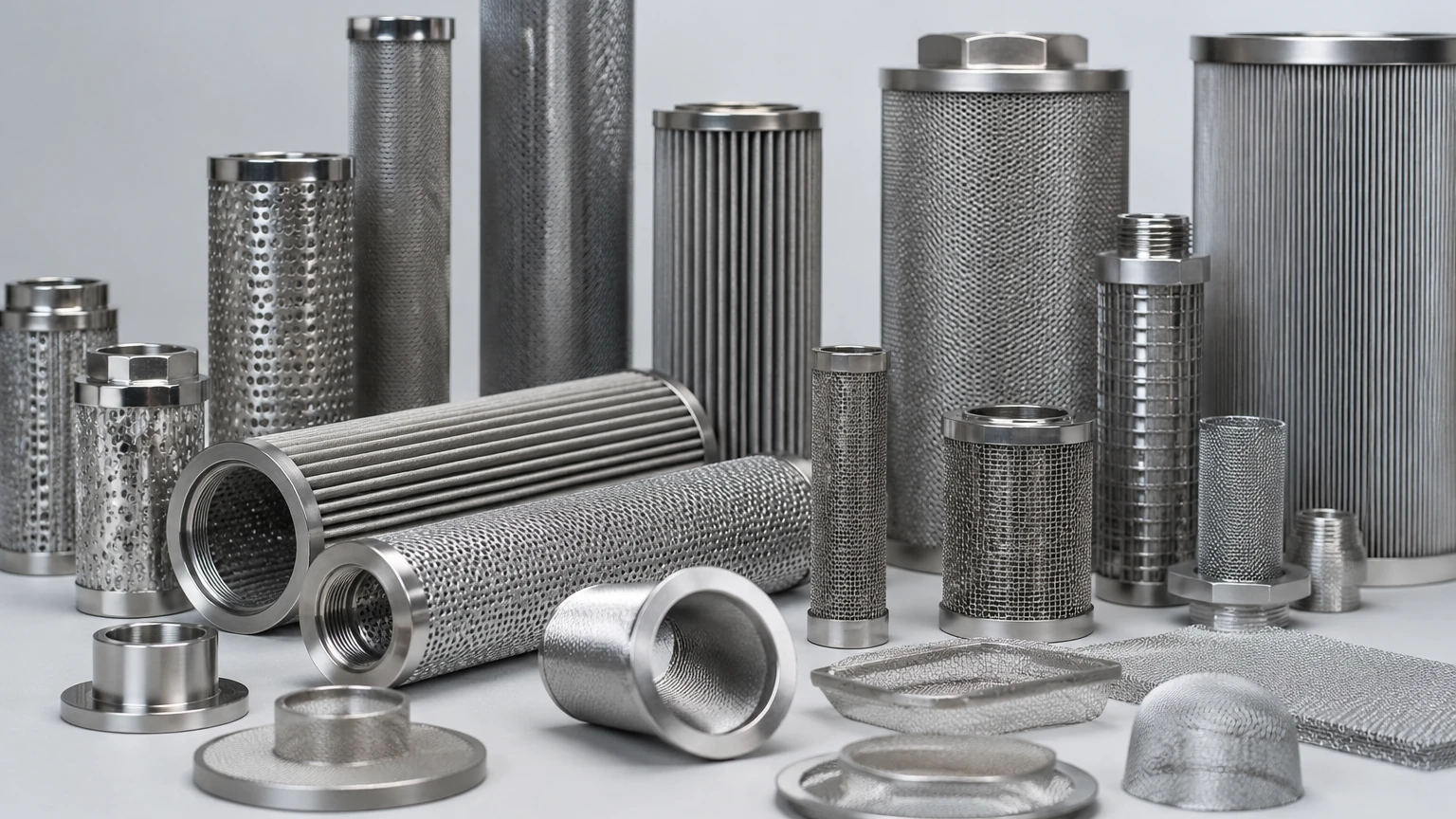
Standard filter cartridges often fail to meet the spatial or flow requirements of specialized industrial machinery. This is where the value of a specialized stainless steel filter supplier becomes evident. Customization involves more than just changing the length of a cylinder; it includes the engineering of end caps, support cores, and pleating configurations.
For instance, in high-viscosity fluid filtration, the surface area of the filter is a limiting factor. By pleating the stainless steel wire mesh, a manufacturer can significantly increase the filtration area within the same footprint. This reduces the flux (flow per unit area), which in turn lowers the pressure drop and extends the time between cleaning cycles.
OEM (Original Equipment Manufacturer) support is another critical factor. Many industrial equipment builders require proprietary filter designs that integrate seamlessly into their systems. A supplier with robust design and prototyping capabilities can help optimize the filter housing and element interface to eliminate bypass—a common issue where unfiltered fluid leaks around the edges of the filter element.
Critical Evaluation Criteria for a Stainless Steel Filter Supplier
When vetting a potential partner, purchasing and engineering teams should evaluate the following technical and operational benchmarks:
Technical Expertise and Design Support
Does the supplier understand the nuances of your industry? For example, a supplier for the pharmaceutical industry must understand Ra (Roughness Average) surface finish requirements to prevent bacterial growth in "dead zones." A supplier for hydraulic systems must understand Beta ratios and ISO cleanliness codes.
Manufacturing Precision
The quality of a stainless steel filter is often found in its joins. Look for suppliers who utilize advanced welding techniques such as TIG (Tungsten Inert Gas), plasma welding, or laser welding. These methods provide clean, strong bonds without the need for adhesives or resins that could outgas or degrade in the presence of solvents.
Testing and Quality Control
How does the supplier verify the integrity of their products? Standard tests include the Bubble Point Test (per ISO 2942) to verify the pore size and the Pressure Drop vs. Flow Rate test. For critical applications, material test reports (MTRs) should be provided to confirm the chemical composition of the steel.
Supply Chain and Lead Times
In industrial maintenance, downtime is the single greatest cost. A reliable supplier must offer predictable lead times and have the capacity to handle both small-batch custom orders and high-volume production. To Review product options and application support, engineers should consult the supplier’s technical documentation early in the design phase to ensure material availability.
Maintenance, Cleaning, and Longevity
One of the primary advantages of stainless steel filters is their cleanability. However, the cleaning method must be matched to the contaminant and the filter structure. Common methods include:
* Ultrasonic Cleaning: Uses high-frequency sound waves to create cavitation bubbles that dislodge fine particles from deep within the mesh.
* Backwashing: Reversing the flow of fluid through the filter to push contaminants off the surface. This is most effective with surface-loading filters like Dutch weaves.
* Chemical Cleaning: Using solvents or acids to dissolve organic or mineral buildup. This requires the filter to have high chemical resistance (e.g., 316L stainless steel).
* Burn-off/Pyrolysis: Heating the filter to high temperatures to incinerate organic contaminants. This is only possible with all-welded stainless steel constructions.
A professional supplier will provide guidance on the expected number of cleaning cycles before the structural integrity of the mesh is compromised. This data is essential for calculating the total cost of ownership (TCO) compared to disposable alternatives.
Conclusion: Strategic Sourcing for Industrial Success
Choosing a stainless steel filter supplier is an investment in the reliability of your industrial process. By focusing on material science, weave technology, and custom engineering capabilities, technical professionals can ensure they select a component that not only meets the immediate filtration requirement but also contributes to long-term operational efficiency.
Whether the application involves high-pressure hydraulic systems, sterile pharmaceutical environments, or aggressive chemical processing, the right supplier acts as an extension of your engineering team. Through rigorous quality control and technical support, they provide the filtration solutions necessary to maintain product purity and protect expensive machinery. For those seeking comprehensive industrial solutions, visiting the Main Page of a dedicated manufacturer can provide the technical resources needed to begin the selection process.
