


Coalescing Filter for Oil
In industrial fluid management, the separation of immiscible liquids or the removal of liquid aerosols from gas streams is a critical process for protecting downstream equipment and ensuring product purity. A coalescing filter for oil is a specialized component designed to perform this task by merging small droplets into larger ones, which can then be easily separated by gravity. Unlike standard particulate filters that simply trap solids, coalescing filters rely on complex physical interactions within a specialized media to manage liquid-phase contaminants.
For engineers and procurement professionals, selecting the right coalescing system requires a deep understanding of fluid dynamics, material compatibility, and the specific requirements of the application. This guide examines the technical principles, selection criteria, and engineering considerations essential for implementing effective oil coalescence in industrial environments.
The Engineering Principles of Coalescence
Coalescence is a multi-stage process that occurs within a filter medium, typically involving three distinct phases: interception, coalescence, and drainage. Understanding these phases is vital for evaluating how a coalescing filter for oil will perform under varying pressure and flow conditions.
1. Direct Interception and Diffusion
As the contaminated fluid (either a gas or another liquid) passes through the filter media, sub-micron oil droplets collide with the fibers or the mesh structure. Smaller droplets are often moved by Brownian motion, increasing their likelihood of hitting a fiber, while larger droplets are captured through direct interception or inertial impaction.
2. The Coalescing Phase
Once the droplets are captured by the media, they begin to move along the fibers. As they encounter other captured droplets, they merge (coalesce) to form larger drops. The efficiency of this phase depends heavily on the surface tension of the oil and the surface properties of the filter media. In high-quality stainless steel or composite filter elements, the media is often treated or structured to encourage this merging without causing excessive pressure drop.
3. Gravity Drainage
Once the oil droplets reach a sufficient size and mass, the force of gravity overcomes the drag of the fluid flow. The enlarged drops migrate to the bottom of the filter housing or to a dedicated collection sump. In gas-to-liquid separation (such as removing oil mist from compressed air), the oil typically drains to the outside of the element, while in liquid-to-liquid separation, the heavier phase settles at the bottom.
Material Selection for Industrial Durability
In demanding industrial environments, the choice of materials for a coalescing filter for oil is paramount. While disposable fiber elements are common in light-duty applications, heavy industrial processes often require the structural integrity of metal-based solutions.
Stainless steel is the preferred material for coalescing filter supports and high-temperature applications. Manufacturers like Kaifil specialize in custom stainless steel filtration solutions that provide the necessary mechanical strength to withstand high differential pressures. Using 304 or 316L stainless steel ensures that the filter remains resistant to corrosion, especially in chemical processing or offshore oil and gas applications.
When evaluating materials, engineers must consider:
* Chemical Compatibility: Does the oil or the carrier fluid contain additives or corrosive elements that could degrade the media?
* Temperature Limits: Will the process operate at elevated temperatures that exceed the melting point of standard polymer fibers?
* Structural Integrity: Can the filter element resist collapsing during a pressure surge?
For more detailed technical specifications on material grades and custom configurations, engineers can refer to the Kaifil Main Page to explore available options for industrial-grade components.
Key Performance Metrics for Evaluation
When specifying a coalescing filter for oil, several performance metrics must be analyzed to ensure the system meets the required ISO cleanliness levels or process purity standards.
Filtration Efficiency and Micron Rating
Coalescing filters are often rated by their ability to remove droplets of a specific size. For oil aerosols in gas, efficiency is often measured in parts per million (ppm) of carryover. For liquid-liquid separation, the focus is on the percentage of the dispersed phase removed. It is important to note that a "nominal" rating is rarely sufficient for coalescing; an "absolute" rating is required for critical protection.
Pressure Drop (Delta P)
Every filter introduces a restriction to flow. A high initial pressure drop reduces system efficiency and increases energy costs. However, in coalescing filters, the "wet" pressure drop (the resistance when the media is saturated with oil) is the more critical metric. If the pressure drop increases too rapidly, it may indicate that the filter is also acting as a particulate trap, which can lead to premature clogging.
Flow Velocity
Coalescence is a velocity-sensitive process. If the fluid velocity is too high, the captured droplets may be re-entrained into the flow stream before they have a chance to drain. Engineering the filter housing and element size to maintain an optimal face velocity is essential for maximizing separation efficiency.
Common Applications for Oil Coalescing Filters
The versatility of the coalescing filter for oil makes it a staple in several major industries. Each application presents unique challenges regarding viscosity and contaminant loading.
Compressed Air Systems
In compressed air systems, oil-injected compressors introduce lubricating oil into the air stream. A coalescing filter is used to remove this oil to protect pneumatic tools, sensitive instruments, and downstream processes (such as spray painting or food packaging) from contamination.
Hydraulic and Lube Oil Systems
Water is a common contaminant in hydraulic fluids, leading to oxidation and component wear. Coalescing filters are used to remove free and entrained water from the oil. Conversely, in some systems, oil must be removed from water before discharge to meet environmental regulations.
Natural Gas Processing
In the oil and gas industry, coalescers are used to remove liquid hydrocarbons and water from natural gas streams. This prevents liquid slugs from damaging turbines and compressors and ensures the gas meets pipeline specifications.
Customization and OEM Considerations
Off-the-shelf filtration products often fail to meet the specific spatial or performance requirements of complex industrial machinery. This is where custom engineering becomes a necessity. A customized coalescing filter for oil can be designed to fit existing housing dimensions while optimizing the internal media layers for a specific oil viscosity or flow rate.
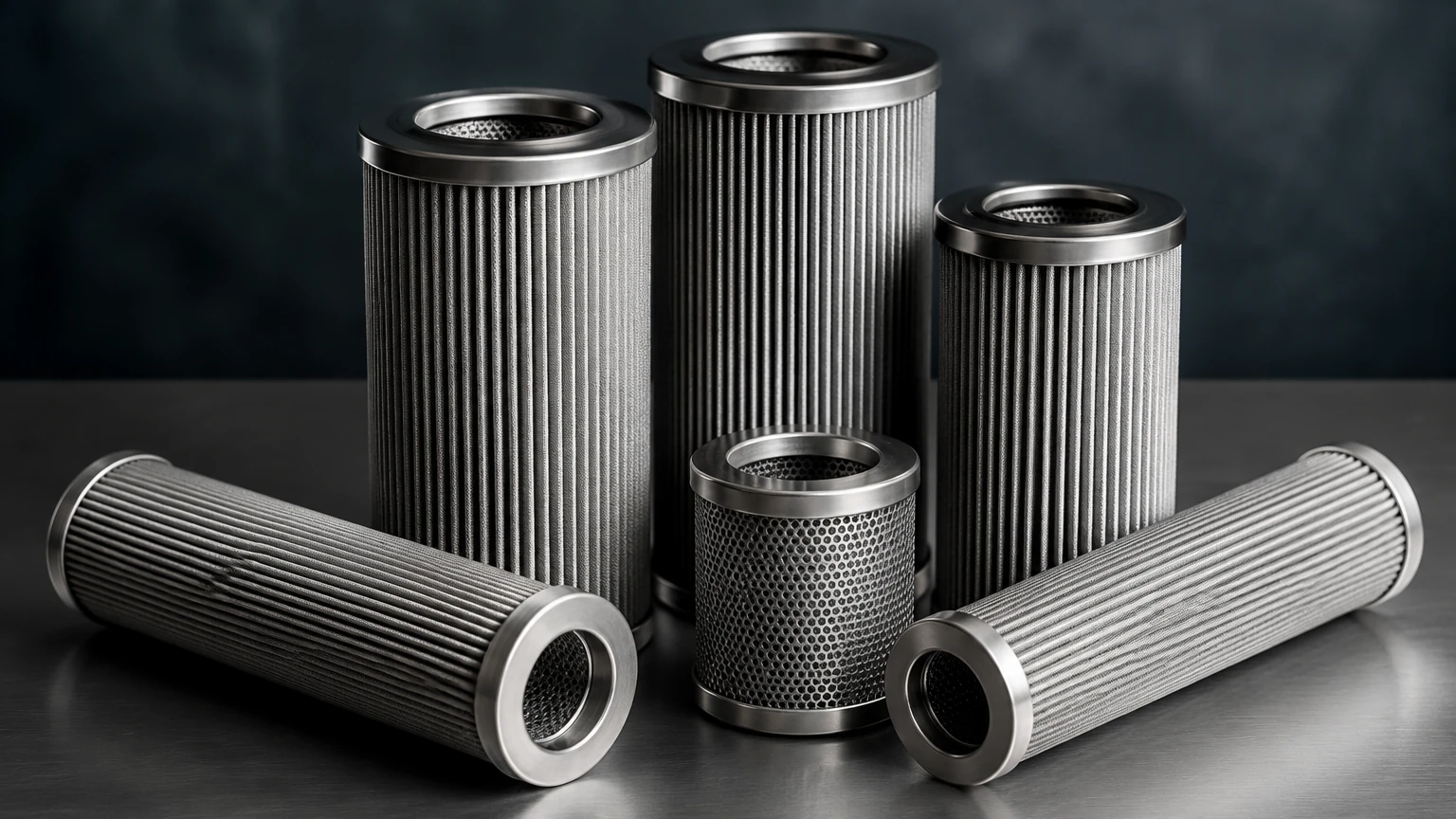
When working with a manufacturer like Kaifil, engineers can specify custom wire mesh configurations, sintered metal supports, and specialized end-cap designs. This level of customization ensures that the filtration component integrates seamlessly into the overall system design, reducing the need for costly adapters or piping modifications.
Key questions to confirm with an OEM partner include:
* Can the filter element be cleaned and reused, or is it a single-use component?
* What are the burst pressure ratings for the stainless steel core?
* Are there specific certifications (such as ASME or PED) required for the filter housing?
Risks of Improper Selection and Maintenance
Failure to correctly specify or maintain a coalescing filter for oil can lead to significant operational risks. The most common issue is "breakthrough," where the filter becomes overwhelmed and allows oil to pass through downstream. This often occurs due to:
1. Excessive Flow Rates: Operating beyond the design capacity of the coalescer.
2. Particulate Clogging: If the fluid is not pre-filtered for solids, the coalescing media will clog, leading to high pressure drops and potential media rupture.
3. Surfactant Contamination: Certain chemicals or additives can lower the surface tension of the oil, making it difficult for droplets to coalesce.
Regular monitoring of differential pressure is the most effective way to prevent these issues. A sudden drop in differential pressure may indicate a ruptured element, while a steady increase signals the need for replacement or cleaning.
Conclusion
Implementing a robust coalescing filter for oil is an essential strategy for maintaining fluid purity and protecting industrial infrastructure. By focusing on the physics of coalescence, selecting durable materials like stainless steel, and adhering to strict performance metrics, engineers can significantly reduce downtime and maintenance costs.
For those seeking to develop specialized filtration components or integrate high-performance metal filters into their systems, reviewing the technical resources and product capabilities on the Kaifil Main Page is a recommended next step. Professional guidance in material selection and custom design ensures that the chosen filtration solution will perform reliably in the most demanding industrial environments.
