


Filter for Steam
In industrial environments, steam is a critical utility used for heating, sterilization, and as a direct ingredient in processes ranging from food production to pharmaceutical manufacturing. However, steam is rarely pure. As it travels through piping systems, it picks up contaminants such as pipe scale, rust, and sediment. Without a high-performance filter for steam, these particulates can damage sensitive downstream equipment, contaminate final products, and reduce the overall efficiency of the thermal system.
Selecting the correct filtration solution requires an understanding of steam grades, material science, and the mechanical stresses inherent in high-temperature, high-pressure environments. For engineers and procurement teams, the goal is to balance filtration efficiency with durability and low maintenance costs.
Understanding Steam Quality and Grades
Before selecting a filter for steam, it is essential to define the required steam quality. Not all industrial steam applications have the same cleanliness requirements. Generally, steam is categorized into three main grades:
Industrial Steam
Often referred to as "plant steam," this is used for indirect heating applications where the steam does not come into contact with the product. Even in these systems, filtration is necessary to protect control valves, heat exchangers, and steam traps from abrasive particles. Standard stainless steel wire mesh or coarse sintered filters are typically sufficient here.
Culinary Steam
Culinary steam must be filtered to remove 95% of particles 2 microns or larger to meet 3-A Sanitary Standards. This grade is used when steam is injected directly into food products or used to clean food-contact surfaces. The filter media must be made of 300-series stainless steel and be capable of being cleaned and sterilized.
Pure or Clean Steam
Used primarily in the pharmaceutical and biotech industries, pure steam is produced from deionized or distilled water. The filtration requirements here are the most stringent, often requiring absolute-rated filters to ensure that no microorganisms or pyrogens are introduced into the process. In these cases, the housing and the filter element must meet strict hygienic design criteria.
Engineering Considerations for Steam Filter Media
The harsh nature of steam—characterized by high temperatures, thermal expansion, and the potential for water hammer—precludes the use of many standard polymer-based filter media. Stainless steel is the industry standard for steam filtration due to its mechanical strength and corrosion resistance.
Sintered Stainless Steel Powder
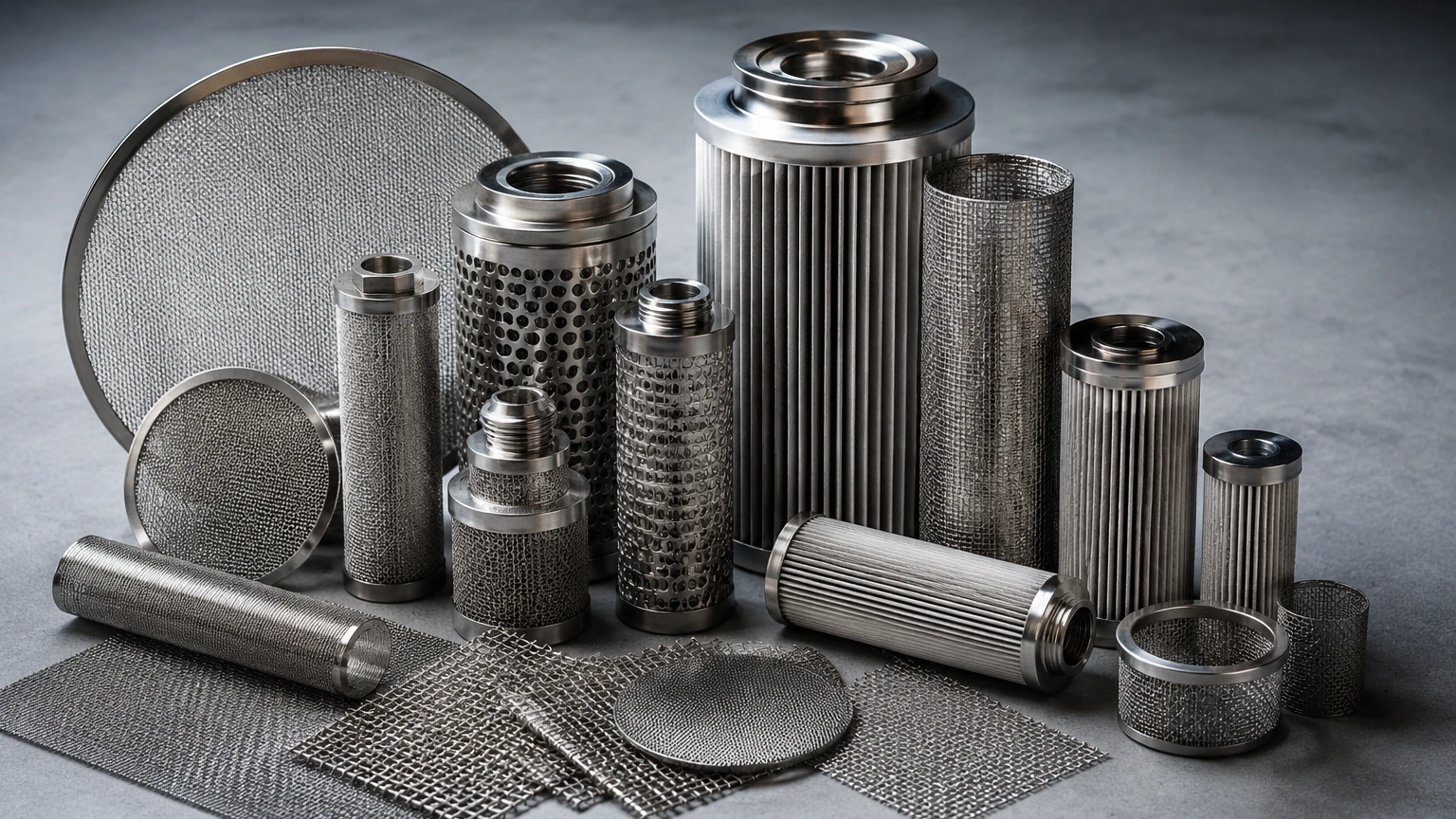
Sintered powder elements are created by compressing stainless steel powder into a solid structure and then heating it until the particles bond. This creates a tortuous path for steam, providing high filtration efficiency and excellent depth-loading capacity. These filters are robust and can withstand significant differential pressures, making them ideal for high-velocity steam lines.
Pleated Wire Mesh
For applications requiring high flow rates with low pressure drops, pleated wire mesh filters are often preferred. By pleating the mesh, the surface area is significantly increased, which extends the service life between cleaning cycles. These are particularly effective as pre-filters or in systems where the contaminant load is relatively low but the steam volume is high.
Material Selection: 304 vs. 316L
While both 304 and 316L stainless steel are common, 316L is generally recommended for steam applications due to its superior resistance to pitting and stress-corrosion cracking. In systems where the steam may contain chemicals from boiler water treatment or where the environment is particularly corrosive, 316L provides the necessary longevity to ensure a low total cost of ownership.
Performance Evaluation: Micron Ratings and Flow Rates
When evaluating a filter for steam, engineers must look beyond the initial price and focus on performance metrics that impact the entire system. Two of the most misunderstood concepts in steam filtration are micron ratings and flow velocity.
Absolute vs. Nominal Ratings
A "nominal" rating refers to a filter's ability to retain the majority of particles of a certain size, but it does not guarantee 100% efficiency. An "absolute" rating means the filter will catch 99.9% or more of particles at that micron level. For culinary or pharmaceutical steam, absolute-rated elements are mandatory to ensure process safety.
Managing Differential Pressure (ΔP)
As a filter collects debris, the pressure drop across the element increases. If the ΔP becomes too high, it can lead to a reduction in steam temperature and pressure at the point of use, potentially stalling the process. A well-designed steam filtration system should include pressure gauges upstream and downstream to monitor the element's condition. Typically, steam filter elements should be cleaned or replaced when the differential pressure reaches 0.7 to 1.0 bar (10-15 psi).
Steam Velocity and Entrained Moisture
Steam travels at very high velocities, often exceeding 25 to 35 meters per second. High-velocity steam carrying water droplets (wet steam) can cause erosion of the filter media, a phenomenon known as "sandblasting." To prevent this, it is often necessary to install a moisture separator upstream of the filter for steam to remove bulk condensate and protect the fine filtration media.
Installation and Maintenance Protocols
The longevity of a steam filter is heavily dependent on how it is installed and maintained. Because steam systems are subject to thermal cycling, the installation must account for expansion and contraction.
1. Orientation: Steam filters should always be installed in a horizontal line with the bowl facing downward. This allows for the collection and drainage of condensate.
2. Condensate Management: A steam trap should be installed immediately upstream of the filter housing. This prevents the filter from becoming waterlogged, which would otherwise lead to reduced flow capacity and potential damage from water hammer.
3. Cleaning Procedures: One of the primary advantages of stainless steel filters is their cleanability. Depending on the type of contaminant, elements can be cleaned using ultrasonic baths, back-pulsing with clean air or water, or chemical cleaning with compatible solvents. It is vital to ensure that the cleaning process does not compromise the structural integrity of the mesh or sintered pores.
4. Sterilization-in-Place (SIP): In hygienic applications, the filter for steam must be capable of withstanding repeated SIP cycles. The seals and O-rings within the housing must be made of high-temperature materials like EPDM or Viton to maintain a leak-proof system.
Total Cost of Ownership and Customization
For many purchasing teams, the initial capital expenditure for a high-quality stainless steel filter housing and element may seem high compared to disposable alternatives. However, when considering the total cost of ownership (TCO), permanent stainless steel solutions are significantly more cost-effective.
Disposable filters require frequent replacement, leading to high recurring costs and increased downtime. In contrast, a robust stainless steel filter for steam can last for years if maintained correctly. Furthermore, custom-engineered filtration solutions allow for the optimization of housing sizes and connection types (such as NPT, Flanged, or Tri-clamp), ensuring the filter fits perfectly into existing infrastructure without the need for expensive piping modifications.
Customization also extends to the filtration media itself. Depending on the specific particulate profile of a plant's steam, manufacturers can adjust the density of sintered powder or the weave pattern of the mesh to provide the optimal balance between filtration fineness and flow capacity. This level of engineering ensures that the steam system operates at peak efficiency while protecting the most sensitive components of the production line.
Conclusion: Selecting the Right Partner
Effective steam filtration is a technical challenge that requires a deep understanding of fluid dynamics, metallurgy, and industry-specific regulations. Whether you are upgrading an existing boiler system or designing a new sterile process, the choice of filtration components will directly impact your product quality and equipment lifespan.
By focusing on high-grade materials, precise micron ratings, and robust mechanical designs, engineers can mitigate the risks associated with contaminated steam. For those seeking specialized guidance or custom-manufactured filtration components, visiting the Main Page provides access to technical resources and product specifications tailored to demanding industrial applications. Proper filtration is not just a maintenance task; it is a fundamental requirement for operational excellence in any steam-dependent industry.
