


Woven Wire Mesh Fine
In industrial filtration and separation, the precision of the media determines the efficiency of the entire process. While standard wire cloth serves basic screening needs, woven wire mesh fine categories are engineered for applications requiring high-precision particle retention, often measured in microns rather than inches. For engineers and procurement specialists, selecting the correct fine mesh involves balancing filtration accuracy with mechanical durability and flow characteristics.
This guide examines the technical nuances of fine woven wire mesh, focusing on the engineering considerations necessary for optimizing filtration performance in demanding B2B environments such as chemical processing, pharmaceutical manufacturing, and hydraulic systems.
Understanding the Fundamentals of Woven Wire Mesh
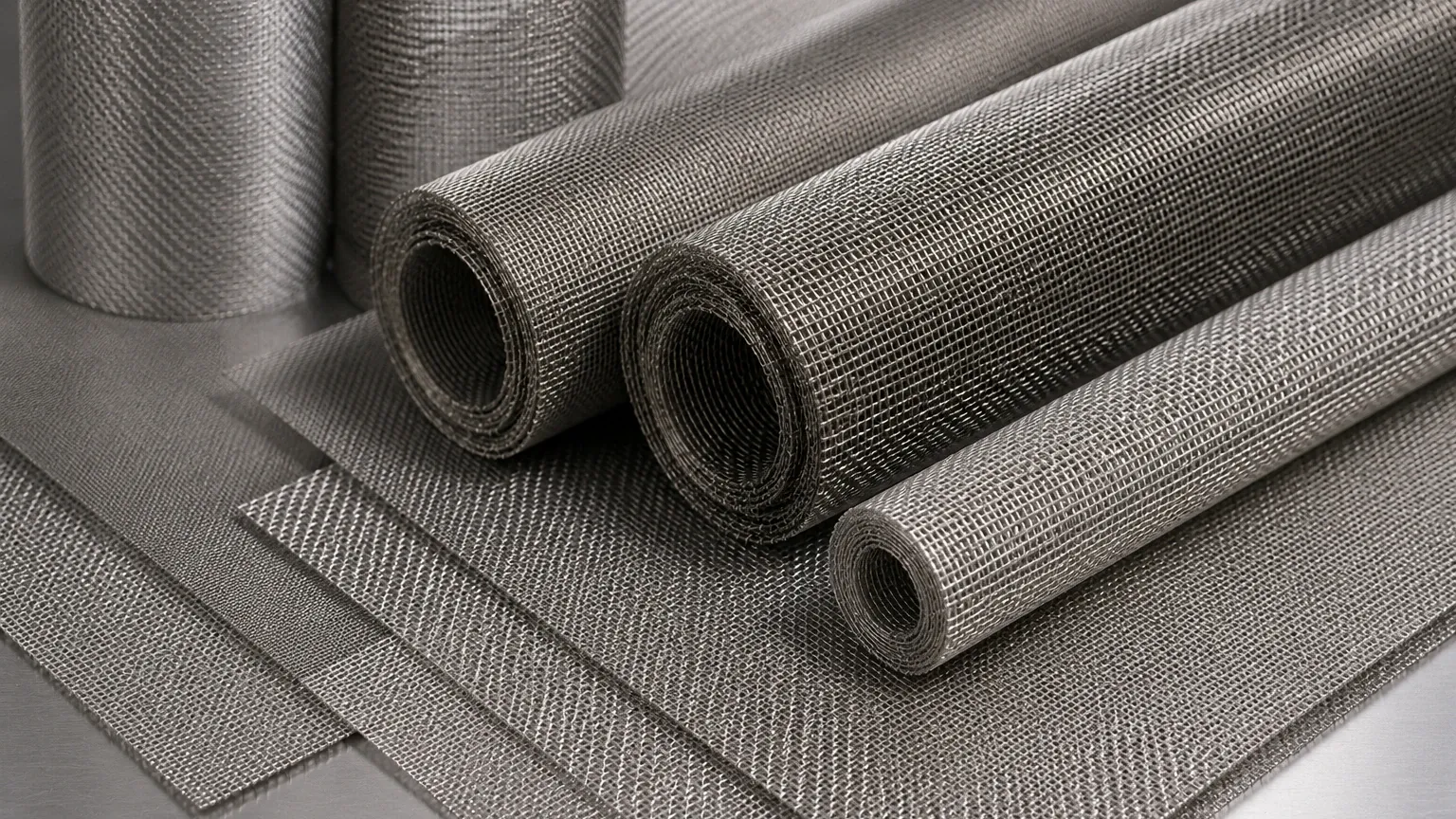
At its core, Woven Wire Mesh is a structured fabric created by weaving longitudinal (warp) wires and transverse (shute) wires. In "fine" mesh specifications—typically defined as mesh counts exceeding 100 or aperture sizes below 150 microns—the precision of the weaving process becomes critical. At these scales, even minor deviations in wire diameter or weave tension can lead to inconsistent pore sizes, directly impacting the reliability of the filtration system.
Key Technical Definitions
* Mesh Count: The number of openings per linear inch. As the mesh count increases, the aperture size typically decreases, provided the wire diameter is adjusted accordingly.
* Aperture (Pore Size): The clear distance between two adjacent warp or shute wires. In fine mesh, this is the primary metric for determining the largest particle that can pass through the media.
* Wire Diameter: The thickness of the wire before weaving. In fine mesh, wire diameters can be as thin as 0.02 mm, requiring specialized handling and high-precision looms.
* Open Area Percentage: The ratio of the area of the openings to the total area of the mesh. A higher open area reduces pressure drop but may compromise the structural integrity of the fine mesh.
Weave Types for Fine Filtration Applications
The weave pattern significantly influences the performance of woven wire mesh fine products. While plain weaves are common for general screening, more complex weaves are often required to achieve fine filtration without sacrificing strength.
1. Plain Weave
The most straightforward pattern where each shute wire passes over and under one warp wire. While highly stable, plain weaves are limited in how fine they can go because the wire diameter must be small enough to allow the tight bends of the weave, which can lead to a fragile mesh at very high counts.
2. Twill Weave
In a twill weave, each shute wire passes over and under two warp wires. This allows for the use of relatively heavier wires for a given mesh count compared to plain weave. Twill weaves are common in fine mesh applications where increased mechanical strength and a higher degree of filtration are required.
3. Dutch Weave (Plain and Twilled)
Dutch weaves utilize different diameters for warp and shute wires. The warp wires remain relatively heavy, while the shute wires are smaller and driven closely together. This creates a "tortuous path" for the fluid, providing excellent depth filtration.
* Plain Dutch Weave: Offers high strength and is easy to clean through backwashing.
* Twilled Dutch Weave: Allows for the highest density of wires, enabling filtration ratings down to 1–5 microns. This is the standard for high-pressure hydraulic and fuel filtration.
Material Selection and Chemical Compatibility
In industrial environments, the longevity of a fine mesh filter is largely dictated by its material composition. Stainless steel is the industry standard due to its balance of cost, mechanical properties, and corrosion resistance.
Stainless Steel 304
SS304 is the most common material for general industrial use. It provides good resistance to atmospheric corrosion and many organic and inorganic chemicals. However, it is susceptible to chloride pitting, making it less ideal for marine or high-saline environments.
Stainless Steel 316L
For pharmaceutical and chemical processing, SS316L is preferred. The addition of molybdenum enhances resistance to pitting and crevice corrosion in chloride-rich environments. The "L" denotes low carbon content, which is essential for components that require welding, as it prevents carbide precipitation that can lead to intergranular corrosion.
Specialty Alloys
In extreme cases involving high temperatures or highly aggressive acids, alloys such as Hastelloy, Inconel, or Monel may be used. These materials maintain the structural integrity of the fine mesh under conditions where standard stainless steel would fail.
Engineering Considerations for Fine Mesh Selection
When specifying woven wire mesh fine for a new project or as a replacement part, engineers must look beyond the micron rating. Several factors influence the total cost of ownership and system efficiency.
Pressure Drop and Flow Rates
Fine mesh naturally imposes a higher resistance to flow. Engineers must calculate the clean pressure drop to ensure the pump or system pressure can accommodate the filter. As particles accumulate (cake formation), the pressure drop increases. Selecting a weave with a higher open area or utilizing a Dutch weave with optimized wire spacing can help manage these variables.
Mechanical Stability and Support
Because fine mesh is constructed from very thin wires, it is inherently delicate. In high-pressure applications, the mesh often requires a support layer—typically a coarser mesh or a perforated metal plate. Sintering multiple layers of mesh together is a common solution to create a composite media that combines the fine filtration of the top layer with the structural rigidity of thicker base layers.
Calendering
Calendering is a secondary process where the woven mesh is passed through high-pressure rollers. This flattens the knuckles of the weave, reducing the overall thickness of the mesh and stabilizing the wire positions. Calendering results in a smoother surface, which can improve the release of filter cakes during cleaning cycles.
Common Risks and Maintenance Strategies
Operating with fine filtration media presents specific challenges that can lead to premature failure if not managed correctly.
1. Blinding and Clogging
Blinding occurs when particles become wedged in the mesh apertures, or when a sticky film coats the surface. To mitigate this, engineers should consider the particle morphology. If particles are near-sized to the aperture, a twill or Dutch weave may be less prone to blinding than a plain weave. Regular cleaning protocols, such as ultrasonic cleaning or high-pressure backpulsing, are essential for maintaining flow.
2. Mechanical Fatigue
In systems with fluctuating pressures or vibrations, the fine wires can suffer from fatigue. This often manifests as cracks near the edges or at the points where the mesh is welded to a frame. Ensuring proper tensioning and using reinforced borders can significantly extend the service life of the component.
3. Media Migration
In lower-quality mesh, wires may shift or break, leading to "media migration" where fragments of the filter or unfiltered bypass enter the downstream flow. Utilizing high-quality, ISO-certified woven wire mesh ensures that the wire spacing remains consistent and the weave is tight enough to prevent shifting under operational loads.
Evaluating Total Cost of Ownership (TCO)
While the initial purchase price of fine mesh is a factor, the TCO is influenced by:
* Service Life: How many cleaning cycles can the mesh withstand before the apertures deform or wires break?
* Cleaning Efficiency: How much downtime is required to restore the filter to a functional state?
* Process Yield: Does the precision of the mesh prevent the loss of valuable product or protect expensive downstream equipment (like high-pressure pumps) from damage?
Investing in higher-grade materials like SS316L or opting for specialized Dutch weaves often results in a lower TCO by reducing the frequency of replacements and preventing catastrophic system failures.
Conclusion: Confirming Requirements for Procurement
Before finalizing a purchase of woven wire mesh fine, technical teams should confirm the following data points with their manufacturer:
1. Exact Micron Rating: Is the requirement for absolute or nominal filtration?
2. Operating Environment: What are the maximum temperatures and chemical concentrations the mesh will encounter?
3. Mechanical Load: What is the maximum differential pressure the mesh must withstand?
4. Form Factor: Is the mesh required in bulk rolls, cut-to-size pieces, or as a finished, framed component?
By addressing these technical boundaries early in the design or procurement phase, industrial operators can ensure they select a filtration solution that provides the necessary precision without compromising on durability or operational efficiency. Professional manufacturers like Kaifil provide the engineering support needed to navigate these variables, ensuring that the selected mesh aligns perfectly with the specific demands of the application.
