


Air Intake Screens
In industrial environments, the integrity of rotating machinery and thermal exchange systems depends heavily on the quality of the air entering the system. Air intake screens serve as the primary mechanical barrier, protecting internal components from airborne debris, wildlife, and environmental contaminants that can lead to catastrophic mechanical failure or significant efficiency losses. For engineers and procurement professionals, selecting the correct air intake screen involves a complex balance between filtration efficiency, structural durability, and the preservation of aerodynamic performance.
As a specialized manufacturer of stainless steel filtration solutions, Kaifil provides precision-engineered components designed to meet the rigorous demands of industrial air handling. Understanding the technical nuances of these screens is essential for optimizing equipment lifespan and reducing maintenance overhead.
The Role of Air Intake Screens in Industrial Systems
Air intake screens are installed at the point of entry for various industrial systems, including gas turbines, large-scale HVAC units, air compressors, and cooling towers. Their primary function is to intercept large particles—such as leaves, insects, birds, and construction debris—before they can enter the intake ductwork.
While secondary and tertiary filters (such as HEPA or bag filters) handle fine particulate matter, the air intake screen acts as a "pre-filter" or safeguard. Without a robust intake screen, primary filters would clog prematurely, leading to increased pressure drops and more frequent replacement cycles. In high-velocity systems like gas turbines, the screen also prevents Foreign Object Damage (FOD), where even a small piece of debris can cause tens of thousands of dollars in damage to high-speed blades.
Engineering Considerations: Material Selection and Durability
The choice of material for air intake screens is perhaps the most critical factor in determining long-term performance. While plastic or galvanized steel options exist, stainless steel remains the industry standard for demanding B2B applications due to its mechanical properties and resistance to environmental degradation.
Stainless Steel Grades
1. AISI 304 Stainless Steel: This is the most common material for general industrial air intake screens. It offers excellent strength and good corrosion resistance for inland environments where moisture is present but chemical exposure is limited.
2. AISI 316/316L Stainless Steel: For coastal facilities or chemical processing plants, 316 stainless steel is required. The addition of molybdenum provides superior resistance to chloride-induced pitting and crevice corrosion, ensuring the screen does not fail prematurely in salt-laden air or acidic atmospheres.
3. Specialty Alloys: In extreme high-temperature environments or highly corrosive chemical zones, alloys like Monel or Inconel may be utilized, though stainless steel remains the most cost-effective solution for the vast majority of industrial intakes.
Structural Integrity
Unlike liquid filtration, air intake screens must withstand significant wind loads and potential impact from flying debris. The wire diameter and weave type must be engineered to prevent the mesh from sagging or tearing under high-velocity airflow. Kaifil utilizes advanced manufacturing techniques to ensure that the mesh remains taut and the frame remains rigid, even in high-vibration environments.
Technical Parameters: Balancing Airflow and Filtration
Engineers must navigate the trade-off between the "open area" of the screen and its filtration rating. A screen with a very fine mesh will stop more debris but will also create a higher pressure drop, forcing the system's fans or compressors to work harder and consume more energy.
Open Area Percentage
The open area is the ratio of the total area of the apertures to the total area of the screen. For most industrial air intakes, an open area of 50% to 70% is targeted. This allows for high-volume airflow while maintaining sufficient structural wire density to intercept debris. If the open area is too low, the resulting static pressure increase can lead to system surging or reduced cooling capacity.
Mesh Count and Aperture Size
The "mesh count" refers to the number of wires per linear inch. For air intake screens, the aperture (the clear space between wires) is usually sized based on the specific threats in the environment. For example, a screen designed to prevent bird ingress may have a 1/2-inch aperture, while a screen designed to keep out smaller insects or cottonwood seeds may require a much finer mesh.
Pressure Drop (ΔP)
Every air intake screen introduces some level of resistance. It is vital to calculate the clean pressure drop during the design phase. A well-designed stainless steel screen should provide minimal resistance when clean. However, engineers must also account for the "dirty" pressure drop—how the resistance increases as the screen begins to capture debris. High-quality wire mesh designs allow for easier cleaning, ensuring that the pressure drop can be returned to baseline levels through standard maintenance.
Customization and OEM Integration
Off-the-shelf solutions rarely meet the specific geometric and performance requirements of industrial machinery. Customization is often necessary to ensure a perfect fit and optimal performance. When sourcing components from the Main Page of a professional manufacturer, engineers should look for the following customization capabilities:
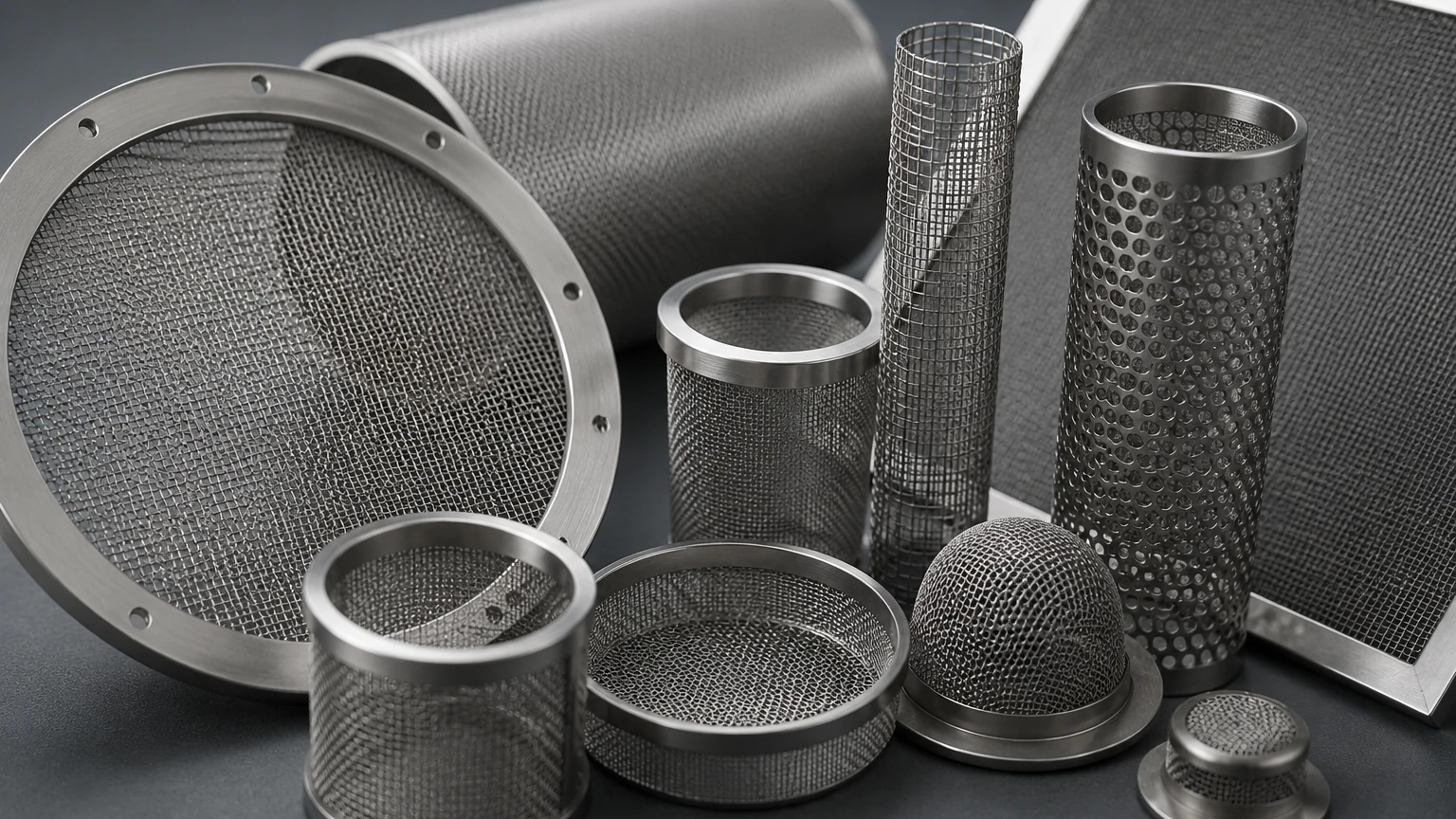
* Frame Design: Screens can be manufactured with U-channels, flat bars, or angle iron frames to facilitate easy installation into existing ductwork or equipment housings.
* Mounting Options: Custom-drilled holes, tabs, or slide-in tracks allow for rapid replacement during maintenance shutdowns.
* Reinforcement: For large-span intakes, internal reinforcement bars or double-layer mesh designs may be required to prevent vibration-induced fatigue.
* Edge Treatments: Hemmed edges or welded frames ensure there are no sharp wires that could cause injury during handling or create turbulence in the airflow.
Critical Applications for Air Intake Screens
1. HVAC and Cooling Towers
In large commercial and industrial buildings, HVAC intakes are prone to clogging from seasonal debris like leaves and pollen. Air intake screens protect the delicate fins of heat exchangers. In cooling towers, screens prevent debris from entering the water basin, which helps reduce the load on water filtration systems and prevents pump damage.
2. Gas Turbines and Power Generation
Gas turbines require massive volumes of air. The intake screens here are critical for preventing FOD. These screens are often designed as part of a multi-stage filtration house, where they serve as the first line of defense against large objects that could cause catastrophic internal damage to the turbine blades.
3. Air Compressors and Blowers
Industrial air compressors are sensitive to particulate intake. While they have internal filters, an external air intake screen prevents the primary filter from becoming overwhelmed by large contaminants, thereby extending the service interval of the more expensive internal filter elements.
4. Food and Pharmaceutical Processing
In cleanroom environments or food processing plants, air intakes must not only filter debris but also be constructed of materials that do not shed particles or harbor bacteria. Stainless steel air intake screens are ideal here because they are non-porous, easy to sanitize, and resistant to the harsh cleaning chemicals used in these industries.
Maintenance and Life Cycle Costs
While the initial cost of a high-quality stainless steel air intake screen is higher than that of plastic or lower-grade metal alternatives, the Total Cost of Ownership (TCO) is significantly lower.
Durability and Replacement Cycles
Plastic screens degrade under UV exposure and can become brittle in cold temperatures, leading to cracks and eventual failure. Galvanized steel eventually rusts, especially at the weld points. A stainless steel screen from a reputable manufacturer like Kaifil can last for decades with minimal maintenance. This longevity reduces the frequency of procurement cycles and the labor costs associated with replacement.
Cleaning Efficiency
Stainless steel mesh is rigid and smooth, making it easier to clean via pressure washing, compressed air, or manual brushing. Because the material does not rust, there is no risk of "rust-bonding" where debris becomes permanently fused to the screen surface.
Selection Checklist for Engineers
Before finalizing a specification for air intake screens, technical teams should confirm the following data points:
1. Environmental Conditions: Is the site near the ocean? Is there exposure to specific industrial chemicals? (Determines 304 vs. 316 stainless steel).
2. Airflow Velocity: What is the face velocity of the air at the intake? (Determines required wire diameter and mesh stability).
3. Target Particle Size: What is the smallest object that must be excluded? (Determines aperture size).
4. Allowable Pressure Drop: What is the maximum ΔP the system can tolerate before performance degrades?
5. Physical Dimensions and Mounting: Does the screen require a custom frame or specific mounting hardware for a flush fit?
Conclusion
Air intake screens are a fundamental component of industrial infrastructure, providing the first line of defense for expensive and critical machinery. By selecting high-quality stainless steel mesh and focusing on engineering parameters like open area and structural integrity, facilities can ensure optimal airflow while protecting their equipment from environmental hazards.
Kaifil specializes in the production of customized stainless steel filtration components that meet these exacting standards. For technical professionals seeking to optimize their filtration systems, it is advisable to Review product options and application support to find a solution tailored to specific operational requirements. By prioritizing material quality and precision manufacturing, companies can achieve higher system efficiency, lower maintenance costs, and greater operational reliability.
