


Natural Gas Filtration
In industrial energy and processing sectors, the integrity of natural gas streams is paramount to the operational lifespan of downstream equipment. Natural gas filtration is not merely a secondary process but a critical engineering requirement designed to protect high-value assets such as turbines, compressors, meters, and pressure regulators. Contaminants within a gas stream—ranging from solid particulates like pipeline scale and sand to liquid aerosols and compressor oil carryover—can lead to catastrophic mechanical failure, measurement inaccuracies, and significant downtime.
For engineers and procurement professionals, selecting the appropriate filtration solution requires a deep understanding of the physical and chemical properties of the gas stream, the specific nature of the contaminants, and the environmental conditions of the application. As a specialized manufacturer of stainless steel filtration components, Kaifil provides the technical foundation necessary to address these complex challenges through precision-engineered metal filter media.
The Critical Role of Filtration in Natural Gas Infrastructure
Natural gas travels through extensive pipeline networks before reaching its end-use application. During this journey, the gas is subject to various forms of contamination. In the upstream sector, wellhead gas often contains formation sand and water. During midstream transport, the gas may pick up "black powder"—a common industry term for a mixture of iron sulfides and oxides created by internal pipeline corrosion.
Without effective natural gas filtration, these contaminants cause several systemic issues:
1. Erosion: High-velocity solid particles act as an abrasive, wearing down valve seats, turbine blades, and orifice plates.
2. Fouling: Liquid hydrocarbons and compressor oils can coat internal surfaces, leading to reduced heat transfer efficiency in heat exchangers and clogging in sensitive instrumentation.
3. Corrosion: The presence of water and chemicals (such as H2S or CO2) in the gas stream can lead to localized corrosion, compromising the structural integrity of the piping and filtration housings.
By implementing robust stainless steel filter cartridges, operators can ensure that the gas entering sensitive equipment meets the required purity standards, thereby optimizing the total cost of ownership for the entire facility.
Technical Evaluation of Filter Media: Why Stainless Steel?
When designing systems for natural gas filtration, the choice of filter media is a primary engineering decision. While disposable synthetic filters are common in low-pressure, low-temperature applications, industrial gas processing often demands the resilience of metallic media. Stainless steel wire mesh and sintered metal components offer several distinct advantages:
Thermal and Mechanical Stability
Natural gas processes often involve significant pressure fluctuations and temperature extremes. Stainless steel filters maintain their structural integrity under high differential pressures where synthetic fibers might collapse or bypass. Furthermore, in cryogenic applications or high-temperature gas sweetening processes, stainless steel remains stable, preventing media migration into the gas stream.
Chemical Compatibility
Industrial natural gas often contains "sour" components like hydrogen sulfide (H2S). Standard carbon steel or certain polymers may succumb to sulfide stress cracking or chemical degradation. Using 304 or 316L stainless steel provides the necessary corrosion resistance to handle aggressive chemical environments, ensuring a long service life even in demanding offshore or refinery settings.
Cleanability and Sustainability
Unlike disposable depth filters, stainless steel mesh filters are often cleanable. This is particularly beneficial in applications with high solid loading, such as removing black powder from pipelines. The ability to backwash or ultrasonically clean the filter elements reduces waste and lowers long-term operational costs.
Key Engineering Parameters for Filter Selection
To specify the correct filter for a natural gas application, engineers must evaluate several performance metrics. These parameters dictate the efficiency of the filtration system and its impact on the overall process flow.
Filtration Rating (Micron Level)
Natural gas filtration typically targets particulate removal in the range of 1 to 100 microns, depending on the downstream equipment's sensitivity. For example, gas turbines may require much finer filtration (down to 1-3 microns) compared to general pipeline distribution. It is essential to distinguish between nominal and absolute filtration ratings to ensure the media can reliably capture the targeted particle sizes.
Differential Pressure (Delta P)
Every filter introduces a restriction to the flow. In natural gas systems, excessive pressure drop equates to lost energy and reduced throughput. Engineers must balance the need for high filtration efficiency with the requirement for low initial differential pressure. A well-designed stainless steel pleated filter increases the available surface area, allowing for higher flow rates while maintaining a low Delta P.
Flow Velocity and Capacity
High gas velocities can lead to particle re-entrainment or damage to the filter media. The filtration system must be sized to accommodate the maximum expected flow rate (expressed in Standard Cubic Feet per Day, or SCFD) while keeping the face velocity across the media within safe engineering limits.
Addressing Complex Contaminants: Solids vs. Liquids
Natural gas filtration is often categorized into two primary functions: particulate filtration and coalescing filtration. Understanding the difference is vital for system design.
Particulate Filtration
This process focuses on removing solid debris. Stainless steel wire mesh is highly effective here, acting as a surface filter that traps particles on the exterior of the mesh. For finer particulates, multi-layered sintered mesh provides a tortuous path that enhances capture efficiency without significantly increasing the footprint of the filter element.
Coalescing Filtration
If the gas stream contains liquid aerosols (water or oil), a coalescing filter is required. These filters encourage small droplets to merge into larger drops that eventually fall out of the gas stream due to gravity. While often utilizing specialized fiber media, these elements frequently use stainless steel inner and outer supports to provide the necessary mechanical strength to withstand the pressure of the gas flow.
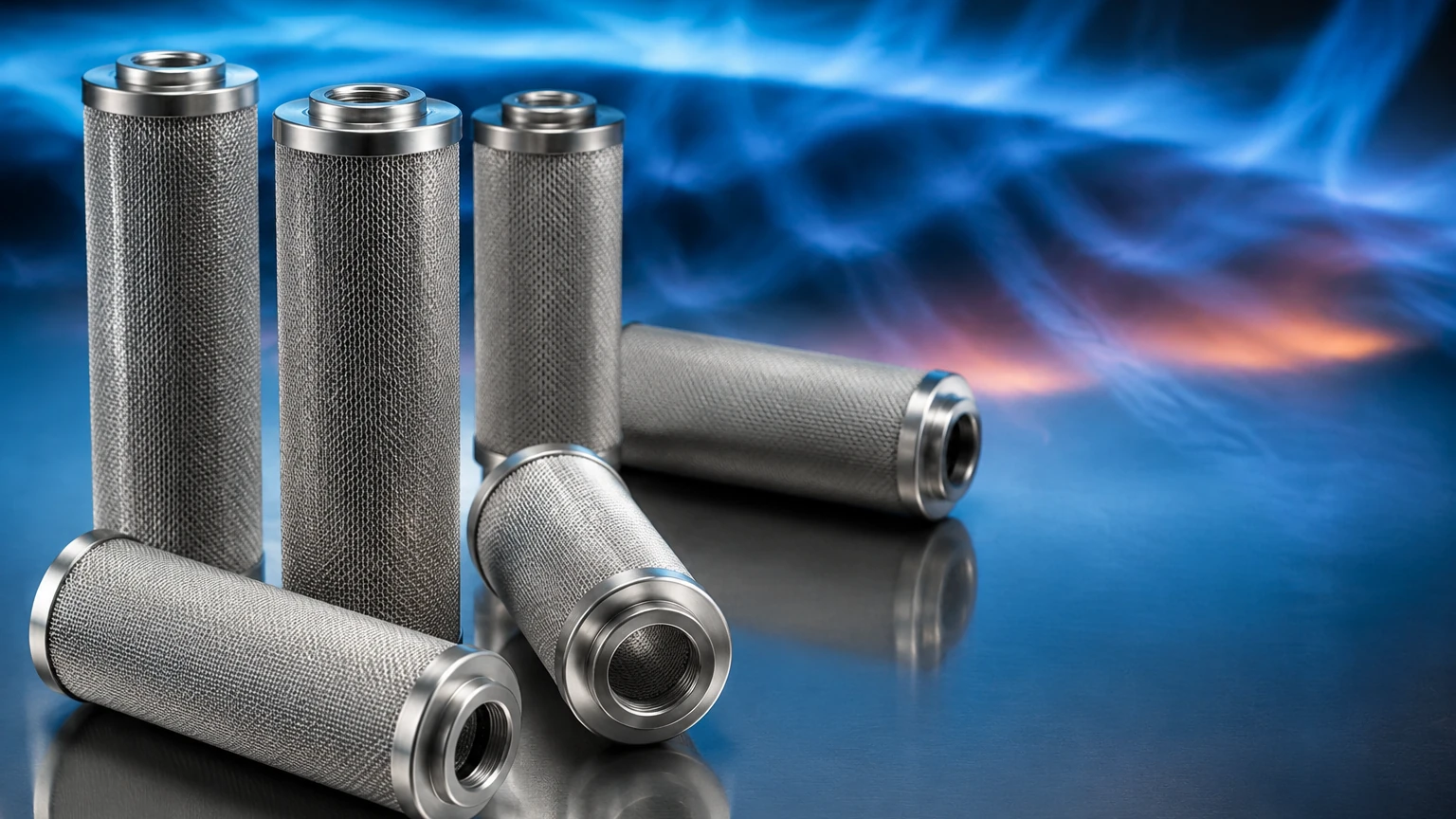
Customization and OEM Integration
In many industrial settings, standard off-the-shelf filters do not meet the specific spatial or performance constraints of a project. This is where customized manufacturing becomes essential. For engineers looking to integrate filtration into specialized machinery or unique pipeline configurations, working with a manufacturer that understands OEM requirements is critical.
Customization options for natural gas filtration components include:
* Specific End-Cap Configurations: Ensuring a leak-proof seal within existing housings using specialized gaskets or threaded connections.
* Variable Mesh Weaves: Selecting between plain, twilled, or dutch weave patterns to optimize for either flow rate or fine particle retention.
* Reinforced Structures: Adding internal support cores or external cages for applications subject to high-pressure surges or reverse flow conditions.
For a comprehensive look at available configurations and technical support for custom designs, engineers can visit the Main Page to explore professional filtration solutions tailored to industrial needs.
Maintenance and Operational Best Practices
The longevity of a natural gas filtration system depends heavily on proactive maintenance and monitoring. Neglecting filter health can lead to "breakthrough," where contaminants bypass the filter, or "bursting," where the pressure differential exceeds the media's structural limit.
Monitoring Differential Pressure
Continuous monitoring of the pressure drop across the filter bank is the most effective way to determine the optimal time for cleaning or replacement. Most industrial systems utilize differential pressure gauges or transmitters that trigger an alarm when a pre-set limit is reached.
Cleaning Protocols
For stainless steel elements, cleaning should be performed according to the manufacturer’s guidelines. Methods such as back-pulsing with clean gas or solvent cleaning can restore the filter's performance. However, it is vital to inspect the mesh for any signs of mechanical wear or chemical pitting during each maintenance cycle.
Spare Parts Management
Given the critical nature of natural gas filtration, maintaining an inventory of replacement elements is standard practice. This ensures that when a filter reaches its terminal pressure drop, it can be serviced immediately, preventing any interruption to the gas supply.
Conclusion: Selecting a Reliable Filtration Partner
Natural gas filtration is a sophisticated discipline that sits at the intersection of fluid dynamics, material science, and mechanical engineering. The choice of filter media and the design of the filtration element directly impact the reliability of the entire energy infrastructure. By prioritizing high-quality stainless steel components and understanding the specific demands of the gas stream, engineers can protect their equipment from the costly effects of contamination.
Kaifil remains committed to providing the technical expertise and manufacturing precision required for these demanding applications. Whether you are addressing black powder issues in a pipeline or protecting a high-performance gas turbine, the right filtration strategy is the first line of defense in maintaining operational excellence. For more information on custom stainless steel filter cartridges and industrial filtration components, please visit https://www.kaifil.com/.
