What Is the Function of a Catalyst
In the realm of industrial chemistry and large-scale manufacturing, the efficiency of a chemical reaction often dictates the economic viability of a product. At the heart of these processes is the catalyst. Understanding what is the function of a catalyst is essential for engineers and technical professionals who design, maintain, and optimize industrial systems. While the catalyst drives the chemical change, the hardware surrounding it—specifically the filtration and separation systems—ensures that the process remains stable, clean, and cost-effective.
The Fundamental Role of a Catalyst in Industrial Chemistry
To answer the question, "what is the function of a catalyst?" one must look at the thermodynamics and kinetics of chemical reactions. A catalyst is a substance that increases the rate of a chemical reaction by providing an alternative reaction pathway with a lower activation energy. Crucially, the catalyst itself is not consumed during the reaction; it emerges from the process chemically unchanged, allowing it to facilitate subsequent cycles of the same reaction.
In an industrial context, the primary functions of a catalyst include:
1. Lowering Activation Energy: Every chemical reaction requires a certain threshold of energy to break existing bonds and form new ones. Catalysts lower this barrier, allowing reactions to occur at lower temperatures and pressures than would otherwise be possible.
2. Increasing Selectivity: In many processes, multiple products can form from the same reactants. A catalyst can be engineered to favor the production of a specific desired molecule, reducing waste and the need for extensive downstream purification.
3. Enhancing Throughput: By speeding up the reaction rate, catalysts allow for higher production volumes within the same timeframe, directly impacting the profitability of a facility.
Heterogeneous vs. Homogeneous Catalysis
From an engineering and filtration perspective, the physical state of the catalyst is a critical consideration. Catalysts are generally categorized into two types:
* Homogeneous Catalysts: These exist in the same phase as the reactants (usually liquid). While highly efficient, they can be difficult to separate from the final product.
* Heterogeneous Catalysts: These exist in a different phase from the reactants, typically as a solid facilitating a reaction in a gas or liquid stream. These are the most common in industrial settings, often taking the form of pellets, powders, or coatings on a substrate. Because these catalysts are solids, they require robust physical support and sophisticated filtration systems to prevent them from leaching into the product stream or being lost during the process.
The Critical Intersection of Catalysis and Filtration
While the catalyst performs the chemical work, it cannot function in a vacuum. Industrial filtration systems, such as those provided by Kaifil, play a vital role in maintaining the environment required for effective catalysis. There are two primary ways filtration interacts with the catalytic process: protecting the catalyst from contamination and recovering the catalyst after the reaction.
Preventing Catalyst Poisoning
One of the most significant challenges in industrial catalysis is "catalyst poisoning." This occurs when impurities in the feedstock—such as particulates, heavy metals, or sulfur compounds—bind to the active sites of the catalyst, rendering it inactive. Once a catalyst is poisoned, the reaction rate drops, and the catalyst must be replaced or regenerated, leading to significant downtime and expense.
High-precision stainless steel filters are employed upstream of the reactor to remove these contaminants. By ensuring the feedstock is free of particulate matter, engineers can significantly extend the lifespan of expensive catalysts. For more information on specialized filtration components designed for high-purity industrial applications, you can visit the Main Page of the Kaifil site.
Catalyst Recovery and Retention
In many applications, the catalyst itself is an extremely valuable material, often containing precious metals like platinum, palladium, or rhodium. If these catalysts are used in a slurry or powdered form, they must be recovered from the product stream with near-total efficiency.
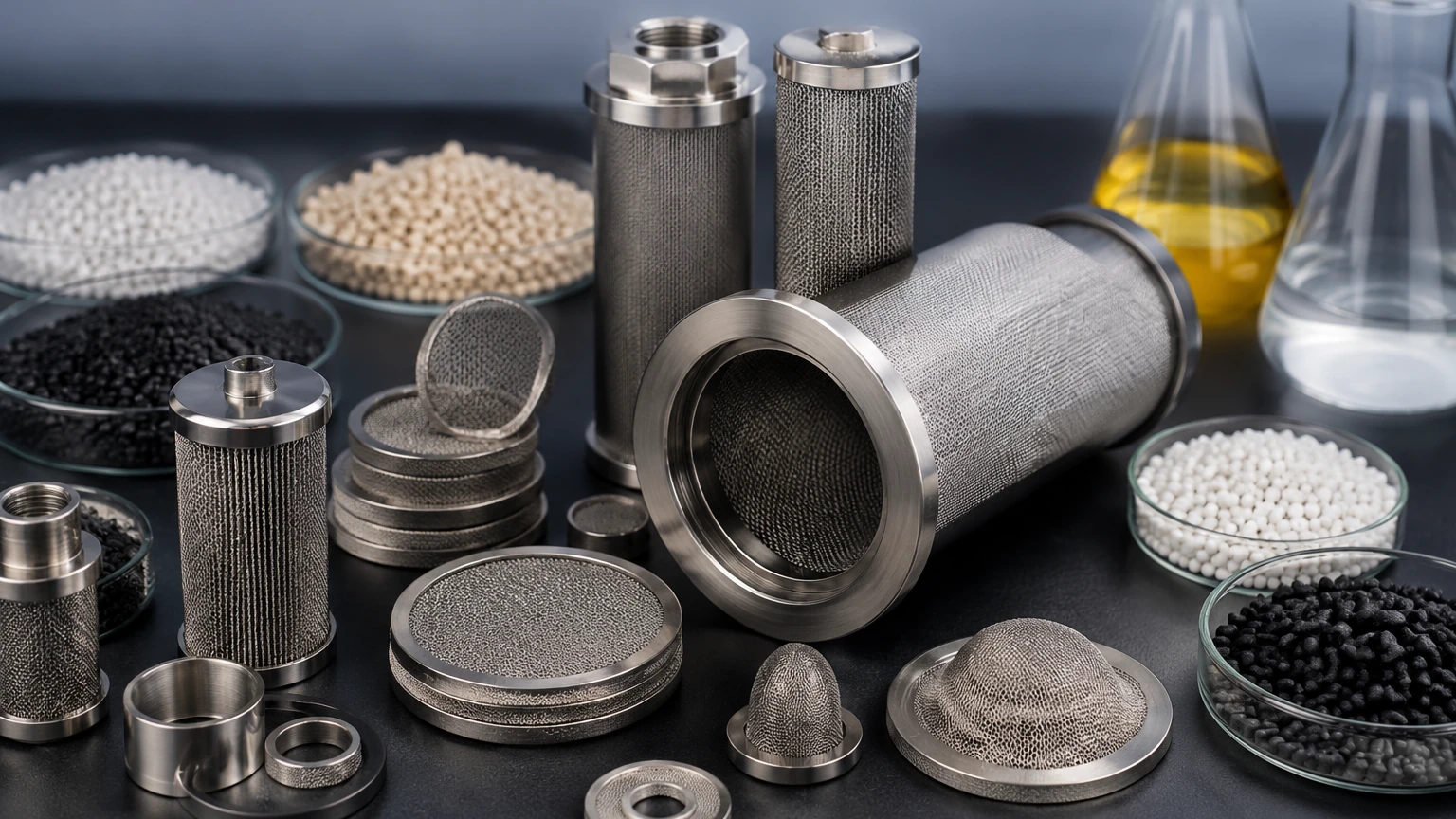
This is where metal filtration technology becomes indispensable. Standard polymer filters often lack the thermal and chemical resistance required for these environments. Stainless steel wire mesh filters and sintered metal cartridges provide the necessary durability to handle high-temperature, high-pressure, and corrosive product streams while capturing microscopic catalyst particles.
Engineering Considerations for Catalyst Filtration Systems
When designing a filtration system to support catalytic functions, several engineering factors must be evaluated to ensure the system does not become a bottleneck or a point of failure.
1. Material Compatibility
Industrial reactions often involve aggressive chemicals and extreme temperatures. Filtration components must be constructed from materials that can withstand these conditions without degrading or leaching contaminants into the process. 316L stainless steel is a standard choice due to its excellent corrosion resistance, but exotic alloys like Hastelloy or Inconel may be required for specific high-acid or high-temperature environments.
2. Filtration Accuracy (Micron Rating)
Determining the correct micron rating is a balance between catalyst retention and pressure drop. If the filter pores are too large, valuable catalyst particles will pass through. If they are too small, the filter will clog rapidly, increasing the pressure drop across the system and requiring more frequent cleaning or replacement. Sintered wire mesh offers a controlled pore size that provides consistent filtration accuracy even under fluctuating pressure conditions.
3. Mechanical Strength and Durability
In many catalytic processes, filters are subjected to high differential pressures and mechanical stresses, especially during backpulsing or cleaning cycles. The filter media must be structurally sound to prevent deformation or media migration. Sintered metal cartridges are preferred here because the individual layers of wire mesh are fused together, creating a rigid, stable structure.
The Impact of Filtration on Total Cost of Ownership (TCO)
Understanding what is the function of a catalyst also involves understanding its cost. Catalysts represent a significant portion of the operational expenditure (OPEX) in chemical processing. An inefficient filtration system can lead to:
* Higher Catalyst Replacement Costs: Due to poisoning or physical loss.
* Increased Downtime: Frequent stops to clean or replace filters or to regenerate poisoned catalysts.
* Product Contamination: Catalyst fines ending up in the final product can lead to batch rejection and quality control issues.
By investing in high-quality, custom-engineered stainless steel filtration solutions, companies can optimize their catalytic processes, reduce waste, and improve the overall return on investment (ROI) for their chemical reactors.
Maintenance and Cleaning of Catalyst Filters
Unlike disposable filters, stainless steel filtration components are designed to be cleaned and reused. In catalyst recovery applications, this is typically achieved through backwashing or ultrasonic cleaning.
* Backwashing/Backpulsing: A reverse flow of fluid or gas is used to dislodge the accumulated catalyst cake from the surface of the filter. This allows the catalyst to be returned to the reactor without opening the system.
* Chemical Cleaning: If the filter becomes fouled with organic polymers or scale, chemical baths can be used to restore the original permeability of the stainless steel mesh without damaging the underlying structure.
Conclusion
So, what is the function of a catalyst? It is the engine of the chemical reaction, enabling faster, more selective, and more efficient production. However, for a catalyst to perform its function effectively over a long service life, it requires the support of a robust filtration infrastructure. From protecting the catalyst from upstream contaminants to ensuring the recovery of expensive catalyst particles downstream, precision-engineered metal filters are essential components in the modern industrial landscape.
For engineers looking to optimize their filtration stages, selecting a manufacturer with deep expertise in custom stainless steel solutions is critical. By focusing on material integrity, filtration accuracy, and mechanical durability, facilities can ensure their catalytic processes remain both productive and profitable. To explore a wide range of industrial filtration options and technical support for your specific application, please refer to the Main Page for comprehensive product details and engineering guidance.