


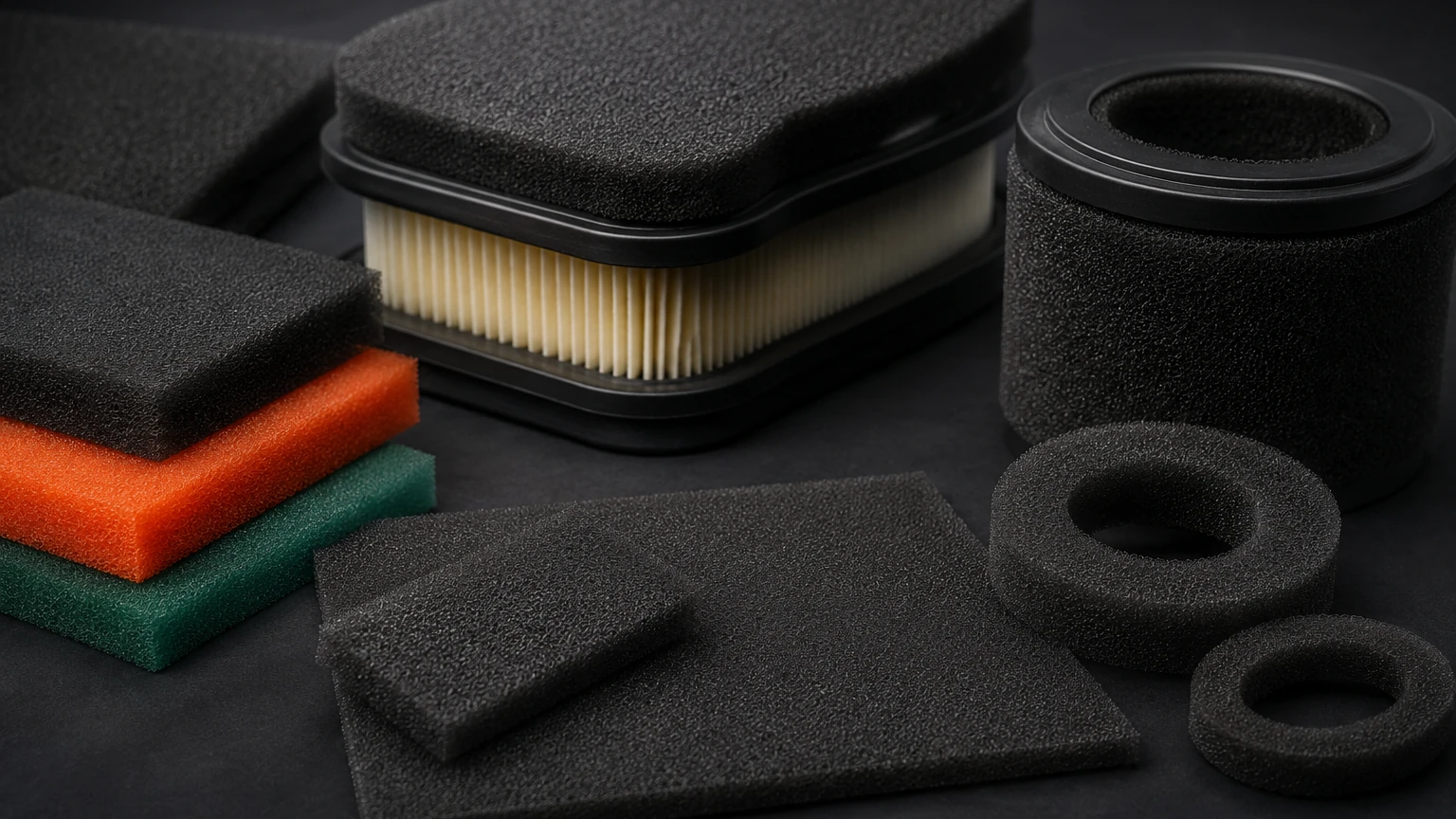
Foam for Air Filter
In industrial filtration, the selection of media is a critical engineering decision that dictates the efficiency, pressure drop, and longevity of a system. Foam for air filter applications, specifically reticulated open-cell foam, serves as a versatile medium across various sectors, from HVAC systems to heavy machinery and chemical processing. While often perceived as a simple material, the technical nuances of foam—including pore density, chemical composition, and structural integrity—require careful evaluation to ensure it meets the rigorous demands of industrial environments.
For engineers and procurement specialists, understanding the intersection between polymer-based foam filters and high-performance metal filtration components is essential. As a manufacturer specializing in stainless steel filtration, Kaifil often provides the structural housing or secondary mesh layers that complement foam media in complex industrial assemblies. This guide examines the technical properties of foam for air filter use, its performance characteristics, and how it compares to more durable alternatives like stainless steel wire mesh.
Understanding Foam Filter Materials and Structures
The effectiveness of foam for air filter applications is rooted in its "reticulated" structure. Unlike standard sponge foam, which has closed or partially closed cells, reticulated foam undergoes a manufacturing process—typically thermal or chemical—that removes the thin cell membranes. This leaves behind a three-dimensional skeletal structure of dodecahedron-shaped cells.
Polyurethane Foam
Polyurethane is the most common material for air filter foam. It is generally categorized into two types:
1. Polyester-Based: Offers high mechanical strength and excellent resistance to oils and many chemicals. However, it is susceptible to hydrolysis (degradation in high humidity and heat).
2. Polyether-Based: Provides superior resistance to water and moisture, making it ideal for humid environments or applications where the filter may be washed frequently. It generally has lower tensile strength than polyester foam.
Ceramic and Metal Foams
In specialized high-temperature or highly corrosive environments, engineers may opt for ceramic or metal foams. While more expensive, these materials provide the same high-surface-area benefits as polymer foam but can withstand temperatures exceeding 1000°C. For many of these advanced applications, stainless steel wire mesh or sintered metal components from the Main Page serve as a more robust and predictable alternative.
Technical Specifications: PPI and Airflow Dynamics
The primary metric for defining foam for air filter performance is PPI (Pores Per Inch). This measurement determines the filtration efficiency and the resistance to airflow (pressure drop).
* 10 to 30 PPI (Coarse): Used for large particle pre-filtration. These foams have very low resistance to airflow and are often found in heavy equipment intakes or as a first-stage filter in multi-stage systems.
* 45 to 70 PPI (Medium): A balance between efficiency and airflow. Commonly used in general industrial machinery and small engine air cleaners.
* 80 to 100+ PPI (Fine): High-efficiency foam capable of capturing smaller particulates. These are often used in medical devices or cleanroom pre-filters, though they require more frequent maintenance due to a faster increase in pressure drop as they load with dust.
The Relationship Between PPI and Surface Area
As the PPI increases, the total internal surface area of the foam increases exponentially. This allows for a higher "dust holding capacity" compared to surface-loading media like paper. Foam is a depth-loading medium, meaning particles are trapped throughout the thickness of the material rather than just on the surface. This characteristic is vital for maintaining consistent airflow over longer operational periods.
Industrial Applications and Compatibility
Foam for air filter media is utilized across a broad spectrum of industrial applications, each requiring specific material properties:
1. HVAC and Air Handling Units
In large-scale HVAC systems, foam is frequently used as a permanent, washable pre-filter. It protects more expensive secondary filters (like HEPA or bag filters) by capturing large debris and lint. The ability to wash and reuse foam filters reduces the total cost of ownership in commercial facilities.
2. Compressor and Blower Intakes
Industrial compressors require high volumes of clean air. Foam filters are often used here because they can be manufactured in custom shapes to fit compact intake housings. They provide excellent vibration dampening, which is a secondary benefit in high-vibration machinery environments.
3. Electronics and Server Cooling
In data centers and industrial control panels, foam filters prevent dust ingress that could lead to overheating. Because these filters must often be flame-retardant, engineers must specify foam that meets UL 94 HF-1 or similar fire safety standards.
4. Chemical Processing
When air filtration is required in the presence of solvent vapors or corrosive gases, the chemical compatibility of the foam is paramount. Polyester foams are often preferred for their resistance to hydrocarbons, whereas polyether foams are selected for aqueous environments.
Comparing Foam Filters with Stainless Steel Mesh Solutions
While foam for air filter applications is cost-effective and versatile, it is not always the optimal choice for demanding industrial environments. Engineers must weigh the benefits of foam against the durability of stainless steel wire mesh, a core specialty of Kaifil.
| Feature | Reticulated Foam | Stainless Steel Wire Mesh |
| :— | :— | :— |
| Durability | Moderate; degrades over time | Exceptional; resists mechanical wear |
| Temperature Limit | Typically < 120°C | Up to 800°C+ (depending on alloy) |
| Chemical Resistance | Variable (limited by polymer type) | High (resistant to most acids/alkalis) |
| Cleanability | Washable, but cell structure can tear | Ultrasonic or backwash cleaning possible |
| Pressure Drop | Very low initially | Depends on weave; highly predictable |
| Structural Rigidity | Requires external support/housing | Self-supporting in many designs |
In many high-pressure hydraulic or high-temperature exhaust systems, foam would simply melt or collapse. In these instances, custom-engineered stainless steel filter cartridges provide the necessary precision and resilience. Many systems utilize a hybrid approach: a foam pre-filter for large debris followed by a precision-grade stainless steel mesh filter for final particulate removal.
Selection Criteria for Engineering and Procurement
When specifying foam for air filter use, procurement teams and engineers should confirm several key parameters to avoid premature system failure:
1. Operating Temperature: Ensure the continuous operating temperature does not exceed the polymer's glass transition temperature. For environments exceeding 100°C, metal mesh is usually required.
2. Face Velocity: The speed at which air enters the filter. High face velocities can cause foam to compress, which reduces the effective pore size and spikes the pressure drop.
3. Environmental Exposure: Will the filter be exposed to UV light? Standard polyurethane foams can become brittle and crumble when exposed to direct sunlight over long periods. UV-stabilized additives may be necessary.
4. Retention Requirements: Define the micron rating required. While PPI is the standard for foam, it can be roughly correlated to micron retention (e.g., 100 PPI is approximately 30-40 microns). If sub-micron filtration is needed, foam should only be used as a pre-filter.
5. Regulatory Compliance: Check for requirements such as REACH, RoHS, or FDA compliance if the filter is used in food processing or pharmaceutical environments.
Maintenance, Cleaning, and Replacement Cycles
One of the primary selling points of foam for air filter applications is that it is often reusable. However, the cleaning process must be handled correctly to maintain the filter's integrity.
* Cleaning Methods: Foam can typically be cleaned using compressed air (blown from the clean side to the dirty side) or by washing with water and a mild detergent. It is crucial to avoid harsh solvents that could swell or dissolve the polymer matrix.
* Drying: Foam must be completely dry before re-installation to prevent the growth of mold or bacteria, which can create a biohazard in air handling systems.
* Replacement Indicators: Unlike stainless steel mesh, which can last for years, foam eventually loses its elasticity. If the foam feels "crunchy," leaves a residue on hands, or fails to spring back after compression, it has reached the end of its service life and must be replaced to prevent foam particles from entering the downstream airflow.
Customization and OEM Integration
For many equipment manufacturers (OEMs), standard off-the-shelf foam sizes are insufficient. Custom-contoured foam inserts are often required to fit specific housing geometries. This is where the synergy between foam and metal components becomes apparent. A custom stainless steel frame or perforated metal cage, designed by specialists like those at Kaifil, can hold the foam media securely in place, preventing bypass—a common failure where air flows around the filter rather than through it.
By integrating precision metal supports with high-quality reticulated foam, manufacturers can create filtration assemblies that are both easy to maintain and structurally sound under high-flow conditions. For technical teams looking to optimize these assemblies, reviewing the various mesh and support options available on the Main Page is a recommended starting point for developing a comprehensive filtration strategy.
Conclusion
Foam for air filter applications remains a staple in industrial design due to its unique depth-loading capabilities and cost-efficiency. However, its performance is highly dependent on selecting the correct PPI and material base for the specific operating environment. While foam excels in pre-filtration and low-temperature applications, it often works best when paired with or replaced by more durable stainless steel components in demanding industrial settings.
When designing a filtration system, engineers must look beyond the initial cost and consider the total lifecycle, including maintenance frequency and the risk of media migration. By understanding the technical boundaries of foam and the advantages of precision metal filtration, organizations can ensure optimal air quality and equipment protection in even the most challenging industrial landscapes.
